Information Retrieval Journal
Scope & Guideline
Connecting Researchers to the Frontiers of Information Science
Introduction
Aims and Scopes
- Information Retrieval Techniques:
The journal emphasizes the development and evaluation of various information retrieval techniques, including traditional methods and modern approaches like deep learning and graph-based models. - Multimodal Retrieval Systems:
Research on systems that integrate multiple data modalities (text, image, audio, etc.) for effective information retrieval is a core focus, reflecting the growing need for comprehensive retrieval solutions. - User-Centric Search and Interaction:
There is a significant emphasis on understanding user behavior and preferences in search systems, including interactive and conversational search capabilities. - Evaluation Metrics and Methodologies:
The journal highlights the importance of developing robust evaluation metrics and methodologies to assess the effectiveness of information retrieval systems. - Thematic and Contextual Retrieval:
Research on thematic analysis and contextual understanding in information retrieval is prominent, indicating a trend towards more nuanced and context-aware retrieval systems.
Trending and Emerging
- Deep Learning Applications in Retrieval:
There is a significant increase in research applying deep learning techniques to various aspects of information retrieval, including ranking, question answering, and user modeling. - Graph-Based Information Retrieval:
Emerging studies focus on the use of graph-based models and attention networks for passage retrieval, indicating a trend towards leveraging complex data structures for enhanced retrieval performance. - Privacy and Ethical Considerations:
Research addressing privacy-aware retrieval systems is gaining momentum, highlighting the importance of ethical considerations in the design and implementation of information retrieval systems. - Multimodal and Multilingual Retrieval:
There is a growing interest in developing retrieval systems that can handle multiple modalities (e.g., text, images) and multiple languages, reflecting the global and diverse nature of information consumption. - Contextual and Temporal Information Retrieval:
The exploration of contextual and temporal dimensions in information retrieval is emerging as a key area of interest, as researchers seek to improve user experience and relevance in dynamic information environments.
Declining or Waning
- Traditional Boolean Retrieval Methods:
There is a noticeable decline in research focusing on traditional Boolean retrieval methods, as the field shifts towards more sophisticated, machine learning-based approaches. - Static Document Ranking Techniques:
Research centered on static document ranking methods has waned, with a growing emphasis on dynamic and context-aware ranking systems that adapt to user interactions. - Basic Query Expansion Techniques:
The exploration of basic query expansion techniques has decreased, likely due to the rise of more advanced contextualized embeddings and deep learning techniques that provide better performance. - Single-Modal Retrieval Systems:
There appears to be a decline in research focused solely on single-modal retrieval systems, as the integration of multiple modalities becomes increasingly important in information retrieval. - Generalized User Studies:
Research that lacks specificity regarding user demographics and behaviors in search systems is becoming less common, as more targeted and nuanced user studies gain traction.
Similar Journals
Geo-Spatial Information Science
Innovating Insights in Spatial Data AnalysisGeo-Spatial Information Science, published by TAYLOR & FRANCIS LTD, is a premier open-access journal that has been at the forefront of disseminating cutting-edge research since its inception in 1998. With an ISSN of 1009-5020 and an E-ISSN of 1993-5153, this journal plays a pivotal role in the fields of Computers in Earth Sciences and Geography, Planning and Development, achieving a prestigious Q1 ranking in both categories as of 2023. Its exemplary Scopus rankings highlight its relevance within the social sciences and earth sciences, placing it among the top echelons of its field, with a 95th and 93rd percentile respectively. The journal aims to bridge the gap between innovative geospatial technologies and their applications in real-world scenarios, fostering interdisciplinary collaboration and advancing the global understanding of spatial data analysis. Based in the United Kingdom, Geo-Spatial Information Science invites researchers, professionals, and students to contribute and access research that shapes the future of geo-spatial sciences, all while adhering to open access principles that ensure broad dissemination and engagement with the broader academic community.
ACM TRANSACTIONS ON INFORMATION SYSTEMS
Driving Theoretical and Practical Advances in Information SystemsACM Transactions on Information Systems, published by the Association for Computing Machinery, serves as a leading forum for the dissemination of high-quality research in the domain of information systems. With an impact factor consistently placing it in the prestigious Q1 quartile across multiple categories including Business, Management and Accounting, Computer Science Applications, and Information Systems, this journal has established itself as a key resource for researchers, practitioners, and students seeking to advance their understanding of information systems. The journal encompasses a broad scope, featuring innovative methodologies, theoretical advancements, and practical applications that address contemporary challenges in the field. Although it does not currently provide open access options, the insights shared within its pages significantly contribute to shaping academic discourse and promoting best practices in the evolving landscape of information systems. With its impressive Scopus rankings, ACM Transactions on Information Systems remains at the forefront of scholarly communication, encouraging rigorous inquiry and collaboration.
Legal Information Management
Bridging the Gap Between Law and Information Excellence.Legal Information Management is a prestigious journal published by Cambridge University Press that serves as an essential resource for professionals, researchers, and students engaged in the dynamic field of legal studies. With a focus on the intersection of law and information management, this journal provides a platform for exploring contemporary issues, best practices, and innovative solutions related to the management of legal information and resources. Although it does not currently offer Open Access options, its rigorous peer-review process ensures the publication of high-quality research that significantly impacts legal education and practice. With its strong academic reputation and commitment to advancing knowledge in legal information management, this journal is crucial for anyone looking to stay updated on critical developments in the field. Located in Cambridge, England, this journal continues to strive towards enhancing the accessibility and understanding of legal information structures globally.
INFORMATION PROCESSING & MANAGEMENT
Transforming Research into Effective Information SolutionsINFORMATION PROCESSING & MANAGEMENT, published by ELSEVIER SCI LTD, is a distinguished journal at the forefront of research in the fields of Computer Science, Information Systems, Library and Information Sciences, and Management Science and Operations Research. Since its inception in 1975, this journal has continually evolved to provide a scholarly platform for the dissemination of innovative methodologies and frameworks in information processing. With a remarkable Q1 ranking across multiple disciplines and esteemed Scopus rankings—notably, 1st in Media Technology and 4th in Library and Information Sciences—it stands as a pivotal resource for researchers, professionals, and students alike, seeking to advance their understanding and application of information management principles. Although not an Open Access journal, it remains widely accessed and respected, marking its influence in shaping the future of effective information management practices. The journal is committed to providing a rigorous peer-review process, ensuring the publication of high-quality research that addresses current challenges and trends in information technology and its application in various sectors.

Informacao & Sociedade-Estudos
Bridging Communication, Sociology, and Political ScienceInformacao & Sociedade-Estudos, published by the Universidade Federal de Campina Grande, is a pivotal journal based in Brazil that focuses on the intersections of communication, sociology, and political science. With an ISSN of 0104-0146 and an E-ISSN of 1809-4783, it serves as a platform for scholarly discourse and research dissemination. Though it currently holds a Q4 ranking in both Communication and Sociology/Political Science, the journal facilitates essential conversations within these fields, particularly reflecting on regional studies and social dynamics in Latin America. Scholars can access this journal to explore diverse methodologies and perspectives, despite its discontinuation in Scopus coverage since 2023. The journal is dedicated to enhancing academic dialogue and providing insights that resonate with both local and global audiences. As research in these areas becomes increasingly crucial, Informacao & Sociedade-Estudos remains an important resource for academics and practitioners alike.
ONLINE INFORMATION REVIEW
Connecting Research with Digital InnovationONLINE INFORMATION REVIEW, published by Emerald Group Publishing Ltd, is a leading academic journal that focuses on the interdisciplinary areas of information science and technology, engaging extensively with topics related to information retrieval, digital information management, and user interaction with online content. With an impressive impact factor and a significant presence in the Q1 and Q2 categories across Library and Information Sciences and Computer Science Applications, this journal ranks among the top platforms for scholarly research, boasting a Scopus rank of #30 in Library and Information Sciences. Established in the UK, this journal has been pivotal since its inception in 1980, providing invaluable insights into the rapidly evolving landscape of online information systems. The journal offers both subscription and open access options, making its high-quality research accessible to a global audience. Researchers, professionals, and students alike will find this journal a critical resource for advancing knowledge and fostering innovation in the exploration of information technologies and their applications.

Information is a distinguished open-access journal published by MDPI since 2010, dedicated to advancing the field of Information Systems. With its E-ISSN 2078-2489, the journal serves as a crucial platform for researchers, professionals, and students to disseminate and access innovative research and methodologies in the domain of information science, data management, and technology. Based in Basel, Switzerland, the journal has established a commendable reputation in the academic community, currently holding a Q2 ranking in the prestigious Scopus category of Information Systems, and occupies the 74th percentile among its peers. The breadth of the journal's objectives is to promote and facilitate the open exchange of ideas, research findings, and emerging trends, fostering collaboration and knowledge growth in a rapidly evolving digital landscape. With an unwavering commitment to high-quality scholarship and accessible knowledge, Information plays an essential role in shaping the future of the information sciences.
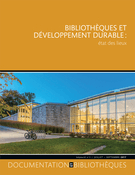
Documentation et Bibliotheques
Advancing knowledge in library science and documentation.Documentation et Bibliothèques is a pivotal academic journal published by the Association pour l'Avancement des Sciences et Techniques de la Documentation, based in Montreal, Canada. Focusing on the fields of library science and documentation, this journal serves as a crucial platform for disseminating research and practical insights that drive innovation in information management and library services. Although it does not follow an open access model, it boasts a dedicated readership among researchers, professionals, and students who seek high-quality content in the realm of information science. With its commitment to advancing theoretical and empirical studies, Documentation et Bibliothèques remains an essential resource for navigating the evolving landscape of documentation and library services. For those interested in exploring how strategic documentation practices can enhance knowledge dissemination, this journal provides a wealth of valuable resources and scholarly articles.

DESIDOC Journal of Library & Information Technology
Empowering Research in Library and Information PracticesDESIDOC Journal of Library & Information Technology, published by the Defence Scientific Information Documentation Centre, is a pivotal scholarly platform in the realm of Library and Information Sciences. The journal, indexed with ISSN 0974-0643 and E-ISSN 0976-4658, has established its reputation with a commendable Q3 category ranking in the latest Scopus quartiles and a notable rank of 113 out of 280 in its field, placing it in the 59th percentile. Engaging a global audience, it disseminates high-quality research insights aimed at advancing the practices and technologies within library and information management. Operating within a converged timeframe from 2012 to 2024, the journal is committed to fostering robust discussions surrounding contemporary issues in the field, making it an invaluable resource for researchers, professionals, and students alike. While currently not offering open access, its content is accessible through institutional subscriptions, reinforcing its significance in the academic community of India and beyond.
KNOWLEDGE AND INFORMATION SYSTEMS
Transforming Ideas into Impactful SolutionsKNOWLEDGE AND INFORMATION SYSTEMS, published by SPRINGER LONDON LTD, is a distinguished journal in the field of information systems, artificial intelligence, and human-computer interaction. With its ISSN 0219-1377 and E-ISSN 0219-3116, this journal has built a robust reputation since its inception, featuring a convergence of valuable research from 2005 through 2024. Catering to a diverse academic audience, it is classified among the leading journals in its category, proudly holding a Q1 ranking in Information Systems and Q2 rankings in multiple other domains. The journal aims to publish cutting-edge research that not only advances theoretical understanding but also provides practical applications within these rapidly evolving fields. Although it is not an Open Access journal, subscribers can access a wealth of knowledge critical for researchers, practitioners, and students looking to enhance their expertise. With a 2023 Scopus rank placing it within the 66th percentile for Information Systems, KNOWLEDGE AND INFORMATION SYSTEMS is an invaluable resource for those committed to pushing the frontiers of knowledge in technology and information science.