
International Journal of Educational Psychology
Scope & Guideline
Exploring Innovative Paths in Educational Psychology
Introduction
Aims and Scopes
- Educational Psychology and Learning Processes:
The journal emphasizes research that explores cognitive, emotional, and social processes related to learning. This includes studies on motivation, self-efficacy, resilience, and engagement in educational contexts. - Assessment and Evaluation:
A significant focus is on psychometric evaluations and assessments that measure various psychological constructs such as grit, burnout, and emotional well-being, offering insights into how these factors influence academic performance. - Socio-emotional Factors in Education:
Research on the socio-affective dimensions of education, including the impact of teacher-student relationships, family engagement, and peer interactions, is a core area, highlighting their role in student success and psychological health. - Diversity and Inclusion:
The journal addresses issues related to diversity in educational settings, examining how factors like ethnicity, gender, and socioeconomic status affect learning outcomes and educational experiences. - Innovative Educational Practices:
The journal showcases studies that investigate new educational interventions and methodologies, including the use of technology in education and alternative teaching strategies that enhance student learning.
Trending and Emerging
- Mindset and Grit in Academic Performance:
Research on growth mindset and grit has surged, emphasizing their roles as determinants of academic success. This trend underscores an increasing interest in psychological resilience and its impact on educational outcomes. - Resilience and Psychological Well-being:
There is a growing focus on resilience as a crucial factor in educational psychology, particularly in how it relates to student burnout and emotional adjustment, reflecting a broader understanding of mental health in educational settings. - Technology in Education:
The integration of digital technologies in educational practices is trending, with studies investigating their effects on learning outcomes and engagement, indicating a shift towards understanding the role of technology in modern education. - Social and Emotional Learning (SEL):
The importance of SEL is emerging as a key theme, with research exploring its impact on classroom dynamics, student relationships, and overall academic performance, highlighting a holistic approach to education. - Cross-Cultural Educational Comparisons:
An increase in studies comparing educational practices across different cultures suggests a trend towards understanding global educational dynamics and the influence of cultural factors on learning.
Declining or Waning
- Traditional Behavioral Approaches:
There has been a noticeable decrease in research focused solely on traditional behavioral methods in education, as newer, more holistic approaches gain traction in understanding student engagement and learning. - Generalized Studies on Educational Outcomes:
Research that broadly examines educational outcomes without a nuanced understanding of psychological factors appears to be waning, as the journal increasingly favors studies that integrate psychological constructs with educational metrics. - Narrow Focus on Specific Populations:
There seems to be a decline in studies exclusively focusing on very specific populations without considering broader implications, as the journal shifts towards more inclusive research that examines diverse educational contexts.
Similar Journals

CONTEMPORARY EDUCATIONAL PSYCHOLOGY
Unveiling the Complexities of LearningCONTEMPORARY EDUCATIONAL PSYCHOLOGY, published by Academic Press Inc. Elsevier Science, stands as a leading journal in the fields of developmental and educational psychology. With an impressive impact factor and ranked in the Q1 category for both Developmental and Educational Psychology and Education, it is recognized as a top resource for researchers and professionals seeking to explore the complexities of learning, development, and educational practices. The journal has been disseminating groundbreaking research since 1976 and continues to be relevant through 2024, showcasing innovative studies that inform educational theory and practice. Although the journal operates under a subscription model, it provides unparalleled insights and comprehensive reviews that cater to a diverse audience, including researchers, educators, and students. The rigorous peer-review process guarantees the high quality of published work, while its Scopus rankings affirm its significant contribution to the academic community, with standout positions in both the fields of social sciences education and developmental psychology. For those committed to advancing the intersection of psychology and education, CONTEMPORARY EDUCATIONAL PSYCHOLOGY is an indispensable scholarly resource.

Revista de Psicodidactica
Empowering Minds Through Innovative ResearchRevista de Psicodidactica, published by ELSEVIER ESPAÑA, is a leading academic journal dedicated to the fields of Developmental and Educational Psychology. With an impressive impact factor reflecting its high-quality research, the journal has achieved a commendable Q2 ranking in its field for Developmental and Educational Psychology and a Q1 ranking in Education as of 2023. Notably, it holds a significant position in Scopus Ranks, placing in the top 90th percentile in Social Sciences Education and the 84th percentile in Psychology. Launched in 2005, the journal is committed to advancing knowledge in educational practices through empirical research and theoretical frameworks. It provides a vital platform for researchers, educators, and students in Spain and beyond, fostering an open exchange of ideas and innovative approaches to learning and development. Though it is not an open-access publication, it remains a compelling source of contemporary findings for those invested in enhancing educational outcomes.

Educational and Developmental Psychologist
Connecting researchers and practitioners for meaningful impact.The Educational and Developmental Psychologist is a premier journal dedicated to advancing research and practice in the fields of educational and developmental psychology, published by Taylor & Francis Ltd. With an ISSN of 2059-0776 and an E-ISSN of 2059-0784, this journal has established itself as a key resource for researchers and practitioners alike, providing a platform for innovative studies that bridge theory and application. With a 2023 Scopus ranking placing it in the top 73rd percentile in Education and 58th in Developmental Psychology, it highlights significant findings that are shaping educational practices globally. Operating from the United Kingdom, this journal is committed to disseminating high-quality, peer-reviewed research that is crucial for professionals addressing the challenges encountered in educational settings. Although it is not an open-access journal, its impact on educational psychology is noteworthy, reflecting rigorous standards in its publication process. The journal's scope encompasses a wide variety of topics, promoting an interdisciplinary dialogue that is essential for the advancement of knowledge in education.

International Journal of School & Educational Psychology
Shaping Educational Practices with Evidence-Based ResearchThe International Journal of School & Educational Psychology, published by Taylor & Francis Ltd, is a premier academic journal dedicated to advancing the fields of educational and developmental psychology. With an ISSN of 2168-3603 and E-ISSN 2168-3611, the journal has been a valuable resource since its establishment in 2013, with contributions to the field continuing through 2024. The journal's commitment to rigorous research is evident in its Q2 ranking in both Developmental and Educational Psychology and Education categories in 2023, as well as its notable Scopus rankings, placing it in the top 25% of educational journals. Although it does not offer open access options, the journal provides an essential platform for disseminating high-quality research that enriches the understanding of psychological principles in educational contexts. Targeting researchers, professionals, and students alike, the International Journal of School & Educational Psychology strives to highlight innovative methodologies, practical applications, and theoretical discussions that shape educational practices and foster optimal learning environments.

EDUCATIONAL PSYCHOLOGY REVIEW
Shaping the Future of Learning Through ResearchEDUCATIONAL PSYCHOLOGY REVIEW is a premier journal published by Springer/Plenum Publishers, dedicated to advancing the field of educational psychology through rigorous scholarship and innovative research. Since its inception in 1989, this influential journal has played a pivotal role in disseminating high-quality research findings and theoretical insights, helping to shape the future of educational practices and psychological frameworks. With an impressive impact factor and a place in the Q1 quartile in both Developmental and Educational Psychology as well as Education, it ranks among the top journals in its field. Recent Scopus rankings further highlight its significance, placing it in the 99th percentile among education publications and the 98th percentile in developmental psychology. Although it is not an open-access journal, it maintains a strong commitment to accessibility through institutional subscriptions and partnerships. The EDUCATIONAL PSYCHOLOGY REVIEW invites researchers, professionals, and students alike to contribute and engage with the latest findings, fostering a deeper understanding of psychological principles in educational contexts.
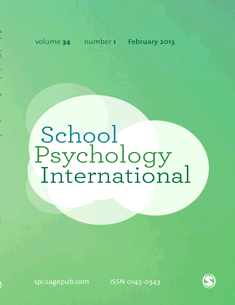
SCHOOL PSYCHOLOGY INTERNATIONAL
Connecting Research with Real-World ImpactSCHOOL PSYCHOLOGY INTERNATIONAL is a leading academic journal published by SAGE Publications Ltd, focusing on the interdisciplinary fields of developmental and educational psychology, education, and psychiatry and mental health. With its origins dating back to 1979, this esteemed journal aims to advance the understanding and practice of school psychology by disseminating high-quality research and innovative practices that support the development and well-being of students globally. Recognized for its impact, it currently holds a Q2 ranking in Developmental and Educational Psychology, a Q1 ranking in Education, and a Q2 ranking in Psychiatry and Mental Health according to the latest 2023 quartile assessments. The journal's commitment to excellence is further evidenced by its impressive standings in Scopus Ranks, where it occupies significant percentiles across various categories. Scholars and practitioners looking to stay at the forefront of research in school psychology can access this journal for insights that explore critical issues faced within educational systems, making it an invaluable resource for advancing both theoretical and applied knowledge.

Journal of Educational Cultural and Psychological Studies
Unveiling Insights at the Intersection of Learning and CultureJournal of Educational Cultural and Psychological Studies is a prominent academic journal published by EDIZIONI UNIV LETTERE ECONOMIA DIRITTO-LED, dedicated to exploring the intricate interplay between education, culture, and psychological processes. Since its inception as an Open Access journal in 2010, it has been committed to disseminating high-quality research that contributes to the fields of Developmental and Educational Psychology, Education, and Social Psychology, achieving Quartile 4 rankings in these categories as of 2023. With an ISSN of 2037-7932 and E-ISSN 2037-7924, the journal operates from Milan, Italy, providing a platform for researchers, professionals, and students to engage with innovative theories and empirical findings. Although the journal currently ranks within the lower percentiles in Scopus metrics, it holds significant potential for growth and influence in the academic landscape, particularly in the rapidly evolving domains it covers. Scholars can access the journal’s articles freely to foster a broader understanding of topics critical to cultural and psychological education, making it an essential resource for anyone interested in advancing their knowledge and research in these interdisciplinary areas.
European Journal of Education and Psychology
Unlocking Potential Through Interdisciplinary Research.The European Journal of Education and Psychology, published by Universidad Autonoma de Chile, stands at the intersection of education and psychological research, offering a dynamic platform for scholarly discourse. With an ISSN of 1888-8992 and E-ISSN 1989-2209, this open-access journal has been committed to disseminating knowledge since 2015, providing researchers, professionals, and students unrestricted access to cutting-edge studies in both fields. Despite its young trajectory, it has achieved notable recognition, currently positioned in Q3 for both Education and Psychology (miscellaneous) categories as of 2023. The journal’s ranking reflects its commitment to high-quality academic contributions, with a Scopus rank of #808 in the Social Sciences - Education, and #140 in General Psychology. By fostering interdisciplinary dialogue, the journal not only enriches academic literature but also influences practical applications in educational settings and psychological practices. Engage with the latest research and contribute to the evolving discourse in education and psychology.

International Journal of Psychology and Psychological Therapy
Advancing the Frontiers of Psychological ScienceThe International Journal of Psychology and Psychological Therapy, published by ASOC ANALISIS COMPORTAMIENTO, is a leading platform for the dissemination of innovative research in the field of psychology, headquartered in Spain. With an impactful history from 2001 to 2024, this journal focuses on a diverse range of psychological topics, including clinical, developmental, educational, experimental, and cognitive psychology. Recognized in 2023, the journal holds prestigious rankings in the Scopus database, with quartile placements of Q3 in Clinical Psychology and Q4 in both Developmental and Educational Psychology as well as Experimental and Cognitive Psychology, indicating its growing influence within these domains. While it operates under a subscription model, the journal remains committed to enhancing accessibility for researchers and practitioners alike, facilitating an exchange of knowledge that is crucial for advancing psychological science. Whether you're a seasoned researcher or an emerging scholar, the International Journal of Psychology and Psychological Therapy serves as an invaluable resource for fostering a deeper understanding of complex psychological phenomena.
JOURNAL OF EXPERIMENTAL EDUCATION
Advancing educational research through innovative methodologies.Journal of Experimental Education, published by Routledge Journals, Taylor & Francis Ltd, is a prestigious platform dedicated to advancing the field of educational research. With an impressive history spanning from 1932 to 2024, this journal covers significant developments in Developmental and Educational Psychology and Education, achieving a Q1 ranking in both categories for 2023. The journal is recognized for its rigorous peer-reviewed articles that explore innovative experimental methodologies and empirical studies that shape contemporary practices in education. Current Scopus rankings further establish its credibility, placing it in the top percentiles among its peers. While it is not an open-access journal, the insights offered through its publications are invaluable for researchers, educators, and students seeking to deepen their understanding of educational phenomena and improve pedagogical approaches. By fostering a community dedicated to research excellence, the Journal of Experimental Education serves as an essential resource for those committed to the advancement of education.