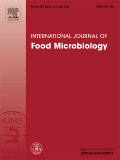
INTERNATIONAL JOURNAL OF FOOD MICROBIOLOGY
metrics 2024
Innovating Solutions for Safer Food Practices
Introduction
INTERNATIONAL JOURNAL OF FOOD MICROBIOLOGY is a leading journal in the field of food safety and microbiology, published by Elsevier. With an impressive impact factor and a distinguished position, it ranks in the top quartile for both Food Science and Medicine, as well as holding a strong presence in Microbiology and Safety, Risk, Reliability, and Quality categories. The journal provides a vital platform for researchers, professionals, and students to disseminate and discuss innovative research findings and applications that address the complexities of food microbiology. Operating from its headquarters in the Netherlands, this journal not only facilitates access to high-quality scholarly articles but also encourages the development of interdisciplinary approaches to tackle current challenges in food safety and public health. Since its inception in 1984, the journal has continually evolved, ensuring that it remains at the forefront of scientific inquiry, making it a crucial resource for anyone engaged in the food sciences.
Metrics 2024
 1.035.005.00219
Metrics History
Rank 2024
Scopus
IF (Web Of Science)
JCI (Web Of Science)
Quartile History
Similar Journals

JOURNAL OF MICROBIOLOGY AND BIOTECHNOLOGY
Empowering Research for Tomorrow's Biotechnological ChallengesJOURNAL OF MICROBIOLOGY AND BIOTECHNOLOGY, published by the Korean Society for Microbiology and Biotechnology, is a premier academic journal based in South Korea that has been at the forefront of advancing knowledge in the fields of microbiology, biotechnology, and their applied sciences since its inception in 1991. This journal holds a commendable Q2 quartile ranking in key categories, including Applied Microbiology and Biotechnology, showcasing its significant impact within the academic community. With an emphasis on high-quality, peer-reviewed research, the journal aims to disseminate innovative findings that foster deeper understanding and advancements in microbial and biotechnological sciences. Researchers, professionals, and students utilize this journal to stay informed about contemporary developments and to inspire future investigations. Although it is not an open-access journal, its content is accessible through various academic libraries and databases, providing a vital resource for those engaged in cutting-edge research.

CRITICAL REVIEWS IN MICROBIOLOGY
Connecting Scholars to Cutting-Edge Microbial InsightsCRITICAL REVIEWS IN MICROBIOLOGY, published by Taylor & Francis Ltd, is a leading peer-reviewed journal that has made significant contributions to the field of microbiology since its inception in 1971. With a prestigious Q1 ranking in Applied Microbiology and Biotechnology, as well as in Medicine and Microbiology, this journal is recognized for its high-quality reviews that synthesize current research and emerging trends in the discipline. Researchers and professionals rely on its comprehensive evaluations and critical insights, helping to advance knowledge and application in various microbiological contexts. Although the journal does not currently operate under an open access model, it remains an invaluable resource for academics seeking to stay at the forefront of microbiological advances. With a consistent publication record, CRITICAL REVIEWS IN MICROBIOLOGY continues to support the scholarly community by addressing key issues and innovations within the field.
Food Hygiene and Safety Science
Advancing Global Food Safety StandardsFood Hygiene and Safety Science is a pivotal academic journal published in Japan by the esteemed FOOD HYGIENE & SAFETY. With its ISSN 0015-6426, this journal operates within the broad domains of food science, public health, and medicine, strategically addressing the critical issues surrounding food hygiene and safety. With a notable history spanning from 1960 to 2024, it has become an essential resource in these fields, currently holding a Q3 category ranking in Food Science as well as in Medicine (Miscellaneous) and Public Health, Environmental and Occupational Health, according to the 2023 evaluations. Although access options may vary, the journal is committed to disseminating vital research findings to enhance food safety practices on a global scale. With its focus on advancing knowledge and sharing innovative practices, Food Hygiene and Safety Science serves as a vital platform for researchers, professionals, and students dedicated to improving food safety standards and public health outcomes.

Frontiers in Microbiology
Leading the Charge in Microbial DiscoveriesFrontiers in Microbiology is a leading open-access journal published by Frontiers Media SA, available since 2010, and based in Switzerland. As a prominent platform for innovative research, it specializes in microbiology and medical microbiology, marked by its impressive Q1 classification in the respective fields, reflecting its significant impact and relevance in advancing microbial sciences. With a Scopus ranking of 49th in Microbiology and 41st in Medical Microbiology, this journal is positioned among the top-tier publications, catering to a diverse audience of researchers, professionals, and students. The journal aims to disseminate groundbreaking findings and foster discussions that drive the field forward, ensuring a comprehensive coverage of microbiological studies, from basic research to applications in healthcare and beyond. Enjoy unrestricted access to cutting-edge articles that contribute to both theoretical and applied aspects of microbiology, enriching the scientific community's knowledge base.
BRAZILIAN JOURNAL OF MICROBIOLOGY
Advancing Microbial Knowledge GloballyThe BRAZILIAN JOURNAL OF MICROBIOLOGY, published by SPRINGER, stands as a pivotal platform in the field of microbiology, offering an open access model since 2000. With the ISSN 1517-8382 and E-ISSN 1678-4405, this esteemed journal encourages the dissemination of groundbreaking research and innovative methodologies that contribute to the understanding of microbial life, its role in health and disease, and its environmental impact. Based in Switzerland and accessible globally, the journal’s categorization in the Q3 quartile for Microbiology reflects its commitment to quality and relevance in the scientific community. As of 2023, it ranks 121 out of 182 in the Scopus listings for Microbiology, further highlighting its growing influence in immunology and microbiological research. With converged years spanning from 1992 to 2024, the journal continues to support a diverse range of studies, making it an invaluable resource for researchers, professionals, and students alike.
Microbiology Research
Transforming Microbiology Through Open Access KnowledgeMicrobiology Research, published by MDPI, stands as a pivotal open-access journal in the field of microbiology, having established its presence since 2010. Based in Switzerland, this journal strives to provide a platform for innovative research and cutting-edge findings in various branches of microbiology, including medical microbiology and molecular biology. With an impact factor that reflects its dedication to scholarly excellence, Microbiology Research is classified in the Q3 category for both microbiology and medical microbiology, and Q4 for molecular biology as of 2023, indicating its growing importance and outreach within these domains. The journal aims to foster discussion and collaboration among researchers, professionals, and students by presenting articles that cover a wide array of topics and methodologies in microbiological research. Leveraging its open-access model, Microbiology Research ensures that high-quality research is accessible to a global audience, thus facilitating the advancement of knowledge and innovation in the microbial sciences.
MIKROBIYOLOJI BULTENI
Exploring Innovations in Infectious Disease ResearchMIKROBIYOLOJI BULTENI, with ISSN 0374-9096, is a prestigious academic journal published by the ANKARA MICROBIOLOGY SOC, located in Ankara, Turkey. Established in 1973, this journal has been a vital conduit for disseminating research in the fields of Immunology, Microbiology, and Infectious Diseases, garnering a reputation as a significant contributor to the scientific community. The journal is currently ranked in the Q3 category within Immunology and Microbiology (miscellaneous), and Infectious Diseases, indicating its impactful presence amidst contemporary research. With access options that may be restricted, MIKROBIYOLOJI BULTENI actively welcomes submissions that advance the understanding of critical microbiological principles and practices, thereby supporting both national and international research efforts. Researchers, professionals, and students are encouraged to explore the latest findings shared in this journal, as it continually shapes the landscape of microbiology and infectious disease studies through its comprehensive and rigorous peer-reviewed publications.
FOOD MICROBIOLOGY
Exploring the unseen world of food microbiology.FOOD MICROBIOLOGY is a premier journal, published by Academic Press Ltd - Elsevier Science Ltd, dedicated to advancing the field of food science and microbiology. With an impressive impact factor and recognition as a Q1 journal in Food Science and a Q2 journal in Microbiology, it holds a significant position in the scientific community, emphasizing research that explores microbial phenomena in food products. Established in 1984, the journal continues to thrive with converged coverage until 2025, making it an essential resource for researchers, professionals, and students aiming to deepen their understanding of food-related microbiological issues. While it operates under traditional access options, the journal is highly regarded for its rigorous peer-review process and impactful contributions to agricultural and biological sciences, ranking #26 in Food Science and #22 in Microbiology according to Scopus. Researchers are encouraged to submit their findings that impact food safety, quality, and preservation, fostering a collaborative environment that generates knowledge pivotal for the food industry and public health.
FEMS MICROBIOLOGY LETTERS
Unveiling the Secrets of MicrobiologyFEMS Microbiology Letters, published by Oxford University Press, is a prestigious international journal dedicated to advancing the understanding of microbiology through concise and impactful research articles. With an ISSN of 0378-1097 and E-ISSN 1574-6968, this journal encompasses a wide range of topics within the fields of genetics, microbiology, and molecular biology, achieving a notable Q3 quartile ranking in these categories as of 2023. As an essential platform for researchers, professionals, and students, FEMS Microbiology Letters invites submissions that contribute valuable insights into microbial behaviors, genetic mechanisms, and innovative methodologies pivotal in the study of microbiology. Although it is not an open-access publication, the journal's rigorous editorial standards ensure high-quality content that is relevant and significant to its audience, furthering scholarly dialogue and collaboration in the vibrant field of microbiological research.
ANNALS OF MICROBIOLOGY
Transforming ideas into impactful microbiological advancements.ANNALS OF MICROBIOLOGY is a prestigious journal dedicated to advancing the field of microbiological research, published by BMC, renowned for its commitment to providing open access to vital scientific findings. With its ISSN 1590-4261 and E-ISSN 1869-2044, this journal provides a platform for the dissemination of high-quality research since its inception in 1997. Renowned for its rigorous peer-review process, it has attained a commendable Q2 ranking in the Applied Microbiology and Biotechnology category in 2023, reflecting its significant contributions to the discipline. Positioned within the 67th percentile among its peers in Scopus rankings, ANNALS OF MICROBIOLOGY continues to facilitate the exchange of innovative ideas and methodologies, serving as an essential resource for researchers, professionals, and students alike. The journal covers a broad spectrum of topics, emphasizing the intersection of microbiology with applied sciences, thereby fostering an environment that encourages collaboration and advancement in this vital field. Scholars seeking to stay at the forefront of microbiological studies will find ANNALS OF MICROBIOLOGY an invaluable addition to their academic pursuits.