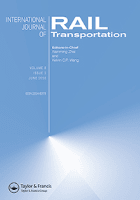
International Journal of Rail Transportation
metrics 2024
Advancing rail innovation for a sustainable future.
Introduction
International Journal of Rail Transportation is a premier academic publication dedicated to advancing the field of rail transportation, published by Taylor & Francis Ltd. With an impressive convergence of scholarly contributions from 2013 to 2024, the journal aims to disseminate high-quality research and innovative ideas in automotive engineering, mechanics of materials, and transportation. The journal proudly holds a Q1 ranking in both Automotive Engineering and Mechanics of Materials for 2023, as well as a Q2 ranking in Transportation, signifying its impact and relevance in the respective disciplines. Additionally, it is recognized within the top percentiles in its Scopus rankings, affirming its commitment to producing significant insights that inform both academic and industrial practices. While currently not open access, the journal strives to connect researchers, professionals, and students with cutting-edge developments in rail transportation. By fostering collaboration and knowledge sharing, the *International Journal of Rail Transportation* serves as an essential resource for those seeking to push the boundaries of transport engineering and contribute to sustainable infrastructure solutions.
Metrics 2024
 0.953.403.6031
Metrics History
Rank 2024
Scopus
IF (Web Of Science)
JCI (Web Of Science)
Quartile History
Similar Journals
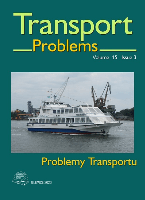
Transport Problems
Transforming Ideas into Solutions for a Sustainable FutureTransport Problems, published by the Silesian University of Technology, Faculty of Transport, is a distinguished open-access journal that has been advancing scholarship in the fields of Automotive Engineering, Mechanical Engineering, and Transportation since its inception in 2007. With an ISSN of 1896-0596 and an E-ISSN of 2300-861X, this journal serves as a vital platform for researchers and practitioners to disseminate innovative research findings and explore fundamental issues in transport systems and technologies. Based in Poland, the journal covers various topics including transportation logistics, vehicle dynamics, and environmental impacts, thereby addressing critical challenges faced in the transportation sector globally. As reflected in its Scopus rankings, the journal occupies respectable quartiles and continues to contribute valuable insights to the academic community. By making its content freely accessible, Transport Problems significantly enhances the ability of researchers and students alike to engage with the latest developments in transport engineering and contribute to this ever-evolving field.
PROCEEDINGS OF THE INSTITUTION OF MECHANICAL ENGINEERS PART D-JOURNAL OF AUTOMOBILE ENGINEERING
Exploring Breakthroughs in Automobile Design and PerformancePROCEEDINGS OF THE INSTITUTION OF MECHANICAL ENGINEERS PART D-JOURNAL OF AUTOMOBILE ENGINEERING, published by SAGE PUBLICATIONS LTD, is a premier peer-reviewed journal dedicated to advancing the field of automobile engineering. Established in 1989, this journal serves as a vital platform for researchers, professionals, and students interested in the latest advancements in automotive technology and engineering practices. With a significant focus on aerodynamics, vehicle dynamics, and safety innovations, it consistently ranks in the Q2 quartile within both Aerospace Engineering and Mechanical Engineering, showcasing its influence and reliability in the academic community. The journal is indexed in Scopus with impressive rankings, being placed in the 41st percentile for Aerospace Engineering and the 214th percentile for Mechanical Engineering, further solidifying its importance in these fields. As an important resource for cutting-edge research, the journal does not currently offer open access, making it a great venue for disseminating substantial findings that drive the future of automotive innovation.
Journal of the Brazilian Society of Mechanical Sciences and Engineering
Advancing the frontiers of mechanical engineering research.The Journal of the Brazilian Society of Mechanical Sciences and Engineering, published by Springer Heidelberg, is a pivotal platform dedicated to disseminating cutting-edge research in the realm of mechanical sciences and engineering. With an ISSN of 1678-5878 and an E-ISSN of 1806-3691, this journal showcases innovative findings across various categories, including Aerospace Engineering, Automotive Engineering, and Industrial and Manufacturing Engineering. Notably positioned in the Q2 and Q3 quartiles of its fields as of 2023, the journal highlights the importance of rigorous scientific inquiry, contributing significantly to the understanding and application of engineering principles globally. With a Scopus rank reflecting strong performance in multiple engineering disciplines, this journal serves as an invaluable resource for researchers, professionals, and students seeking to advance their knowledge and explore the frontiers of mechanical sciences. The journal covers a broad range of topics and aims to facilitate collaboration and synergy among experts in the field, enhancing the overall impact of mechanical engineering research.
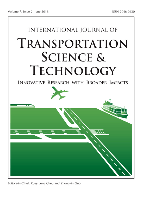
International Journal of Transportation Science and Technology
Advancing transportation knowledge for a sustainable future.The International Journal of Transportation Science and Technology, published by KEAI PUBLISHING LTD, stands as a pivotal resource in the fields of transportation, automotive engineering, civil and structural engineering, and policy management. With a robust Open Access model since its inception in 2012, this journal provides unparalleled visibility to research that impacts real-world transportation systems and infrastructure. The journal proudly holds a Q1 category ranking in crucial engineering fields, reflecting its high impact and quality of published research. Its diverse scope and comprehensive coverage make it an essential platform for researchers, professionals, and students alike who are eager to contribute to the advancement of transportation science and technology. With impressive Scopus rankings underscoring its relevance in environmental science and social sciences related to transport, the International Journal of Transportation Science and Technology continues to foster innovation and influence policy development globally, addressing the challenges of modern transportation systems.
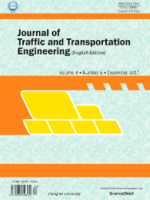
Journal of Traffic and Transportation Engineering-English Edition
Innovative Insights for Safer and Smarter Transportation Solutions.Journal of Traffic and Transportation Engineering-English Edition, published by KEAI PUBLISHING LTD, is a leading open-access journal that has been disseminating valuable research in the realms of civil and structural engineering, as well as transportation studies since 2014. With a robust impact factor reflected by its prestigious Q1 rankings in both Civil and Structural Engineering and Transportation, this journal stands at the forefront of innovation and scholarship, featuring contributions from experts across the globe. The journal is particularly noted for its practical and theoretical advancements in traffic and transportation engineering, making it indispensable for researchers, industry professionals, and students aiming to deepen their understanding of these critical fields. Dedicated to providing a platform for high-quality interdisciplinary research, the Journal of Traffic and Transportation Engineering embraces the principles of open access, ensuring that all published articles are freely available to foster knowledge sharing and collaboration within the community. With its headquarters located in Beijing, China, the journal continues to push boundaries and set new standards in the field of traffic and transportation research.

Baltic Journal of Road and Bridge Engineering
Pioneering Research in Road and Bridge EngineeringThe Baltic Journal of Road and Bridge Engineering, published by RIGA TECHNICAL UNIV-RTU, serves as a pivotal platform for disseminating cutting-edge research in the fields of building and construction as well as civil and structural engineering. Established as an Open Access journal since 2006, it fosters global collaboration and accessibility to critical engineering knowledge, facilitating the exchange of innovative ideas among researchers, professionals, and students. With a commendable impact factor and recognition in Scopus rankings, where it stands in the third quartile for both relevant engineering categories, the journal underscores its significance in advancing the discipline. The journal aims to publish high-quality, peer-reviewed articles that address contemporary challenges in road and bridge engineering, making it an essential resource for anyone involved in infrastructure development and research. Located in Lithuania at 6B Kipsalas Street, RIGA LV-1658, this journal not only highlights the latest advancements but also seeks to inspire future innovations in engineering practices.

TRANSPORTATION
Exploring the Future of Mobility and InfrastructureTRANSPORTATION is a premier academic journal published by Springer, focusing on the dynamic and interdisciplinary field of transportation studies. Established in 1972 and set to release its latest findings through 2024, the journal has garnered a strong reputation, reflected in its impressive impact factor and Q1 quartile rankings across key categories including Civil and Structural Engineering, Development, and Transportation. With a robust Scopus ranking that places it in the top percentile of its fields (ranked #16/306 in Social Sciences - Development, #27/379 in Engineering - Civil and Structural Engineering, and #23/141 in Social Sciences - Transportation), "TRANSPORTATION" is crucial for researchers, professionals, and students alike who seek to expand their understanding of innovative transport systems, policies, and technologies. By offering in-depth research articles, reviews, and case studies, the journal serves as a vital resource for advancing academic knowledge and practical solutions in the transportation sector. Part of a thriving academic community, contributors and readers alike are encouraged to engage with the latest research to foster development in pressing issues related to mobility and infrastructure.
Transport
Advancing sustainable mobility through innovative research.Transport is a leading open-access journal published by VILNIUS GEDIMINAS TECH UNIVERSITY, specializing in the fields of automotive and mechanical engineering. Since its transition to open access in 2018, the journal has become a vital platform for disseminating high-quality research and innovative practices in transport systems, engineering technologies, and sustainable mobility solutions. With an ISSN of 1648-4142 and an E-ISSN of 1648-3480, Transport is indexed in Scopus with notable rankings, including Q2 in Automotive Engineering and Q3 in Mechanical Engineering for 2023, reflecting its influential presence within these disciplines. Researchers and practitioners are encouraged to contribute to this scholarly community, where their work will reach a robust international audience, thereby advancing knowledge and fostering collaborations in the ever-evolving transport sector. Based in Lithuania, the journal is committed to maintaining rigorous peer-review standards and promoting interdisciplinary studies to address the complex challenges in transportation engineering.

Transportation Safety and Environment
Innovating solutions for sustainable transportation practices.Transportation Safety and Environment is an esteemed open-access journal published by Oxford University Press, dedicated to advancing the field of transportation safety and environmental sustainability. Since its inception in 2019, the journal has rapidly gained recognition with an impressive Q2 category ranking in Control and Systems Engineering, Engineering (miscellaneous), and Safety, Risk, Reliability and Quality as of 2023. With an E-ISSN of 2631-4428, it provides a platform for high-quality research that addresses critical safety challenges and environmental impact within the transportation sector, covering a wide array of topics from vehicle safety measures to ecological considerations in transportation infrastructure. The journal’s open-access model promotes widespread distribution and accessibility of research findings, enabling researchers, professionals, and students to engage with the latest advancements and contribute to future developments in the field. Located in the heart of the United Kingdom at Great Clarendon St, Oxford OX2 6DP, England, Transportation Safety and Environment stands at the forefront of fostering innovative solutions for safer and more sustainable transportation practices worldwide.
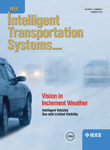
IEEE Intelligent Transportation Systems Magazine
Connecting Ideas to Revolutionize TravelIEEE Intelligent Transportation Systems Magazine, published by the IEEE-Institute of Electrical and Electronics Engineers Inc., is a leading journal in the fields of automotive engineering, computer science applications, and mechanical engineering. With an impressive impact factor reflected in its 2023 rankings, this journal sits in the top quartile (Q1) across multiple engineering categories, making it an essential resource for researchers and professionals dedicated to advancing the intelligent transportation systems landscape. The magazine covers a diverse array of topics from vehicle technology innovations to traffic management solutions, aimed at improving transportation efficiency, safety, and sustainability. Since its inception in 2009, the publication has established a solid reputation for disseminating cutting-edge research and practical applications in intelligent transportation, all while remaining an accessible resource for academic and industrial stakeholders alike. Subscribe today to stay at the forefront of transformative transportation technologies!