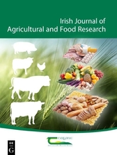
IRISH JOURNAL OF AGRICULTURAL AND FOOD RESEARCH
Scope & Guideline
Bridging theory and practice in food science and ecology.
Introduction
Aims and Scopes
- Sustainable Agricultural Practices:
Research on innovative farming techniques and practices that enhance environmental sustainability, such as nutrient management, grassland management, and integrated pest management. - Animal Production and Welfare:
Studies on livestock breeding, health, and welfare, including genetic trends, feeding strategies, and the socio-economic factors influencing animal husbandry in Ireland. - Food Science and Quality:
Investigations into food processing, quality assessment, and consumer perception, with an emphasis on the nutritional and sensory properties of food products derived from Irish agriculture. - Agri-Food Systems and Policy:
Analysis of agri-food systems, including socio-economic aspects, policy frameworks, and socio-cultural factors affecting food consumption and production. - Climate Change and Environmental Impact:
Research addressing the impact of climate change on agriculture, including greenhouse gas emissions from livestock and strategies for mitigation.
Trending and Emerging
- Climate Change Mitigation Strategies:
There is an increasing focus on research addressing the warming impact of methane emissions and strategies for reducing greenhouse gas emissions from livestock, indicating a strong commitment to sustainability in agriculture. - Consumer Acceptance of Alternative Proteins:
Emerging studies on the willingness to consume insects and alternative protein sources suggest a growing interest in sustainable food sources, reflecting changing consumer attitudes towards food and nutrition. - Precision Agriculture Technologies:
Research on precision technologies and their applications in pasture-based systems is trending, emphasizing the importance of data-driven approaches to improve agricultural productivity and sustainability. - Interdisciplinary Approaches to Agri-Food Research:
There is a noticeable trend towards integrating social sciences with agricultural research, as seen in studies exploring the role of advisors in farmer decision-making and consumer perceptions of agricultural practices. - Nutritional and Health Aspects of Livestock Products:
An increasing number of studies are focusing on the impact of livestock feeding strategies on the nutritional quality of dairy and meat products, indicating a growing concern for health-oriented food production.
Declining or Waning
- Conventional Crop Production Techniques:
Research focused on traditional crop production methods appears to be waning, as there is a growing emphasis on sustainable and innovative agricultural practices that address environmental concerns. - Pest and Disease Control in Conventional Systems:
Studies that primarily address pest and disease management in conventional agricultural systems are becoming less prevalent, likely due to a shift towards integrated pest management and organic farming practices. - Historical Agricultural Practices:
Research centered on historical perspectives of agriculture is declining, as there is a greater focus on current challenges and future solutions in the context of climate change and consumer demands.
Similar Journals
Animal Production Science
Fostering Innovation in Livestock Management and Food QualityAnimal Production Science, published by CSIRO PUBLISHING, is a prestigious journal that caters to the fields of Animal Science and Food Science. With an ISSN of 1836-0939 and an E-ISSN of 1836-5787, the journal features high-quality research and reviews that are crucial for advancing the understanding and innovation of animal production systems. Recognized within the Q2 category of both Animal Science and Zoology, and Food Science, as per the 2023 Journal Rankings, Animal Production Science has achieved commendable Scopus rankings, placing it in the 68th and 48th percentiles in its respective categories. With converged years from 2009 to 2024, and an aim to disseminate knowledge that promotes sustainable practices, the journal is pivotal for researchers, professionals, and students devoted to animal production and food security. Exploring topics from livestock management to food quality, the journal offers valuable insights for enhancing productivity while considering welfare and environmental impact. For those seeking accessibility, the journal provides various open access options, encouraging a wider reach of its scholarly articles.
CIENCIA E AGROTECNOLOGIA
Connecting Researchers for a Greener TomorrowCIENCIA E AGROTECNOLOGIA, published by UNIV FEDERAL LAVRAS-UFLA, is a vital open-access journal since 2005 that serves as an influential platform for disseminating research in the fields of Agronomy, Animal Science, Food Science, Soil Science, and Veterinary Science. With its ISSN 1413-7054 and E-ISSN 1981-1829, this journal is recognized for its contribution to science and technology advancements in agriculture, particularly in Brazil, fostering knowledge exchange among researchers, professionals, and students. Currently ranked in the Q2 quartile for Agronomy and Crop Science, Animal Science and Zoology, and in the Q3 quartile for Food Science and Soil Science, it demonstrates a solid international standing in the relevant Scopus indices. The journal's commitment to open access ensures that critical research findings are freely available, enabling a broader impact and encouraging collaborative advancements in agritech. As the journal looks towards its converged years from 2007 to 2024, it continues to uphold its objectives of promoting sustainable practices and innovation within the agricultural sciences.

PAKISTAN JOURNAL OF AGRICULTURAL SCIENCES
Cultivating Knowledge for Sustainable AgricultureWelcome to the Pakistan Journal of Agricultural Sciences, a prominent platform for disseminating vital research findings in the fields of agronomy, crop science, food science, plant science, and soil science. Published by the prestigious University of Agriculture in Faisalabad, this journal aims to enhance the scientific discourse surrounding agricultural innovation and sustainability in Pakistan and beyond. With an ISSN of 0552-9034 and E-ISSN of 2076-0906, the journal serves as a valuable resource for researchers, professionals, and students interested in cutting-edge agricultural developments. As of 2023, the journal is ranked in the Q3 category for Agronomy and Crop Science as well as Food Science and positioned in Q4 for Plant and Soil Science, highlighting its growing impact within a competitive academic landscape. While the Pakistan Journal of Agricultural Sciences is not currently open access, it provides a comprehensive archive of research converging from 2011 to 2024, ensuring that critical knowledge remains accessible to those striving to advance the agricultural sciences. Join us in our mission to foster innovation and support sustainable practices in agriculture.
Poljoprivreda
Fostering a community of agricultural excellence and innovation.Poljoprivreda is a distinguished open-access journal dedicated to the field of agronomy and crop science, published by the FAC Agriculture Osijek in Croatia. Since its inception in 2000, the journal has been committed to disseminating high-quality research that informs both academic and practical advancements in agriculture. With an ISSN of 1330-7142 and an E-ISSN of 1848-8080, Poljoprivreda provides a vital platform for researchers, professionals, and students to engage with the latest findings and methodologies in agronomy, contributing significantly to the enhancement of agricultural practices in Croatia and beyond. Although currently ranked in the 22nd percentile within its category according to Scopus, the journal aspires to elevate its standing by welcoming innovative research that addresses contemporary challenges within the agricultural sciences. By fostering open access since 2000, Poljoprivreda ensures that its scholarly content is freely available, promoting wider dissemination and collaborative opportunities among researchers globally.

Journal of Agriculture and Food Research
Connecting Ideas for a Healthier PlanetJournal of Agriculture and Food Research, published by ELSEVIER, is a premier Open Access journal that has made significant strides in the fields of agricultural and biological sciences since its launch in 2019. With an ISSN of 2666-1543, the journal is headquartered at Radarweg 29, 1043 NX Amsterdam, Netherlands. It holds a remarkable position in the 2023 Category Quartiles, achieving Q1 rankings in Agricultural and Biological Sciences (miscellaneous), Agronomy and Crop Science, and Food Science. The journal's impactful research is reflected in its impressive Scopus ranks, including a ranking of #25 in Agricultural and Biological Sciences, showcasing the journal's commitment to high-quality, innovative research relevant to contemporary agricultural challenges. Researchers, professionals, and students can benefit from its diverse array of published works, fostering a greater understanding of food security, sustainable agriculture, and innovative food technologies. By embracing an open access model, the journal ensures that critical research is readily available to a global audience, aiming to enhance knowledge dissemination in this vital field.

PHILIPPINE AGRICULTURAL SCIENTIST
Fostering Agricultural Breakthroughs in the Philippines.PHILIPPINE AGRICULTURAL SCIENTIST is a pioneering journal published by the University of the Philippines Los Baños, dedicated to advancing the fields of Agronomy, Crop Science, Animal Science, and Biotechnology. With an ISSN of 0031-7454, this esteemed journal provides a vital platform for researchers and practitioners focusing on agricultural innovations and practices in the Philippines and beyond. With a robust history dating back to 1996 and continuing through 2024, the journal operates within the Q4 quartile, reflecting its potential for growth and impactful contributions in its categories. Despite currently being positioned in the lower ranks, it serves as an essential publishing venue for nascent studies and localized research, contributing to the agricultural discourse. The journal fosters a collaborative research environment, encouraging submissions from both emerging scholars and seasoned experts, making it a valuable resource for students, professionals, and researchers engaged in the agricultural sciences. While it currently does not offer open access, it plays a crucial role in disseminating vital knowledge aimed at enhancing agricultural practices in the region.
Food and Energy Security
Unlocking New Pathways for Sustainable Food and Energy PracticesFood and Energy Security, an esteemed journal published by WILEY, is dedicated to advancing the fields of food science, agriculture, and renewable energy. Since its inception in 2012, this open-access journal has provided a platform for groundbreaking research and innovative practices that address global challenges related to food production and energy sustainability. With an impressive impact factor reflected in its Q1 quartile rankings across notable categories such as Agronomy and Crop Science and Food Science, this journal is instrumental for researchers and practitioners alike who are focused on enhancing food security and promoting sustainable energy solutions. The journal's scope encompasses multidisciplinary approaches and encourages submissions that explore the intersection of food systems and energy dynamics, ensuring relevance in the evolving landscape of environmental science and policy. By offering open access to its publications, Food and Energy Security commits to making vital research accessible, fostering informed dialogue and collaboration among scholars, policymakers, and the agrifood industry worldwide.

Agriculture-Basel
Innovating the Future of Agronomy and Food ScienceAgriculture-Basel is a prestigious, peer-reviewed journal published by MDPI, specializing in the dynamic fields of agronomy, crop science, food science, and plant science. Established in 2011, this open-access journal serves as a pivotal platform for disseminating innovative research and developments in agricultural practices and technologies. With its impressive impact factor and ranking within the top quartiles in key categories, including Q1 in Agronomy and Crop Science and Q2 in Food Science and Plant Science, the journal has garnered significant attention from the research community. Its current Scopus rankings reflect its influence and importance, with notable positions in agricultural and biological sciences. Aimed at researchers, professionals, and students in the agricultural sector, Agriculture-Basel is committed to fostering a deeper understanding of sustainable practices and advancements in the field. With an emphasis on accessibility, the journal ensures that its valuable content is freely available since its inception, making it a cornerstone resource for all those engaged in contemporary agricultural research and applications.
Chilean Journal of Agricultural Research
Cultivating knowledge for food security and sustainability.Chilean Journal of Agricultural Research, published by INST INVESTIGACIONES AGROPECUARIAS - INIA, is a premier academic journal dedicated to the advancement of knowledge in the fields of Agronomy, Crop Science, Animal Science, and Zoology. With an ISSN of 0718-5839, this journal serves as a vital resource for researchers, professionals, and students alike, facilitating the dissemination of impactful research from Chile and around the globe. Classified as a Q2 journal in both Agronomy and Crop Science and Animal Science and Zoology as of 2023, it occupies a significant position in academic rankings, highlighted by its Scopus metrics, which recognize its contributions to the field. The journal operates under an Open Access model, ensuring that valuable research is accessible to a wider audience, thereby promoting innovation and collaboration. With a converged publication timeline from 2008 to 2024, the Chilean Journal of Agricultural Research continues to enhance understanding and foster advancements in agricultural science, thus playing an instrumental role in addressing contemporary challenges in food security and sustainable practices.

PESQUISA AGROPECUARIA BRASILEIRA
Advancing agricultural knowledge for a sustainable future.PESQUISA AGROPECUARIA BRASILEIRA, an esteemed journal published by EMPRESA BRASIL PESQ AGROPEC, serves as a vital platform for disseminating research in the realms of agronomy, animal science, horticulture, and soil science. With an ISSN of 0100-204X and an e-ISSN of 1678-3921, this Open Access journal has been at the forefront of agricultural research since its initiation in 1978, and has been fully accessible to researchers globally since 1999. Hailing from Brazil, it is dedicated to advancing knowledge in agricultural practices and sustainability, making it an essential resource for academics and professionals alike. The journal is ranked in the Q3 and Q4 quartiles across various categories, reflecting its impact within the scientific community, while its Scopus rankings illustrate its commitment to high-quality scholarship. With its rigorous peer-review process, PESQUISA AGROPECUARIA BRASILEIRA not only promotes scholarly engagement but also plays a crucial role in addressing agricultural challenges, thus appealing to a broad audience of researchers, professionals, and students seeking to contribute to this dynamic field.