
Journal of Cancer Metastasis and Treatment
Scope & Guideline
Empowering researchers with vital oncology knowledge.
Introduction
Aims and Scopes
- Cancer Metastasis Mechanisms:
Exploration of the biological processes and molecular mechanisms that underlie cancer metastasis, including tumor microenvironment interactions and cellular signaling pathways. - Innovative Treatment Strategies:
Investigation of novel therapeutic approaches, including immunotherapy, targeted therapy, and emerging drug combinations that improve patient outcomes in various cancer types. - Clinical Research and Trials:
Reporting on clinical studies, trials, and retrospective analyses that provide insights into the efficacy and safety of cancer treatments across diverse patient populations. - Biomarkers and Prognostic Indicators:
Identification and validation of biomarkers that can predict treatment response, disease progression, and patient prognosis in cancer patients. - Translational Research:
Focus on bridging laboratory findings with clinical applications to enhance treatment modalities and patient care in oncology. - Multidisciplinary Approaches:
Encouragement of collaborative research that integrates various disciplines, such as surgery, radiology, and pharmacology, to address complex cancer challenges.
Trending and Emerging
- Immunotherapy Innovations:
There is an increasing volume of research dedicated to immunotherapy, including combination strategies with checkpoint inhibitors, highlighting their potential in various cancer types. - Machine Learning and AI Applications:
The integration of machine learning and artificial intelligence in analyzing clinical data and omics is gaining traction, showcasing its potential to predict treatment outcomes and personalize therapy. - Microbiome and Cancer Interactions:
Research exploring the role of the microbiome in cancer treatment responses and disease progression is emerging as a significant area of interest, emphasizing its impact on patient health. - Liquid Biopsy Techniques:
The development and application of liquid biopsy methods for early cancer detection and monitoring treatment responses are increasingly featured, reflecting a shift towards less invasive diagnostic approaches. - Targeted Therapies and Personalized Medicine:
A growing emphasis on precision medicine and the identification of molecular targets for tailored treatment strategies is evident, as researchers seek to optimize therapeutic efficacy. - Cancer Stem Cell Research:
The investigation of cancer stem cells and their role in metastasis and treatment resistance is trending, as understanding these cells is crucial for developing effective therapies.
Declining or Waning
- Traditional Chemotherapy Approaches:
There has been a noticeable shift away from discussions centered on traditional chemotherapy, as newer targeted therapies and immunotherapy options gain traction in the field. - Single-Agent Therapy Studies:
Research focusing solely on the efficacy of single-agent therapies is becoming less common, with a growing emphasis on combination therapies that enhance treatment effectiveness. - Basic Cancer Biology Studies:
While foundational research remains important, there is a decreasing emphasis on purely basic science studies without direct clinical application, as the journal leans towards translational research. - Historical Treatment Protocols:
Papers discussing outdated treatment protocols or historical perspectives on cancer management are less frequently published, reflecting a move towards contemporary practices and innovations.
Similar Journals
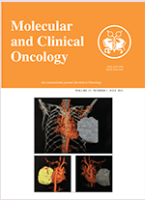
Molecular and Clinical Oncology
Innovating cancer care through rigorous research.Molecular and Clinical Oncology is a dynamic journal published by SPANDIDOS PUBL LTD, aimed at advancing the understanding of cancer biology and treatment modalities. With an ISSN of 2049-9450 and an E-ISSN of 2049-9469, the journal serves as a critical platform for researchers and clinicians dedicated to uncovering novel insights in molecular oncology and enhancing clinical practices. As a testament to its growing influence, the journal has achieved a Q3 ranking in Oncology and a Q4 ranking in Cancer Research for the year 2023, reflecting its commitment to publishing high-quality research. Although currently not an Open Access publication, the journal offers crucial subscription options, ensuring comprehensive access to groundbreaking studies and innovations in the field. With converged years spanning 2018 to 2024, the journal is set to continue enriching the academic community with its valuable contributions, ultimately empowering researchers, professionals, and students engaged in the fight against cancer.
ANTICANCER RESEARCH
Illuminating Paths in Cancer Treatment and PreventionANTICANCER RESEARCH, published by the International Institute of Anticancer Research, stands at the forefront of cancer-related scholarly communication. With ISSN 0250-7005 and E-ISSN 1791-7530, this esteemed journal has been serving the global research community since 1981, showcasing innovative research aimed at combating cancer through various therapeutic approaches and scientific inquiry. Based in Greece, the journal aims to disseminate vital findings in the fields of Cancer Research, Medicine, and Oncology, reflecting its notable categorization in the Q3 and Q2 quartiles as of 2023. Despite its rigorous peer-review process and the absence of open access, ANTICANCER RESEARCH remains a vital publication for researchers, clinicians, and students eager to stay updated on the evolving landscape of anticancer strategies. As it converges to its milestone year of 2024, the journal continues to enrich the discourse around cancer treatment and prevention, affirming its position as an essential resource for those dedicated to advancing knowledge in anticancer therapies.
CANCER AND METASTASIS REVIEWS
Unraveling the Mysteries of Cancer DynamicsCancer and Metastasis Reviews, published by Springer, is a leading journal in the field of oncology and cancer research. With an impressive impact factor placing it in the Q1 category for both Cancer Research and Oncology as of 2023, this journal is ranked 29th out of 404 in Medicine, Oncology, and 22nd out of 230 in Biochemistry, Genetics, and Molecular Biology, reflecting its significant influence and prestige in the academic community. Established in 1982, the journal covers a wide spectrum of topics related to the mechanisms of cancer progression and metastasis, making it an essential resource for researchers, healthcare professionals, and students dedicated to understanding and tackling cancer. Although the journal does not provide open access options, the impactful research it publishes contributes to advances in therapeutic strategies and enhances the collective knowledge surrounding cancer pathophysiology. With research converging from 1982 to 2024, Cancer and Metastasis Reviews continues to be a vital platform for disseminating high-quality scientific information in the ever-evolving landscape of cancer research.

BRITISH JOURNAL OF CANCER
Connecting Researchers and Clinicians in the Fight Against Cancer.The British Journal of Cancer, published by SpringerNature, stands as a preeminent resource in the fields of Cancer Research and Oncology, with a distinguished history of publication dating back to 1947. With its Q1 rank in both categories for 2023, this journal is among the top-tier publications, offering cutting-edge research and insights into the biology, etiology, and treatment of cancer. The journal’s rigorous peer-review process ensures that readers are presented with high-quality studies that contribute to the advancement of cancer knowledge and clinical practice. Operating from the United Kingdom, it has garnered a notable impact factor and ranks impressively within Scopus, making it an essential publication for researchers, healthcare professionals, and students who are dedicated to understanding cancer's complexities. Access to the journal's articles is available in traditional formats, providing a versatile platform for disseminating pivotal research. As we move towards a future where cancer treatment and prevention remain crucial, the British Journal of Cancer continues to play a vital role in shaping the dialogue and discoveries within the oncology community.
CURRENT CANCER DRUG TARGETS
Innovating drug discovery at the forefront of cancer research.CURRENT CANCER DRUG TARGETS is a prominent academic journal published by Bentham Science Publishers Ltd, focusing on the critical intersection of cancer research and innovative drug development. Since its inception in 2001, this journal has offered a platform for the dissemination of cutting-edge research aimed at advancing targeted cancer therapies, contributing significantly to the fields of Cancer Research, Drug Discovery, Oncology, and Pharmacology. With a respectable impact factor and consistent ranking in its respective categories, including Q2 in Drug Discovery and Pharmacology, it positions itself as an invaluable resource for researchers, clinicians, and students alike. CURRENT CANCER DRUG TARGETS is dedicated to enhancing our understanding of novel therapeutic targets and methods, thereby fostering a collaborative environment for knowledge exchange in the ever-evolving landscape of cancer treatment.
CELLULAR ONCOLOGY
Pioneering Open Access Discoveries in Cellular OncologyCELLULAR ONCOLOGY is an esteemed open access journal published by SPRINGER since 2004, specializing in the dynamic field of oncological research. With its ISSN 2211-3428 and E-ISSN 2211-3436, this journal plays a pivotal role in disseminating cutting-edge findings and innovative methodologies that address cancer at the cellular level. The journal has consistently achieved high-impact recognition, currently holding a Q2 rating in Cancer Research and Q1 rankings in Medicine (miscellaneous), Molecular Medicine, and Oncology as of 2023. Furthermore, it ranks 56th in oncology medicine and 48th in cancer research according to Scopus, placing it firmly within the top echelons of its field. Published in the Netherlands, with an aim to connect scientists, clinicians, and practitioners worldwide, CELLULAR ONCOLOGY fosters a collaborative environment for researchers to share insights, enhance understanding, and advance treatments. The journal’s open access model ensures that ground-breaking research is freely available, facilitating greater visibility and impact within the scientific community and beyond.

Molecular & Cellular Oncology
Innovating therapeutic interventions for a brighter future.Molecular & Cellular Oncology, published by Taylor & Francis Inc, is a vital academic journal dedicated to the exploration of cancer biology through the lens of molecular and cellular mechanisms. Since its inception in 2014, the journal has played a crucial role in disseminating innovative research findings that address the fundamental aspects of cancer research and molecular medicine. With its current ranking in Scopus placing it in the Q3 quartile for both Cancer Research and Molecular Medicine, the journal provides a platform for groundbreaking studies that push the boundaries of our understanding of oncogenesis and therapeutic interventions. Although the journal operates under a subscription model, its dedication to high-quality peer-reviewed research makes it an essential resource for researchers, professionals, and students aiming to contribute to or stay updated in the rapidly evolving field of oncology. As we approach the culmination of its converged years in 2024, Molecular & Cellular Oncology aims to continue fostering collaborations and insights that advance cancer research on a global scale.
Oncologie
Advancing cancer research for a healthier tomorrow.Oncologie is a distinguished academic journal published by WALTER DE GRUYTER GMBH, focusing on the dynamic and vital field of oncology. Established in 1999 and continuously published until 2024, this journal provides a platform for high-quality research and advancements in cancer treatment, prevention, and diagnosis. With an ISSN of 1292-3818 and an E-ISSN of 1765-2839, it is indexed in various databases, contributing to its growing visibility. Although categorized in the Q3 quartile for oncology research as of 2023, Oncologie offers essential insights and fosters scholarly dialogue among researchers, professionals, and students interested in oncology. Its unique contributions aim to bridge the gap between theoretical frameworks and clinical applications, making it a valuable resource for those seeking to advance their knowledge and expertise in cancer research.
ONCOLOGY RESEARCH
Advancing the Frontiers of Cancer ResearchONCOLOGY RESEARCH, published by TECH SCIENCE PRESS, is a vital academic journal dedicated to the rapidly evolving field of oncology. With its ISSN 0965-0407 and E-ISSN 1555-3906, the journal serves as a key resource for researchers, clinicians, and academicians committed to advancing cancer research and treatment strategies. Operating without an Open Access model, ONCOLOGY RESEARCH provides high-quality, peer-reviewed articles that cover diverse topics within cancer research, medicine, and oncology, with its 2023 Scopus ranking placing it in the Q3 quartile. The journal's commitment to facilitating rigorous scientific discourse is evident in its historical breadth, with a publishing history dating back to 1992. ONCOLOGY RESEARCH is not only significant for the academic community but also plays a critical role in fostering new insights and approaches in the fight against cancer, making it a must-read for those involved in this critical area of study.
Blood Cancer Discovery
Illuminating the Path to Understanding Blood MalignanciesBlood Cancer Discovery is a premier academic journal published by the American Association for Cancer Research, dedicated to advancing the understanding of hematologic malignancies through cutting-edge research in the fields of oncology, biochemistry, and molecular biology. With an impressive impact factor and recognition as a Q1 journal across multiple disciplines, including cancer research and hematology, Blood Cancer Discovery serves as an essential platform for scholars and practitioners alike, facilitating impactful discourse and dissemination of pioneering findings. This open-access journal, established within the vibrant academic landscape of the United States, aims to bridge gaps in research and foster collaborations to ultimately enhance patient outcomes. Its Scopus rankings demonstrate its vital role in the critical advancement of cancer research and therapeutic development. By inviting contributions from a diverse range of disciplines, Blood Cancer Discovery is poised to drive innovation and inspire future advancements in understanding blood cancers.