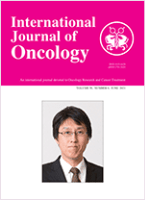
INTERNATIONAL JOURNAL OF ONCOLOGY
Scope & Guideline
Empowering breakthroughs in oncology and patient care.
Introduction
Aims and Scopes
- Molecular Mechanisms of Cancer:
The journal publishes studies elucidating the molecular pathways and genetic alterations that drive cancer development and progression, including signaling pathways, gene expression regulation, and epigenetic modifications. - Tumor Microenvironment and Immunology:
Research articles explore the interactions between cancer cells and their surrounding microenvironment, including the roles of tumor-associated macrophages, immune checkpoint molecules, and the impact of the immune system on tumor growth. - Targeted and Immunotherapy:
The journal emphasizes innovative therapeutic approaches, including targeted therapies, immunotherapies, and combination treatments, aimed at improving patient outcomes in various cancer types. - Biomarkers and Prognostic Factors:
Papers often focus on identifying biomarkers for early detection, prognosis, and treatment response, contributing to personalized medicine in oncology. - Novel Drug Development and Preclinical Studies:
The journal features research on new anti-cancer agents, their mechanisms of action, and preclinical studies that assess their efficacy and safety. - Mechanisms of Drug Resistance:
Understanding how cancer cells develop resistance to therapies is a critical area of focus, with studies investigating the underlying molecular mechanisms and potential strategies to overcome resistance.
Trending and Emerging
- Long Non-Coding RNAs (lncRNAs) in Cancer:
Research on the roles of lncRNAs in cancer biology has surged, highlighting their involvement in gene regulation, tumor progression, and potential as therapeutic targets. - Tumor Microenvironment Interactions:
There is a growing emphasis on the tumor microenvironment, particularly the role of immune cells, fibroblasts, and extracellular vesicles in cancer progression and treatment response. - Molecular Targeted Therapies:
The journal increasingly features studies on novel targeted therapies, including small molecules and monoclonal antibodies, highlighting advancements in personalized medicine. - Immunotherapy Innovations:
Innovations in immunotherapy, particularly with immune checkpoint inhibitors and CAR-T cell therapies, are emerging as a primary focus, reflecting their transformative impact on cancer treatment. - Metabolic Reprogramming in Cancer:
Research into the metabolic adaptations of cancer cells, including the Warburg effect and altered lipid metabolism, is gaining traction as a critical area of investigation. - Microbiome and Cancer:
The interplay between the microbiome and cancer development/treatment is an emerging field, with studies exploring how microbial communities may influence tumor behavior and treatment efficacy.
Declining or Waning
- Chemoprevention Research:
The frequency of studies dedicated to chemoprevention strategies has decreased, possibly due to a greater emphasis on targeted therapies and immunotherapy approaches. - Traditional Herbal Remedies:
Research focusing on the efficacy of traditional herbal remedies in cancer treatment is less prevalent, indicating a possible shift towards more scientifically validated therapeutic approaches. - Epidemiological Studies:
There seems to be a reduction in epidemiological research articles, as the journal increasingly emphasizes molecular and mechanistic insights rather than broader population-based studies. - Radiotherapy Mechanisms:
While still relevant, the depth of articles specifically exploring the mechanisms of radiotherapy has waned, possibly overshadowed by new developments in targeted and immune-based therapies. - Basic Science without Clinical Relevance:
There is a noticeable decline in purely basic science studies that lack direct clinical implications, as the journal seeks more translational research that bridges laboratory findings with patient care.
Similar Journals
CANCER AND METASTASIS REVIEWS
Elevating Knowledge in Oncology and BeyondCancer and Metastasis Reviews, published by Springer, is a leading journal in the field of oncology and cancer research. With an impressive impact factor placing it in the Q1 category for both Cancer Research and Oncology as of 2023, this journal is ranked 29th out of 404 in Medicine, Oncology, and 22nd out of 230 in Biochemistry, Genetics, and Molecular Biology, reflecting its significant influence and prestige in the academic community. Established in 1982, the journal covers a wide spectrum of topics related to the mechanisms of cancer progression and metastasis, making it an essential resource for researchers, healthcare professionals, and students dedicated to understanding and tackling cancer. Although the journal does not provide open access options, the impactful research it publishes contributes to advances in therapeutic strategies and enhances the collective knowledge surrounding cancer pathophysiology. With research converging from 1982 to 2024, Cancer and Metastasis Reviews continues to be a vital platform for disseminating high-quality scientific information in the ever-evolving landscape of cancer research.
Molecular Therapy Oncolytics
Exploring the Frontiers of Molecular Medicine in OncologyMolecular Therapy Oncolytics is an esteemed Open Access journal published by CELL PRESS, focusing on cutting-edge research in the fields of oncology, molecular medicine, and pharmacology. Established in 2014, the journal has quickly gained a prominent position in the academic community, reflected in its impressive Q1 and Q2 rankings across various categories including Cancer Research, Molecular Medicine, and Pharmacology. With an impactful presence in the UK and a strong international readership, it aims to disseminate significant advancements in therapeutic strategies targeted at cancer treatment and management. By providing a platform for peer-reviewed research, Molecular Therapy Oncolytics plays a critical role in bridging the gap between scientific innovation and clinical application, making it an invaluable resource for researchers, healthcare professionals, and students striving to contribute to the evolving landscape of oncology.
Recent Patents on Anti-Cancer Drug Discovery
Empowering the Fight Against Cancer through ScienceRecent Patents on Anti-Cancer Drug Discovery, published by Bentham Science Publishers Ltd, is an esteemed peer-reviewed journal specializing in the innovative intersection of pharmaceutical science and oncology. With an ISSN of 1574-8928 and an E-ISSN of 2212-3970, this journal aims to provide a comprehensive platform for the dissemination of recent developments in anti-cancer drug discovery, addressing critical issues and breakthroughs that influence cancer research and treatment. The journal spans from 2006 to 2024 and is indexed in several prestigious databases, showcasing its relevance with a Q3 ranking in key categories such as Cancer Research and Drug Discovery as of 2023. Its status of being open access reflects a commitment to making valuable scientific findings widely available, promoting collaboration and advancement in the field. With a dedicated focus on advancing knowledge in cancer therapeutics, the journal serves as a vital resource for researchers, healthcare professionals, and students aiming to contribute to the fight against cancer.
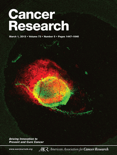
CANCER RESEARCH
Shaping the future of cancer research with excellence.Cancer Research, published by the American Association for Cancer Research, is a premier journal in the field of oncology, renowned for its commitment to advancing cancer research since its inception in 1941. With an impressive impact factor reflecting its vital role in the field, this journal consistently ranks in the Q1 quartile for both Cancer Research and Oncology, positioning it among the top 7.5% of journals in these categories. The journal serves as a crucial platform for researchers, professionals, and students to disseminate and gain insights into groundbreaking studies that shape our understanding of cancer biology, prevention, diagnosis, and treatment. While it is not an open-access publication, its rigorous peer-review process ensures that only high-quality research is published, thus maintaining a standard of excellence in the scientific community. With a strong legacy and an ever-expanding influence, Cancer Research continues to be essential for anyone dedicated to the fight against cancer, showcasing cutting-edge research that drives scientific discovery and innovation.

Molecular Cancer
Championing high-quality research for impactful outcomes.Molecular Cancer, published by BMC, stands as a premier open access journal dedicated to advancing our understanding of cancer biology, treatment, and prevention since its inception in 2002. With an impressive Q1 ranking in the domains of Cancer Research, Molecular Medicine, and Oncology, this journal occupies a significant position in the academic landscape, emphasizing high-quality research that influences clinical practices and future studies. The journal is indexed in leading databases with exceptional Scopus ranks, reflecting its rigorous peer-review process and impactful contributions to the field, where it ranks in the top 2-3 positions across various relevant categories. Based in the United Kingdom, Molecular Cancer offers researchers worldwide a valuable platform for disseminating innovative findings that drive the biomedical community forward. The journal's open access model ensures that groundbreaking research is freely accessible, fostering collaboration and knowledge sharing among professionals, students, and academics alike. Explore cutting-edge developments in cancer research through Molecular Cancer and join a community committed to improving patient outcomes and advancing scientific discovery.
CANCER INVESTIGATION
Exploring the frontiers of cancer research with precision.CANCER INVESTIGATION is a distinguished peer-reviewed journal published by Taylor & Francis Inc, dedicated to the advancing field of cancer research and oncology. With an ISSN of 0735-7907 and E-ISSN of 1532-4192, this journal has been a pivotal resource for professionals and researchers since its inception in 1983, continually contributing to the evolving landscape of cancer investigation until its convergence in 2024. CANCER INVESTIGATION boasts noteworthy rankings in 2023, including Q3 in Cancer Research and Q2 in Medicine (miscellaneous), highlighting its relevance and impact in these critical areas. The journal's commitment to disseminating innovative research and comprehensive reviews makes it an essential platform for those engaged in cancer studies and related disciplines. While currently not available as an open-access publication, CANCER INVESTIGATION remains an invaluable tool for understanding the complexities of cancer, offering insights that drive scientific advancements and improve patient outcomes.
HEMATOLOGICAL ONCOLOGY
Transforming Knowledge into Practice in Hematological OncologyHEMATOLOGICAL ONCOLOGY, published by Wiley, is a premier journal in the fields of cancer research, hematology, and oncology, with a rich history of publication dating back to 1983. With an impact factor indicative of its influential standing—ranking in the second quartile in multiple categories including Cancer Research, Hematology, and Oncology—this journal serves as a vital resource for researchers, clinicians, and students alike. HEMATOLOGICAL ONCOLOGY is based in the United Kingdom and focuses on the advancements and challenges in the understanding and treatment of hematological malignancies. While it does not offer open access options, its rigorous peer-review process ensures that all published articles are of the highest quality, contributing to the ongoing dialogue and research in this critical area of medicine. With its commitment to disseminating impactful research, HEMATOLOGICAL ONCOLOGY remains an essential platform for driving innovation and collaboration within the global scientific community.
Cancer Research Communications
Advancing the frontiers of cancer knowledge.Cancer Research Communications is an esteemed journal published by the American Association for Cancer Research, a leading organization in the field of oncology. This journal aims to advance knowledge in cancer research through the dissemination of high-quality, peer-reviewed articles that cover a wide range of topics related to cancer biology, treatment modalities, and prevention strategies. As an open-access journal, Cancer Research Communications ensures that vital research findings are accessible to a global audience, promoting collaboration and innovation within the scientific community. The journal serves as a crucial platform for researchers, professionals, and students to share their insights and foster the exchange of effective cancer therapies and methodologies. With a commitment to excellence, it plays a significant role in shaping the future of cancer research and therapeutic development.
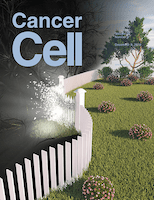
CANCER CELL
Elevating Cancer Research to New HeightsCancer Cell, published by Cell Press, represents a pinnacle of research in the fields of cancer research, cell biology, and oncology. With an impressive Impact Factor and ranking as Q1 in prestigious categories for both 2023 and previous years, this journal stands out as a vital resource for professionals and scholars dedicated to understanding the molecular underpinnings of cancer. Operating from Cambridge, MA, Cancer Cell has been an essential platform for innovative studies since its inception in 2002. Although it is not an Open Access journal, its rigorous peer-review process ensures that only the highest quality research is disseminated to the scientific community. Readers can expect to find a wealth of knowledge ranging from cutting-edge therapies to insights into tumor biology, thereby contributing significantly to the advancement of oncology. With rankings placing it among the top echelons of related fields—#2 in Cancer Research and #6 in Oncology—Cancer Cell is an indispensable reference for anyone committed to the fight against cancer.
Cancer Communications
Fostering Global Collaboration in Cancer ScienceCancer Communications, published by WILEY, is a leading open-access journal that has positioned itself at the forefront of cancer research and oncology since its inception in 2017. With an impressive HIndex reflective of its scholarly impact and recognized in the Q1 category for both Cancer Research and Oncology as of 2023, this journal consistently ranks in the top echelons of its field, specifically at Rank #16/404 and Rank #13/230 in their respective categories on Scopus. Cancer Communications aims to disseminate cutting-edge research findings, innovative methodologies, and significant advancements in cancer treatments, thereby fostering a deeper understanding of oncology among researchers, healthcare professionals, and students. The journal operates under an Open Access model since 2018, ensuring that vital research is accessible to a global audience, thus enhancing collaboration and knowledge sharing necessary to tackle one of the most pressing health challenges of our time. Located in Hoboken, NJ, United States, and with a strong commitment to scientific excellence, Cancer Communications remains an essential resource for anyone engaged in the fight against cancer.