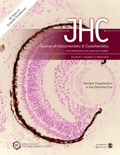
JOURNAL OF HISTOCHEMISTRY & CYTOCHEMISTRY
metrics 2024
Connecting Researchers with Cutting-Edge Discoveries
Introduction
Welcome to the JOURNAL OF HISTOCHEMISTRY & CYTOCHEMISTRY, a premier platform for the dissemination of cutting-edge research in the fields of anatomy and histology. Published by SAGE PUBLICATIONS LTD, this esteemed journal has been a cornerstone of academic inquiry since its inception in 1953 and continues to play a vital role in advancing our understanding of cellular structure and function. With an impressive Impact Factor reflected in its rank as Q1 in both Anatomy and Histology categories, the journal ranks #5 out of 48 in Medicine Anatomy and #17 out of 62 in Medicine Histology, making it an essential resource for researchers and professionals alike. The journal provides a rigorous peer-review process and encourages submissions that enhance the scientific community's knowledge. As a vital resource for students, professionals, and researchers focusing on histochemical methodologies, the JOURNAL OF HISTOCHEMISTRY & CYTOCHEMISTRY offers insights into the latest advancements and critical debates within this dynamic discipline.
Metrics 2024
 1.181.903.30137
Metrics History
Rank 2024
Scopus
IF (Web Of Science)
JCI (Web Of Science)
Quartile History
Similar Journals
JOURNAL OF CELL SCIENCE
Innovating insights into the world of cells.JOURNAL OF CELL SCIENCE, with ISSN 0021-9533 and E-ISSN 1477-9137, is a distinguished publication in the field of Cell Biology, released by COMPANY BIOLOGISTS LTD in the United Kingdom. Since its inception in 1966, this journal has served as a vital platform for disseminating cutting-edge research and reviews that significantly advance our understanding of cellular processes and innovations. Currently positioned in the Q1 category within the 2023 rankings, this journal is recognized for its high impact and quality, holding a notable Scopus rank of 120 out of 285 in the Cell Biology category, placing it within the 58th percentile. While not an open-access journal, it provides extensive access options for readers and institutions, ensuring that pivotal research is accessible to a wide audience. With converged publication years leading toward 2024, JOURNAL OF CELL SCIENCE continues to be an essential resource for researchers, professionals, and students alike, fostering a deeper understanding of the intricate workings of cell biology.

Frontiers in Cell and Developmental Biology
Pioneering research for a deeper understanding of life.Frontiers in Cell and Developmental Biology is a leading open-access journal published by FRONTIERS MEDIA SA, dedicated to advancing the understanding of fundamental biological processes at the cellular and developmental levels. Since its inception in 2013, the journal has positioned itself as a cornerstone of research in its field, achieving esteemed Q1 quartile rankings in both Cell Biology and Developmental Biology for 2023. With a robust Scopus ranking of #13 out of 82 in Developmental Biology and #67 out of 285 in Cell Biology, it represents a vital platform for innovative research and scholarly discourse. The journal provides a comprehensive and accessible avenue for researchers, professionals, and students alike to share high-quality findings and insights into cellular mechanisms and developmental processes, fostering collaboration and knowledge exchange in the global scientific community. Based in Lausanne, Switzerland, Frontiers in Cell and Developmental Biology is committed to open science, ensuring that all articles are freely accessible to the public, thereby broadening the impact of research in the biological sciences.

BMC Molecular and Cell Biology
Empowering open access to vital biological research.BMC Molecular and Cell Biology is a forward-thinking open-access journal published by BMC, specializing in the vital fields of molecular biology and cell biology. Since its inception in 2019, the journal has carved a niche for itself, ranking in the Q3 quartile in both Cell Biology and Molecular Biology categories as of 2023. With an ISSN of N/A and an E-ISSN of 2661-8850, the journal provides a platform for groundbreaking research, high-quality reviews, and innovative methodologies. Situated in the United Kingdom, BMC Molecular and Cell Biology promotes a diverse range of studies, addressing fundamental questions in biology that resonate with both experts and new researchers alike. The journal's commitment to open access ensures that valuable findings are readily available to the global scientific community, fostering collaboration and knowledge-sharing across disciplines. Researchers aiming to contribute to the field of cell and molecular biology will find this journal an indispensable resource for both publishing and staying informed on the latest advances.
MOLECULAR AND CELLULAR PROBES
Fostering Innovation in Biochemistry and GeneticsMOLECULAR AND CELLULAR PROBES, published by Academic Press Ltd - Elsevier Science Ltd, stands as a prominent journal at the intersection of cell and molecular biology. With an ISSN of 0890-8508 and an E-ISSN of 1096-1194, this journal has consistently contributed to the scientific discourse since its inception in 1987, converging its scholarly content through to 2024. As a member of Q3 in both Cell Biology and Molecular Biology categories, it provides a platform for innovative research and critical insights into cellular mechanisms, signaling pathways, and molecular interactions. Its Scopus rankings position it within the top half of its categories, fostering a vibrant academic community that supports the exploration and advancement of biochemistry, genetics, and molecular biology. Although it does not currently offer Open Access, the high-quality peer-reviewed articles published in MOLECULAR AND CELLULAR PROBES are invaluable resources for researchers, professionals, and students who seek to stay at the forefront of breakthroughs in these essential fields.
FOLIA HISTOCHEMICA ET CYTOBIOLOGICA
Empowering Scientists with Open Access to Cutting-edge ResearchFOLIA HISTOCHEMICA ET CYTOBIOLOGICA, an esteemed journal published by VIA MEDICA, serves as a vital platform for researchers and professionals in the fields of histology, pathology, and cytobiology. With an ISSN of 0239-8508 and E-ISSN of 1897-5631, this Open Access journal has been disseminating significant findings since 1984, offering free access to a broad audience of scientists and academics. Based in Poland, this journal focuses on critical advancements in the study of cellular structures and functions, contributing substantially to the understanding of various diseases and biological processes. The journal currently holds a respectable impact factor, ranking in the Q3 category for Histology and miscellaneous Medicine, and Q2 for Pathology and Forensic Medicine as per the 2023 metrics. With its commitment to quality research and an inclusive publishing approach, FOLIA HISTOCHEMICA ET CYTOBIOLOGICA is poised to continue influencing its fields significantly through 2024 and beyond.

HISTOLOGY AND HISTOPATHOLOGY
Fostering Insights into Tissue Structure and FunctionHISTOLOGY AND HISTOPATHOLOGY, published by F HERNANDEZ, is an esteemed academic journal dedicated to advancing the fields of histology and pathology. With its ISSN 0213-3911 and E-ISSN 1699-5848, this journal has been a crucial resource for researchers and professionals since its inception in 1986. The journal enjoys a strong reputation, evidenced by its Q2 category rankings in both Histology and Pathology & Forensic Medicine as of 2023, positioning it within the top tier of scholarly publications. With Scopus rankings placing it at Rank #74/208 in Medicine - Pathology and Forensic Medicine and Rank #31/62 in Medicine - Histology, it proves to be an essential platform for disseminating significant research findings and innovations. Although the journal is not open access, it is committed to providing high-quality, peer-reviewed articles that cater to the needs of its academic community. With a focus on fostering a deeper understanding of tissue structure and disease mechanisms, HISTOLOGY AND HISTOPATHOLOGY serves as an indispensable resource for students, researchers, and practitioners alike, facilitating the exchange of knowledge and pioneering research in these vital areas of study.

Cell Reports Methods
Innovating Methodologies, Inspiring DiscoveriesCell Reports Methods is a cutting-edge journal published by CELL PRESS, focusing on innovative methodologies in the vast fields of biochemistry, genetics, biotechnology, and radiological sciences. Launched in 2021, it has rapidly ascended to attain a Q1 ranking across multiple disciplines in the latest 2023 metrics, reflecting its influential contribution to the scientific community. With an emphasis on practical and rigorous experimental approaches, this journal serves as a vital resource for researchers looking to advance their methodologies and collaborate on significant findings in their respective specialties. Despite not being an open-access publication, Cell Reports Methods ensures broad accessibility through institutional subscriptions, allowing researchers from various backgrounds to engage with high-quality scholarly work. The journal presents a unique platform for sharing insights from interdisciplinary methods that foster innovation and discovery, ultimately shaping the future of scientific research.
CURRENT PROTEIN & PEPTIDE SCIENCE
Fueling Innovation Through Cutting-Edge Protein ResearchCURRENT PROTEIN & PEPTIDE SCIENCE, published by Bentham Science Publishers, is a pivotal journal dedicated to the dynamic and rapidly evolving fields of protein and peptide research. With an ISSN of 1389-2037 and an E-ISSN of 1875-5550, this esteemed journal serves as a platform for disseminating cutting-edge findings from various disciplines, including biochemistry, cell biology, and molecular biology. Recognized for its influence with a 2023 Scopus ranking placing it within the top quartiles of its categories—Q3 in Biochemistry, Q4 in Cell Biology, and Q2 in Medicine—the journal not only enhances the visibility of critical research but also supports the academic community in advancing our understanding of the molecular foundations of life. Established in 2000 and running through 2024, CURRENT PROTEIN & PEPTIDE SCIENCE is positioned to cater to the interests of researchers, professionals, and students alike, providing them with open access to vital knowledge that fuels innovation and scientific inquiry in the United Arab Emirates and beyond.

CELL AND TISSUE RESEARCH
Unveiling Cellular Mysteries through Rigorous ResearchCELL AND TISSUE RESEARCH, published by Springer, is a premier journal dedicated to advancing the field of cell biology, histology, pathology, and forensic medicine. With a proud history dating back to its foundation in 1924 and continuing its legacy, this journal has established itself as a vital source for innovative research, facilitating the dissemination of significant findings that contribute to the understanding of cellular and tissue dynamics. Hailing from Germany, the journal exhibits an impressive standing in the academic community with a 2023 impact factor reflected in its category quartiles: Q2 in Cell Biology, Q1 in Histology, and Q1 in Pathology and Forensic Medicine. It ranks notably within multiple Scopus categories, including 32/208 in Pathology and Forensic Medicine and 13/62 in Histology, showcasing its high percentile rankings of 84th and 79th, respectively. Researchers, professionals, and students benefit from its extensive coverage and rigorous peer-review process that ensures the integrity and relevance of its published works, thus making it an essential resource in the scientific community. While it operates under a subscription model, its commitment to quality and impact makes it an indispensable journal for anyone engaged in cellular and tissue research.
CELLS TISSUES ORGANS
Championing Innovation in Cellular and Tissue Research.CELLS TISSUES ORGANS is a renowned academic journal published by KARGER, focusing on pivotal research within the fields of Anatomy and Histology. Based in Switzerland, this journal has been disseminating influential scientific findings since 1889, contributing to our understanding of cellular structures and tissue functionality. With a current impact factor that places it in the Q2 quartile for both disciplines, it serves as a vital resource for researchers, professionals, and students seeking to stay abreast of significant advancements and discussions in these areas. The journal embraces an Open Access model, ensuring that high-quality, peer-reviewed articles are freely available, thus enhancing visibility and accessibility of critical research. As it continues to foster scholarly communication and innovation up to 2024, CELLS TISSUES ORGANS plays a crucial role in shaping the future of biological sciences and medical research.