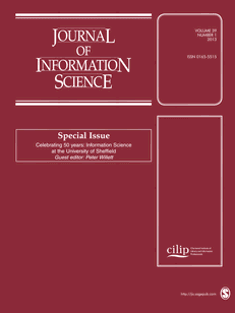
JOURNAL OF INFORMATION SCIENCE
Scope & Guideline
Connecting theory and practice in the realm of information science.
Introduction
Aims and Scopes
- Information Retrieval and Management:
Research focusing on techniques and systems for effectively retrieving, managing, and utilizing information across various domains, including libraries, digital archives, and information systems. - Interdisciplinary Studies:
Exploration of the intersections between information science and other fields, such as health, education, and technology, emphasizing the impact of interdisciplinary research on information practices. - Digital and Social Media:
Investigation of the role of digital platforms and social media in information dissemination, user behavior, and the implications of these technologies for knowledge sharing and communication. - Data Science and Analytics:
Applications of data science methodologies, including machine learning and text mining, to enhance information retrieval, recommendation systems, and understanding user interactions with information. - Information Policy and Ethics:
Critical analysis of policies governing information access, distribution, and ethical considerations in information practices, including issues like open access and information equity. - User Studies and Information Behavior:
Empirical research examining how individuals seek, use, and share information in various contexts, providing insights into user needs and behaviors.
Trending and Emerging
- Artificial Intelligence and Machine Learning:
There is a growing focus on the application of AI and machine learning techniques in information retrieval, recommendation systems, and user behavior analysis, highlighting advancements in technology. - Open Science and Data Sharing:
Research addressing the principles and practices of open science, including data sharing and open access publishing, is gaining traction, emphasizing transparency and collaboration in research. - Health Information and Misinformation:
Emerging themes related to health information behavior, misinformation dissemination, and the impact of social media on public health communication are increasingly prevalent. - User-Centric Information Design:
An emphasis on user experience and user-centered design in information systems is becoming more prominent, reflecting the need for systems that cater to diverse user needs and preferences. - Digital Literacy and Information Skills:
The importance of digital literacy and information skills is being increasingly recognized, with research focusing on how individuals navigate and evaluate information in digital environments.
Declining or Waning
- Traditional Library Science:
Research focusing solely on traditional library practices and cataloging methods has seen a decline, as the journal increasingly emphasizes digital and technological advancements in information science. - Static Information Systems:
Studies related to static or legacy information systems are becoming less common, as there is a shift towards dynamic, adaptive systems that leverage real-time data and user interactions. - Historical Bibliometrics:
While bibliometric studies remain relevant, there is less focus on historical analyses of bibliometric data compared to emerging methodologies that integrate big data and real-time analytics. - Print Media and Physical Collections:
Research centered on print media and the management of physical collections is waning, reflecting a broader trend towards digitalization and online access to information.
Similar Journals

INFORMATION TECHNOLOGY AND LIBRARIES
Pioneering Research at the Crossroads of Information and Libraries.INFORMATION TECHNOLOGY AND LIBRARIES, published by the American Library Association, stands as a crucial resource in the ever-evolving intersection of information technology and library sciences. With an ISSN of 0730-9295 and an E-ISSN of 2163-5226, this open access journal has been dedicated to fostering the dissemination of innovative research since its inception in 1971. Currently enjoying a Q2 ranking in both Information Systems and Library and Information Sciences, it is well-regarded within the scholarly community, reflecting its commitment to high-quality research outputs. The journal's diversified content scope—and a robust ranking of #80 out of 280 in the Library and Information Sciences category on Scopus—positions it as a pivotal platform for researchers, practitioners, and students alike. With the journals' emphasis on bridging technological advancements and library practices, it remains an essential tool for anyone looking to stay informed and engaged in these dynamic fields.
Information Technology & People
Empowering researchers to explore IT's societal impact.Information Technology & People is a renowned academic journal published by Emerald Group Publishing Ltd, dedicated to advancing insights in the intersection of technology, organizational context, and human behavior. Established in 1990, the journal has extensively contributed to the field of Computer Science Applications, Information Systems, and Library and Information Sciences, reflecting top-tier research as evidenced by its Q1 quartile ranking in 2023 across these categories. With a notable Scopus ranking, including a percentile of 91st in Library and Information Sciences, it serves as an essential resource for researchers, professionals, and students eager to explore contemporary issues and innovations in the deployment and impact of information technology on society. While not operating under an open access model, the journal provides a gateway to pivotal studies and findings that shape the future of IT and its implications for people and organizations. Located in the United Kingdom, Information Technology & People continues to be a vital platform for disseminating cutting-edge research that bridges the gap between technology and human experience.
Em Questao
Cultivating Insightful Analyses in Critical Academic DomainsEm Questao is an esteemed open-access journal dedicated to the fields of library science and communication studies, published by the Universidade Federal do Rio Grande do Sul, specifically through its esteemed Faculdade de Biblioteconomia e Comunicação. Since its inception in 2003, this journal has provided a platform for researchers, professionals, and students to disseminate influential scholarly work that fosters dialogue and innovation within these critical academic domains. Em Questao strives to enhance the visibility of emerging trends and methodologies in library science and communication, making it an indispensable resource for those looking to navigate the complexities of information dissemination in today's digital landscape. With a commitment to open access, it ensures that knowledge is readily available to a global audience, contributing to the advancement of these vital fields. Researchers interested in exploring insightful analyses and fostering collaborative research will find Em Questao a valuable addition to their academic resources.

DESIDOC Journal of Library & Information Technology
Empowering Research in Library and Information PracticesDESIDOC Journal of Library & Information Technology, published by the Defence Scientific Information Documentation Centre, is a pivotal scholarly platform in the realm of Library and Information Sciences. The journal, indexed with ISSN 0974-0643 and E-ISSN 0976-4658, has established its reputation with a commendable Q3 category ranking in the latest Scopus quartiles and a notable rank of 113 out of 280 in its field, placing it in the 59th percentile. Engaging a global audience, it disseminates high-quality research insights aimed at advancing the practices and technologies within library and information management. Operating within a converged timeframe from 2012 to 2024, the journal is committed to fostering robust discussions surrounding contemporary issues in the field, making it an invaluable resource for researchers, professionals, and students alike. While currently not offering open access, its content is accessible through institutional subscriptions, reinforcing its significance in the academic community of India and beyond.

RDBCI-Revista Digital de Biblioteconomia e Ciencia da Informacao
Empowering scholars through open access research.RDBCI-Revista Digital de Biblioteconomia e Ciencia da Informacao, published by the esteemed Universidade Estadual de Campinas, is a premier Open Access journal dedicated to advancing the fields of Library and Information Science, Education, and Public Administration. Since its inception in 2003, this multidisciplinary journal has aimed to provide a platform for high-quality research and discourse, contributing to the academic community both in Brazil and globally. With the E-ISSN 1678-765X, the journal addresses contemporary issues and innovations in information management, ensuring accessibility to a diverse audience. RDBCI holds a respectable position among its peers, boasting a Q3 ranking in Library and Information Sciences and various Q4 classifications in Education and Information Systems as of 2023. Scholars and practitioners are encouraged to submit their work, engage with research trends, and explore significant advancements in the discipline through this vital source of knowledge.
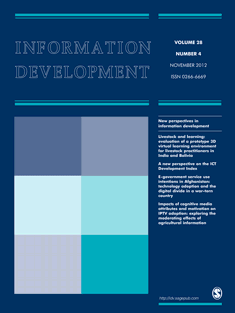
Information Development
Fostering Dialogue in Library and Information SciencesInformation Development, published by SAGE Publications Ltd, is a prestigious journal focusing on the dynamic intersection of library science and information development. With an ISSN of 0266-6669 and an E-ISSN of 1741-6469, this journal has established itself as a critical resource for researchers, professionals, and scholars in the field since its inception in 1985. With a 2023 Q2 ranking in Library and Information Sciences and a commendable Scopus rank, falling within the 82nd percentile among its peers, the journal provides an invaluable platform for the dissemination of cutting-edge research and innovative practices. Notably positioned in the United Kingdom, the journal offers insightful explorations of contemporary challenges and advancements in information access, management, and policy. Although currently not an Open Access journal, it continues to contribute significantly to its field by fostering a robust academic dialogue and sharing knowledge essential for the evolution of library and information sciences. Scholars and practitioners alike are encouraged to engage with Information Development as it remains instrumental in navigating the complexities of today's information landscape.

Informacao & Sociedade-Estudos
Cultivating Academic Dialogue for Social ChangeInformacao & Sociedade-Estudos, published by the Universidade Federal de Campina Grande, is a pivotal journal based in Brazil that focuses on the intersections of communication, sociology, and political science. With an ISSN of 0104-0146 and an E-ISSN of 1809-4783, it serves as a platform for scholarly discourse and research dissemination. Though it currently holds a Q4 ranking in both Communication and Sociology/Political Science, the journal facilitates essential conversations within these fields, particularly reflecting on regional studies and social dynamics in Latin America. Scholars can access this journal to explore diverse methodologies and perspectives, despite its discontinuation in Scopus coverage since 2023. The journal is dedicated to enhancing academic dialogue and providing insights that resonate with both local and global audiences. As research in these areas becomes increasingly crucial, Informacao & Sociedade-Estudos remains an important resource for academics and practitioners alike.

South African Journal of Libraries and Information Science
Transforming the landscape of information management through scholarship.South African Journal of Libraries and Information Science, published by FORUM PRESS, is a premier open-access journal dedicated to advancing knowledge and research in the realms of library science and information management. Since its inception, this journal has been pivotal in promoting scholarly discourse amongst librarians, information professionals, and researchers within South Africa and beyond. With its open-access model implemented in 2011, it provides an invaluable platform for the dissemination of research findings, encouraging accessibility and collaboration within the field. The journal features a diverse range of articles that explore contemporary issues, innovations, and best practices in libraries and information science, making it essential reading for those seeking to stay at the forefront of this dynamic discipline. By fostering open dialogue and knowledge sharing, the South African Journal of Libraries and Information Science plays a critical role in shaping the future of library and information science education and practice.

Biblios-Revista de Bibliotecologia y Ciencias de la Informacion
Championing Research for a Global Information CommunityBiblios-Revista de Bibliotecologia y Ciencias de la Informacion, published by the University of Pittsburgh's Library System, stands as a pivotal contributor to the field of Library and Information Sciences. Holding an ISSN of 1562-4730, this peer-reviewed journal has been offering Open Access content since 2011, reinforcing its commitment to the democratization of knowledge. Despite its current classification in the Q4 quartile with a Scopus rank of 257 out of 280 in its category, the journal plays a crucial role in disseminating research that explores contemporary challenges and innovations within the library science landscape. It is particularly relevant for researchers, practitioners, and students invested in the future of information management and bibliographic studies. With coverage from 2014 to 2024, Biblios provides a platform for scholars to engage with critical discourse, share findings, and enhance the global library and information community.

Malaysian Journal of Library & Information Science
Pioneering Research in Library & Information TrendsMalaysian Journal of Library & Information Science, published by the University of Malaya, Faculty of Computer Science & Information Technology, serves as a crucial platform for researchers, professionals, and students in the field of Library and Information Sciences. With a commitment to advancing scholarly knowledge, this journal has consistently showcased significant research contributions since its inception in 1996, and is currently indexed in Scopus, ranking in the 62nd percentile among its peers. The journal's Q2 categorization reflects its growing impact and relevance in the scholarly community. Although it operates as a traditional subscription-based journal, the publication holds great importance for those looking to delve into innovative practices and emerging trends within library and information sciences. Researchers and practitioners can access valuable insights that contribute to a deeper understanding of the evolving landscape in Malaysia and beyond. Addressed from Kuala Lumpur, Malaysia, the journal welcomes contributions that further exploration and scholarship in the vital field of information dissemination and management.