JOURNAL OF RISK RESEARCH
metrics 2024
Advancing Knowledge in Risk Analysis and Management
Introduction
JOURNAL OF RISK RESEARCH, published by Routledge Journals, Taylor & Francis Ltd, is a prestigious academic journal dedicated to advancing the understanding of risk across diverse fields, including engineering, safety, social sciences, and management. With its impact reflected in its Q1 quartile rankings in multiple categories and a solid standing in Scopus rankings, this journal serves as an essential resource for researchers, professionals, and students aiming to explore the complexities of risk analysis and its implications in real-world scenarios. The journal has been consistently publishing high-quality research since 1998, contributing to both theoretical frameworks and practical applications. While not open access, the content of the journal is invaluable for those keen on staying at the forefront of risk research. By addressing the multifaceted nature of risk, including safety, reliability, and strategic management, the JOURNAL OF RISK RESEARCH plays a vital role in shaping contemporary discussions and innovations in risk management and decision-making.
Metrics 2024
 1.202.403.2078
Metrics History
Rank 2024
Scopus
IF (Web Of Science)
JCI (Web Of Science)
Quartile History
Similar Journals
Annals of Actuarial Science
Shaping the future of actuarial science through rigorous research.Annals of Actuarial Science, published by Cambridge University Press, stands as a prominent academic journal in the fields of economics, statistics, and actuarial science. With an ISSN of 1748-4995, it features rigorous research aimed at advancing knowledge and practice in areas related to risk management, data analysis, and probability. The journal is recognized for its significant impact, holding a Q2 category ranking in both Economics and Econometrics and Statistics and Probability, along with notable positioning within Scopus rankings. Although it does not currently offer open access, its comprehensive selection of scholarly articles from 2010 to 2024 remains invaluable to researchers, professionals, and students alike, providing insights that drive the actuarial profession and enhance decision-making processes across various sectors. Positioned at the intersection of theoretical innovation and practical application, the Annals of Actuarial Science continues to shape the discourse and development of its disciplines.

Exposure and Health
Exploring the intersection of exposure, health, and sustainability.Exposure and Health is a pioneering journal published by Springer, specializing in the interdisciplinary fields of health, toxicology, and environmental sciences. With an ISSN of 2451-9766 and E-ISSN of 2451-9685, this open-access journal exemplifies a commitment to disseminating high-quality research that informs public health practices and policies globally. Situated in the Netherlands, it boasts an impressive impact factor and ranks in the top quartile (Q1) across multiple categories in the 2023 Scopus rankings, including Health, Toxicology and Mutagenesis, Pollution, and Water Science and Technology. The journal is dedicated to advancing knowledge on the interactions between environmental factors and health outcomes, making it a vital resource for researchers, professionals, and students in these critical fields. Exposure and Health actively encourages submissions that address the challenges of exposure assessment, risk management, and the promotion of sustainable public health initiatives.

Therapeutics and Clinical Risk Management
Championing open access to critical therapeutic knowledge.Therapeutics and Clinical Risk Management is a pioneering journal published by DOVE MEDICAL PRESS LTD, dedicated to advancing the fields of medication safety, pharmacology, and clinical risk management through rigorous research and comprehensive reviews. With an impact factor that demonstrates its significance within various disciplines, this Open Access journal has been instrumental since its inception in 2006, promoting the dissemination of knowledge to a global audience without barriers. With its reach spanning categories such as Pharmacology, Medicine, and Chemical Health and Safety, it champions innovative practices and risk assessment methodologies. The journal is recognized in the Q2 quartile for multiple related categories and excels in rank within its field, highlighting its influential contributions to safety and therapeutic practices. By prioritizing the sharing of impactful research, Therapeutics and Clinical Risk Management serves as an indispensable resource for researchers, professionals, and students aiming to enhance clinical outcomes and mitigate risks in therapeutic paradigms.
Disaster Prevention and Management
Leading the discourse on disaster resilience and recovery.Disaster Prevention and Management, published by Emerald Group Publishing Ltd, is a leading journal in the fields of disaster management, public health, and environmental policy. With an ISSN of 0965-3562 and an E-ISSN of 1758-6100, this journal has made significant contributions to both theoretical and practical advancements since its inception in 1992. Operating from the United Kingdom, it holds a Q2 ranking across various categories, including Business, Management and Accounting, Health (Social Science), and Public Health, reflecting its pivotal role in academic discourse and policy formulation. By engaging with contemporary issues related to disaster risk reduction, emergency preparedness, and resilience strategies, Disaster Prevention and Management aims to foster a multidisciplinary approach, making it a vital resource for researchers, practitioners, and students seeking to navigate the complexities of disaster scenarios effectively. With an impressive Scopus ranking across multiple categories, researchers are encouraged to explore its diverse range of articles and reports available for their academic and professional endeavors.
International Journal of Disaster Risk Science
Fostering collaboration for effective disaster response strategies.The International Journal of Disaster Risk Science, with ISSN 2095-0055 and E-ISSN 2192-6395, is a premier, peer-reviewed open-access journal published by Springer. Since its inception in 2011, the journal has been dedicated to advancing knowledge and practice in the field of disaster risk science, facilitating critical discussions around disaster preparedness, response, and resilience across various regions of the globe. This journal holds impressive rankings, including Q1 in Geography, Planning and Development, and Q1 in Safety Research for 2023, confirming its high impact within the academic community. With converged publication years from 2010 to 2024 and being ranked in the top 10% in multiple categories, it serves as an essential resource for researchers, professionals, and students alike. As an open-access journal, it ensures that cutting-edge research is freely available, promoting wider dissemination and engagement with topical issues in disaster risk management.

Journal of Agricultural Safety and Health
Fostering a culture of safety in the agricultural community.Journal of Agricultural Safety and Health is a premier publication dedicated to advancing the knowledge and practice of safety and health in agricultural environments. Published by the American Society of Agricultural and Biological Engineers, this journal has been a vital resource since its inception in 1997, providing a platform for research that addresses critical issues related to occupational safety, risk management, and public health in the agricultural sector. With an ISSN of 1074-7583 and an E-ISSN of 1943-7846, the journal is indexed in various databases and achieves recognition in the academic community, notably being categorized in Q3 for Agricultural and Biological Sciences and Safety, Risk, Reliability and Quality, and Q4 for Public Health and Environmental Health in the latest rankings. Researchers, practitioners, and students can access valuable insights and findings that not only reflect the current state of agricultural safety but also guide future improvements in health standards and practices. As the field continues to evolve, the Journal of Agricultural Safety and Health remains committed to its mission of promoting safety and health in agricultural work, ensuring that the community thrives in a safe and productive environment.
HEALTH RISK & SOCIETY
Connecting Societal Factors with Health RisksHEALTH RISK & SOCIETY is an esteemed journal published by Routledge Journals, Taylor & Francis Ltd, focusing on the intricate relationships between health risks and societal factors. Since its inception in 1999, the journal has been dedicated to advancing knowledge in the fields of public health, environmental health, and occupational health, currently positioned in the prestigious Q2 quartile of these categories as of 2023. With an international scope, the journal aims to foster interdisciplinary research that explores how societal dynamics affect health outcomes, risk perceptions, and public policies. The journal operates without an Open Access model, which allows it to maintain rigorous peer review and uphold high academic standards. Researchers, professionals, and students in the health sciences will find valuable insights, innovative research methods, and critical discussions that enhance understanding and guide effective practice in addressing health risks. By bridging theory and application, HEALTH RISK & SOCIETY is an essential resource for those committed to improving health and wellbeing in the context of social and environmental challenges.
International Journal of Emergency Management
Advancing global strategies for effective emergency management.International Journal of Emergency Management is a reputable publication within the fields of emergency medicine and strategic management, published by InderScience Enterprises Ltd. With its ISSN 1471-4825 and E-ISSN 1741-5071, this journal has been a crucial platform for scholarly research since its inception in 2003. The journal aims to disseminate high-quality, peer-reviewed articles that address critical issues related to emergency management, including but not limited to disaster preparedness, response strategies, recovery methods, and risk assessment. Despite being categorized in Q4 of both emergency medicine and strategy and management in 2023, the journal serves as an essential resource for researchers, professionals, and students looking to further explore the evolving dynamics of emergency management. It leverages its global presence, with its headquarters located in the United Kingdom, thus attracting a diverse array of contributions addressing international and interdisciplinary perspectives. The journal fosters an environment where innovative ideas can flourish, ultimately contributing towards enhancing global emergency management practices.
International Journal of Disaster Risk Reduction
Pioneering research to mitigate disaster impacts worldwide.The International Journal of Disaster Risk Reduction is a leading academic publication dedicated to advancing the understanding and management of disaster risks, promoting innovative solutions and effective strategies for risk reduction. Published by ELSEVIER, this journal serves as a critical platform for researchers, professionals, and students in the fields of Geology, Geotechnical Engineering, and Safety Research. With an impressive impact factor and ranked in the top quartile (Q1) across its various categories as of 2023, it demonstrates exceptional quality and relevance in its contributions to science and engineering disciplines. The journal has been committed to disseminating high-quality research since its inception in 2012 and remains open for new submissions through 2024. The Scopus rankings reflect its prestigious position, with notable placements in Earth and Planetary Sciences and Social Sciences, highlighting its influence in shaping best practices for disaster risk governance. As an essential resource for anyone involved in disaster preparedness and mitigation, the International Journal of Disaster Risk Reduction fosters knowledge exchange and collaboration among stakeholders in the global community.
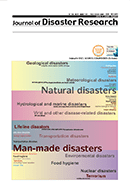
Journal of Disaster Research
Connecting research and policy for enhanced disaster preparedness.Journal of Disaster Research, published by FUJI TECHNOLOGY PRESS LTD, is a prominent Open Access journal that has been disseminating critical research on disaster management since its inception in 2007. Focusing on the interrelated fields of engineering and safety, the journal aims to advance knowledge and policy in disaster risk reduction, response, and resilience, making it an essential resource for researchers, practitioners, and policymakers alike. With an ISSN of 1881-2473 and E-ISSN 1883-8030, the journal covers a wide range of topics related to disaster studies, ensuring the dissemination of innovative solutions and diverse perspectives. Situated in Japan, the journal has been ranked Q3 in both Engineering (Miscellaneous) and Safety, Risk, Reliability, and Quality categories, showcasing its commitment to quality scholarship. As it converges its research contributions from 2006 to 2024, the Journal of Disaster Research continues to serve as a vital platform for advancing the science and practice of disaster research, thereby enhancing societal resilience against crises.