
JOURNAL OF VISUAL IMPAIRMENT & BLINDNESS
Scope & Guideline
Championing insights in ophthalmology and rehabilitation.
Introduction
Aims and Scopes
- Research on Educational Practices:
The journal consistently publishes studies that investigate effective instructional methodologies and curricula designed for students with visual impairments, including the Expanded Core Curriculum and specialized literacy programs. - Assistive Technologies and Innovations:
JVIB emphasizes the development and evaluation of assistive technologies that facilitate independence and enhance the daily lives of individuals with visual impairments, including new software, devices, and training programs. - Social and Psychological Aspects:
Research exploring the social dynamics, mental health, and emotional well-being of individuals with visual impairments is a key area, addressing issues such as stigma, self-esteem, and community integration. - Policy and Advocacy:
The journal includes discussions on policy implications affecting individuals with visual impairments, advocating for inclusivity and accessibility in various sectors, including education, employment, and healthcare. - Cross-Disciplinary Approaches:
JVIB embraces a multidisciplinary perspective, incorporating insights from psychology, education, rehabilitation, and technology to address the comprehensive needs of people with visual impairments.
Trending and Emerging
- User-Centered Design and Evaluation:
There is a growing emphasis on user-centered approaches in the design and evaluation of assistive technologies and educational tools, ensuring that the needs and experiences of individuals with visual impairments are prioritized. - Mental Health and Well-Being:
Research focusing on the mental health and emotional well-being of individuals with visual impairments is gaining traction, recognizing the importance of psychosocial factors in the overall quality of life. - Inclusivity and Accessibility in Technology:
An increasing number of studies are addressing the challenges and solutions related to the accessibility of digital resources and technologies, particularly in light of the rapid expansion of online learning and remote services. - Intervention Programs and Rehabilitation Strategies:
There is a notable trend towards exploring innovative intervention programs and rehabilitation strategies, particularly those that leverage technology and community support to improve outcomes for individuals with visual impairments. - Cultural and Sociocultural Perspectives:
Emerging research increasingly addresses the sociocultural factors affecting individuals with visual impairments, including the influence of societal attitudes and the need for culturally relevant practices in education and rehabilitation.
Declining or Waning
- Traditional Braille Instruction:
Though still important, the frequency of research focused solely on traditional Braille instruction has decreased, possibly due to the increasing integration of technology and alternative literacy methods in educational practices. - General Employment Studies:
Research centered on general employment rates for individuals with visual impairments appears to be waning, as the journal increasingly emphasizes specific barriers, interventions, and job satisfaction rather than broad employment statistics. - Historical Perspectives on Visual Impairment:
There seems to be a decline in papers focusing on historical analyses of visual impairment, suggesting a shift towards contemporary issues and practical applications that address current challenges faced by individuals with visual impairments.
Similar Journals
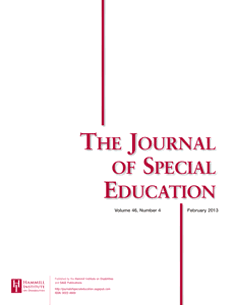
JOURNAL OF SPECIAL EDUCATION
Connecting scholarship with practice in special education.The JOURNAL OF SPECIAL EDUCATION, published by SAGE PUBLICATIONS INC, is a leading academic journal in the fields of education and rehabilitation, dedicated to advancing knowledge and research practices for individuals with disabilities. Established in 1966 and converging into a rich legacy of scholarship, the journal is esteemed for its rigorous peer-reviewed articles, boasting a top-tier Q1 ranking in both the Education and Rehabilitation categories. With a commendable impact, it ranks #36 out of 161 in Medicine Rehabilitation and #349 out of 1543 in Social Sciences Education, placing it in the 77th percentile in both contexts. The journal serves as a vital platform for educators, researchers, and practitioners to disseminate innovative studies and methodologies that profoundly influence special education practices. While not open access, its contributions are pivotal for advancing inclusive educational strategies and fostering greater understanding of diverse learning needs. For those engaged in special education research, the JOURNAL OF SPECIAL EDUCATION is an essential resource for current trends, theories, and practices shaping the future of the field.

PSYCHIATRIC REHABILITATION JOURNAL
Exploring New Horizons in Mental HealthPSYCHIATRIC REHABILITATION JOURNAL, published by the Educational Publishing Foundation of the American Psychological Association, is a premier source of scholarly information and innovative research in the fields of psychiatric care, rehabilitation, and mental health. With its ISSN 1095-158X and E-ISSN 1559-3126, this journal has established itself as a leading platform, evidenced by its top-tier rankings — notably in the Q1 category for Health Professions (miscellaneous) and Rehabilitation, as well as a respectable Q2 ranking in Psychiatry and Mental Health for 2023. The journal's convergence of scholarship from 1996 to 2024 underlines its longstanding commitment to advancing evidence-based practices and improving outcomes for individuals facing psychiatric challenges. Indexed in Scopus with robust rankings (e.g., Rank #8/78 in Health Professions), it serves as an essential resource for researchers, practitioners, and students dedicated to enhancing the quality of rehabilitation and mental health care in the United States and beyond. While the journal does not offer open access, its impact factor and professional relevance continue to make it invaluable for those engaged in the vital work of psychiatric rehabilitation.
Journal of Enabling Technologies
Advancing Knowledge for a Technological FutureThe Journal of Enabling Technologies, published by EMERALD GROUP PUBLISHING LTD, stands as a pivotal resource within the realms of Computer Science Applications, Health (Social Science), and Management of Technology and Innovation. Established in 2017 and converging towards its 2024 target, the journal has garnered significant recognition, reflected in its Q3 classification in multiple categories for 2023 and a commendable Q2 ranking in Rehabilitation. It holds respectable standings in Scopus rankings, notably positioning itself at the 38th percentile in Rehabilitation and 71st in Health Social Sciences. Aimed at promoting knowledge and innovation, the journal serves as an essential platform for researchers, professionals, and students, enabling them to explore advancements, share insights, and foster interdisciplinary collaboration. Although it does not offer open access, its impact factor and authoritative standing in the field underscore its importance for anyone dedicated to enhancing technology utilization across these vital sectors.
JOURNAL OF PSYCHOSOCIAL ONCOLOGY
Bridging disciplines to enhance cancer patient well-being.JOURNAL OF PSYCHOSOCIAL ONCOLOGY, published by Routledge Journals, Taylor & Francis Ltd, serves as a pivotal platform in the interdisciplinary field of psychosocial oncology, providing critical insights into the psychological, social, and emotional aspects impacting cancer patients and their families. With a storied history dating back to 1983 and converging until 2024, this journal holds a prestigious positioning, ranked in the Q2 category for Applied Psychology and Q3 for both Oncology and Psychiatry & Mental Health in 2023, highlighting its integral role in these overlapping fields. Despite not currently offering an open access model, the journal continues to attract a broad spectrum of scholars with its impactful research, evidenced by its Scopus rankings within the 50th to 58th percentile across related categories. Researchers, clinicians, and students alike will find the journal’s focus on the psychosocial dimensions of cancer to be invaluable, as it advances knowledge and practice aimed at improving patient outcomes and well-being in the cancer care continuum.

Archives of Physiotherapy
Elevating Standards in Therapy Through Scholarly ExchangeArchives of Physiotherapy is a prominent peer-reviewed journal published by SPRINGERNATURE, dedicated to advancing knowledge and practice in the fields of physical therapy, sports therapy, and rehabilitation. Since its inception in 2015, this Open Access journal has contributed to the dissemination of research that informs clinical practice and educates future professionals. With a commendable impact reflected in its Scopus rankings—placing it in the 72nd and 69th percentiles for Rehabilitation and Physical Therapy respectively—Archives of Physiotherapy stands as a critical resource for researchers, practitioners, and students striving to stay at the forefront of innovative therapy techniques and rehabilitative practices. The journal’s strategic focus on emerging trends and evidence-based methodologies makes it an invaluable platform for scholarly exchange and collaboration in the evolving landscape of healthcare. Now, serving audiences across the globe from its base in the United Kingdom, it is positioned to impact the future of rehabilitation science during its converged years from 2015 to 2024.

Revista Iberoamericana de Psicologia del Ejercicio y el Deporte
Driving Progress in Psychology and Exercise ScienceRevista Iberoamericana de Psicologia del Ejercicio y el Deporte is a pivotal resource in the fields of psychology and sports science, published by the esteemed REVISTA IBEROAMERICANA PSICOLOGIA EJERCICIO & DEPORTE in Spain. With an ISSN of 1886-8576 and an E-ISSN of 2340-7700, this journal serves as a platform for researchers, professionals, and students to explore the intersection of psychology, exercise, and sports. Although it currently holds a Q4 quartile rating in Applied Psychology, Social Psychology, and Sports Science, its presence in these diverse categories emphasizes its commitment to fostering inter-disciplinary collaboration and understanding. The journal has undergone significant transformations since its inception in 2012 and aims to stimulate advancements in knowledge and practices related to exercise and sport psychology. Despite its discontinuation from Scopus coverage in 2024, the journal continues to publish original research, reviews, and theoretical papers that contribute to the body of knowledge in its respective fields. With open access options available, it encourages broad dissemination and engagement with its scholarly contributions, making it an invaluable asset for those invested in the realms of psychology and sports.
SUPPORTIVE CARE IN CANCER
Bridging research and practice for better patient outcomes.SUPPORTIVE CARE IN CANCER is a premier academic journal published by Springer, dedicated to advancing the understanding and management of supportive care for cancer patients. With a notable impact factor, the journal is recognized for its contribution to the fields of Oncology, Rehabilitation, and Nursing, achieving impressive rankings in Scopus, including Q1 for Oncology Nursing and Rehabilitation, and Q2 for general Oncology. Founded in 1993 and looking towards a promising future until 2024, it serves as a vital resource for researchers, professionals, and students engaged in these critical areas of healthcare. Although not an Open Access journal, its rigorous peer-reviewed articles provide valuable insights into innovative practices and evidence-based strategies that enhance patient quality of life during and after treatment. By bridging the gap between research and clinical practice, SUPPORTIVE CARE IN CANCER significantly influences patient outcomes and fosters interdisciplinary collaboration in patient support.
Physical Medicine and Rehabilitation Clinics of North America
Driving excellence in rehabilitation and patient care.Physical Medicine and Rehabilitation Clinics of North America is a leading journal published by W B Saunders Co-Elsevier Inc., focusing on the multifaceted disciplines of physical medicine, rehabilitation, and related health professions. With an impressive impact factor reflecting its significant contribution to the field, this journal ranks in the Q2 quartile for both Physical Therapy and Rehabilitation categories. The journal, available in both print (ISSN: 1047-9651) and online (E-ISSN: 1558-1381), provides critical insights, clinical updates, and comprehensive reviews that are essential for researchers, practitioners, and students alike. Covering a wide spectrum of topics from innovative rehabilitation techniques to emerging trends in sports medicine, it aims to disseminate knowledge that enhances patient care and drives advancements in rehabilitation practices. With a publication history spanning from 1995 to 2024, Physical Medicine and Rehabilitation Clinics is an essential resource for those dedicated to improving functional outcomes and the quality of life for patients worldwide.
Open Ophthalmology Journal
Innovating vision science for a brighter tomorrow.The Open Ophthalmology Journal, published by Bentham Science Publishers Ltd, is a vital resource in the field of ophthalmology, dedicated to advancing knowledge through open-access research. With an ISSN of 1874-3641, it offers a platform for the dissemination of innovative studies from 2011 to 2024, focusing on the latest developments in eye care and vision science. Despite being categorized in the lower quartile (Q4) according to the 2023 rankings, and holding a position in the Scopus Ricks at 113 out of 137 in the ophthalmology domain, the journal serves as a valuable outlet for emerging scholars and seasoned researchers alike to share their findings. The journal's commitment to accessibility ensures that its content is available to a broad audience, promoting collaboration and knowledge exchange. Located in the Netherlands, The Open Ophthalmology Journal aspires to become a cornerstone for those passionate about understanding and improving ocular health through rigorous scientific inquiry.
Acta Paulista de Enfermagem
A Gateway to Cutting-Edge Nursing DiscoveriesActa Paulista de Enfermagem is a distinguished peer-reviewed academic journal published by the University of São Paulo's Department of Nursing. With its inception dating back to 2005 as an Open Access publication, this journal has made significant contributions to the fields of Nursing, particularly in Advanced and Specialized Nursing and Medical and Surgical Nursing. It currently holds a commendable impact factor, sitting in the Q2 category for Advanced and Specialized Nursing and Q1 in Medical and Surgical Nursing as of 2023. The journal's rigorous editorial standards have positioned it favorably in Scopus rankings, showcasing its relevance and influence within the nursing community. Research published in Acta Paulista de Enfermagem is accessible to a global audience, enhancing collaboration and innovation in nursing practice. Located in São Paulo, Brazil, it serves not only as a platform for researchers and professionals to share their findings but also as a rich resource for students and educators aiming to advance their knowledge in nursing disciplines.