Chinese Journal of Chromatography
metrics 2024
Bridging Theory and Practice in Chromatographic Applications
Introduction
Chinese Journal of Chromatography, published by SCIENCE PRESS, is a dedicated platform for disseminating pioneering research in the fields of Analytical Chemistry, Biochemistry, and Organic Chemistry. Established in 1997, this esteemed journal offers invaluable insights into chromatographic techniques and their applications, showcasing studies that contribute to the advancement of chemical engineering and electrochemistry. Although it currently holds a Q4 ranking in several categories, the journal aims to foster growth and knowledge among researchers, professionals, and students alike. With a continuous publication window extending until 2024, the Chinese Journal of Chromatography invites submissions that not only enhance scientific understanding but also address real-world challenges through innovative chromatographic solutions. Researchers looking for a collaborative community will find this journal a vital resource in their ongoing academic endeavors.
Metrics 2024
 0.191.200.7023
Metrics History
Rank 2024
Scopus
IF (Web Of Science)
JCI (Web Of Science)
Quartile History
Similar Journals
ANALYTICAL AND BIOANALYTICAL CHEMISTRY
Illuminating the Path of Chemical InnovationANALYTICAL AND BIOANALYTICAL CHEMISTRY, published by SPRINGER HEIDELBERG, is a leading international journal that serves as a vital platform for innovative research in the fields of analytical and bioanalytical chemistry. With an impressive impact factor and ranking in the Q2 category for both Analytical Chemistry and Biochemistry, the journal highlights key advancements and methodologies that drive the discipline forward. Established in 1996 and continuing vigorously into 2024, it has gained significant recognition with Scopus rankings placing it in the 83rd and 78th percentiles within its categories, underscoring its impact and relevance. The journal's commitment to open access facilitates widespread dissemination of critical scientific knowledge, making it an essential resource for researchers, professionals, and students dedicated to exploring the complexities of chemical analysis. With its base in Heidelberg, Germany, ANALYTICAL AND BIOANALYTICAL CHEMISTRY continues to inspire and influence the global research community.
Journal of Saudi Chemical Society
Elevating Research Standards in the Chemistry Community.The Journal of Saudi Chemical Society, published by ELSEVIER, stands as a premier platform for advancing knowledge in the field of chemistry. Since its inception in 2009, this Open Access journal has garnered significant attention, securing a prestigious Q1 ranking in the Chemistry (miscellaneous) category for 2023, reflecting its position among the top journals in the discipline. With an impressive Scopus ranking of #66 out of 408 in General Chemistry, this journal boasts a commendable 83rd percentile, underscoring its impact and relevance in the global research community. The journal aims to disseminate high-quality research articles, reviews, and case studies, fostering innovation and collaboration among chemists and allied professionals. By enabling widespread access to cutting-edge research, the Journal of Saudi Chemical Society plays a crucial role in supporting the educational and professional development of students, researchers, and practitioners alike, making it an essential resource for anyone invested in the dynamic field of chemistry.
LCGC North America
Inspiring Progress in Analytical Chemistry Since 1999LCGC North America is a pivotal resource in the field of Analytical Chemistry, published by MJH Life Sciences. Since its inception in 1999, the journal has strived to bridge the gap between scientific research and practical applications, catering to a diverse audience that includes researchers, professionals, and students interested in chromatography and related analytical practices. Although currently categorized in the Q4 quartile of Analytical Chemistry, with a Scopus rank of #137 out of 156, LCGC North America is dedicated to delivering insightful articles that foster discussion and innovation within the analytical chemistry community. With a commitment to quality content, the journal covers a broad spectrum of topics, ensuring that readers remain informed about the latest developments and trends in the field. Despite its non-open access model, readers can access its valuable resources through institutional subscriptions and various library networks, making it a vital asset for those engaged in cutting-edge research and practice. Located in Cranbury, NJ, United States, LCGC North America continues to contribute significantly to the advancement of analytical methodologies and technologies.
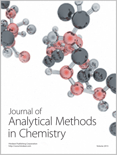
Journal of Analytical Methods in Chemistry
Catalyzing knowledge exchange in analytical methodologies.The Journal of Analytical Methods in Chemistry, published by HINDAWI LTD, stands as a premier platform dedicated to the dissemination of research in the vibrant field of analytical chemistry. With an ISSN of 2090-8865 and an E-ISSN of 2090-8873, this Open Access journal has been committed to providing unrestricted access to quality research since 1978, thereby fostering greater collaboration and innovation among researchers, professionals, and students globally. The journal showcases rigorous research insights spanning diverse categories, earning impressive Scopus rankings including Q2 in Chemical Engineering and Q3 in Analytical Chemistry for 2023, positioning itself effectively among respected peers. Its interdisciplinary approach also covers significant contributions in the realms of instrumentation and computer science applications, thus addressing contemporary challenges and advancements in analytical methodologies. By bridging theoretical underpinnings with practical applications, the Journal of Analytical Methods in Chemistry aims to catalyze knowledge exchange while enhancing the global discourse in analytical science.
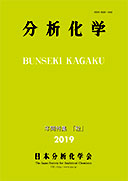
BUNSEKI KAGAKU
Connecting Researchers Through Quality ScholarshipBUNSEKI KAGAKU, published by the Japan Society Analytical Chemistry, is a reputable journal dedicated to the field of analytical chemistry. With an ISSN of 0525-1931, this journal has been a crucial outlet for scholarly communication since its inception in 1952, converging its publication years from 1954 to 1957 and from 1959 to 2024. Although it holds a Q4 category ranking in the most recent 2023 quartiles of analytical chemistry and ranks 153/156 in Scopus, it continues to serve as a platform for quality research, fostering advancements in the field. BUNSEKI KAGAKU is based in Tokyo, Japan, and emphasizes the critical importance of analytical techniques in scientific inquiry. With a commitment to professionalism and rigor, the journal provides a vital resource for researchers, students, and professionals seeking to explore innovative methodologies and contribute to the ongoing dialogue in analytical chemistry.
LCGC EUROPE
Connecting researchers to the pulse of chromatographic advancements.LCGC EUROPE is a prominent journal dedicated to the field of analytical chemistry, specifically highlighting the latest trends and innovations in chromatographic techniques. Published by MJH Life Sciences, this journal has served as a valuable resource for researchers, professionals, and students interested in the nuances of laboratory practices and the advancement of instrumentation. Although LCGC EUROPE ceased its coverage in Scopus from 2018, it has maintained a significant influence within the community, evidenced by its Scopus rank of 90/114 in Analytical Chemistry, placing it in the 21st percentile. With its inception dating back to 1996, the journal provided essential insights and peer-reviewed articles, fostering a rich understanding of chromatographic science. While the journal is not currently open access, it remains an integral part of the literature for anyone engaged in the analytical chemistry landscape, especially as it pertains to laboratory methodologies and innovations.
MICROCHEMICAL JOURNAL
Pioneering Innovations in Analytical Chemistry and SpectroscopyMicrochemical Journal, published by Elsevier, stands as a leading scholarly publication in the fields of Analytical Chemistry and Spectroscopy, boasting impressive rankings of Q1 and Q2 in their respective categories for 2023. With an H-index reflecting its substantial impact and relevance, this journal has been a cornerstone of research dissemination since its inception in 1957, and it continues to play a vital role in advancing the methodological and technological innovations within these disciplines. The journal presents peer-reviewed articles that explore a wide array of topics, making it an essential resource for researchers, professionals, and students keen on the latest advancements in microchemical processes and techniques. Although it does not currently offer open access options, its publication through Elsevier ensures a high standard of academic integrity and wide accessibility through various academic institutions. With a strong Scopus ranking—9th in Chemistry Spectroscopy and 22nd in Analytical Chemistry—Microchemical Journal is an indispensable platform for empirical studies, insightful reviews, and pioneering methodologies in the microchemical domain.
Chromatography
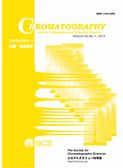
Advancing chromatographic excellence for innovative research.Chromatography is an esteemed journal published by the SOC CHROMATOGRAPHIC SCIENCES, dedicated to advancing the field of chromatographic techniques and their applications across various disciplines, including analytical chemistry, biochemistry, and environmental science. By facilitating the exchange of high-quality research, Chromatography plays a pivotal role in enhancing methodologies and technologies that drive innovation in sample analysis. While the journal is not currently open access, it maintains a rigorous peer-review process, ensuring the publication of valuable and impactful studies. Researchers, professionals, and students alike can benefit from its comprehensive coverage of chromatography-related advancements, making it a vital resource for anyone engaged in this dynamic area of study.

BMC Chemistry
Exploring the Frontiers of Chemistry ResearchBMC Chemistry, published by BMC, is a reputable open access journal that has made significant strides since its inception in 2019. Operating under e-ISSN 2661-801X, this journal is dedicated to advancing the field of general chemistry by promoting high-quality research across various sub-disciplines. Headquartered in the United Kingdom, BMC Chemistry boasts a commendable impact factor and is classified in Q2 within the prestigious field of Chemistry (miscellaneous) according to the 2023 category quartiles. The journal's Scopus ranking places it at #139 out of 408 in its category, highlighting its growing relevance and influence in the academic community, with a commendable 66th percentile standing. With a commitment to open access, BMC Chemistry ensures that groundbreaking discoveries and innovative research are available to a global audience, fostering collaboration and development in chemistry. Researchers, professionals, and students alike will find this journal to be an invaluable resource for disseminating knowledge and driving scientific advancement.
JPC-JOURNAL OF PLANAR CHROMATOGRAPHY-MODERN TLC
Exploring Modern TLC for Tomorrow's Discoveries.JPC-JOURNAL OF PLANAR CHROMATOGRAPHY-MODERN TLC, published by Springer Heidelberg, is a pivotal resource in the fields of Analytical Chemistry, Biochemistry, and Clinical Biochemistry. With an ISSN of 0933-4173 and an E-ISSN of 1789-0993, this journal serves as an essential platform for the dissemination of innovative research on planar chromatography techniques, specifically modern thin-layer chromatography (TLC). With its upcoming coverage extending to 2024 and a third quartile ranking (Q3) across major scientific categories in 2023, it addresses the critical advancements and applications in analytical methods. Although it does not offer open access, the journal's rigorous peer-review process ensures high-quality findings that contribute to the progression of these vital scientific disciplines. The journal is located in Heidelberg, Germany, and continues to be a beacon for researchers, professionals, and students who seek to enhance their knowledge and practice in chromatographic techniques.