
Mindfulness
Scope & Guideline
Bridging psychology and health through mindfulness.
Introduction
Aims and Scopes
- Mindfulness Interventions:
The journal publishes research on mindfulness interventions, exploring their efficacy in clinical and non-clinical populations. This includes mindfulness-based stress reduction (MBSR) and mindfulness-based cognitive therapy (MBCT), among other formats. - Measurement and Assessment:
A significant focus is on the development and validation of psychometric tools for assessing mindfulness, self-compassion, and related constructs, ensuring that researchers can reliably measure the impacts of mindfulness practices. - Cultural and Contextual Adaptations:
The journal highlights culturally adapted mindfulness interventions, addressing the need for mindfulness practices that respect and incorporate diverse cultural backgrounds and psychological frameworks. - Mechanisms of Action:
Research on the underlying mechanisms of mindfulness, such as the role of self-compassion, emotional regulation, and cognitive flexibility, is a central theme, contributing to a deeper understanding of how mindfulness affects psychological outcomes. - Mindfulness in Specific Populations:
The journal emphasizes studies on mindfulness applications in specific populations, including children, adolescents, caregivers, and individuals with chronic conditions, providing insights into tailored interventions. - Ethical and Social Considerations:
Discussions on the ethical implications of mindfulness practices and their integration into public health and educational settings are also included, ensuring a holistic approach to mindfulness research.
Trending and Emerging
- Mindfulness and Self-Compassion:
There is a notable increase in studies exploring the interplay between mindfulness and self-compassion, particularly regarding their combined effects on mental health outcomes and emotional regulation. - Digital and Virtual Mindfulness Interventions:
The rise of technology-driven mindfulness interventions, such as mobile apps and online programs, is a growing area of interest, especially in response to the COVID-19 pandemic and the need for accessible mental health resources. - Mindfulness in Educational Settings:
Research on the implementation and effects of mindfulness programs in educational contexts is trending, with a focus on enhancing social-emotional learning and reducing behavioral issues among students. - Mindfulness and Social Justice:
Emerging themes include mindfulness practices aimed at addressing social justice issues, particularly in marginalized communities, highlighting mindfulness as a tool for resilience and community empowerment. - Mindfulness and Neurobiological Mechanisms:
Increasingly, studies are investigating the neurobiological mechanisms underlying mindfulness practices, utilizing advanced imaging techniques to explore how mindfulness affects brain function and structure. - Mindfulness in Clinical Populations:
The journal emphasizes mindfulness research targeted at specific clinical populations, including those with chronic illnesses, PTSD, and emotional regulation difficulties, reflecting a trend towards personalized mental health interventions.
Declining or Waning
- Traditional Mindfulness Practices:
Research specifically focused on traditional mindfulness practices, such as those strictly adhering to Buddhist teachings, has decreased as the field has broadened to include secular and diverse applications of mindfulness. - Basic Mechanistic Studies:
There is a waning interest in basic mechanistic studies that do not directly link mindfulness to clinical outcomes or practical applications, as researchers increasingly prioritize studies with immediate relevance to mental health. - Mindfulness and Personality Traits:
Exploratory studies linking mindfulness solely to personality traits, without connecting these traits to behavioral or clinical outcomes, have become less common as the journal emphasizes more impactful applications. - Generalized Mindfulness Constructs:
Research that treats mindfulness as a general construct without contextual or situational specificity has been declining, as the journal encourages more nuanced and context-sensitive investigations.
Similar Journals

ASEAN Journal of Psychiatry
Championing research to meet contemporary mental health challenges.Welcome to the ASEAN Journal of Psychiatry, a pivotal platform dedicated to advancing the field of psychiatry and mental health across the ASEAN region and beyond. Published by the ASEAN Federation of Psychiatry & Mental Health, this journal serves as a vital resource for researchers, clinicians, and students focusing on contemporary mental health challenges, including but not limited to, psychological disorders, therapeutic developments, and public health initiatives. With its ISSN 2231-7791 and E-ISSN 2231-7805, the journal aims to foster innovative research that addresses the unique mental health needs of diverse populations in the ASEAN community. Although currently operating under a non-open access model, it is committed to enhancing knowledge dissemination in psychiatry, facilitating better mental healthcare practices. Join us in this indispensable pursuit of mental wellness and scholarly excellence.

Behavioral Psychology-Psicologia Conductual
Exploring Innovative Insights in Clinical and Experimental PsychologyBehavioral Psychology-Psicologia Conductual is a pioneering journal dedicated to advancing the field of psychology, with a specific focus on clinical and experimental domains. Published by FUNDACION VECA PARA AVANCE PSICOLOGIA in Spain, this journal serves as a vital resource for researchers, professionals, and students seeking to explore contemporary practices and theoretical frameworks in behavioral psychology. With its ISSN 1132-9483 and E-ISSN 1132-9483, the journal has established itself over a span of nearly three decades, from 1996 to 2024, contributing significantly to the academic discourse. While it currently holds a Q3 ranking in Clinical Psychology and a Q4 ranking in Experimental and Cognitive Psychology as of 2023, it aims to promote knowledge synthesis and innovative approaches to psychological research. Despite the absence of an open-access model, the journal's rigorous peer-review process ensures the dissemination of high-quality research that resonates with the needs of a growing audience dedicated to enhancing psychological practice and theory.
BioPsychoSocial Medicine
Pioneering Knowledge: Connecting Biological and Social Realms in MedicineBioPsychoSocial Medicine is a pioneering open-access journal published by BMC that has been at the forefront of integrating biological, psychological, and social perspectives in medicine since its inception in 2007. With a commitment to advancing research in the fields of biological psychiatry, psychology, and mental health, this journal has solidified its reputation, achieving notable ranking quartiles including Q2 in both Psychiatry and Mental Health, as well as Psychology categories as of 2023. Researchers and professionals can explore a wealth of interdisciplinary studies that bridge the gaps across these fields, facilitating a comprehensive understanding of mental health issues. As a vital resource for the academic community, BioPsychoSocial Medicine promotes innovative research that not only sheds light on complex psychological phenomena but also informs clinical practices and policies. The journal, indexed in Scopus, encourages knowledge sharing and collaboration, making it an indispensable platform for students, researchers, and practitioners alike in their pursuit of excellence in psychosocial medicine.
BEHAVIOUR CHANGE
Transforming insights into action.BEHAVIOUR CHANGE is a leading journal published by Cambridge University Press, dedicated to advancing knowledge and practice in the domains of clinical psychology and experimental and cognitive psychology. Since its inception in 1984, the journal has established itself as a vital resource for researchers and practitioners, focusing on innovative strategies and empirical research aimed at promoting effective behavior change. With an impact factor that places it in the prestigious Q2 quartile within both fields, it serves as a platform for rigorous studies that explore psychological principles and their applications in real-world contexts. The journal is accessible to an international audience, contributing significantly to the understanding of human behavior and the development of interventions that improve mental health outcomes. Located in the United Kingdom, at Edinburgh Building, Shaftesbury Rd, CB2 8RU Cambridge, England, BEHAVIOUR CHANGE continues to publish high-quality research that not only informs academic discourse but also enhances practical approaches to behavior modification and psychological well-being.
Mind Brain and Education
Empowering Educators with Cutting-Edge ScienceMind, Brain, and Education is a pioneering journal published by WILEY, focusing on the intersection of cognitive neuroscience, developmental psychology, and educational practices. With an ISSN of 1751-2271 and E-ISSN 1751-228X, this esteemed publication offers a platform for researchers and educators to disseminate innovative findings that bridge theory and practice in learning environments. Spanning from 2008 to 2024, the journal has established a reputation as a vital resource in the academic community, recognized in 2023 as Q2 in Developmental and Educational Psychology and Education, and Q3 in Cognitive Neuroscience and Experimental and Cognitive Psychology. With Scopus ranks demonstrating its impact, especially in Education and Psychology fields, Mind, Brain, and Education invites submissions that advance knowledge and application of educational strategies informed by brain science. Researchers, professionals, and students will find critical insights and collaborative opportunities to enhance educational outcomes and cognitive development in learners.

Psychology Research and Behavior Management
Championing accessible knowledge in behavioral science.Psychology Research and Behavior Management is a leading peer-reviewed journal that serves as a vital resource in the field of psychology and mental health. Published by DOVE MEDICAL PRESS LTD since 2008, this open access journal allows for the free dissemination of knowledge, ensuring that valuable research findings are accessible to a global audience. With an impact factor that positions it within the Q2 category in both Psychiatry and Mental Health as well as in Psychology (miscellaneous), the journal is recognized for its significant contribution to the understanding of behavioral management and psychological health. Its rankings—#61 out of 216 in General Psychology and #222 out of 567 in Psychiatry and Mental Health—further highlight its influence within these critical fields. By providing an avenue for innovative research and insights, Psychology Research and Behavior Management aims to support researchers, professionals, and students in exploring and addressing complex psychological issues, ultimately fostering informed practices and advancements in mental health care.
DEPRESSION AND ANXIETY
Advancing understanding in mental health research.DEPRESSION AND ANXIETY is a leading academic journal published by WILEY, dedicated to presenting cutting-edge research in the fields of clinical psychology, psychiatry, and mental health. With an impressive impact factor underscoring its prominence—ranked in the top quartile (Q1) for both clinical psychology and psychiatry, and occupying the 7th and 20th ranks in Scopus respectively—this journal serves as a pivotal resource for researchers, professionals, and students alike. Since its inception in 1996 and continuing through 2024, DEPRESSION AND ANXIETY has been at the forefront of disseminating findings that significantly impact our understanding of mental health issues. The journal's rigorous peer-review process ensures the highest quality of published works, making it an essential platform for scholars aiming to advance knowledge and contribute meaningfully to the mental health discourse.

Revista de Psicodidactica
Elevating Learning through Empirical EvidenceRevista de Psicodidactica, published by ELSEVIER ESPAÑA, is a leading academic journal dedicated to the fields of Developmental and Educational Psychology. With an impressive impact factor reflecting its high-quality research, the journal has achieved a commendable Q2 ranking in its field for Developmental and Educational Psychology and a Q1 ranking in Education as of 2023. Notably, it holds a significant position in Scopus Ranks, placing in the top 90th percentile in Social Sciences Education and the 84th percentile in Psychology. Launched in 2005, the journal is committed to advancing knowledge in educational practices through empirical research and theoretical frameworks. It provides a vital platform for researchers, educators, and students in Spain and beyond, fostering an open exchange of ideas and innovative approaches to learning and development. Though it is not an open-access publication, it remains a compelling source of contemporary findings for those invested in enhancing educational outcomes.
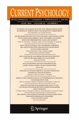
CURRENT PSYCHOLOGY
Pioneering Research for a Deeper Psychological InsightCURRENT PSYCHOLOGY is a renowned journal published by SPRINGER, focusing on a myriad of topics within the field of psychology. With its ISSN 1046-1310 and E-ISSN 1936-4733, this journal has established a significant footprint since its inception in 1981. Based in the United States, at One New York Plaza, Suite 4600, New York, NY 10004, CURRENT PSYCHOLOGY caters to an international audience of researchers, professionals, and students seeking to advance their understanding of both theoretical and applied psychology. Rated in the Q1 category for miscellaneous psychology in 2023 and holding a respectable rank of 58 out of 216 in the general psychology field according to Scopus, the journal emphasizes high-quality research and innovation. While it does not currently offer open access, it is committed to disseminating essential insights that address contemporary psychological issues, promoting a deeper engagement with the evolving landscape of psychology.
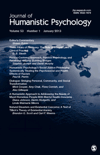
JOURNAL OF HUMANISTIC PSYCHOLOGY
Challenging Perspectives, Enriching LivesThe Journal of Humanistic Psychology, published by SAGE Publications Inc, stands as a leading platform in the fields of psychology, philosophy, and sociology, catering to scholars and practitioners who seek to explore the depth of human experience through a humanistic lens. With an ISSN of 0022-1678 and E-ISSN of 1552-650X, this esteemed journal has a rich history dating back to its inception in 1961 and continues to thrive, with articles that challenge and enhance our understanding of human behavior and values. The journal is recognized in the top quartiles of its categories—Q1 in Philosophy and Sociology and Political Science, and Q2 in Social Psychology—indicating its significant impact and relevance in academia. Additionally, the journal boasts impressive rankings within major databases, including being in the 97th percentile in Arts and Humanities Philosophy and the 88th percentile in Social Sciences Sociology and Political Science. With its commitment to rigorous, qualitative research and a focus on the human condition, the Journal of Humanistic Psychology is essential reading for those dedicated to advancing knowledge and practice in humanistic approaches.