
PROCEEDINGS OF THE INSTITUTION OF CIVIL ENGINEERS-TRANSPORT
Scope & Guideline
Connecting Research and Practice in Transportation Engineering
Introduction
Aims and Scopes
- Sustainable Transportation Solutions:
The journal emphasizes research that contributes to sustainable transportation practices, including studies on carbon emissions, energy-efficient transport modes, and the integration of renewable energy sources. - Traffic Management and Safety:
A core focus is on traffic management strategies, accident prediction models, and methodologies to improve road safety and reduce congestion. - Public Transport Systems:
The journal covers advancements in public transportation systems, including the analysis of passenger flow, mode choice dynamics, and the impact of external factors such as pandemics on travel behaviors. - Technological Innovations in Transport:
Research that explores the application of new technologies, such as machine learning and big data analytics, to optimize transport operations and infrastructure is frequently published. - Infrastructure Performance and Resilience:
The journal includes studies on the performance of transport infrastructure under various conditions, focusing on resilience against environmental and man-made challenges. - Policy and Economic Analysis:
The journal addresses the economic implications of transportation policies and explores the relationship between transport systems and urban development.
Trending and Emerging
- Impact of COVID-19 on Transport:
There is a growing body of research analyzing how the COVID-19 pandemic has affected commuting patterns, public transport usage, and overall transport system resilience. - Sustainable and Green Transport Initiatives:
Emerging themes include the exploration of sustainable transport initiatives, such as electric vehicles, bike-sharing systems, and eco-friendly infrastructure solutions. - Data-Driven Decision Making:
The integration of big data and machine learning techniques for transport optimization, including accident prediction and traffic flow modeling, is becoming increasingly prominent. - Transport and Climate Change:
Research examining the relationship between transport systems and climate change, including carbon emissions and adaptation strategies, is on the rise. - Resilience and Infrastructure Adaptation:
There is a trend towards studying the resilience of transport infrastructure in the face of environmental challenges, focusing on adaptive design and planning strategies.
Declining or Waning
- Traditional Traffic Modelling:
There has been a noticeable decrease in research focused on traditional traffic modelling techniques, as newer methodologies such as machine learning and data-driven approaches gain prominence. - Static Infrastructure Assessments:
Research that solely focuses on static assessments of infrastructure without considering dynamic factors, such as real-time data and adaptive management strategies, has become less frequent. - Conventional Transport Modes:
Studies centered on conventional transport modes, such as private vehicle use and non-sustainable practices, have declined as the focus shifts to more innovative, sustainable approaches. - Localized Transport Issues:
Research specifically addressing localized transport issues without broader implications or connections to global challenges, such as climate change, has seen reduced publication.
Similar Journals
Scientific Journal of Silesian University of Technology-Series Transport
Pioneering research for a sustainable transport future.Scientific Journal of Silesian University of Technology-Series Transport is an esteemed academic platform dedicated to the field of transport engineering, published by FAC TRANSPORT SILESIAN UNIV TECHNOLOGY. Established as an Open Access journal since 2008, it ensures wide dissemination and accessibility of research findings to foster knowledge sharing within the global community. With an ISSN of 0209-3324 and an E-ISSN of 2450-1549, this journal plays a critical role in advancing interdisciplinary discussions in applied Aerospace, Automotive, Civil and Structural, and Mechanical Engineering. Currently classified in Q4 across various engineering subfields according to 2023 metrics, it provides a platform for emerging research and insights into transport systems. Despite its recent establishment, the journal demonstrates growing visibility, contributing to a range of social science discussions in transportation with a Scopus percentile ranking of 18th. Researchers, professionals, and students will find valuable knowledge and innovative approaches in its pages, as it bridges theoretical and practical aspects of transport engineering.
Promet-Traffic & Transportation
Driving Knowledge Exchange in Transportation EngineeringPromet-Traffic & Transportation is a premier open-access journal published by SVEUCILISTE U ZAGREBU, FAKULTET PROMETNIH ZNANOSTI, dedicated to advancing the fields of traffic and transportation engineering. Since its inception in 2001, the journal has played a crucial role in disseminating innovative research and best practices within its scope, which embraces civil and structural engineering, urban studies, and various engineering disciplines. With a Q3 ranking in multiple categories as of 2023, including Civil and Structural Engineering and Ocean Engineering, Promet is positioned to provide valuable insights into contemporary challenges and solutions in transportation systems. Open-access since 2013, the journal ensures that all published articles are freely available to researchers, practitioners, and students globally, fostering a collaborative environment for knowledge exchange. Based in Croatia, it serves as an essential platform for interdisciplinary studies that influence the future of traffic and transportation policies and practices.
Public Transport
Connecting Ideas to Enhance Transportation Infrastructure.Public Transport is a prestigious journal published by Springer Heidelberg, focusing on the critical field of transportation systems and their impacts on urban planning, infrastructure, and environmental management. With an ISSN of 1866-749X and an E-ISSN of 1613-7159, the journal has established itself as a vital resource for researchers and practitioners alike, particularly noted for its Q2 ranking in Information Systems, Management Science and Operations Research, and Transportation, alongside a Q1 ranking in Mechanical Engineering as of 2023. This blend of categories underscores its interdisciplinary nature, making it an essential reading for individuals aiming to enhance their understanding of public transport systems from various angles. While the journal currently does not offer open access, its authoritative articles are critical for driving innovation and policy in the transportation sector. With a converged publication period from 2009 to 2024, Public Transport continues to lead discussions, disseminate research trends, and provide insight into the evolution of transportation methodologies, reflecting its significant impact as a reliable academic source in this crucial field.

International Journal of Transport Economics
Connecting Economic Theory with Transport PracticeWelcome to the International Journal of Transport Economics, a premier platform published by FABRIZIO SERRA EDITORE that explores the intricate relationship between transport economics and its impact on societal progress. Established to foster academic discourse, this journal serves as a vital resource for researchers, professionals, and students in the fields of economics, transportation, and public policy. With a commitment to publishing high-quality, peer-reviewed articles, the journal delves into essential topics such as transport policy analysis, infrastructure economics, and sustainable transportation solutions. Although it operates under a traditional subscription model, the journal remains dedicated to disseminating crucial findings that influence transport strategies worldwide. Nestled in the heart of Pisa, Italy, the International Journal of Transport Economics stands as a beacon of knowledge, playing a pivotal role in shaping the future of transport economics and promoting innovative research in the discipline.

Transport and Telecommunication Journal
Transforming Transport Through Open Access InsightsTransport and Telecommunication Journal is a premier open-access publication dedicated to advancing the fields of transport and telecommunications. Published by SCIENDO, this journal has been providing a platform for innovative research and discussions since 2008, catering to a global audience. With a current impact factor that reflects its growing influence in the academic community—ranking in the Q3 quartile for both Computer Science Applications and Engineering (Miscellaneous)—its articles cover a wide range of topics pertinent to contemporary transport challenges and the integration of telecommunications technology. Notably, the journal's reach extends internationally from Latvia, promoting accessibility and collaboration across borders, as it has been fully open access since 2012. Researchers and professionals are encouraged to contribute to this dynamic forum, where cutting-edge studies and insights into engineering and computer science disciplines converge.
Transport
Connecting researchers to revolutionize transport engineering.Transport is a leading open-access journal published by VILNIUS GEDIMINAS TECH UNIVERSITY, specializing in the fields of automotive and mechanical engineering. Since its transition to open access in 2018, the journal has become a vital platform for disseminating high-quality research and innovative practices in transport systems, engineering technologies, and sustainable mobility solutions. With an ISSN of 1648-4142 and an E-ISSN of 1648-3480, Transport is indexed in Scopus with notable rankings, including Q2 in Automotive Engineering and Q3 in Mechanical Engineering for 2023, reflecting its influential presence within these disciplines. Researchers and practitioners are encouraged to contribute to this scholarly community, where their work will reach a robust international audience, thereby advancing knowledge and fostering collaborations in the ever-evolving transport sector. Based in Lithuania, the journal is committed to maintaining rigorous peer-review standards and promoting interdisciplinary studies to address the complex challenges in transportation engineering.

Journal of Transportation Engineering Part A-Systems
Fostering Interdisciplinary Collaboration in Transportation EngineeringThe Journal of Transportation Engineering Part A-Systems, published by the American Society of Civil Engineers (ASCE), is a cutting-edge, peer-reviewed journal dedicated to the advancement of knowledge in the field of transportation systems. With an ISSN of 2473-2907 and an E-ISSN of 2473-2893, this journal serves as a crucial resource for researchers, professionals, and students interested in the intricate interplay between civil engineering and transportation networks. Boasting a Q2 ranking in both the Civil and Structural Engineering and Transportation categories, this journal reflects the high-quality research contributing to these vital disciplines. Accessible through open-access options, the journal provides a platform for innovative ideas and research findings from 2017 to 2024, aiming to address contemporary challenges in transportation systems while fostering interdisciplinary collaboration. As an essential outlet for scholarly work in the United States and beyond, the Journal of Transportation Engineering Part A-Systems is committed to enhancing the understanding of complex transportation dynamics and the development of sustainable and efficient infrastructures.
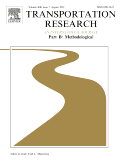
TRANSPORTATION RESEARCH PART B-METHODOLOGICAL
Innovating methodologies for a sustainable transportation future.TRANSPORTATION RESEARCH PART B - METHODOLOGICAL is a premier academic journal published by Pergamon-Elsevier Science Ltd, focusing on innovative methodologies and solutions in the field of transportation research. With a prestigious Q1 ranking in key categories, including Civil and Structural Engineering, Management Science and Operations Research, and Transportation, the journal demonstrates its vital role in advancing the academic discourse and practical applications within these domains. Boasting an impressive Scopus ranking of #20 in Civil and Structural Engineering and #15 in Transportation, it attracts high-quality research that informs policy, enhances transport systems, and contributes to sustainable development. The journal serves as a critical platform for researchers, practitioners, and students alike to disseminate findings that push the boundaries of transportation science. With a publication history dating from 1979 to 2024, TRANSPORTATION RESEARCH PART B is dedicated to fostering interdisciplinary collaborations and inspiring new methodologies to tackle complex transportation challenges. As a vital resource for the academic community, it leverages a broad international perspective to enrich the field and facilitate cutting-edge research.
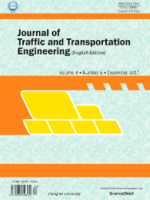
Journal of Traffic and Transportation Engineering-English Edition
Empowering Knowledge in Civil and Structural Engineering.Journal of Traffic and Transportation Engineering-English Edition, published by KEAI PUBLISHING LTD, is a leading open-access journal that has been disseminating valuable research in the realms of civil and structural engineering, as well as transportation studies since 2014. With a robust impact factor reflected by its prestigious Q1 rankings in both Civil and Structural Engineering and Transportation, this journal stands at the forefront of innovation and scholarship, featuring contributions from experts across the globe. The journal is particularly noted for its practical and theoretical advancements in traffic and transportation engineering, making it indispensable for researchers, industry professionals, and students aiming to deepen their understanding of these critical fields. Dedicated to providing a platform for high-quality interdisciplinary research, the Journal of Traffic and Transportation Engineering embraces the principles of open access, ensuring that all published articles are freely available to foster knowledge sharing and collaboration within the community. With its headquarters located in Beijing, China, the journal continues to push boundaries and set new standards in the field of traffic and transportation research.

European Journal of Transport and Infrastructure Research
Unlocking the potential of transport studies through open access.The European Journal of Transport and Infrastructure Research (EJTIR) is a premier academic journal dedicated to advancing the field of transport and infrastructure studies. Established in 2000 and published by the EDITORIAL BOARD EJTIR in the Netherlands, this open-access journal promotes the dissemination of high-quality research through a global platform. With an impressive categorization in the Q2 quartile for Geography, Planning, and Development, as well as Urban Studies, and a Q3 ranking in Transportation as of 2023, EJTIR is recognized for its significant contributions to these vital disciplines. It holds commendable Scopus rankings, reflecting its impact and relevance in the social sciences. The journal's objectives include fostering innovative research, facilitating a dialogue among scholars, practitioners, and policymakers, and addressing contemporary transportation challenges. The open access model ensures that research findings are accessible to a wider audience, thereby promoting evidence-based decision-making in transport policies and infrastructure development. Researchers, professionals, and students are encouraged to engage with the journal's content, contributing to the ongoing discourse in this essential field.