Qualitative Sociology
Scope & Guideline
Fostering Critical Scholarship, Empowering Sociological Voices
Introduction
Aims and Scopes
- Qualitative Research Methodologies:
The journal emphasizes the use of diverse qualitative methods, including ethnography, interviews, and participatory research, to gather rich, nuanced data that captures the complexity of social interactions and phenomena. - Social Justice and Marginalized Voices:
A core focus is on issues of social justice, highlighting the experiences of marginalized populations and the structural inequalities they face, thereby contributing to sociological discussions on power dynamics. - Interdisciplinary Approaches:
The journal welcomes interdisciplinary contributions, integrating insights from various fields such as anthropology, political science, and cultural studies to enrich qualitative sociology and its applications. - Contextual Understanding of Social Phenomena:
There is a consistent aim to understand social phenomena within their specific contexts, recognizing the importance of place, culture, and historical background in shaping social behaviors and meanings. - Reflexivity in Research:
Qualitative Sociology encourages reflexivity among researchers, prompting them to critically engage with their positionality and the impact of their perspectives on the research process and outcomes.
Trending and Emerging
- Environmental Sociology and Authenticity:
A significant trend is the focus on environmental sociology, particularly regarding authenticity in ecological contexts, reflecting growing concerns about climate change and sustainability. - Digital Ethnography and Online Communities:
The rise of digital platforms has led to an increase in studies utilizing digital ethnography, exploring how online communities shape social interactions and identities, particularly during the COVID-19 pandemic. - Intersectionality and Social Identity:
Research increasingly examines intersectionality, focusing on how various social identities (race, gender, class) intersect and influence individual experiences and societal structures. - Political and Civic Engagement:
There is a growing interest in civic opportunities and political engagement, particularly in post-conflict societies and among marginalized groups, reflecting a desire to understand grassroots movements and democratic practices. - Health and Medical Sociology:
Emerging themes in health and medical sociology are gaining traction, examining the cultural and social dimensions of health practices, particularly in the context of the COVID-19 pandemic and its aftermath.
Declining or Waning
- Traditional Quantitative Comparisons:
There has been a noticeable decrease in papers that rely heavily on traditional quantitative methods or comparative statistics, as the journal increasingly prioritizes qualitative insights over purely numerical analysis. - Static Sociological Theories:
Theoretical frameworks that do not adapt to contemporary social issues or fail to incorporate qualitative insights are becoming less common, indicating a shift towards more dynamic and context-sensitive analyses. - Overly Generalized Findings:
Research that presents overly generalized conclusions without grounding them in specific qualitative data or case studies has seen a decline, as the journal's readership seeks more nuanced and contextually rich interpretations. - Descriptive Studies Without Analytical Depth:
There appears to be reduced interest in purely descriptive qualitative studies that lack analytical depth or theoretical engagement, as the journal emphasizes the importance of critical analysis and interpretation.
Similar Journals
Qualitative Social Work
Advancing Insights Through Qualitative ResearchQualitative Social Work is a leading journal dedicated to advancing the field of social work through qualitative research. Published by SAGE PUBLICATIONS INC in the United States, this journal serves as a key platform for scholars and practitioners aimed at exploring the complexities of social work practice and its profound impact on individuals and communities. With an ISSN of 1473-3250 and E-ISSN 1741-3117, the journal has established a notable presence, currently ranking in the Q2 category in Health (social science) and Q1 in Social Sciences (miscellaneous) in its 2023 evaluations. The journal spans the period from 2002 to 2024, emphasizing its ongoing commitment to disseminating cutting-edge research. Although it is not an Open Access journal, its significant Scopus Ranks—ranking #100/604 in Social Sciences (miscellaneous) and #120/371 in Health (social science)—highlight the rigorous standards and relevance of its published work. Researchers, professionals, and students can benefit from the detailed insights and innovative methodologies featured within its pages, solidifying Qualitative Social Work as an essential resource for those passionate about enhancing social work practices through qualitative investigation.
Studies in Social Justice
Empowering voices for equity and change.Studies in Social Justice, published by the University of Windsor's Centre for Studies in Social Justice, is a prominent, peer-reviewed open-access journal dedicated to advancing critical discussions and research in the fields of social justice, gender studies, law, sociology, and political science. Since its inception in 2007, this journal has provided an essential platform for scholars and practitioners to share innovative ideas, empirical studies, and theoretical insights, enhancing understanding of pressing social issues. Notably, it ranks in the Q2 category across multiple disciplines, showcasing its significant impact and relevance in contemporary academic discourse. With a commitment to fostering accessible knowledge, Studies in Social Justice welcomes contributions from diverse perspectives and disciplines, making it a vital resource for researchers, professionals, and students alike. The journal remains pivotal in shaping conversations around equity, inclusivity, and social transformation in a rapidly changing world.
Ethnography
Advancing anthropology with innovative insights.Ethnography is a leading peer-reviewed journal published by SAGE Publications Ltd, focusing on the field of anthropology, cultural studies, and the broader domain of arts and humanities. With an ISSN of 1466-1381 and an E-ISSN of 1741-2714, the journal has established itself as a premier outlet for innovative research and theoretical discussions that encapsulate diverse cultural narratives across the globe. Celebrated for its impact, Ethnography holds a prestigious Q1 ranking in 2023 for Anthropology and Cultural Studies, reflecting its influence in the academic community. Researchers seeking to disseminate their findings can appreciate the journal's rigorous editorial standards and the relevant scope that spans from 2000 to 2024. While not currently offering Open Access, its extensive reach and engagement provide essential insights into contemporary ethnographic practices and methodological advancements. Academics and students alike will find Ethnography an indispensable resource for critically analyzing cultures and enriching their understanding of social dynamics.
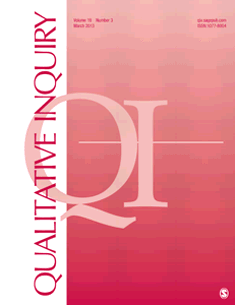
QUALITATIVE INQUIRY
Exploring the Depths of Social UnderstandingQUALITATIVE INQUIRY is a leading academic journal published by SAGE Publications Inc, dedicated to advancing the field of qualitative research within the domains of Anthropology and Social Sciences. With an impressive Q1 ranking in both categories for 2023, the journal holds a prominent position in the academic community, recognized for its high-quality contributions and influential research. The journal, available in print with the ISSN 1077-8004 and electronically with the E-ISSN 1552-7565, showcases innovative methodologies and critical analyses that deepen our understanding of social phenomena. Researchers, professionals, and students will find a wealth of knowledge as the journal publishes insightful studies that push the boundaries of qualitative inquiry. Situated in the vibrant academic landscape of the United States and operating from its headquarters in Thousand Oaks, CA, QUALITATIVE INQUIRY plays a crucial role in shaping discussions and fostering new perspectives in the social sciences, underscoring its importance in the scholarly community.

Revista Critica de Ciencias Sociais
Exploring diverse perspectives in the social sciences landscape.Revista Critica de Ciencias Sociais is a distinguished journal published by the CENTRO ESTUDOS SOCIAIS, FAC ECONOMIA, dedicated to advancing the field of social sciences. Established in 2001 and embracing Open Access since 2002, this journal aims to provide an inclusive platform for scholarly research in various areas of psychology and social sciences. With a notable commitment to quality and accessibility, it currently holds a Q4 category ranking in both psychology and general social sciences as of 2023. Despite its emerging status, with rankings reflecting its growth in the competitive landscape, this journal aspires to elevate discussions and disseminate knowledge pertinent to contemporary societal issues. Based in Coimbra, Portugal, the journal serves as an invaluable resource for researchers, professionals, and students alike, fostering a global dialogue that enriches the multifaceted field of social studies.
Qualitative Research Journal
Advancing Knowledge Through Rich NarrativesQualitative Research Journal is a leading academic publication dedicated to the exploration and advancement of qualitative methodologies and insights within the fields of Education and Social Sciences. Published by Emerald Group Publishing Ltd in the United Kingdom, this journal plays a crucial role in fostering interdisciplinary dialogue and innovation, with a commendable impact factor that underscores its significance in the academic community. Holding a prestigious Q2 category ranking in both Education and Social Sciences as of 2023, the journal provides a platform for high-quality research that emphasizes the richness of qualitative data. Researchers, professionals, and students alike will benefit from its diverse contributions and comprehensive coverage of emerging trends in qualitative analysis. The journal is committed to enhancing scholarly discourse, making it a vital resource for anyone engaged in qualitative research.
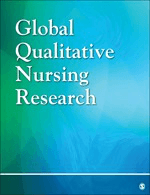
Global Qualitative Nursing Research
Fostering dialogue and discovery in qualitative nursing practices.Global Qualitative Nursing Research, published by SAGE Publications Inc, is a premier open-access journal dedicated to advancing the field of qualitative research within nursing. Since its inception in 2014, this journal has championed the dissemination of innovative and impactful findings that enhance the understanding and practice of qualitative methodologies in nursing and healthcare contexts. With an impressive Scopus ranking of #43 out of 139 in General Nursing, placing it in the 69th percentile, and achieving a Q2 quartile ranking in 2023, it stands as a vital resource for researchers, practitioners, and students alike. The journal embraces a wide array of qualitative approaches, fostering a diverse academic dialogue that influences nursing practice, education, and policy on a global scale. As an open-access publication, it ensures that critical research is widely accessible, facilitating knowledge transfer and supporting evidence-based practices in nursing across the globe. Addressing crucial themes in nursing and qualitative research, Global Qualitative Nursing Research is positioned as an indispensable platform for the scholarly community, driving both inquiry and innovation in the nursing discipline.

Departures in Critical Qualitative Research
Challenging Boundaries in Communication and Language StudiesDepartures in Critical Qualitative Research, published by University of California Press, is an influential journal dedicated to advancing knowledge within the realms of Communication and Linguistics and Language. With its commitment to exploring the complexities and nuances of qualitative research, this journal has quickly established itself as a vital resource for scholars and professionals alike. Although it currently resides in the fourth quartile in Communication and the third quartile in Linguistics, its notable Scopus rankings, including a 64th percentile in Language and Linguistics, highlight its growing significance in the academic discourse. Covering a converged period from 2019 until 2024, the journal seeks to foster innovative and critical perspectives on qualitative methodologies, offering invaluable insights that address contemporary social issues. Access to its content is available to a wide audience, contributing to the journal's reputation as a beacon for those engaged in critical qualitative research.

Du Bois Review-Social Science Research on Race
Catalyzing Scholarly Conversations on Racial IssuesDu Bois Review: Social Science Research on Race is a prestigious academic journal published by Cambridge University Press, focusing on the intersections of race, ethnicity, and social sciences. Since its inception in 2004, this journal has carved out a vital space for interdisciplinary research, vital for understanding contemporary societal dynamics surrounding race. With an impressive categorization in the Q1 tier of Anthropology and Cultural Studies, and a respectable Q2 ranking in Sociology and Political Science, the Du Bois Review is recognized for its impactful contributions to the field, boasting a remarkable 86th percentile ranking in Cultural Studies. Researchers and students will find in this journal a rich repository of scholarly articles that encourage critical discourse and innovative thinking. Although it is not an open-access publication, its rigorous peer-review process ensures the highest quality of scholarship, making it an essential resource for anyone engaged in social science research on race.
International Journal of Qualitative Studies in Education
Exploring the Depths of Educational Inquiry.Welcome to the International Journal of Qualitative Studies in Education, a prestigious publication in the field of education, managed by Routledge Journals, Taylor & Francis Ltd. With a strong emphasis on qualitative methodologies, this journal serves as a critical platform for researchers, educators, and practitioners, providing insightful analyses and innovative approaches to educational inquiry since its inception in 1988. Recognized within the Q2 category in Education as of 2023, it holds an impressive Scopus rank of 570 out of 1543, reflecting its significant impact and relevance in social sciences and education research. Although it does not offer open access, the journal's rich content contributes to the advancement of qualitative research, encouraging discourse that shapes contemporary educational practices. With a commitment to rigorous scholarly standards, the International Journal of Qualitative Studies in Education aims to stimulate critical dialogue and foster community among researchers, professionals, and students seeking to deepen their understanding of qualitative research and its applications in the rapidly evolving educational landscape.