Race and Justice
Scope & Guideline
Exploring the intersections of race and justice.
Introduction
Aims and Scopes
- Intersections of Race and Justice:
The journal examines how race influences various aspects of the justice system, including arrest rates, sentencing, and perceptions of law enforcement. - Impact of Systemic Racism:
Research published in the journal explores systemic racism within policing and judicial practices, shedding light on disparities faced by racial and ethnic minorities. - Community and Law Enforcement Relations:
The journal highlights studies that investigate the dynamics between communities of color and law enforcement, emphasizing the implications for public safety and community trust. - Cultural and Social Contexts:
Papers often delve into the cultural narratives and social contexts that shape perceptions of crime and justice, particularly among marginalized groups. - Policy Analysis and Reform:
The journal serves as a platform for discussing policy implications and potential reforms aimed at addressing racial disparities in the criminal justice system.
Trending and Emerging
- Racial Justice and Activism:
There is an increasing emphasis on the role of community activism and movements, such as Black Lives Matter, in shaping public perceptions and policies related to policing and justice. - Intersectionality in Research:
Emerging studies increasingly utilize an intersectional lens to explore how overlapping identities (race, gender, class) affect experiences within the justice system, indicating a broader understanding of social dynamics. - Impact of Technology on Policing:
Research is increasingly focusing on the implications of technology in policing practices, including body cameras and social media, and their effects on accountability and public perceptions of law enforcement. - Health Disparities Post-Incarceration:
An emerging theme is the examination of health outcomes and disparities following incarceration, particularly among marginalized racial groups, linking justice involvement with broader public health issues. - Racial Bias in Sentencing and Legal Decisions:
Recent papers are increasingly addressing the nuanced ways in which racial bias manifests in sentencing practices and legal decision-making, contributing to ongoing discussions about reform and equality.
Declining or Waning
- Historical Contexts of Racial Violence:
There has been a noticeable decrease in papers specifically addressing historical instances of racial violence, such as lynching or other historical injustices, as newer studies focus more on contemporary issues. - Traditional Criminal Justice Approaches:
Topics rooted in traditional criminal justice theories and practices are becoming less prominent. The journal is moving towards more innovative and interdisciplinary approaches that incorporate social justice perspectives. - Individualized Studies on Racial Dynamics:
There is a waning interest in studies that solely focus on individual racial dynamics without considering broader systemic implications, as the journal increasingly emphasizes structural and institutional analyses. - Overemphasis on Quantitative Studies:
The journal's recent publications show a shift away from purely quantitative research towards more qualitative and mixed-methods approaches, reflecting a broader trend in social sciences.
Similar Journals

Du Bois Review-Social Science Research on Race
Exploring the Dynamics of Race and SocietyDu Bois Review: Social Science Research on Race is a prestigious academic journal published by Cambridge University Press, focusing on the intersections of race, ethnicity, and social sciences. Since its inception in 2004, this journal has carved out a vital space for interdisciplinary research, vital for understanding contemporary societal dynamics surrounding race. With an impressive categorization in the Q1 tier of Anthropology and Cultural Studies, and a respectable Q2 ranking in Sociology and Political Science, the Du Bois Review is recognized for its impactful contributions to the field, boasting a remarkable 86th percentile ranking in Cultural Studies. Researchers and students will find in this journal a rich repository of scholarly articles that encourage critical discourse and innovative thinking. Although it is not an open-access publication, its rigorous peer-review process ensures the highest quality of scholarship, making it an essential resource for anyone engaged in social science research on race.
SOCIAL PROBLEMS
Illuminating the complexities of social issues with rigorous research.SOCIAL PROBLEMS, an esteemed journal published by Oxford University Press Inc, stands at the forefront of the sociology and political science fields. Established in 1973, this journal has evolved to become a key platform for advancing theoretical and empirical research on the pressing social issues of our time, spanning various critical topics such as inequality, crime, health disparities, and policy impacts. With an impressive 2023 impact factor placing it in the Q1 category for both sociology and political science, SOCIAL PROBLEMS is ranked #68 out of 1466 journals in its category, representing the top 95th percentile in Scopus rankings. While not an Open Access publication, the journal maintains a commitment to disseminating influential research and scholarship, enabling researchers, professionals, and students to engage with cutting-edge discussions and findings. For those passionate about understanding and addressing social challenges, SOCIAL PROBLEMS offers invaluable insights and a rigorous academic community.
Anuario Iberoamericano de Derecho Internacional Penal
Connecting researchers and practitioners in criminal justice.Anuario Iberoamericano de Derecho Internacional Penal is a distinguished open-access journal dedicated to the field of international criminal law, published by UNIV ROSARIO, EDITORIAL. Since its inception in 2013, this journal has provided a platform for rigorous research and scholarly discussions related to the complexities of international penal law, enhancing understanding and application across Ibero-American jurisdictions. With an ISSN of 2346-3120, it caters to an audience of researchers, legal practitioners, and students who are keen to explore contemporary issues, case law, and reforms within the realm of international criminal justice. The journal aims to foster interdisciplinary dialogue, promote legal scholarship, and contribute to the development of international law principles in the Spanish-speaking world. As an essential resource for those engaged in the study and practice of international law, Anuario Iberoamericano de Derecho Internacional Penal continues to uphold a commitment to accessibility and academic excellence.
Race Ethnicity and Education
Unpacking complexities in race, ethnicity, and learning.Race Ethnicity and Education is a premier interdisciplinary journal published by Routledge Journals, Taylor & Francis Ltd, dedicated to exploring critical issues at the intersection of race, ethnicity, and educational practices. With an impressive impact factor and distinguished Scopus rankings placing it in the top quartile across categories such as Cultural Studies, Demography, and Education, this journal provides a rich platform for innovative research that addresses the complexities of educational equity and social justice. Since its inception in 1998, the journal has aimed to advance knowledge in these crucial areas, facilitating scholarly dialogue among researchers, educators, and policy makers. With a commitment to disseminating high-quality research, Race Ethnicity and Education plays an essential role in shaping the future of educational discourse, making it a must-read for anyone invested in the fields of education and social justice.

Crime and Justice-A Review of Research
Advancing the discourse on crime and justice.Crime and Justice: A Review of Research is a leading scholarly journal published by the University of Chicago Press, dedicated to advancing knowledge in the fields of sociology and political science, specifically through the lens of crime and justice studies. With an ISSN of 0192-3234 and an E-ISSN of 2153-0416, this academic journal offers a distinguished platform for researchers, practitioners, and students to explore contemporary issues, methodologies, and theoretical advancements within the domain. Ranked in the Q2 category for both sociology and political science as of 2023, it has gained recognition with an impressive Scopus rank of #150 out of 1466 in its field, placing it in the 89th percentile. The journal publishes comprehensive reviews and research articles that inform best practices and policies in crime prevention, law enforcement, and social justice, fostering a deeper understanding of the complexities surrounding crime and societal responses. Though it is not an open-access journal, the insightful research it presents is indispensable for academic discourse and practical application in addressing the multifaceted challenges of crime and justice in contemporary society.

JOURNAL OF CRIMINAL LAW & CRIMINOLOGY
Pioneering Research in Law and CrimeJournal of Criminal Law & Criminology, published by Northwestern University, is a premier scholarly journal dedicated to advancing the understanding of criminal law and criminological theories. Established in 1974, it has a strong history of publishing rigorous empirical research and critical analyses, contributing significantly to the discourse in legal and criminal justice studies. With an impressive impact factor and recognized as a Q1 journal in Law, it ranks favorably within the Scopus database, positioned in the top 25% of its category. This journal is essential for academics, legal practitioners, and students seeking insightful perspectives and developments in contemporary criminal justice issues. Although not open access, it provides a wealth of resources and discussions, making it an invaluable asset for anyone engaged in the study of law and criminology.

Canadian Ethnic Studies-Etudes Ethniques au Canada
Unraveling the Complexities of Diversity in CanadaCanadian Ethnic Studies - Études Ethniques au Canada serves as a pivotal platform for interdisciplinary scholarship focused on the complexities of ethnic identity and multiculturalism within Canada. Published by the Canadian Ethnic Studies Association, this journal not only examines the rich tapestry of Canada’s diverse population but also engages with significant themes in Anthropology, History, Sociology, and Political Science. With impressive rankings—Q1 in History and Q2 in Anthropology for 2023—this journal is recognized for its rigorous approach to research, fostering critical dialogue among scholars and practitioners alike. Although currently not Open Access, articles are made accessible to those in institutions and academic settings, expanding reach and impact. By publishing cutting-edge research from 1986 to the present, this journal continues to enhance our understanding of ethnic studies, making it an essential resource for anyone involved in the study of Canada’s multicultural landscape.
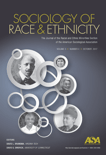
Sociology of Race and Ethnicity
Illuminating the intersections of sociology and ethnicity.Sociology of Race and Ethnicity is a leading academic journal published by SAGE Publications Inc, dedicated to advancing the understanding of race and ethnicity within the realms of sociology and anthropology. Since its inception in 2015, the journal has rapidly established itself as a vital resource, achieving notable rankings as a Q1 journal in both Anthropology and Social Sciences, showcasing its impact within the academic community. With an impressive Scopus ranking of #23 out of 502 in Anthropology, it stands in the 95th percentile, and ranks #60 out of 604 in the field of Social Sciences, representing the 90th percentile. This commitment to high-quality research is reflective of its rigorous peer-review process and dedication to presenting innovative and impactful scholarship. Though not open-access, the journal ensures wide dissemination of pioneering research on critical issues related to race and ethnicity, making it an essential read for researchers, professionals, and students aiming to explore and understand the complexities of these pressing social dynamics. With its base in the United States and a forward-looking vision extending into 2024, Sociology of Race and Ethnicity is poised to remain at the forefront of sociological inquiry, shaping conversations and future research directions in this crucial field.

International E-Journal of Criminal Sciences
Illuminating Contemporary Issues in Criminal JusticeWelcome to the International E-Journal of Criminal Sciences, a distinguished platform dedicated to the rigorous exploration of contemporary issues within the field of criminal sciences. Published by the DMS INT RESEARCH CENTRE, this journal aims to disseminate high-quality research and critical analyses that foster a deeper understanding of criminal behavior, law enforcement strategies, justice systems, and related societal impacts. With its commitment to open access, it ensures that knowledge is readily available to a global audience, promoting inclusivity and academic collaboration across borders. Although specific metrics like impact factor and H-index have yet to be established, its relevance and contribution to the discourse on criminal sciences remain significant. Researchers, professionals, and students are invited to engage with the journal’s valuable insights, as it strives to become a leading resource for innovative thought and evidence-based solutions in the evolving landscape of criminal science.

CRIMINAL JUSTICE STUDIES
Uncovering new dimensions in criminal justice research.CRIMINAL JUSTICE STUDIES, published by Routledge Journals, Taylor & Francis Ltd, is a leading journal in the field of criminal justice and law, boasting an impressive 2023 Q1 category ranking. With an ISSN of 1478-601X and an E-ISSN of 1478-6028, this journal serves as a pivotal platform for disseminating high-quality research that spans various dimensions of criminal justice, including policy, theory, and practice. Since its inception in 2007, CRIMINAL JUSTICE STUDIES has become a vital resource for scholars, practitioners, and students, addressing contemporary challenges and developments within the field. With a remarkable Scopus rank of #157 out of 1025 in Law, positioning it within the 84th percentile, this journal is dedicated to advancing knowledge and fostering critical discourse. Although it does not offer open access, the insights shared within its pages are invaluable to those seeking to deepen their understanding of criminal justice systems worldwide. Based in the United Kingdom and running through 2024, CRIMINAL JUSTICE STUDIES is essential for those engaged in research and practice, pushing the boundaries of knowledge and contributing to the evolution of criminal justice scholarship.