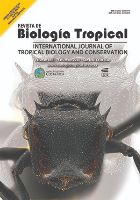
REVISTA DE BIOLOGIA TROPICAL
metrics 2024
Illuminating the path to conservation and sustainability.
Introduction
REVISTA DE BIOLOGIA TROPICAL is a prominent scholarly journal published by the Universidad de Costa Rica that serves as a vital platform for research in the realms of agricultural and biological sciences. Established in 1969, the journal has evolved into a crucial resource, contributing significantly to the understanding of tropical ecosystems and biodiversity. With its current classification in the Q2 quartile for Agricultural and Biological Sciences, it ranks #109 out of 221 journals in its category, reflecting its esteemed position within the academic community. Although it operates under traditional access guidelines, the journal remains committed to disseminating high-quality research that informs conservation efforts and sustainable practices in tropical biology. The journal's diverse scope encompasses a wide range of topics, ensuring relevance for professionals, researchers, and students dedicated to enhancing knowledge and innovation in the biological sciences. As the journal progresses towards 2024, it continues to invite contributions that advance scientific discourse and foster collaboration within the field.
Metrics 2024
 0.270.800.9048
Metrics History
Rank 2024
Scopus
IF (Web Of Science)
JCI (Web Of Science)
Quartile History
Similar Journals
BIOTROPICA
Leading the way in ecological and evolutionary research since 1979.BIOTROPICA is a premier journal published by Wiley, specializing in the fields of Ecology, Evolution, Behavior, and Systematics. With a robust impact factor and positioned in the Q1 category in its field, it stands out as a leading source of research that informs and shapes our understanding of biodiversity and ecosystem management. Since its inception in 1979, BIOTROPICA has been dedicated to publishing high-quality articles that advance scientific knowledge and foster conservation efforts globally. Researchers and professionals alike value the journal for its rigorous peer-review process and its influence in academic discourse, demonstrated by its Scopus ranking placing it in the 70th percentile among its peers. While the journal does not currently offer open access, it continues to be a vital resource for those engaged in the study of biological systems, making significant contributions to the advancement of ecological science. Readers can expect to find a wealth of innovative research and perspectives that are critical to addressing contemporary environmental challenges.
AFRICAN INVERTEBRATES
Bridging Disciplines in African Invertebrate StudiesAFRICAN INVERTEBRATES is a distinguished open-access academic journal published by the COUNCIL NATAL MUSEUM, specializing in the study of invertebrate biology within the vibrant ecosystems of Africa. Operating since 2006, this journal has established itself as a vital resource in the fields of Animal Science, Ecology, Evolution, Behavior, Insect Science, and Paleontology, earning a strong Q2 ranking in these categories as of 2023. With its ISSN 1681-5556 and E-ISSN 2305-2562, the journal provides unrestricted access to cutting-edge research, fostering collaboration among global researchers and professionals. AFRICAN INVERTEBRATES serves not only as a platform for high-quality scholarly articles but also aims to enhance the understanding of Africa's unique invertebrate fauna and the ecological challenges they face. With a commitment to innovation and excellence, the journal is pivotal for those looking to contribute to the discourse surrounding African biodiversity and conservation strategies.

TROPICAL ECOLOGY
Illuminating the Path to Sustainable Tropical DevelopmentTropical Ecology is a distinguished journal published by SpringerNature that has been at the forefront of advancing the field of ecology since its inception. With a focus on tropical ecosystems, it addresses critical areas such as conservation biology, systematics, and environmental science. The journal is indexed within leading databases and enjoys a respectable impact factor, ranking in the second quartile (Q2) in Ecology as well as in Plant Science, and third quartile (Q3) in Ecology, Evolution, Behavior and Systematics for 2023. Its insightful research contributions place it among the top-tier publications in Agricultural and Biological Sciences, specifically in rankings such as #185 in Plant Science and #178 in Ecology. While it currently operates under subscription access, it remains an essential resource for researchers, professionals, and students interested in the dynamics of tropical environments, fostering a greater understanding of ecological principles and practices that are pivotal for sustainable development. The journal operates with continuous publication from 1976 to 2024, ensuring timely dissemination of impactful research findings that contribute to the global body of knowledge.
INTERNATIONAL JOURNAL OF TROPICAL INSECT SCIENCE
Advancing the Science of Tropical InsectsINTERNATIONAL JOURNAL OF TROPICAL INSECT SCIENCE, published by Springer International Publishing AG, is a leading interdisciplinary journal dedicated to advancing knowledge in the fields of insect science and ecology. With its ISSN 1742-7584 and E-ISSN 1742-7592, this journal provides a platform for researchers to publish high-quality, peer-reviewed articles that explore various aspects of tropical insect biology, behavior, and their ecological impacts. As evidenced by its Q3 ranking in both Ecology, Evolution, Behavior and Systematics and Insect Science, it plays a vital role in fostering scientific dialogue and innovation within these disciplines. Researchers affiliated with the journal benefit from its visibility and growing impact, as demonstrated by its Scopus ranks, with a percentile standing of 61st in Insect Science. Although the journal is not open access, it still reaches a wide academic audience, making significant contributions to our understanding of tropical ecosystems. Situated in Switzerland, this journal is crucial for students, professionals, and researchers invested in the intersection of entomology and ecological science.

CAHIERS DE BIOLOGIE MARINE
Connecting Researchers to the Marine WorldCAHIERS DE BIOLOGIE MARINE, published in France, is a distinguished journal in the field of Aquatic Sciences, known for its interdisciplinary exploration of marine biological research. With ISSN 0007-9723 and E-ISSN 2262-3094, it has served as a vital platform for disseminating scientific knowledge since its inception in 1992. The journal is indexed in Scopus, where it currently holds a position of rank #172 out of 247 in the Aquatic Science category, landing in the 30th percentile, reflecting its commitment to quality research in the domain. Although it operates as a traditional access journal, CAHIERS DE BIOLOGIE MARINE encourages scholarly contribution from both emerging and established researchers, making significant strides in understanding marine ecosystems and biota. As such, it remains an essential resource for professionals and students aiming to contribute to the growing body of knowledge in aquatic sciences.
Nature Conservation-Bulgaria
Exploring the intricate web of biodiversity and conservation.Nature Conservation-Bulgaria is a distinguished peer-reviewed journal published by PENSOFT PUBLISHERS, dedicated to advancing the field of conservation through a comprehensive exploration of ecological and environmental issues. Since its inception in 2012, this Open Access journal has cemented its position as an essential resource for researchers, professionals, and students interested in the complex dynamics of ecosystems and biodiversity conservation. With an impressive Q2 ranking in both the Ecology, Evolution, Behavior and Systematics and Nature and Landscape Conservation categories, the journal showcases significant contributions to ecological scholarship, reflecting its commitment to vibrant and impactful research. The journal's coverage extends from 2012 to 2024, and it is indexed in Scopus, where it ranks in the 63rd percentile for key areas within Agricultural and Biological Sciences. With its base in Bulgaria, the journal also aims to highlight regional conservation efforts while maintaining global relevance, making it an indispensable platform for disseminating vital knowledge and fostering collaboration across the scientific community.
MOLLUSCAN RESEARCH
Advancing the Science of MollusksMolluscan Research is a distinguished journal dedicated to advancing the field of molluscan science, covering a broad spectrum of topics including taxonomy, ecology, evolutionary biology, and conservation. Published by Taylor & Francis Ltd, this journal has been a crucial resource for researchers from its inception in 1987 up to 2024, significantly contributing to the understanding of molluscan species and their roles in various ecosystems. With an impressive impact factor and recognized within the Q3 quartile rankings in Animal Science and Zoology and Ecology, Evolution, Behavior and Systematics, as well as Q4 in Genetics, Molluscan Research serves as a vital platform for dissemination of high-quality original research and reviews. While it does not currently offer Open Access options, the journal remains accessible through institutional subscriptions, fostering collaboration and knowledge-sharing among researchers, professionals, and students across the globe.

NORTHWEST SCIENCE
Empowering researchers with vital insights from the Northwest.NORTHWEST SCIENCE, published by the NORTHWEST SCIENTIFIC ASSOCIATION, serves as a vital resource for researchers and professionals in the fields of ecology, evolution, and systematics. With an ISSN of 0029-344X and an E-ISSN of 2161-9859, this journal has been disseminating valuable scientific insights since its inception in 1975 and continues to do so into 2024. Although currently positioned in the Q4 quartile for its category, it plays a crucial role in advancing the understanding of ecological and biological sciences, reflecting a diverse range of studies and methodologies. Researchers will find the journal particularly appealing due to its emphasis on regional studies and their implications on a global scale. While NORTHWEST SCIENCE is not an open-access publication, it provides significant contributions to the academic dialogue within its discipline, making it an essential addition to the library of any dedicated researcher, student, or professional in the environmental sciences.
Tropical Conservation Science
Empowering research to protect tropical biodiversity.Tropical Conservation Science, an esteemed journal published by SAGE Publications Inc, plays a pivotal role in the field of environmental science, particularly within the realms of ecology and nature conservation. Established as an Open Access platform since 2008, it facilitates global dissemination of critical research findings dedicated to the preservation of tropical ecosystems. With an impressive impact factor reflected in its Q2 rankings within both ecology and nature landscape conservation categories for 2023, the journal is ranked in the 66th percentile for Environmental Science and maintains a strong position in the academic community. The journal’s scope encompasses a wide array of tropical conservation issues and aims to foster interdisciplinary collaboration among researchers, professionals, and students committed to advancing conservation strategies. Tropical Conservation Science is not merely a publication; it's a vital resource contributing to the safeguarding of our planet's biodiversity.
JOURNAL OF TROPICAL ECOLOGY
Driving Innovation in Ecological UnderstandingThe JOURNAL OF TROPICAL ECOLOGY, published by Cambridge University Press, serves as a pivotal platform for advancing knowledge in the field of ecology, particularly within tropical environments. With an ISSN of 0266-4674 and an E-ISSN of 1469-7831, this esteemed journal has been a key resource since its inception in 1985, maintaining a focus on empirical research that addresses the complexities of tropical ecosystems. It holds a respectable Q3 ranking in the Ecology, Evolution, Behavior and Systematics category as of 2023, indicating its significant contribution to the field, although it remains within the competitive mid-range. The journal publishes original research, reviews, and methodological articles that illuminate the rich biodiversity and unique ecological processes of tropical regions, fostering a deeper understanding of conservation challenges. Accessible from the United Kingdom, this publication appeals to a diverse audience of researchers, professionals, and students keen on exploring ecological dynamics in tropical settings, and plays a crucial role in promoting scientific discourse and collaborative efforts aimed at preserving our planet's vital ecosystems.