
Revista Comunicacion
Scope & Guideline
Empowering Voices Through Rigorous Academic Inquiry
Introduction
Aims and Scopes
- Transmedia Narratives:
The journal explores how narratives extend across multiple media platforms, analyzing their implications for storytelling and audience engagement, particularly in contexts such as gaming, music, and film. - Representation and Gender Studies:
There is a strong emphasis on gender representation in media, examining issues of discrimination and empowerment, especially concerning women in journalism and other media roles. - Impact of Digital Technologies:
The journal investigates how digital platforms, such as social media and streaming services, affect communication practices, audience interactions, and content distribution across various sectors. - Cultural Studies and Identity:
Revista Comunicacion delves into cultural phenomena and their role in identity construction, particularly within fan cultures, music industries, and digital communities. - Educational Communication:
The journal addresses the role of communication in education, focusing on how digital tools and narratives can enhance learning experiences and promote critical thinking.
Trending and Emerging
- Fandom and Interactive Engagement:
There is a growing interest in how fandoms engage interactively with narratives, especially in contexts like alternate reality games and VTubers, which reflects a shift towards participatory culture. - Digital Storytelling and Edu-Entertainment:
The journal is increasingly focused on digital storytelling techniques and their educational applications, highlighting the potential of narratives to enhance learning and engagement. - Gender and Diversity in Media Representation:
Emerging themes around the representation of diverse identities in media, particularly concerning race, gender, and sexuality, are gaining traction, emphasizing the need for inclusivity. - Crisis Communication and Digital Media:
The impact of crises, such as the COVID-19 pandemic, on communication strategies, particularly in journalism and public relations, has become a significant area of exploration. - Social Media's Role in Identity Formation:
The role of social media in shaping collective identities and personal narratives is increasingly relevant, as reflected in studies on digital ethnography and social network analysis.
Declining or Waning
- Traditional Journalism:
The focus on traditional journalism practices seems to be waning, as newer themes prioritize digital and transmedia narratives over conventional journalistic approaches. - General Media Literacy:
Although media literacy remains important, the specific discussions around general media literacy without a digital or contextual focus are less prevalent compared to the rise of digital competencies. - Static Gender Studies:
While gender studies are still a vital part of the journal's scope, the exploration of static gender roles without a focus on intersectionality or contemporary issues is becoming less common.
Similar Journals

Review of Communication Research
Empowering Voices in Scholarly DiscourseReview of Communication Research is a prestigious open-access journal dedicated to advancing the field of communication studies. Published by REVIEW COMMUNICATION RESEARCH from its base in Madrid, Spain, this journal has established itself as a vital platform for scholarly discourse since its inception. With an impressive impact factor and ranked in the Q1 quartile of communication journals for 2023, it holds a commendable position, placing it within the top 13% of approximately 511 journals in the communication category on Scopus. Since becoming open-access in 2013, the journal has enabled researchers, professionals, and students to access high-quality research without financial barriers, thereby fostering a greater dissemination of knowledge and dialogue within the community. Covering a wide array of topics from communication theory to media studies, the Review of Communication Research continues to contribute significantly to the understanding and evolution of communication in today’s interconnected world. Researchers are encouraged to engage with and submit their findings to this influential journal to further enrich the scholarly landscape.
Howard Journal of Communications
Fostering interdisciplinary dialogue for a dynamic communication field.The Howard Journal of Communications, published by Routledge Journals, Taylor & Francis Ltd, is a leading academic journal dedicated to advancing the field of communications. With a strong focus on both theoretical and practical elements, it has established itself as a vital resource for researchers, professionals, and students since its inception in 1988. The journal holds a prestigious Q2 ranking in the categories of Communication and Strategy and Management for 2023, positioning it among the top publications in these fields. The Scopus ranking also highlights its importance, with a notable rank of #158 in Social Sciences Communication and #268 in Business, Management and Accounting. Although the journal does not offer open access at this time, its comprehensive scope and commitment to quality scholarship ensure it remains an essential platform for disseminating innovative research and ideas in the rapidly evolving landscape of communication studies. Located in the United Kingdom, the journal continues to foster interdisciplinary dialogue and enhance academic discourse within these vital disciplines.
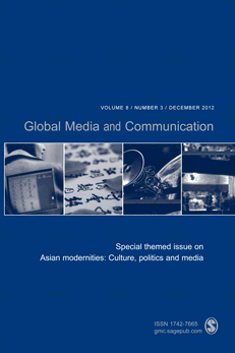
Global Media and Communication
Advancing Insights into Global Media DynamicsGlobal Media and Communication is a premier journal dedicated to advancing the fields of media and communication studies, published by SAGE Publications Ltd. With an ISSN of 1742-7665 and an E-ISSN of 1742-7673, this journal offers a platform for scholarly discourse and innovative research that explores the intricate relationships between global media practices and communication strategies. Recognized as a Q1 journal in both the Arts and Humanities (Miscellaneous) and Communication categories for 2023, it stands out in its commitment to delivering high-quality, peer-reviewed articles that contribute to the understanding of contemporary media landscapes. Located in London, United Kingdom, the journal benefits from being at the heart of cultural and digital innovation. Researchers, professionals, and students can look forward to insightful articles that not only critique existing frameworks but also propose new methodologies, ensuring that Global Media and Communication remains a vital resource for anyone interested in navigating the evolving dynamics of media and communication on a global scale.
Womens Studies in Communication
Illuminating the Intersections of Gender and DialogueWomens Studies in Communication, published by Routledge Journals, Taylor & Francis Ltd, stands as a pivotal platform for scholars and practitioners in the fields of communication and gender studies. With an impressive history of publishing since 1977, this journal delves into the intricate intersections of gender and communication, fostering critical dialogue and innovative research. It currently holds a category quartile ranking of Q2 in both Communication and Gender Studies, reflecting its significant impact in these vital fields. With an ongoing commitment to exploring the nuances of women's voices and experiences in various communicative contexts, the journal provides an invaluable resource for understanding contemporary societal issues. While currently not available as an open-access publication, its adherence to high academic standards, evidenced by its Scopus rankings, making it an essential read for researchers, students, and professionals eager to enrich their understanding of gender dynamics in communication.

Austral Comunicacion
Unveiling new methodologies in communication practices.Austral Comunicacion, published by the esteemed Universidad Austral within its Faculty of Communication, is an open-access journal dedicated to advancing the field of communication studies. Since its inception in 2012, this journal has emerged as a vital platform for scholarly discourse, fostering new ideas and methodologies within the discipline. With the increasing importance of communication in our globalized world, the journal serves as a crucial resource for researchers, professionals, and students looking to explore the dynamics of media, culture, and communication practices. The journal's accessibility ensures that cutting-edge research reaches a global audience, promoting collaboration and innovation in the field. Operating under the ISSN 2313-9129 and E-ISSN 2313-9137, Austral Comunicacion is poised to continue its significant impact on communication studies as it transitions into its latest converged years of 2023 to 2024.

Communication & Society-Spain
Championing High-Quality Research in Communication StudiesCommunication & Society-Spain, published by Universidad de Navarra, is an esteemed open access journal dedicated to advancing scholarship in the dynamic fields of communication and cultural studies. Since its inception in 1988, the journal has maintained a commitment to disseminating high-quality research that engages with contemporary issues and contributes to the evolving discourse around communication theories and practices. With a commendable Q1 ranking in both Communication and Cultural Studies categories, it stands as a prominent source for researchers and professionals alike, reflecting its robust presence in the academic community—evidenced by its Scopus rankings placing it in the top percentiles within both fields. The journal's scope encompasses diverse perspectives and methodologies, thereby fostering interdisciplinary dialogue essential for understanding the complexities of communication in society. With a publication history that spans from 2010 to 2024 and a ranking of #87 out of 1304 in Cultural Studies, our commitment to open access ensures that impactful research is readily available to all, promoting further scholarly engagement and innovation.
Perspectivas de la Comunicacion
Advancing Knowledge Through Open Access ResearchPerspectivas de la Comunicacion is an esteemed open-access academic journal published by UNIV FRONTERA, dedicated to the field of communication studies. With an ISSN of 0718-4867, the journal has established itself as a vital resource for scholars and practitioners since its inception in 2008, offering a platform for innovative research and discourse across various communication paradigms. Located in the heart of Chile at AV FRANCISCO SALAZAR, TEMUCO, this journal caters to a diverse international audience, encouraging contributions that reflect the global nature of communicative practices. While specific ranking metrics such as HIndex and Scopus Ranks are not readily available, the journal's open-access model ensures that its contributions are widely disseminated, promoting greater accessibility and engagement within the academic community. The objectives of Perspectivas de la Comunicacion include fostering critical discussion on contemporary issues in communication, highlighting interdisciplinary research, and providing a space for emerging voices in the field. This commitment to scholarly excellence positions the journal as a significant player in advancing knowledge and understanding within communication studies.

Revista Mediterranea Comunicacion-Journal of Communication
Connecting Ideas, Cultures, and ScholarsRevista Mediterranea Comunicacion - Journal of Communication, published by UNIV ALICANTE, stands as a significant platform for scholars and practitioners in the fields of Communication and Cultural Studies. With an impact factor that firmly places it in Q2 for Communication and Q1 for Cultural Studies, this open-access journal promotes scholarly dialogue through a rich array of articles, encouraging international discourse that spans various cultural and communicative phenomena. Since its inception in 2010, the Revista Mediterranea Comunicacion has made substantial contributions to understanding contemporary communication dynamics, supported by a growing reputation evidenced by its commendable Scopus rankings—144th in Cultural Studies and 181st in Communication. Researchers, professionals, and students are invited to explore and contribute to this journal, further enhancing the understanding of communication within diverse social contexts.
Revista Latina de Comunicacion Social
Exploring New Frontiers in Communication ExcellenceRevista Latina de Comunicación Social is a prestigious and influential journal in the field of Communication, published by Historia Sistemas Informativos - HISIN. Established in 1998, this Open Access journal has continually contributed to the dissemination of high-quality research and innovative perspectives within the discipline. Based in Madrid, Spain, it has established itself as a vital platform for scholars, professionals, and students alike, particularly with its impressive ranking in the 2023 Scopus Ranks, where it sits at Rank #47 out of 511 journals in the Communication category, placing it in the 90th percentile. The journal embraces a broad scope that tracks the evolving trends and technologies in communication, with its Q1 status in Communication underlining its commitment to publishing impactful research. As it converges its years from 2011 to 2025, the journal remains dedicated to fostering academic discourse and engaging with emerging themes that shape the digital and traditional communication landscapes.

Fonseca-Journal of Communication
Exploring the Frontiers of Communication and LinguisticsFonseca-Journal of Communication, published by EDICIONES UNIV SALAMANCA in Spain, serves as a vital platform for the dissemination of scholarly research in the fields of Communication, Linguistics, and Social Sciences. Since its transition to Open Access in 2010, this journal has ensured that innovative ideas and research findings are accessible to a global audience, fostering knowledge exchange among researchers, professionals, and students alike. With an impressive ranking in various categories—Q3 in Communication, Q2 in Linguistics and Language, and Q3 in Social Sciences—the journal reflects its commitment to excellence and relevance in contemporary academic discourse. Its Scopus rankings confirm its growing impact in the linguistic and social research spheres, making it a valuable resource for those seeking to advance their understanding and contribute to scholarship in these fields. Through its rigorous peer-review process and diverse content, Fonseca aims to stimulate critical conversations and inspire future research.