
Revista de Investigaciones Veterinarias del Peru
Scope & Guideline
Elevating Standards in Veterinary Science and Care
Introduction
Aims and Scopes
- Veterinary Medicine and Public Health:
Research addressing health issues in companion and livestock animals, including zoonotic diseases and their implications for public health. - Animal Production and Management:
Studies focused on improving productivity and welfare in livestock species through nutrition, genetics, and management practices. - Parasitology and Infectious Diseases:
Investigations into the prevalence, control, and treatment of parasitic infections in domestic and wild animals. - Animal Welfare and Ethics:
Research promoting the welfare of animals in various settings, including farm operations, urban environments, and wildlife. - Aquaculture and Fisheries:
Studies related to fish health, management practices, and the impacts of aquaculture on ecosystems and food security. - Genetics and Breeding:
Research aimed at understanding genetic diversity, breeding practices, and their effects on productivity and health in livestock.
Trending and Emerging
- One Health Approach:
Increasing focus on the interconnectedness of human, animal, and environmental health, emphasizing collaborative approaches to disease prevention and health promotion. - Sustainable Animal Production:
Research aimed at sustainable practices in animal agriculture is on the rise, with a focus on reducing environmental impacts and improving animal welfare. - Antimicrobial Resistance:
Growing attention to the issues of antimicrobial resistance in veterinary medicine, reflecting global health concerns and the need for responsible medication use. - Nutritional Innovations:
Emerging studies on alternative feed sources and dietary supplements that enhance animal health and productivity are becoming more prevalent. - Genomic and Biotechnological Advances:
A trend towards the application of genomic technologies in breeding and health management, indicating a shift towards precision veterinary medicine. - Urban Animal Health Issues:
Increasing research on the health of companion animals in urban settings, addressing the unique challenges faced by pets in metropolitan environments.
Declining or Waning
- Traditional Ethology:
Research into traditional animal behavior seems to be decreasing, possibly due to a shift towards more applied and interventionist studies in animal welfare. - Wildlife Management:
Publications focusing on wildlife management and conservation appear to be less frequent, potentially due to a growing emphasis on domesticated species and their direct relevance to agriculture. - Historical Veterinary Practices:
There is a noticeable reduction in studies examining historical veterinary practices, which may be overshadowed by contemporary issues and innovations in veterinary science.
Similar Journals
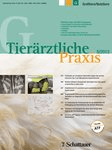
TIERAERZTLICHE PRAXIS AUSGABE GROSSTIERE NUTZTIERE
Innovating veterinary practices for better animal welfare.TIERAERZTLICHE PRAXIS AUSGABE GROSSTIERE NUTZTIERE is a pivotal journal in the field of veterinary science, focusing specifically on large animals and food production animals. Published by GEORG THIEME VERLAG KG, this journal has been a resource for veterinary professionals since its inception in 1996, delivering current research and practical insights to its readership through 2024. Despite its classification in the Q4 quartile for both Food Animals and Veterinary (miscellaneous) categories, the journal provides an essential platform for emerging studies, contributing to the interdisciplinary dialogue around veterinary practices. Researchers and practitioners benefit from the journal’s commitment to advancing knowledge, despite its modest rankings in Scopus where it stands at rank #150 in General Veterinary and #32 in Food Animals. While not currently offering Open Access options, the journals’ significant body of work remains an invaluable asset for those dedicated to enhancing animal health and welfare. TIERAERZTLICHE PRAXIS serves as a cornerstone for academic exploration and practical application in the veterinary field, fostering a deeper understanding of the complexities involved in animal care and management.

BERLINER UND MUNCHENER TIERARZTLICHE WOCHENSCHRIFT
Your Gateway to Veterinary Insights and ResearchBERLINER UND MUNCHENER TIERARZTLICHE WOCHENSCHRIFT is an esteemed journal in the fields of Veterinary Science and Medicine, published by SCHLUETERSCHE VERLAGSGESELLSCHAFT MBH & CO KG. Since its inception in 1946, this journal has served as a vital platform for advancing knowledge and research in veterinary medicine within Germany and beyond. With a current impact factor that places it in the Q4 category in both Medicine and Veterinary, it continues to provide significant insights for professionals, researchers, and students engaged in the veterinary community. Although it is not an Open Access journal, its rich content contributes to the foundational literature of the field, making it an essential reference. Researchers looking to publish their findings or keep informed on the latest advancements in veterinary and medical practices will find this journal an invaluable resource. It is headquartered in Hannover, Germany, and serves as a testament to the ongoing dedication to veterinary research since the mid-20th century.
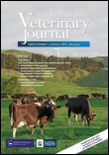
NEW ZEALAND VETERINARY JOURNAL
Connecting global discourse on animal health and welfare.NEW ZEALAND VETERINARY JOURNAL, published by Taylor & Francis Ltd, stands as a pivotal platform in the realm of veterinary science, contributing significantly to the global discourse on animal health and welfare since its inception in 1952. With an ISSN of 0048-0169 and an E-ISSN of 1176-0710, this journal offers invaluable insights within both the veterinary and general medical fields, currently achieving a commendable Q2 ranking in Veterinary (miscellaneous) and Q3 in Medicine (miscellaneous) for 2023. Its Scopus ranking places it in the 76th percentile among veterinary journals, affirming its high-impact presence in academia. While access to this journal is not open, it maintains an essential role for researchers, professionals, and students aiming to advance their knowledge and contribute to the field of veterinary science. With a commitment to disseminating quality research, NEW ZEALAND VETERINARY JOURNAL enriches the understanding of veterinary practices and enhances ongoing dialogue on critical health issues affecting animals, promoting better outcomes through scientific inquiry.

ISRAEL JOURNAL OF VETERINARY MEDICINE
Connecting Research and Practice in Veterinary MedicineThe Israel Journal of Veterinary Medicine, published by the Israel Veterinary Medical Association, serves as a vital resource for researchers, professionals, and students in the fields of veterinary medicine and animal science. With a commitment to advancing knowledge across diverse veterinary disciplines, this journal plays a crucial role in disseminating significant findings and innovations that influence both local and global veterinary practices. Although it currently holds a Q4 ranking in both the Animal Science and Zoology and Veterinary (miscellaneous) categories, the journal's open access policy, enabling free availability of articles, aspires to increase its accessibility and engagement among the academic community. The journal's convergence of research from 2007 to 2024 showcases its dedication to continuously contributing to the evolving landscape of veterinary science.

Tropical Animal Science Journal
Championing Open Access for Global Impact in Animal ScienceTropical Animal Science Journal, ISSN 2615-787X, E-ISSN 2615-790X, is an esteemed open-access journal published by the Bogor Agricultural University, Faculty of Animal Science. Launched in 2018, this journal serves as a pivotal platform for disseminating high-quality research in the fields of Animal Science, Food Animals, and Veterinary Medicine. With its significant presence in Indonesia and a commitment to scientific innovation, it has achieved a Q3 ranking in Animal Science and Zoology and Food Animals, as well as a Q2 ranking in Veterinary (miscellaneous) as of 2023. The journal also enjoys favorable Scopus rankings, placing it in the 61st percentile for General Veterinary and demonstrating its relevance and impact in the academic community. As an advocate for open-access publishing since its inception, the journal enhances accessibility to critical research findings, making it an invaluable resource for researchers, professionals, and students alike who aim to advance their knowledge and contribute to the fields of tropical animal science.

Translational Animal Science
Enhancing Animal Welfare Through Translational ResearchTranslational Animal Science, published by Oxford University Press Inc, stands as a prominent journal in the fields of Animal Science and Zoology as well as Veterinary Sciences, achieving a commendable Q2 ranking in both categories for 2023. With an E-ISSN of 2573-2102 and transitioning to an Open Access model since 2017, this journal fosters accessibility and dissemination of vital research that bridges the gap between basic animal science and its practical applications. The journal's significant impact factor, where it ranks in the 71st and 65th percentiles respectively for Veterinary and Agricultural and Biological Sciences disciplines, highlights its importance as a resource for emerging trends and innovations in animal research. With submissions accepted until 2024, Translational Animal Science not only contributes to advancing knowledge but also aims to engage a broad audience of researchers, professionals, and students dedicated to improving animal health and welfare. Based in India, the journal serves as an essential platform for the exchange of scientific ideas that facilitate progress within these vital fields.
ARQUIVO BRASILEIRO DE MEDICINA VETERINARIA E ZOOTECNIA
Championing excellence in veterinary research and education.ARQUIVO BRASILEIRO DE MEDICINA VETERINARIA E ZOOTECNIA, an esteemed publication in the field of veterinary medicine and animal science, has been a vital resource for researchers and professionals since its inception in 1996. Published by the ARQUIVO BRASILEIRO MEDICINA VETERINARIA ZOOTECNIA, this journal is recognized for its open-access model, allowing widespread dissemination of knowledge since 1999. With a 2023 Scopus ranking placing it in the 25th percentile within the veterinary field, ARQUIVO BRASILEIRO is categorized in Q3 in Veterinary (miscellaneous), highlighting its commitment to scholarly excellence. The journal's scope encompasses a diverse range of topics related to veterinary medicine and zootechnics, making it a crucial platform for advancing research and professional practice. Situated in Belo Horizonte, Minas Gerais, Brazil, it serves not only the local community but also an international audience, fostering collaboration and innovation in veterinary sciences. As such, ARQUIVO BRASILEIRO is an invaluable asset for students, researchers, and practitioners looking to stay at the forefront of veterinary research.
TURKISH JOURNAL OF VETERINARY & ANIMAL SCIENCES
Championing Open Access for Global Veterinary Insights.TURKISH JOURNAL OF VETERINARY & ANIMAL SCIENCES is a distinguished peer-reviewed journal dedicated to advancing knowledge in the field of veterinary sciences and animal health. Published by the Tubitak Scientific & Technological Research Council Turkey, this journal provides a platform for high-quality research, fostering scientific inquiry that spans various aspects of veterinary medicine, animal biology, and animal husbandry. With an impact factor that reflects its growing influence within the Q3 category of Veterinary (miscellaneous) according to the 2023 rankings, it is strategically positioned in the academic landscape, ranked #112 out of 194 in the broader veterinary field. The journal is committed to open access publications, ensuring that research is accessible to a global audience, facilitating collaboration and knowledge sharing among researchers, professionals, and students. By covering a broad spectrum of topics from clinical research to veterinary policy, the TURKISH JOURNAL OF VETERINARY & ANIMAL SCIENCES plays a crucial role in enhancing the understanding and welfare of animal species, thereby contributing significantly to both scientific advancement and practical applications in veterinary practice.

Ankara Universitesi Veteriner Fakultesi Dergisi
Disseminating groundbreaking insights for animal welfare.Ankara Universitesi Veteriner Fakultesi Dergisi is a prominent academic journal published by ANKARA UNIV, focusing on advancements in veterinary sciences and animal biology. Since its inception, the journal has been committed to disseminating high-quality research, featuring articles that span a variety of topics within veterinary medicine and animal science. With an ISSN of 1300-0861 and an E-ISSN of 1308-2817, this journal provides valuable insights into the latest research developments and trends, making it a critical resource for researchers, professionals, and students in the field. The journal has established itself within the scholarly community, achieving a Q3 rank in Animal Science and Zoology and a Q2 rank in Veterinary (miscellaneous) as of 2023, reflecting its growing relevance and impact. Positioned in Turkey, it serves as a vital platform for both local and international scholars to share innovative findings and foster collaboration. Enhancing its accessibility, the journal's content is available through various academic databases, ensuring that its readership can effortlessly access and engage with cutting-edge research.

Scientific Papers-Series D-Animal Science
Innovating Research for Healthier AnimalsScientific Papers-Series D-Animal Science is a prominent academic journal published by the University of Agronomic Sciences and Veterinary Medicine Bucharest (USAMV). With its ISSN number 2285-5750 and E-ISSN 2393-2260, this journal serves as a critical platform for the dissemination of innovative research in the field of animal science and veterinary medicine. The journal focuses on a broad range of topics, from animal breeding and nutrition to health and welfare, contributing significantly to the advancement of knowledge and practice within these vital areas. Although it currently does not offer open access, the journal maintains a commitment to high-quality research with the potential to influence policy and practice in animal sciences. Researchers, professionals, and students are encouraged to engage with the journal to enhance their understanding and contribute to ongoing discussions in this essential field. The journal's rich academic environment fosters collaboration and encourages submissions of original studies, reviews, and case reports that can shape the future of animal science.