
SCIENTIA AGRICOLA
Scope & Guideline
Advancing agricultural knowledge for a sustainable future.
Introduction
Aims and Scopes
- Sustainable Agriculture Practices:
Research focused on improving agricultural sustainability through innovative practices, crop management, and environmental stewardship. - Crop Physiology and Genetics:
Studies on the physiological and genetic traits of crops that influence yield, quality, and resilience to climate impacts. - Soil Science and Fertility Management:
Investigations into soil health, fertility enhancement, and nutrient management strategies to optimize agricultural productivity. - Animal Science and Nutrition:
Research on livestock management, nutrition, and breeding aimed at improving animal health and production efficiency. - Biotechnology and Genetic Engineering:
Exploration of biotechnological applications in agriculture, including genetic modifications to enhance crop resilience and productivity. - Pest Management and Crop Protection:
Studies addressing pest and disease management in crops, emphasizing integrated pest management strategies. - Agroecology and Environmental Impact:
Research focusing on the ecological aspects of agriculture, including biodiversity, ecosystem services, and the impact of agricultural practices on the environment.
Trending and Emerging
- Precision Agriculture and Technology Integration:
An increasing number of studies are focusing on precision agriculture technologies, including the use of remote sensing, data analytics, and machine learning to enhance farming efficiency. - Climate Resilience and Adaptation Strategies:
Research on climate change impacts and adaptive strategies for crops and livestock is gaining momentum, addressing the urgent need for resilience in agriculture. - Biological Control and Eco-Friendly Practices:
There is a growing trend towards research on biological control methods and eco-friendly agricultural practices, reflecting a shift in consumer preferences and environmental awareness. - Nutrient Management and Soil Health:
Emerging studies are increasingly focused on sustainable nutrient management and improving soil health, recognizing their critical role in sustainable agriculture. - Agroecological Approaches:
Research exploring agroecological principles and practices is trending, with emphasis on biodiversity, ecosystem services, and holistic farm management.
Declining or Waning
- Traditional Pest Control Methods:
There is a noticeable decrease in research focused on conventional pest control methods, as the field shifts towards more sustainable and integrated approaches. - Soil Tillage Practices:
Research on traditional soil tillage practices is declining, potentially due to a growing emphasis on no-till and conservation agriculture methods. - Chemical Fertilizer Use:
The focus on chemical fertilizers is waning as there is an increasing interest in organic and sustainable fertilization techniques. - Livestock Production Systems:
While livestock research remains important, traditional production systems are being overshadowed by studies on alternative systems, such as agroecological or integrated systems.
Similar Journals
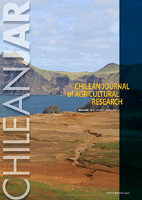
Chilean Journal of Agricultural Research
Leading the way in agronomic and animal science advancements.Chilean Journal of Agricultural Research, published by INST INVESTIGACIONES AGROPECUARIAS - INIA, is a premier academic journal dedicated to the advancement of knowledge in the fields of Agronomy, Crop Science, Animal Science, and Zoology. With an ISSN of 0718-5839, this journal serves as a vital resource for researchers, professionals, and students alike, facilitating the dissemination of impactful research from Chile and around the globe. Classified as a Q2 journal in both Agronomy and Crop Science and Animal Science and Zoology as of 2023, it occupies a significant position in academic rankings, highlighted by its Scopus metrics, which recognize its contributions to the field. The journal operates under an Open Access model, ensuring that valuable research is accessible to a wider audience, thereby promoting innovation and collaboration. With a converged publication timeline from 2008 to 2024, the Chilean Journal of Agricultural Research continues to enhance understanding and foster advancements in agricultural science, thus playing an instrumental role in addressing contemporary challenges in food security and sustainable practices.

Zemdirbyste-Agriculture
Advancing agricultural knowledge for a sustainable future.Zemdirbyste-Agriculture is a prominent journal dedicated to advancing the field of agricultural sciences, with a particular focus on agronomy and crop science. Published by the Lithuanian Research Centre Agriculture & Forestry, this open access journal has been fostering knowledge sharing and scientific discourse since 2004, allowing researchers, professionals, and students unrestricted access to its content. Located in the beautiful country of Lithuania, specifically at Vytautas Magnus University, this journal plays a significant role in disseminating innovative research findings. With a 2023 Scopus ranking of #246 out of 406 in the category of Agricultural and Biological Sciences, Zemdirbyste-Agriculture falls within the Q3 quartile, reflecting its growing influence in the academic community. This journal, which has converged its publication focus from 2008 to 2023, aims to provide a platform for scientists to share their critical insights on agricultural practices, sustainability, and technological advancements in crop science, thereby contributing to the global discourse on food security and environmental health.

PAKISTAN JOURNAL OF AGRICULTURAL SCIENCES
Pioneering Research in Crop and Soil SciencesWelcome to the Pakistan Journal of Agricultural Sciences, a prominent platform for disseminating vital research findings in the fields of agronomy, crop science, food science, plant science, and soil science. Published by the prestigious University of Agriculture in Faisalabad, this journal aims to enhance the scientific discourse surrounding agricultural innovation and sustainability in Pakistan and beyond. With an ISSN of 0552-9034 and E-ISSN of 2076-0906, the journal serves as a valuable resource for researchers, professionals, and students interested in cutting-edge agricultural developments. As of 2023, the journal is ranked in the Q3 category for Agronomy and Crop Science as well as Food Science and positioned in Q4 for Plant and Soil Science, highlighting its growing impact within a competitive academic landscape. While the Pakistan Journal of Agricultural Sciences is not currently open access, it provides a comprehensive archive of research converging from 2011 to 2024, ensuring that critical knowledge remains accessible to those striving to advance the agricultural sciences. Join us in our mission to foster innovation and support sustainable practices in agriculture.
ACTA SCIENTIARUM-AGRONOMY
Exploring the frontiers of crop science and sustainability.ACTA SCIENTIARUM-AGRONOMY is a prestigious, peer-reviewed journal published by UNIV ESTADUAL MARINGA, PRO-REITORIA PESQUISA POS-GRADUACAO, focusing on advanced research in the field of agronomy and crop science. Since its inception as an Open Access journal in 2007, it has significantly contributed to disseminating high-quality research, allowing unrestricted access to its content for a global audience. Operating from Brazil, the journal holds a notable Q2 category ranking in Agronomy and Crop Science as of 2023, validating its importance within the academic community. The journal’s Scopus ranking positions it in the 49th percentile among Agricultural and Biological Sciences, indicating a robust foundation for impactful research. With a commitment to innovation and scientific excellence, ACTA SCIENTIARUM-AGRONOMY aims to provide researchers, professionals, and students with vital insights that drive forward our understanding of agriculture and its environmental implications.
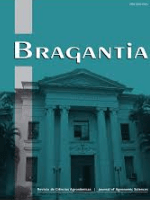
BRAGANTIA
Advancing Agricultural Knowledge Since 1977BRAGANTIA, published by the Instituto Agronômico, is a distinguished open access journal that has been a vital resource since its inception in 1977. With an ISSN of 0006-8705 and E-ISSN 1678-4499, this journal is recognized for its contributions to the field of Agricultural and Biological Sciences, where it currently holds a respectable Q2 ranking as of 2023. Additionally, BRAGANTIA is indexed in various databases, supporting its impact within Materials Science (Q3 ranking). Positioned in Brazil, the journal promotes the dissemination of high-quality research, aiming to bridge the gap between academia and practical applications in agricultural innovation and sustainability. Researchers, professionals, and students looking to keep abreast of recent advancements and their implications will find BRAGANTIA to be an indispensable platform for sharing and accessing vital agricultural knowledge.

Romanian Agricultural Research
Exploring Agronomy to Enhance Global PracticesRomanian Agricultural Research is a prominent academic journal dedicated to advancing the field of agricultural science with a specific focus on agronomy and crop management. Published by the NATL AGRICULTURAL RESEARCH & DEVELOPMENT INST in Romania, this journal has established itself as an important resource within its discipline, evidenced by its Q3 ranking in the Agronomy and Crop Science category for 2023. With its ongoing publication since 2008, the journal provides a platform for researchers and professionals to disseminate their findings and share innovative practices that address the challenges faced in agricultural development. Although it operates under a non-open access model, Romanian Agricultural Research commits to rigorous peer-review processes, ensuring the high-quality content that enhances the academic community’s knowledge base. The journal's objective is to foster dialogues surrounding sustainable agriculture, improve crop yield, and contribute to the enhancement of agricultural practices globally. Researchers, professionals, and students will find this journal to be an invaluable repository of knowledge and a catalyst for future agricultural innovations.
Journal of Central European Agriculture
Empowering Agricultural Excellence Through Open Access ScholarshipThe Journal of Central European Agriculture, with ISSN 1332-9049 and E-ISSN 1332-9049, is an esteemed platform published by UNIV ZAGREB, FAC AGRICULTURE that caters to the dynamic fields of agronomy, crop science, and animal science. Since its establishment in 2000, this Open Access journal has played a crucial role in disseminating critical research findings while fostering collaboration among academics, researchers, and professionals within the agricultural community. The journal, which is based in the heart of Croatia, spans a rich history of scholarship, with its content available for free to readers and contributors alike. As reflected in its current standings, the journal has achieved a Quartile 3 ranking in Agronomy and Crop Science and Quartile 4 in Animal Science and Zoology for the year 2023, indicating its growing influence within these disciplines. With Scopus ranks placing it in the 32nd percentile among its peers, the Journal of Central European Agriculture is committed to advancing agricultural sciences not only in Central Europe but globally as it prepares for its converged years from 2007 through 2024. This journal serves as a vital resource for innovative research, practical applications, and a deeper understanding of agricultural challenges and solutions.
ANNALS OF AGRICULTURAL SCIENCES
Unveiling the Science Behind Sustainable AgricultureANNALS OF AGRICULTURAL SCIENCES, published by Elsevier, stands as a leading open access journal dedicated to the multifaceted field of agricultural sciences. Since its inception in 2011, this journal has served as a pivotal platform for the dissemination of high-quality research, covering areas such as agronomy, animal science, horticulture, food science, plant science, and soil science. With an impressive Q1 ranking across multiple disciplines and notable positions in Scopus Ranks—including #6 in Animal Science and Zoology and #3 in Horticulture—this journal is recognized globally for its significant contribution to advancing agricultural innovations. The journal caters to a diverse audience of researchers, professionals, and students, providing them with open access to cutting-edge studies that address critical issues in agricultural productivity and sustainability. Its commitment to high-impact research ensures that articles contribute meaningfully to the scientific community, fostering advancements in agricultural practices and policies.
AGRONOMY JOURNAL
Leading the Way in Agronomic Knowledge and DiscoveryThe Agronomy Journal, published by Wiley, is a leading platform for cutting-edge research in the field of agronomy and crop science. Established in the United States, this prestigious journal carries the ISSN 0002-1962 and E-ISSN 1435-0645, with its coverage spanning from 1976 to 2024, showcasing a wealth of knowledge over decades. The journal is recognized in the top quartile (Q1) of its category, making it a highly respected source for quality literature, ranking #108 out of 406 in the Scopus database and reflecting a 73rd percentile standing in agricultural and biological sciences. While it operates under traditional access options, its commitment to disseminating valuable scientific inquiry aligns with the objectives of advancing sustainable agricultural practices globally. The Agronomy Journal serves as an indispensable resource for researchers, professionals, and students eager to stay abreast of significant advancements and discussions influencing the future of crop science and agronomic research.

Revista Ciencia Agronomica
Pioneering insights in agronomy and horticulture.Revista Ciencia Agronomica is a leading open access journal published by the Universidade Federal do Ceará, Departamento de Geociências, dedicated to advancing the field of agricultural sciences. Established in 2008, the journal has emerged as a significant platform for the dissemination of original research and innovative advancements in areas including agronomy, horticulture, and soil science, with a dedicated convergence of years extending to 2025. With an impactful presence in academic circles—ranking in Q3 for Agronomy and Crop Science and Soil Science and Q2 for Horticulture in 2023—this journal provides vital insights for researchers and practitioners alike. Although specific HIndex metrics are currently unavailable, the journal's Scopus rankings attest to its relevance, placing it in the 52nd, 44th, and 43rd percentiles across multiple pertinent categories. Since transitioning to an open access model in 2010, Revista Ciencia Agronomica has committed to maximizing the reach and impact of its published work, thereby ensuring valuable contributions to global agricultural knowledge.