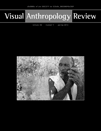
Visual Anthropology Review
Scope & Guideline
Transforming Visual Narratives into Anthropological Insights
Introduction
Aims and Scopes
- Visual Representation of Cultural Narratives:
The journal focuses on how visual media can articulate, challenge, and reshape cultural narratives, particularly through ethnographic films, photography, and digital media. - Innovative Methodologies:
It emphasizes the use of diverse methods such as participatory media, sensory ethnography, and multimodal storytelling to capture lived experiences and cultural practices. - Reflexivity in Visual Anthropology:
The journal encourages reflexive practices in visual anthropology, prompting researchers to consider their positionality and the impact of their work on the subjects they study. - Collaborative Practices:
Highlighting co-creative approaches, the journal advocates for collaboration between anthropologists and the communities they represent, fostering ethical production and representation. - Engagement with Contemporary Issues:
It addresses pressing social issues, including race, gender, and environmental concerns, through visual means, reflecting the dynamic nature of contemporary anthropological inquiry.
Trending and Emerging
- Multimodal Storytelling:
An increasing number of articles explore multimodal storytelling, integrating various forms of media to enrich narrative depth and audience engagement. - Virtual Reality and Digital Media:
The journal is witnessing a rise in the use of virtual reality and digital platforms for ethnographic storytelling, emphasizing immersive experiences and innovative methodologies. - Activism and Social Justice:
There is a growing emphasis on visual activism, with researchers using visual anthropology to address social justice issues, including race, gender, and environmental crises. - Sensory Ethnography:
Recent works highlight sensory ethnography as a critical approach, focusing on the embodied experience and the engagement of multiple senses in understanding cultural phenomena. - Reflexivity and Ethical Considerations:
A trend towards greater reflexivity and ethical considerations in visual research practices is emerging, with authors engaging critically with their roles and the implications of their work.
Declining or Waning
- Traditional Ethnographic Film:
There is a noticeable decrease in traditional ethnographic films, with fewer articles focusing solely on this medium as the journal increasingly embraces innovative and multimodal approaches. - Static Representations of Culture:
Themes centered around static or archival representations of culture have waned, as the journal now favors dynamic and participatory methods that engage with contemporary cultural practices. - Historical Analysis of Visual Media:
The focus on historical analyses of past visual media and their impact has diminished, giving way to more immediate and relevant discussions of current visual anthropology practices.
Similar Journals

Social Text
Exploring the Intersections of Culture and SocietySocial Text, published by DUKE UNIVERSITY PRESS, is a leading peer-reviewed academic journal that has established itself as a critical platform for interdisciplinary research in the fields of Anthropology, Cultural Studies, and Gender Studies. With its impressive ranking in the Q1 category for each of these disciplines in 2023, it occupies a prominent place within the academic landscape—ranked 33rd out of 1304 in Cultural Studies and significantly within the top 20 in both Anthropology and Gender Studies. The journal publishes innovative theoretical and empirical work that challenges and expands upon conventional methodologies and perspectives, aiming to foster a deeper understanding of social phenomena. While Social Text is not an open-access journal, it remains easily accessible through university libraries and academic institutions, ensuring that cutting-edge scholarship reaches a wide audience. This journal is a vital resource for scholars, researchers, and students looking to stay informed about the latest trends and debates within the humanities and social sciences.
JOURNAL OF FILM AND VIDEO
Fostering Scholarly Excellence in Media StudiesThe JOURNAL OF FILM AND VIDEO, published by University of Illinois Press, is a pivotal academic platform that delves into the intricate intersections of film, video, and media studies. With a notable ISSN of 0742-4671 and E-ISSN 1934-6018, this journal has established itself as a significant contributor to the visual arts and performing arts field, currently positioned in Q3 of its category as per the 2023 quartiles. Spanning from 2002 to 2024, it presents a comprehensive array of research, critiques, and theoretical discussions that advance scholarly discourse in film and video. The journal encourages contributions that explore innovative narratives and methodologies, catering to a diverse readership of researchers, professionals, and students alike. While it maintains a traditional subscription model and is not open access, its impact is amplified through its Scopus ranking, holding the 323rd position out of 667 in the visual arts and performing arts category. With its commitment to fostering critical conversations and promoting scholarly excellence, the JOURNAL OF FILM AND VIDEO remains an essential resource for those invested in the study and understanding of film and media.
Visual Resources
Bridging Academia and Contemporary Visual PracticesVisual Resources, an esteemed journal published by Routledge Journals, Taylor & Francis Ltd, serves as a vital platform for scholarly research in the fields of Museology and Visual Arts and Performing Arts. With an ISSN of 0197-3762 and an E-ISSN of 1477-2809, this journal has navigated the academic landscape since its inception in 1980, continuing to amplify critical dialogues up to 2024. Positioning itself within category quartiles as Q3 for both museology and visual arts, the journal ranks at #302/667 in the Visual Arts and Performing Arts category and #41/83 in Museology according to Scopus, reflecting a significant yet competitive standing. Although not designated as Open Access, the publication remains accessible through institutional subscriptions, catering to a diverse audience of researchers, professionals, and students. By disseminating pioneering research and innovative methodologies pertinent to visual culture and museum practices, Visual Resources plays an indispensable role in advancing knowledge in its disciplines and connects academia with contemporary practice.

Ekphrasis-Images Cinema Theory Media
Cultivating New Methodologies in Media ResearchWelcome to Ekphrasis-Images Cinema Theory Media, an academic journal dedicated to exploring the intersections of visual arts, cinema, and media studies. Published by the esteemed BABES-BOLYAI UNIVERSITY, FACULTY OF THEATRE & TELEVISION in Romania, this journal serves as a critical platform for scholars and practitioners to disseminate groundbreaking research and innovative ideas within these vibrant fields. With an ISSN of 2067-631X and an E-ISSN of 2559-2068, Ekphrasis is committed to enhancing the discourse surrounding contemporary visual culture, as evidenced by its Scopus rankings in the arts and humanities categories. Aiming to contribute to academic discussions from 2019 to 2024, it invites submissions that challenge conventional perspectives and promote new methodologies. Although currently positioned in the Q4 category for Communication and Q3 for Visual Arts and Performing Arts, the journal is poised for growth and aims to increase its impact factor through the openness of scholarly exchange and rigorous peer review. Join us in advancing the critical discourse at the crossroads of art and media!
Visual Anthropology
Capturing the Essence of Culture in ImagesVisual Anthropology is a distinguished journal published by Routledge Journals, Taylor & Francis Ltd in the United Kingdom. With an ISSN of 0894-9468 and E-ISSN 1545-5920, this journal focuses on the intersection of visual media and anthropological research, exploring the ways in which visual representations influence cultural practices and perceptions. Since its inception in 1987, Visual Anthropology has contributed significantly to the fields of Anthropology and Cultural Studies, earning a Q2 rank in both categories as of 2023. With a solid impact factor and strategic indexing, the journal maintains a vital place for scholars seeking to understand the visual dimensions of human behavior and societal structures. Although it operates under a traditional subscription model, its rigorous peer-review process ensures the dissemination of high-quality research. The journal invites researchers, professionals, and students alike to engage with cutting-edge studies that bridge visual culture and anthropological inquiry.

LIBERTE
Unpacking Complex Narratives Through Scholarly InquiryLIBERTE is a distinguished academic journal that serves as a platform for critical thinking and scholarly discourse across various fields including Literature and Literary Theory, Philosophy, Sociology and Political Science, and Visual Arts and Performing Arts. Established in Canada and published by LIBERTE, this journal aims to foster intellectual exchange and explore the nuances of cultural and social narratives. Although it currently falls in the Q4 quartile across its categories, it is dedicated to advancing the conversation in the arts and humanities, providing a rich resource for researchers, educators, and students alike. With an ISSN of 0024-2020 and an active publication cycle running from 2002 to 2024, LIBERTE welcomes contributions that challenge prevailing ideologies and reflect innovative perspectives. While the journal is not open access, its value in promoting academic inquiry within its communities cannot be overstated.
Middle East Journal of Culture and Communication
Unveiling Insights into Middle Eastern DynamicsMiddle East Journal of Culture and Communication is a vital scholarly platform published by BRILL, dedicated to fostering an understanding of cultural dynamics and communication pathways within the Middle East. Established in 2008, this journal delivers a rich array of interdisciplinary research spanning the fields of Arts and Humanities, Communication, Cultural Studies, Political Science, and Sociology. With an impact factor reflective of its commitment to high-quality scholarship, it currently ranks in various quartiles, including Q3 in Arts and Humanities (miscellaneous) and Q4 in Communication and Political Science, demonstrating its importance in the academic discourse surrounding these disciplines. The journal's open access policy ensures that critical insights and analyses are widely disseminated, catering to a global audience of researchers, professionals, and students alike. The Middle East Journal of Culture and Communication stands as an essential resource for those seeking to explore the intricate tapestry of cultural interactions in the region through rigorous academic inquiry.

ART HISTORY
Celebrating the Diversity of Artistic Expression Through the AgesART HISTORY is a prestigious journal published by Wiley, focusing on the dynamic and diverse field of visual arts and performing arts since its inception in 1978. With an ISSN of 0141-6790 and an E-ISSN of 1467-8365, the journal has established itself as a significant resource for researchers, professionals, and students interested in exploring the complexities of art across various epochs and cultures. Currently ranked in the Q3 category within the Visual Arts and Performing Arts sector and positioned at #132 out of 667 in Scopus rankings—representing the top 80th percentile—ART HISTORY delivers insightful scholarship that contributes to the understanding and appreciation of art history. Although it does not offer open access, the journal remains committed to publishing high-quality, peer-reviewed articles that delve into critical artistic practices, theories, and aesthetics. The journal's location in the United Kingdom further enhances its international reach and influence, making it a vital platform for advancing discourse in the arts.

Fashion Theory-The Journal of Dress Body & Culture
Transforming Perspectives on Fashion and the BodyFashion Theory - The Journal of Dress Body & Culture is a premier academic journal published by Routledge Journals, Taylor & Francis Ltd. since 2002, catering to the dynamic fields of cultural studies and visual arts. With a substantial impact factor placing it in the first quartile (Q1) of both Cultural Studies and Visual Arts and Performing Arts, this journal stands as a critical platform for scholarly discourse. It is ranked among the top 5% of journals in Visual Arts and Performing Arts and the top 13% in Cultural Studies according to Scopus rankings, emphasizing its significance and influence within the academic community. Although not an open access journal, Fashion Theory facilitates access to cutting-edge research that explores the intersection of fashion, identity, and culture, making it an essential resource for researchers, professionals, and students interested in the implications of dress and body throughout history and contemporary society. This journal not only provides insights into fashion studies but also engages with broader socio-cultural narratives, making it indispensable for those seeking to understand the intricate relationship between attire and identity.
Visual Communication
Elevating Understanding through Visual Narratives.Visual Communication, published by SAGE Publications Inc, is a leading journal in the fields of Communication and Visual Arts and Performing Arts, recognized for its significant contribution to theoretical advancements and empirical research. With an impressive impact factor and ranked in the Q2 quartile for Communication and Q1 for Visual Arts and Performing Arts, this journal attracts a diverse audience of researchers, professionals, and students dedicated to exploring the multifaceted nature of visual communication. Spanning from 2002 to 2024, the journal publishes high-quality articles that delve into the intricate relationship between visual culture and communication practices. It consistently ranks favorably within Scopus, placing in the 97th percentile for Visual Arts and Performing Arts and the 76th percentile for Communication, making it a vital resource for those seeking to advance their understanding of visual discourse. While the journal is not open access, its subscription model ensures rigorous peer review, thereby maintaining high academic standards. The global reach of Visual Communication solidifies its role as an essential platform for innovative dialogue and scholarship within the academic community.