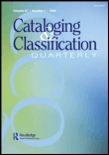
Cataloging & Classification Quarterly
Scope & Guideline
Empowering Knowledge Through Cataloging Innovation
Introduction
Aims and Scopes
- Cataloging Practices and Innovations:
The journal emphasizes the development and application of innovative cataloging practices, including the use of technology such as AI and automated systems to improve metadata creation and bibliographic control. - User-Centered Approaches:
Research published in the journal often highlights the importance of user studies and participatory design, aiming to align cataloging practices with the needs and behaviors of end users. - Diversity and Inclusion in Cataloging:
There is a consistent focus on addressing issues of diversity, equity, and inclusion within cataloging practices, including the representation of marginalized groups in bibliographic records. - Standards and Best Practices:
The journal frequently discusses the evolution of cataloging standards (e.g., RDA, MARC) and offers insights into best practices for cataloging various types of materials. - Interdisciplinary Connections:
The publication explores the intersections between bibliographic control and other disciplines, such as information behavior research, to enrich the understanding of cataloging in different contexts. - Historical and Theoretical Perspectives:
Articles often delve into the historical and theoretical underpinnings of cataloging and classification, providing a scholarly context for contemporary practices.
Trending and Emerging
- AI and Automation in Cataloging:
There is a growing trend towards exploring the applications of artificial intelligence and automation in cataloging processes, with studies focusing on tools like ChatGPT for subject assignment and automated indexing methods. - Critical and Inclusive Cataloging:
Emerging themes in critical and inclusive cataloging practices are increasingly prominent, emphasizing the need to address biases in cataloging and to ensure diverse representation within bibliographic records. - User Experience and Participatory Design:
Research focusing on user experience and participatory design methodologies is gaining traction, reflecting a commitment to aligning cataloging services with user needs and preferences. - Linked Data and Semantic Web Technologies:
The application of linked data and semantic web technologies in cataloging practices is becoming more prevalent, as researchers explore how these technologies can enhance resource discovery and interoperability. - Interdisciplinary Approaches to Knowledge Organization:
There is an emerging trend towards interdisciplinary approaches that connect cataloging and classification with other fields, such as information science, digital humanities, and cultural studies, enriching the discourse around knowledge organization.
Declining or Waning
- Traditional Cataloging Methods:
There has been a noticeable decrease in articles focusing solely on traditional cataloging methods without consideration for technological advancements or user needs, as the field increasingly embraces automation and AI. - Static Authority Control:
Research centered solely around static authority control practices has waned, possibly due to a growing recognition of the need for dynamic, context-sensitive approaches that better reflect contemporary information landscapes. - Manual Cataloging Processes:
As automated systems and AI tools become more prevalent, discussions centered exclusively on manual cataloging processes have decreased, signaling a shift towards more efficient, technology-driven methodologies. - General Bibliographic Standards:
While discussions on bibliographic standards remain relevant, there has been a decline in broad, general articles on these standards without specific applications or case studies, as the community seeks more practical, context-based insights. - Focus on Print Materials:
Research related to cataloging print materials has diminished, as the field increasingly prioritizes digital resources, multimedia, and non-traditional formats, reflecting broader changes in information consumption.
Similar Journals

Biblios-Revista de Bibliotecologia y Ciencias de la Informacion
Connecting Scholars to the Evolving Landscape of Information ManagementBiblios-Revista de Bibliotecologia y Ciencias de la Informacion, published by the University of Pittsburgh's Library System, stands as a pivotal contributor to the field of Library and Information Sciences. Holding an ISSN of 1562-4730, this peer-reviewed journal has been offering Open Access content since 2011, reinforcing its commitment to the democratization of knowledge. Despite its current classification in the Q4 quartile with a Scopus rank of 257 out of 280 in its category, the journal plays a crucial role in disseminating research that explores contemporary challenges and innovations within the library science landscape. It is particularly relevant for researchers, practitioners, and students invested in the future of information management and bibliographic studies. With coverage from 2014 to 2024, Biblios provides a platform for scholars to engage with critical discourse, share findings, and enhance the global library and information community.
DESIDOC Journal of Library & Information Technology
Navigating the Future of Information Management TogetherDESIDOC Journal of Library & Information Technology, published by the Defence Scientific Information Documentation Centre, is a pivotal scholarly platform in the realm of Library and Information Sciences. The journal, indexed with ISSN 0974-0643 and E-ISSN 0976-4658, has established its reputation with a commendable Q3 category ranking in the latest Scopus quartiles and a notable rank of 113 out of 280 in its field, placing it in the 59th percentile. Engaging a global audience, it disseminates high-quality research insights aimed at advancing the practices and technologies within library and information management. Operating within a converged timeframe from 2012 to 2024, the journal is committed to fostering robust discussions surrounding contemporary issues in the field, making it an invaluable resource for researchers, professionals, and students alike. While currently not offering open access, its content is accessible through institutional subscriptions, reinforcing its significance in the academic community of India and beyond.
MASTER DRAWINGS
Celebrating the Timeless Art of Master DrawingsMASTER DRAWINGS is a distinguished journal published by the MASTER DRAWINGS ASSOCIATION INC, focusing on the rich field of visual arts with an emphasis on the practice and appreciation of masterful drawings throughout history. With an ISSN of 0025-5025 and an impact factor that highlights its significance within the scholarly community, this journal serves as a critical resource for researchers, professionals, and students alike. It is categorized in the Q3 quartile for 2023 in the field of Visual Arts and Performing Arts, ranking #530 out of 667 in Scopus, indicating its growing influence in the academic landscape. Published in the United States, MASTER DRAWINGS aims to foster a deeper understanding of artistic techniques, historical contexts, and the broader implications of master drawings, thereby enriching the discourse in art studies. With converged years spanning from 2002 to 2024, this journal continues to provide valuable insights and scholarly articles, accessible to a diverse readership seeking to engage with the arts.
Malaysian Journal of Library & Information Science
Elevating Scholarly Dialogue in Information SciencesMalaysian Journal of Library & Information Science, published by the University of Malaya, Faculty of Computer Science & Information Technology, serves as a crucial platform for researchers, professionals, and students in the field of Library and Information Sciences. With a commitment to advancing scholarly knowledge, this journal has consistently showcased significant research contributions since its inception in 1996, and is currently indexed in Scopus, ranking in the 62nd percentile among its peers. The journal's Q2 categorization reflects its growing impact and relevance in the scholarly community. Although it operates as a traditional subscription-based journal, the publication holds great importance for those looking to delve into innovative practices and emerging trends within library and information sciences. Researchers and practitioners can access valuable insights that contribute to a deeper understanding of the evolving landscape in Malaysia and beyond. Addressed from Kuala Lumpur, Malaysia, the journal welcomes contributions that further exploration and scholarship in the vital field of information dissemination and management.
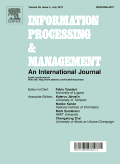
INFORMATION PROCESSING & MANAGEMENT
Elevating Standards in Information Systems ScholarshipINFORMATION PROCESSING & MANAGEMENT, published by ELSEVIER SCI LTD, is a distinguished journal at the forefront of research in the fields of Computer Science, Information Systems, Library and Information Sciences, and Management Science and Operations Research. Since its inception in 1975, this journal has continually evolved to provide a scholarly platform for the dissemination of innovative methodologies and frameworks in information processing. With a remarkable Q1 ranking across multiple disciplines and esteemed Scopus rankings—notably, 1st in Media Technology and 4th in Library and Information Sciences—it stands as a pivotal resource for researchers, professionals, and students alike, seeking to advance their understanding and application of information management principles. Although not an Open Access journal, it remains widely accessed and respected, marking its influence in shaping the future of effective information management practices. The journal is committed to providing a rigorous peer-review process, ensuring the publication of high-quality research that addresses current challenges and trends in information technology and its application in various sectors.
Quaderni di Geofisica
Advancing Earth Sciences through Innovative ResearchQuaderni di Geofisica is a distinguished academic journal published by the IST NAZIONALE GEOFISICA & VULCANOLOGIA-INGV in Italy, focusing on pivotal areas within the fields of geophysics, geology, and computer applications in Earth sciences. Since its inception, this journal has served as a vital platform for the dissemination of innovative research and methodologies, advancing our understanding of geophysical phenomena and their implications. The journal spans various converged years from 2007 to 2019 and 2021 to 2024, allowing for a comprehensive examination of contemporary developments in the field. Despite being categorized in Q3 and Q4 quartiles by Scopus, it plays a critical role in bridging the gap between theory and practice for researchers, professionals, and students alike. The journal's commitment to fostering scholarly communication is underscored by its strategic focus on multidisciplinary studies, making it an essential resource for those engaged in Earth sciences research. Readers can access the journal's content through institutional libraries or by direct request, ensuring a broad reach and ongoing contribution to the global scientific community.
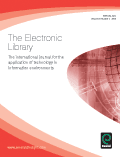
ELECTRONIC LIBRARY
Championing Excellence in Library and Computer Science ResearchELECTRONIC LIBRARY, published by EMERALD GROUP PUBLISHING LTD, serves as a pivotal resource in the realms of Library and Information Sciences as well as Computer Science Applications. Established in 1983 and continuing through 2024, this journal showcases critical research and developments that shape modern information practices and the utilization of electronic resources. With a respectable impact factor positioning it in the Q2 quartile for Library and Information Sciences and Q3 for Computer Science Applications, the journal ranks #57 out of 280 in its field, reflecting its significance within the scholarly community. Authors are encouraged to contribute innovative studies that engage with current challenges and technological advancements, ensuring that the ELECTRONIC LIBRARY remains at the forefront of academic discourse. While the journal does not currently offer open access options, it remains an essential subscription-based resource for researchers, professionals, and students seeking to deepen their understanding of digital libraries and information management.
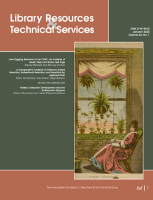
LIBRARY RESOURCES & TECHNICAL SERVICES
Empowering Library Professionals Through Innovative ResearchLIBRARY RESOURCES & TECHNICAL SERVICES, published by the American Library Association, is an esteemed journal dedicated to advancing the fields of library science and information technology. With an ISSN of 0024-2527 and E-ISSN 2159-9610, this journal has been a vital resource since its inception in 1978, converging years and evolving to remain relevant through to 2024. Recognized for its academic rigor, it currently holds a Q3 ranking in Information Systems and a Q2 ranking in Library and Information Sciences, showcasing its contribution to growing knowledge in these crucial areas. Although not an Open Access journal, LIBRARY RESOURCES & TECHNICAL SERVICES provides a platform for innovative research, case studies, and discussions that are critical for researchers, library professionals, and students alike. With a commitment to fostering professional development and sharing best practices, the journal serves as a crucial repository of information that aids in the advancement of library resources and technical services.
International Journal on Digital Libraries
Advancing Knowledge in the Digital Library LandscapeThe International Journal on Digital Libraries, published by Springer, is a premier scholarly journal dedicated to advancing the field of library and information sciences, specifically focusing on the integration and development of digital libraries. Since its inception covering significant periods from 1997 to 1998, 2000, and from 2004 to 2024, the journal has positioned itself as a leading source of research and practical insights, contributing to the evolving landscape of digital information access and preservation. With an impressive Q2 ranking in the category of Library and Information Sciences and a commendable Scopus rank of #56 out of 280, it engages a global audience of researchers, professionals, and students interested in the innovative uses of digital libraries, digital information management, and technological advancements in library science. Although it currently does not offer open access, the journal's significant impact factor underscores its critical role in shaping contemporary discourse and advancing knowledge in this vital area of study. The journal invites contributions that explore theoretical frameworks, empirical studies, and novel applications, aiming to foster collaboration and knowledge sharing in the dynamic world of digital libraries.
Public Library Quarterly
Advancing knowledge in Library and Information Sciences.Public Library Quarterly, published by Routledge Journals, Taylor & Francis Ltd, is a premier scholarly journal dedicated to advancing the field of Library and Information Sciences. With an impressive impact factor and a distinguished ranking of Q1 in its category for 2023, this journal serves as a vital resource for both researchers and practitioners. Since its inception in 1979, it has explored the evolving role of public libraries in society, integrating contemporary research with practical insights. The journal is indexed in Scopus, ranking #69 out of 280 in the Library and Information Sciences category, placing it in the 75th percentile among its peers. Although it is not Open Access, the journal offers a wealth of knowledge on essential topics such as library management, community engagement, and information access, making it an indispensable tool for students, professionals, and scholars alike. Join a global community seeking to enhance public library services and contribute to the discourse on information accessibility and literacy in today's fast-changing landscape.