
Colombian Applied Linguistics Journal
Scope & Guideline
Empowering voices through open access research.
Introduction
Aims and Scopes
- Applied Linguistics Research:
The journal emphasizes empirical research in applied linguistics, drawing on diverse methodologies including qualitative, quantitative, and mixed methods to address language learning and teaching. - Language Education and Pedagogy:
A core area is the investigation of language teaching methodologies, curriculum design, and educational practices, with a focus on improving language education in diverse contexts. - Sociolinguistics and Language Policy:
The journal explores the relationship between language and society, including issues of language policy, identity, and the sociocultural implications of language use. - Second Language Acquisition:
Research on processes and factors influencing second language acquisition is a significant focus, contributing to theoretical frameworks and practical strategies for language learners. - Language Assessment and Evaluation:
The journal publishes studies on language assessment practices, focusing on the effectiveness and reliability of various evaluation methods in educational settings.
Trending and Emerging
- Technology in Language Education:
There is an increasing emphasis on the integration of technology in language teaching and learning, exploring the impact of digital tools and online resources on language acquisition. - Multilingualism and Language Diversity:
Research on multilingualism, including studies on language maintenance and the challenges of language diversity in educational settings, has gained prominence. - Critical Applied Linguistics:
A growing interest in critical perspectives on language use and education is evident, with papers addressing power dynamics, social justice, and advocacy in applied linguistics. - Cultural Competence and Intercultural Communication:
There is a rising focus on the importance of cultural competence in language education, reflecting the need for educators to address intercultural communication skills. - Language and Identity:
Emerging themes around the interplay between language and identity, particularly in multicultural and multilingual contexts, are becoming increasingly central to the journal's publications.
Declining or Waning
- Traditional Linguistic Theory:
There has been a noticeable decline in papers centered on traditional linguistic theories without practical application, suggesting a shift towards more applied and context-sensitive research. - Descriptive Linguistics:
Research focused solely on descriptive linguistics, without an applied component or connection to real-world issues, has decreased, indicating a preference for studies that offer practical implications. - Literary Linguistics:
Papers examining the intersection of linguistics and literature have become less common, possibly due to a growing emphasis on language use in educational and communicative contexts. - Language and Gender Studies:
While still relevant, studies specifically addressing language and gender dynamics appear to be less frequent, suggesting a shift towards broader sociolinguistic themes. - Historical Linguistics:
Research in historical linguistics has waned, reflecting a trend towards contemporary applications and issues in applied linguistics.
Similar Journals
ZEITSCHRIFT FUR GERMANISTISCHE LINGUISTIK
Fostering Scholarly Excellence in German StudiesZEITSCHRIFT FUR GERMANISTISCHE LINGUISTIK, published by WALTER DE GRUYTER GMBH, stands as a pivotal resource in the field of linguistics since its inception in 1973. With its ISSN 0301-3294 and E-ISSN 1613-0626, this esteemed journal serves as an essential platform for researchers and academics focused on the nuances of the German language and its linguistic frameworks. Catering to a diverse audience, the journal features high-impact articles and contributions consistent with rigorous academic standards, as evident from its Q1 categorization in Linguistics and Language and its notable rankings in both the Arts and Humanities and Social Sciences domains. The journal's commitment to advancing knowledge in linguistics fosters a scholarly environment conducive to both emerging and established linguists. While not available through open access, ZEITSCHRIFT FUR GERMANISTISCHE LINGUISTIK remains influential, drawing readers keen on exploring developmental and educational paradigms alongside linguistic theories. With a convergence of research that spans until 2024, it represents a comprehensive body of work integral to the evolving landscape of linguistic studies in Germany and beyond.

Concentric-Studies in Linguistics
Elevating academic dialogue in the field of linguistics.Concentric-Studies in Linguistics is a distinguished journal published by the National Taiwan Normal University, College of International Studies & Social Sciences. With an ISSN of 1810-7478 and an E-ISSN of 2589-5230, this journal contributes significantly to the field of linguistics, encompassing a wide range of topics from language acquisition to sociolinguistics. As of 2023, it holds a respectable Q3 ranking in both the Linguistics and Language categories, and it is positioned in the 28th and 24th percentiles within its Scopus ranks for the Arts and Humanities and Social Sciences, respectively. Although it operates under a traditional access model, its publication from 2014 to 2024 reflects a commitment to advancing academic discourse. Researchers, professionals, and students are encouraged to engage with its rich content as it provides a platform for innovative studies and critical analyses that push the boundaries of linguistic research.

Argentinian Journal of Applied Linguistics
Enhancing language education through cutting-edge research and insights.The Argentinian Journal of Applied Linguistics is a prominent publication dedicated to advancing the field of linguistics with a particular focus on practical applications within various contexts. Published by the Federación Argentina de Asociaciones Profesionales de Profesores de Inglés (FAAP), this journal serves as a vital platform for researchers, educators, and linguistics professionals interested in the nuances of language teaching, acquisition, and sociolinguistics. With an ISSN of 2314-3576, the journal showcases original research and reviews that push the boundaries of current knowledge and practice in applied linguistics. Despite being in its early stages, the journal aims to build a strong academic presence by fostering collaboration among scholars and practitioners, thereby contributing to the enhancement of language education in Argentina and beyond. The importance of this journal lies not only in its commitment to accessibility and knowledge dissemination but also in its role as a bridge between linguistic theory and practical application, ultimately benefiting educators and learners alike.

Forma y Funcion
Connecting scholars with the world of language insights.Forma y Funcion is a distinguished open access journal published by UNIV NACIONAL COLOMBIA, FAC CIENCIAS HUMANAS, dedicated to advancing the fields of linguistics and language studies. With an ISSN of 0120-338X and an E-ISSN of 2256-5469, the journal has been committed to open access since 2005, ensuring that research is freely accessible to scholars, professionals, and students around the globe. Situated in Bogotá, Colombia, it has established itself as a pivotal platform within the academic community, achieving a commendable Q2 ranking in 2023 in the subfield of Linguistics and Language. Its Scopus rankings further underscore its relevance, placing it in the 55th percentile among peers in the Arts and Humanities and the 51st percentile within Social Sciences. Covering a range of topics related to language and linguistics, Forma y Funcion aims to foster cutting-edge research and dialogue, making significant contributions to the field from 2019 through 2024 and beyond.

Canadian Journal of Applied Linguistics
Catalyzing Knowledge Exchange in Applied LinguisticsCanadian Journal of Applied Linguistics is a premier, peer-reviewed publication dedicated to the field of applied linguistics, encompassing a wide range of topics related to language acquisition, language assessment, teaching methodologies, and sociolinguistics. Published by the ASSOC CANADIENNE LINGUISTIQUE APPLIQUEE, this Open Access journal has been paving the way for innovative research and insightful discourse in the linguistic community since 1998. With its comprehensive insights and scholarly articles, the journal serves as an invaluable resource for researchers, educators, and students alike, facilitating the exchange of ideas and advancements in applied linguistics. The journal is committed to promoting quality research that enhances our understanding of language-related processes in diverse contexts, making it a significant contributor to the global dialogue in linguistics. Based in Ottawa, Canada, the journal is accessible to a wide audience, reflecting its dedication to inclusivity and knowledge sharing in the thriving field of applied linguistics.
ITL-International Journal of Applied Linguistics
Connecting researchers and practitioners in the language education landscape.ITL-International Journal of Applied Linguistics, published by JOHN BENJAMINS PUBLISHING CO in Belgium, stands as a leading journal in the field of applied linguistics and education, recognized for its rigorous scholarship and impactful contributions. With an impressive ranking of Q1 in both the Education and Linguistics and Language categories, ITL holds its place among the top journals globally, featuring in the Scopus rankings with a notable 91st percentile in both Arts and Humanities as well as Social Sciences. The journal aims to disseminate innovative research exploring the intersection of linguistics, language acquisition, and pedagogical practices, fostering a rich academic dialogue among researchers, educators, and practitioners. Though not currently an open access journal, ITL remains accessible to a broad readership, with an emphasis on high-quality, peer-reviewed articles that inform and inspire advancements in applied linguistics. The journal's commitment to academic excellence and relevance makes it an essential resource for those seeking to understand and contribute to the dynamic landscape of language studies.

Revista Espanola de Linguistica Aplicada
Pioneering research at the intersection of language and education.Revista Espanola de Linguistica Aplicada is a prominent academic journal published by John Benjamins Publishing Co, specializing in the interdisciplinary fields of linguistics, education, and e-learning. With its ISSN 0213-2028 and E-ISSN 2254-6774, the journal has established a significant presence in Spain and beyond, showcasing innovative research and contributions in applied linguistics. The journal is recognized for its rigorous peer-review process and maintains impressive Scopus rankings, notably within the 72nd percentile for Arts and Humanities and 68th percentile for Social Sciences, reflecting its critical role in advancing the study of language and education. As of 2023, it holds a Q3 rank in Education and a Q2 rank in Linguistics and Language, underscoring its influence and relevance in these disciplines. Targeted at researchers, educators, and students alike, the journal aims to facilitate knowledge exchange and provide a platform for discussions that shape the future of linguistics.
Dutch Journal of Applied Linguistics
Exploring Innovations in Language Use and LearningWelcome to the Dutch Journal of Applied Linguistics, a premier open-access publication dedicated to advancing the field of applied linguistics. Published by openjournals.nl and based in the Netherlands, this journal has been committed to disseminating innovative research since its inception in 2012, gaining recognition within the academic community for its rigorous scholarship and high standard of publications. With an impressive Q1 ranking in both the Linguistics and Language category and a commendable percentile standing in Scopus, the journal provides an essential platform for researchers, professionals, and students alike to explore the latest findings and developments in language studies. As an open-access journal since 2021, it ensures that valuable knowledge is freely accessible to a worldwide audience, fostering collaboration and enhancing the impact of research in this dynamic field. The Dutch Journal of Applied Linguistics invites you to contribute and engage with cutting-edge scholarship that shapes the future of language use and learning.
LANGUAGE
Advancing the Frontiers of Linguistic KnowledgeLANGUAGE, published by the Linguistic Society of America, is a premier academic journal dedicated to the rigorous study of linguistic theory and practice. With an ISSN of 0097-8507 and E-ISSN 1535-0665, this esteemed journal has established itself as a leading publication in the field of linguistics since its inception. The journal has consistently maintained a high impact factor, being ranked in the Q1 category in Linguistics and Language for 2023, placing it among the top tier of academic journals. Notably, it also holds impressive Scopus rankings, being positioned at #75 out of 1088 in Arts and Humanities, and #89 out of 1167 in Social Sciences, demonstrating a significant impact and reach in the discipline. While it is not an open-access journal, LANGUAGE provides crucial insights into linguistic research, fostering a vibrant academic community. Spanning years from 1996 to 2024, it continues to be an essential resource for researchers, professionals, and students alike, aiming to advance the understanding of language in its myriad forms and functions.
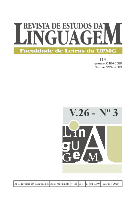
Revista de Estudos da Linguagem
Bridging Gaps in Language Studies Since 1992Revista de Estudos da Linguagem, an esteemed academic journal published by the Universidade Federal de Minas Gerais within its Faculty of Letters, serves as a vital resource for scholars in the fields of linguistics and education. Since its inception in 1992, the journal has embraced an open access model, ensuring that research is accessible to a broader audience, thereby fostering collaboration and knowledge dissemination. Based in Brazil, this journal focuses on a wide array of topics related to language studies, contributing significantly to the discourse within the linguistics community. While recent rankings place it in Q4 in Education and Q3 in Linguistics and Language categories, its dedication to publishing high-quality research continues to attract attention despite its current Scopus rankings. The journal notably ranks at #668 in Language and Linguistics, verifying its emerging impact in the academic landscape. Researchers and students alike will find the journal's commitment to diversity in linguistic research a compelling reason to engage with its articles. The journal's offices are located at AV ANTONIO CARLOS, 6627 PAMPULHA, BELO HORIZONTE, MG, BRAZIL, and it continues to invite contributions that challenge established norms and explore innovative themes within the dynamic realm of language studies.