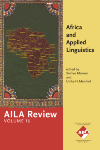
AILA Review
Scope & Guideline
Bridging theory and practice in language scholarship.
Introduction
Aims and Scopes
- Multilingualism and Migration:
The journal explores the dynamics of multilingualism in the context of migration, emphasizing how language functions as a tool for identity and integration in new cultural settings. - Language Education and Pedagogy:
AILA Review highlights innovative pedagogical approaches, including translanguaging and CLIL (Content and Language Integrated Learning), aimed at enhancing language learning in diverse classrooms. - Discourse and Media Studies:
The journal analyzes representations of language and accents in media, contributing to discussions on social equity and the portrayal of linguistic diversity. - Language Policy and Planning:
Research published in AILA Review often addresses the implications of language policies on educational practices, particularly in multilingual and multicultural contexts. - Transdisciplinary Approaches:
The journal encourages research that transcends traditional boundaries, integrating insights from various fields to understand language's role in society and education.
Trending and Emerging
- Translingualism and Plurilingualism:
There is a growing emphasis on translingual and plurilingual approaches in language education, reflecting the realities of multilingual societies and the need for inclusive teaching practices. - Migration Linguistics:
Research on migration linguistics is gaining traction, highlighting how language practices evolve in the context of global mobility and the experiences of migrants. - Social Justice in Language Education:
The journal increasingly addresses themes of social equity and justice in language teaching, particularly in relation to marginalized communities and underrepresented languages. - Digitalization and Language Learning:
Emerging studies focus on the role of digital tools and platforms in language education, exploring challenges and opportunities presented by technological advancements. - Ecological Perspectives in Language Teaching:
There is a trend towards adopting ecological perspectives that consider the interplay between language, environment, and community in educational contexts.
Declining or Waning
- Traditional Language Teaching Methods:
There is a noticeable decline in research focused on conventional language teaching methods, as more innovative and inclusive pedagogical strategies gain prominence. - Narrow Linguistic Studies:
Studies that focus solely on linguistic features without considering sociocultural contexts are becoming less common, signaling a shift towards more holistic approaches. - Static Language Policy Analysis:
Research that examines language policy in a static manner, without addressing its implications in dynamic contexts (such as migration and globalization), appears to be waning.
Similar Journals

Colombian Applied Linguistics Journal
Connecting scholars and practitioners in the linguistic landscape.Colombian Applied Linguistics Journal, published by UNIV DISTRITAL FRANCISCO JOSE DE CALDAS, serves as a vital platform for the advancement of knowledge in the field of applied linguistics, particularly within the Latin American context. Since its inception in 2003, the journal has embraced an Open Access model, ensuring that cutting-edge research is readily accessible to scholars, practitioners, and students alike. With a focus on topics including language acquisition, language policy, and bilingual education, the journal contributes to the understanding of linguistic diversity and its practical applications in educational settings. The Colombian Applied Linguistics Journal is dedicated to fostering dialogue and disseminating research that bridges theory and practice, thus playing a crucial role in shaping contemporary discourses in linguistics and education. Located in Bogotá, Colombia, the journal encourages submissions from both national and international authors, enhancing its reputation as a key player in the global linguistic community.
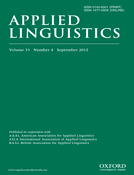
APPLIED LINGUISTICS
Advancing Knowledge in Linguistics and CommunicationApplied Linguistics, published by Oxford University Press, is a premier scholarly journal that has significantly contributed to the fields of linguistics and communication since its inception in 1980. With an impressive impact factor and ranked in the top quartile (Q1) in both Communication and Linguistics and Language categories, Applied Linguistics is recognized for its rigorous peer-reviewed articles that explore the intersections of language, society, and cognition. The journal enjoys a remarkable position in the Scopus rankings, placing it among the top 2% of publications in its discipline. Researchers, professionals, and students benefit from its comprehensive scope, which encompasses innovative research on language acquisition, discourse analysis, and applied linguistics methodologies. Although not an open access journal, its commitment to advancing knowledge and fostering academic discussions makes it an indispensable resource for anyone interested in the critical role of language in various contexts.
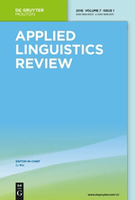
Applied Linguistics Review
Advancing the frontiers of language research.Applied Linguistics Review is a leading academic journal published by WALTER DE GRUYTER GMBH, focusing on the dynamic field of linguistics and language studies. With an impressive Q1 quartile ranking in both Linguistics and Language and Social Sciences, the journal positions itself at the forefront of research, making it a crucial resource for scholars and professionals alike. The journal aims to foster scholarly dialogue by publishing high-quality, peer-reviewed articles that explore theoretical frameworks, empirical studies, and innovative methodologies in applied linguistics. Operating from Poland with an international reach, it is committed to advancing knowledge in areas such as language acquisition, language policy, and multilingualism. Its notable performance can be seen in its Scopus rankings, where it stands at #72 out of 1088 in the Arts and Humanities category and #86 out of 1167 in Social Sciences. The Applied Linguistics Review serves as an invaluable platform for researchers, educators, and students to disseminate and engage with cutting-edge research, thereby enhancing their understanding and application of linguistic principles in diverse contexts.
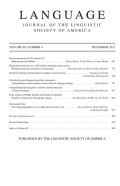
LANGUAGE
Elevating Academic Discourse in Linguistic StudiesLANGUAGE, published by the Linguistic Society of America, is a premier academic journal dedicated to the rigorous study of linguistic theory and practice. With an ISSN of 0097-8507 and E-ISSN 1535-0665, this esteemed journal has established itself as a leading publication in the field of linguistics since its inception. The journal has consistently maintained a high impact factor, being ranked in the Q1 category in Linguistics and Language for 2023, placing it among the top tier of academic journals. Notably, it also holds impressive Scopus rankings, being positioned at #75 out of 1088 in Arts and Humanities, and #89 out of 1167 in Social Sciences, demonstrating a significant impact and reach in the discipline. While it is not an open-access journal, LANGUAGE provides crucial insights into linguistic research, fostering a vibrant academic community. Spanning years from 1996 to 2024, it continues to be an essential resource for researchers, professionals, and students alike, aiming to advance the understanding of language in its myriad forms and functions.
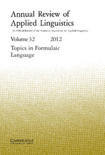
Annual Review of Applied Linguistics
Connecting researchers and practitioners in the world of applied linguistics.The Annual Review of Applied Linguistics, published by Cambridge University Press, stands as a premier journal in the realm of linguistics and psychology, with an impressive impact factor identifying its significance: ranking in the Q1 quartile across both fields in 2023. With an ISSN of 0267-1905 and an E-ISSN of 1471-6356, this journal endeavors to provide comprehensive and insightful reviews covering an array of topics within applied linguistics, thus supporting researchers, professionals, and students in advancing their understanding and expertise. Operating from its base in Cambridge, United Kingdom, the journal has maintained a consistent commitment to scholarly excellence since its inception, accelerating discussions on critical issues and emerging research trends from 2005 to 2024. Notably, it holds a prestigious position in Scopus, ranked #26 in Language and Linguistics and #30 in Social Sciences, showcasing its influence and contribution to the scholarship in the field. The Annual Review of Applied Linguistics thus stands as an essential resource for anyone engaged in linguistic research and application.

Journal of Research in Applied Linguistics
Exploring the Frontiers of Language ResearchJournal of Research in Applied Linguistics is an esteemed academic journal published by Shahid Chamran University Ahvaz, Iran, focusing on the dynamic field of linguistics and language studies. With an ISSN of 2345-3303 and an E-ISSN of 2588-3887, the journal has established itself as a valuable resource for researchers and professionals aiming to explore diverse issues related to applied linguistics, including language acquisition, pedagogy, and sociolinguistic interactions. As part of a robust academic community since its inception in 2017, it is recognized with a Q2 quartile ranking in the world of linguistics and achieved impressive Scopus ranks reflective of its growing impact, particularly within the arts and humanities. The journal embraces an open access policy, enhancing its reach and availability to a broad audience. Researchers, educators, and students alike will find in the Journal of Research in Applied Linguistics a critical platform for dialogue, innovation, and contribution to the evolving landscape of language research.

Lengua y Migracion-Language and Migration
Connecting Communities through Language and Migration Insights.Lengua y Migración - Language and Migration, published by Universidad Alcalá de Henares, is a distinguished academic journal that focuses on the interconnections between language and migration, with a unique perspective grounded in both linguistics and demography. Since its inception in 2015, the journal has positioned itself as a critical platform for researchers, practitioners, and students interested in understanding the implications of migratory phenomena on language practices and identity constructions across diverse sociocultural contexts. With the ISSN 1889-5425, the journal operates without an open access policy, ensuring high-quality, peer-reviewed content that garners significant academic attention. In its latest rankings, Lengua y Migración has achieved a Q3 status in Linguistics and Language, and a Q4 ranking in Demography, indicating its growing influence and relevance in these fields. The journal continues to expand its role as a vital resource for advancing scholarship on language and migration dynamics, contributing valuable insights applicable to academia, policy-making, and community engagement.

Canadian Journal of Applied Linguistics
Illuminating the Dynamics of Language in ContextCanadian Journal of Applied Linguistics is a premier, peer-reviewed publication dedicated to the field of applied linguistics, encompassing a wide range of topics related to language acquisition, language assessment, teaching methodologies, and sociolinguistics. Published by the ASSOC CANADIENNE LINGUISTIQUE APPLIQUEE, this Open Access journal has been paving the way for innovative research and insightful discourse in the linguistic community since 1998. With its comprehensive insights and scholarly articles, the journal serves as an invaluable resource for researchers, educators, and students alike, facilitating the exchange of ideas and advancements in applied linguistics. The journal is committed to promoting quality research that enhances our understanding of language-related processes in diverse contexts, making it a significant contributor to the global dialogue in linguistics. Based in Ottawa, Canada, the journal is accessible to a wide audience, reflecting its dedication to inclusivity and knowledge sharing in the thriving field of applied linguistics.
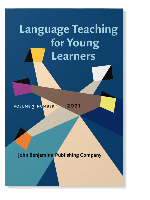
Language Teaching for Young Learners
Shaping the future of language teaching for young learners.Language Teaching for Young Learners, published by John Benjamins Publishing Co, is a premier journal dedicated to enhancing the pedagogy of language acquisition in early childhood education. Since its inception in 2019, it has rapidly established itself within the research community, reflected by its high Scopus rankings—placing it in the 85th percentile for Language and Linguistics and the 84th percentile for Education. The journal aims to provide a platform for innovative research, practical insights, and theoretical discussions surrounding the teaching of languages to young learners, thus contributing significantly to the fields of Education and Linguistics. With an open access model currently unavailable, it caters to a diverse global audience, including researchers, educators, and policy-makers, keen on improving pedagogical practices. Located in the Netherlands, the journal's commitment to academic excellence is evident through its Q1 and Q2 rankings in Linguistics and Language and Education respectively, encouraging continual discourse in cultivating effective language education practices.

Onomazein
Elevating Academic Discourse in Language StudiesOnomazein is an esteemed academic journal published by the Pontificia Universidad Catolica de Chile, Facultad de Letras, featuring a dedicated focus on the field of Linguistics and Language. With an established presence since 2011, it reaches an international audience and is recognized for its contributions within the Q2 category of Linguistics as per the latest rankings, underscoring its significance in the academic community. The journal holds a commendable position in Scopus, ranking 470th out of 1088 in Arts and Humanities and 549th out of 1167 in Social Sciences, reflecting its relevance and impact in the domain. Although it does not currently offer an open access option, Onomazein remains a critical platform for researchers, professionals, and students seeking to advance their understanding of linguistic phenomena and engage with contemporary debates in language studies. For submissions and more information, please refer to the university’s address at AV Vicuna Mackenna 4860, Santiago, Chile.