
Ingineria Automobilului
Scope & Guideline
Exploring the Frontiers of Automotive Design and Safety
Introduction
Aims and Scopes
- Vehicle Dynamics and Performance:
Research on the dynamics of vehicles, including the study of tire-ground grip, suspension systems, and the influence of various transmission types on performance. - Environmental Impact and Sustainability:
Analysis of fuel consumption, CO2 emissions, and the exploration of environmentally compatible energy solutions for automotive applications. - Innovative Propulsion Systems:
Focus on the development and analysis of propulsion systems, including electric, hybrid, and alternative fuel vehicles, as well as modeling techniques for propulsion dynamics. - Traffic Safety and Accident Analysis:
Studies aimed at understanding vehicle-pedestrian interactions, accident impacts, and the effectiveness of safety measures in urban environments. - Educational Initiatives in Automotive Engineering:
Promotion of student involvement in automotive engineering through contests, workshops, and conferences to foster innovation and practical skills. - Technological Advancements and Methodologies:
Investigation into new technologies and methodologies for vehicle diagnostics, aerodynamic studies, and the application of simulation techniques in automotive engineering.
Trending and Emerging
- Electric and Hybrid Vehicle Technologies:
There is a growing emphasis on the performance and optimization of electric and hybrid vehicles, including studies on energy efficiency and innovative propulsion solutions. - Sustainability and Eco-Friendly Innovations:
Research exploring environmentally compatible energy scenarios and the reduction of emissions is increasingly prevalent, aligning with global sustainability goals. - Advanced Safety Features and Accident Prevention:
A notable trend is the focus on improving vehicle safety through advanced technologies and better understanding of accident dynamics, highlighting the importance of pedestrian safety. - Integration of Smart Technologies:
The integration of smart technologies in vehicles, including autonomous systems and connectivity, is becoming a significant area of research, reflecting broader trends in the automotive sector. - Educational and Competitional Engagement:
The journal is increasingly promoting student engagement through competitions and educational initiatives, fostering innovation and practical experience among future engineers.
Declining or Waning
- Traditional Internal Combustion Engine Studies:
Research on conventional diesel and gasoline engines is decreasing as the automotive field shifts towards electric and hybrid technologies, reflecting a broader industry trend. - Basic Vehicle Design Principles:
Papers that cover fundamental design aspects without integrating advanced technologies or sustainability considerations are less frequent, suggesting a move towards more innovative approaches. - Historical Analysis of Automotive Technologies:
While historical perspectives provide valuable insights, recent publications indicate a diminishing interest in purely historical analyses, favoring contemporary issues and future technologies instead. - Local and National Traffic Studies:
Research focused on specific local traffic issues has seen a decline, possibly due to a shift toward more global or systemic approaches to traffic and mobility challenges.
Similar Journals
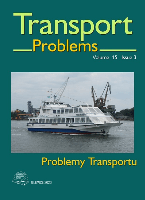
Transport Problems
Transforming Ideas into Solutions for a Sustainable FutureTransport Problems, published by the Silesian University of Technology, Faculty of Transport, is a distinguished open-access journal that has been advancing scholarship in the fields of Automotive Engineering, Mechanical Engineering, and Transportation since its inception in 2007. With an ISSN of 1896-0596 and an E-ISSN of 2300-861X, this journal serves as a vital platform for researchers and practitioners to disseminate innovative research findings and explore fundamental issues in transport systems and technologies. Based in Poland, the journal covers various topics including transportation logistics, vehicle dynamics, and environmental impacts, thereby addressing critical challenges faced in the transportation sector globally. As reflected in its Scopus rankings, the journal occupies respectable quartiles and continues to contribute valuable insights to the academic community. By making its content freely accessible, Transport Problems significantly enhances the ability of researchers and students alike to engage with the latest developments in transport engineering and contribute to this ever-evolving field.
Journal of Mechanical Engineering and Sciences
Elevating Research in Mechanical Engineering and BeyondThe Journal of Mechanical Engineering and Sciences (ISSN: 2289-4659, E-ISSN: 2231-8380), published by UNIV MALAYSIA PAHANG, is a prominent open access journal established in 2011, dedicated to advancing the field of mechanical engineering and associated sciences. Covering a wide array of topics from industrial manufacturing processes to computational mechanics, the journal serves as a vital platform for researchers, professionals, and students to disseminate innovative findings and methodologies. With impressive Scopus rankings, including a place in the 60th percentile for Industrial and Manufacturing Engineering, the journal holds a significant position among its peers, facilitating global academic discourse. Located in Kuantan, Pahang, Malaysia, the journal emphasizes accessibility and collaboration within the engineering community, encouraging submissions that contribute to both theoretical and applied aspects of mechanical engineering.

SAE International Journal of Passenger Vehicle Systems
Elevating Standards in Passenger Vehicle Safety and PerformanceWelcome to the SAE International Journal of Passenger Vehicle Systems, a premier publication in the realm of automotive engineering. Published by SAE International, this journal serves as a critical platform for disseminating high-caliber research focused on the innovation and advancement of passenger vehicle systems. With an impact factor that reflects its growing influence, this open-access journal enhances visibility and accessibility, supporting a diverse readership that includes researchers, engineers, and automotive professionals. Covering a broad scope that incorporates safety, reliability, and mechanical engineering among others, the journal is categorized in the Q3 and Q4 quartiles for various engineering fields, indicating its significance and the potential for impactful contributions to ongoing discussions within the automotive sector. The Scopus rankings further underscore its commitment to quality, placing it within the mid-range of prominent publications. As a valued resource, the SAE International Journal of Passenger Vehicle Systems from 2022 to 2024 offers a vital forum for knowledge exchange, aimed at inspiring breakthroughs in automotive technology and enhancing passenger safety.

Automotive Innovation
Transforming Ideas into Automotive AdvancementsAutomotive Innovation is a leading academic journal dedicated to the advancements and transformative trends in the field of automotive engineering. Published by SpringerNature, this esteemed journal boasts an impressive Q1 ranking in Automotive Engineering for 2023, reflecting its high impact and relevance with a rank of #17 out of 125 in the Scopus database, placing it in the 86th percentile. Focused on publishing cutting-edge research from 2018 to 2024, it serves as an essential platform for researchers, professionals, and students interested in exploring the latest innovations, technologies, and practices in automotive design, manufacturing, and sustainability. Though not an open access journal, its commitment to advancing knowledge in automotive engineering makes it an invaluable resource for anyone invested in the future of transportation. For further insights and research findings, the journal can be accessed at its editorial office located in the United States.
Transport
Elevating knowledge in automotive and mechanical disciplines.Transport is a leading open-access journal published by VILNIUS GEDIMINAS TECH UNIVERSITY, specializing in the fields of automotive and mechanical engineering. Since its transition to open access in 2018, the journal has become a vital platform for disseminating high-quality research and innovative practices in transport systems, engineering technologies, and sustainable mobility solutions. With an ISSN of 1648-4142 and an E-ISSN of 1648-3480, Transport is indexed in Scopus with notable rankings, including Q2 in Automotive Engineering and Q3 in Mechanical Engineering for 2023, reflecting its influential presence within these disciplines. Researchers and practitioners are encouraged to contribute to this scholarly community, where their work will reach a robust international audience, thereby advancing knowledge and fostering collaborations in the ever-evolving transport sector. Based in Lithuania, the journal is committed to maintaining rigorous peer-review standards and promoting interdisciplinary studies to address the complex challenges in transportation engineering.
SAE International Journal of Engines
Elevating Standards in Engine Research and DevelopmentSAE International Journal of Engines, published by SAE International, serves as a leading platform in the field of automotive engineering and fuel technology. Established in 2008, this journal has quickly gained recognition, achieving a Q2 ranking in Automotive Engineering and a Q3 ranking in Fuel Technology as of 2023. With the journal's ongoing commitment to advancing the understanding of engine technologies, it encompasses a diverse range of topics including engine performance, emissions, fuels, and innovative technologies driving the automotive industry. Researchers and professionals can benefit from the high-quality peer-reviewed articles that the journal features, while the comprehensive content serves as an invaluable resource for students engaged in automotive studies. Although it does not currently offer open access, the journal's credibility is further reinforced by its respectable Scopus rankings, indicating its significant impact within the academic community. For anyone seeking to stay at the forefront of engine research and automotive advancements, the SAE International Journal of Engines is an essential resource.
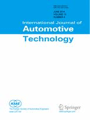
INTERNATIONAL JOURNAL OF AUTOMOTIVE TECHNOLOGY
Accelerating Knowledge in Automotive TechnologyINTERNATIONAL JOURNAL OF AUTOMOTIVE TECHNOLOGY, published by the Korean Society of Automotive Engineers (KSAE), stands as a key platform in the field of Automotive Engineering since its inception in 2000. With an ISSN of 1229-9138 and an E-ISSN of 1976-3832, this esteemed journal aims to disseminate cutting-edge research, innovative methodologies, and advancements in automotive technology. As of 2023, it holds a distinguished Q2 quartile ranking in the Automotive Engineering category on Scopus, featuring a competitive rank of 48/125, illustrating its recognition among peers and the academic community. The journal also enjoys a global readership despite its base in South Korea. Researchers, professionals, and students in the automotive sector are encouraged to contribute to this journal, thus promoting collaboration and knowledge exchange that fosters innovation and progress in automotive engineering. Additionally, the journal is committed to enhancing accessibility of knowledge across boundaries and aims to continue serving as a catalyst for academic growth up to the year 2024.

Propulsion and Power Research
Leading the Charge in Open Access Research.Propulsion and Power Research, published by KEAI PUBLISHING LTD, is a leading Open Access journal that has been advancing the field of propulsion and power systems since its inception in 2012. With its commitment to fostering scientific discourse and innovation, the journal has gained a prominent position within academia, achieving a Q1 ranking in multiple categories such as Aerospace Engineering, Automotive Engineering, and Fluid Flow and Transfer Processes as of 2023. With an impressive ranking of #18 out of 153 in Aerospace Engineering and consistent recognition in the Scopus rankings, the journal explores critical advancements and research findings that propel the industry forward. As an Open Access publication, it ensures that groundbreaking research is readily available to a broad audience, enhancing collaboration between researchers, practitioners, and students. The journal's scope encompasses a wide range of topics within propulsion and energy solutions, making it an essential resource for anyone keen on discovering significant developments in this dynamic field.
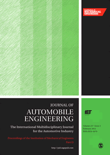
PROCEEDINGS OF THE INSTITUTION OF MECHANICAL ENGINEERS PART D-JOURNAL OF AUTOMOBILE ENGINEERING
Fostering Excellence in Automotive Research and DevelopmentPROCEEDINGS OF THE INSTITUTION OF MECHANICAL ENGINEERS PART D-JOURNAL OF AUTOMOBILE ENGINEERING, published by SAGE PUBLICATIONS LTD, is a premier peer-reviewed journal dedicated to advancing the field of automobile engineering. Established in 1989, this journal serves as a vital platform for researchers, professionals, and students interested in the latest advancements in automotive technology and engineering practices. With a significant focus on aerodynamics, vehicle dynamics, and safety innovations, it consistently ranks in the Q2 quartile within both Aerospace Engineering and Mechanical Engineering, showcasing its influence and reliability in the academic community. The journal is indexed in Scopus with impressive rankings, being placed in the 41st percentile for Aerospace Engineering and the 214th percentile for Mechanical Engineering, further solidifying its importance in these fields. As an important resource for cutting-edge research, the journal does not currently offer open access, making it a great venue for disseminating substantial findings that drive the future of automotive innovation.
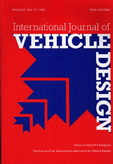
INTERNATIONAL JOURNAL OF VEHICLE DESIGN
Unleashing Creativity in Vehicle EngineeringThe INTERNATIONAL JOURNAL OF VEHICLE DESIGN is a distinguished publication that has been at the forefront of automotive engineering and mechanical design since its inception in 1979. Published by INDERSCIENCE ENTERPRISES LTD in the United Kingdom, this journal aims to foster innovative research and technical knowledge in the field of vehicle design, encompassing various aspects from conceptualization to manufacturing and performance analysis. With an ISSN of 0143-3369 and an E-ISSN of 1741-5314, the journal extends its accessibility to a global audience, although it currently does not operate under an open access model. Recognized for its scholarly contributions, it holds a Q3 ranking in Automotive Engineering and a Q4 ranking in Mechanical Engineering as of 2023, reflecting its position among peers with an increasing impact in the discipline. Researchers, professionals, and students will find valuable insights and cutting-edge research in the articles published, contributing to a deeper understanding of advancing vehicle technologies and methodologies. For inquiries, the journal is based at the World Trade Center Building, 29 Route de Pré-Bois, Case Postale 856, CH-1215 Geneva, Switzerland, where one can also follow its developments and contribution to the growing body of knowledge in vehicle design.