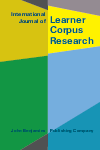
International Journal of Learner Corpus Research
metrics 2024
Exploring the Intersection of Linguistics and Education
Introduction
The International Journal of Learner Corpus Research (ISSN: 2215-1478, E-ISSN: 2215-1486), published by JOHN BENJAMINS PUBLISHING CO, stands at the forefront of research in the fields of education and linguistics, with a notable impact demonstrated by its Category Quartile rankings of Q2 in Education and Q1 in Linguistics and Language for 2023. This distinguished journal, based in the Netherlands, presents cutting-edge studies that focus on learner corpus research—an area that merges linguistic analysis with practical applications in language learning and teaching. Spanning an impressive convergence period from 2015 to 2024, it has established itself as a vital resource for researchers, educators, and students eager to explore the nuances of language acquisition through empirical data. Notably, its high Scopus rankings underscore its significance within the academic community, making it a must-read for those dedicated to advancing the understanding of learner language dynamics.
Metrics 2024
 0.491.10-14
Metrics History
Rank 2024
Scopus
IF (Web Of Science)
JCI (Web Of Science)
Quartile History
Similar Journals
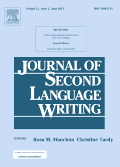
JOURNAL OF SECOND LANGUAGE WRITING
Exploring the Nuances of Multilingual ExpressionJOURNAL OF SECOND LANGUAGE WRITING, an esteemed publication of PERGAMON-ELSEVIER SCIENCE LTD, serves as a pivotal resource in the fields of Education and Linguistics, exhibiting a remarkable impact factor that solidifies its standing in the academic community. Established in 1992, this journal has consistently provided a platform for high-quality research and discourse, with its articles rigorously peer-reviewed to ensure scholarly integrity. Holding Q1 rankings in both Education and Linguistics for 2023, it is recognized for its influence in shaping the field of second language acquisition and pedagogy. With impressive Scopus rankings that place it in the 98th percentile among peers, the journal attracts a diverse readership comprising researchers, educators, and students eager to explore the intricacies of second language writing. Its focus encompasses theoretical research, practical applications, and innovative methodologies that enrich the field, making it an essential resource for those dedicated to understanding and enhancing the writing skills of second language learners.
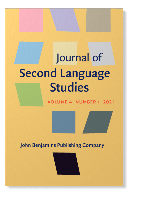
Journal of Second Language Studies
Navigating the Dynamics of Language EducationWelcome to the Journal of Second Language Studies, a premier publication dedicated to advancing the field of language acquisition and pedagogy. Published by John Benjamins Publishing Co in the Netherlands, this journal (ISSN: 2542-3835, E-ISSN: 2542-3843) holds a significant place within the academic community, reflected by its Q2 ranking in Education and Q1 in Linguistics and Language for 2023. With a strong Scopus presence, ranking 197/1088 in Language and Linguistics, it appeals to a broad audience of researchers, educators, and students interested in the complexities of second language learning. The journal has been publishing groundbreaking research from 2018 to 2024, focusing on innovative methodologies, theoretical frameworks, and practical applications that enhance second language education. Although currently not open access, this journal serves as an essential resource for those seeking to deepen their understanding of language dynamics and teaching strategies in a diverse educational landscape.
RUSSIAN LINGUISTICS
Bridging traditional linguistics with modern scholarship.RUSSIAN LINGUISTICS is a peer-reviewed academic journal published by Springer, dedicated to advancing the understanding of the Russian language and its interplay with various linguistic frameworks. With a longstanding history that spans from its inception in 1974, the journal encompasses a broad range of topics within the fields of linguistics and language studies, offering valuable insights especially in *Developmental and Educational Psychology* and the intricacies of linguistics at large. Currently ranked in the Q2 quartile for Linguistics and Language, and holding substantial positions within Scopus rankings, RUSSIAN LINGUISTICS serves as an essential resource for researchers, educators, and students alike, fostering dialogue and collaboration within the international linguistic community. The journal notably provides critical access to research findings that enhance the comprehension of Russian linguistics' role in a global context, despite operating under a traditional access model. For those pursuing scholarly excellence, RUSSIAN LINGUISTICS remains a pivotal platform for disseminating innovative research and promoting the study of language.
Revista de Linguistica y Lenguas Aplicadas
Fostering Dialogue in Linguistics and Language StudiesRevista de Linguistica y Lenguas Aplicadas, an esteemed journal published by UNIV POLITECNICA VALENCIA, EDITORIAL UPV, is a pivotal resource in the field of linguistics and applied languages. Since its inception, the journal has embraced Open Access publishing since 2006, ensuring that its rich repository of research is readily available to a global audience of researchers, academics, and language professionals. Headquartered in Valencia, Spain, the journal contributes significantly to the advancement of linguistics knowledge, boasting a respectable ranking within the Q3 quartile for Linguistics and Language (2023) according to Scopus metrics. It covers a diverse range of topics and methodologies, engaging readers through its commitment to scholarly rigor and innovation. The journal is uniquely positioned to inform and inspire essential discussions from 2015 to 2024, making it a vital platform for emerging linguists and seasoned scholars alike, as they explore the evolving landscapes of language and communication.
International Journal of Corpus Linguistics
Connecting Language and Data for Deeper UnderstandingThe International Journal of Corpus Linguistics, published by John Benjamins Publishing Co, is a premier academic journal dedicated to advancing the field of corpus linguistics. With an ISSN of 1384-6655 and an E-ISSN of 1569-9811, this journal serves as a pivotal platform for researchers and practitioners alike to explore the intricate relationships between language and corpora. Housed in the Netherlands and operating within the prestigious Q1 category in Linguistics and Language, the journal boasts impressive Scopus rankings, positioning it in the top percentiles of both Arts and Humanities and Social Sciences. Its commitment to rigorous peer-reviewed scholarship not only enhances understanding in the domain but also fosters collaboration among scholars. With coverage spanning from 1996 to 2024, the journal publishes cutting-edge research that contributes valuable insights into linguistic patterns and empirical studies. Whether you're an established researcher or a student embarking on your academic journey, the International Journal of Corpus Linguistics is an essential resource for anyone seeking to deepen their understanding of language through corpora.
ReCALL
Exploring the Future of Language Learning through TechnologyReCALL is a prestigious academic journal published by Cambridge University Press, focusing on the rapidly evolving interplay between technology and language learning. Established in 1989, this quarterly journal holds a distinguished Q1 ranking across multiple categories including Computer Science Applications, Education, and Linguistics and Language, reflecting its commitment to the highest standards of scholarly excellence. With an impressive Scopus ranking that places it in the top percentiles across its fields, ReCALL serves as a vital resource for researchers, educators, and professionals interested in the integration of technology in language education. It features cutting-edge research articles, innovative methodological approaches, and comprehensive reviews that offer insights into the current trends and future directions of language learning, teaching, and assessment. By providing a platform for penetrating inquiry and dialogue, ReCALL significantly enhances the discourse surrounding computer-assisted language learning (CALL) and its influence on educational practices worldwide.
TESOL QUARTERLY
Elevating Pedagogy through Critical Analysis and PracticeTESOL Quarterly, published by Wiley, is a premier academic journal in the fields of Education and Linguistics, noted for its significant contributions to the study of Teaching English to Speakers of Other Languages. Since its inception in 1981, this journal has established itself as a vital platform for researchers and educators, emphasizing empirical studies, innovative teaching practices, and critical reviews that inform policy and pedagogy. With an impressive impact factor, it consistently ranks in the Q1 Quartile across multiple categories in both Education and Linguistics, highlighting its influence and reach within the scholarly community. The journal boasts strong Scopus rankings, placing it in the top 96th percentile among related publications, further affirming its essential role in disseminating cutting-edge research. Although it does not offer open access, TESOL Quarterly remains dedicated to promoting high-quality scholarship that advances the understanding of language education practices globally.

Deutsch als Fremdsprache-Zeitschrift zur Theorie und Praxis des Faches Deutsch als Fremdsprache
Elevating Standards in German Language InstructionDeutsch als Fremdsprache-Zeitschrift zur Theorie und Praxis des Faches Deutsch als Fremdsprache is a prominent academic journal published by ERICH SCHMIDT VERLAG in Germany, focused on advancing the field of German as a foreign language. With an ISSN of 0011-9741 and E-ISSN of 2198-2430, this journal has carved out a significant niche in linguistics and language education, reflecting its robust academic rigor as indicated by its ranking in the Q2 in Linguistics and Language and Q3 in Education quartiles for 2023. It occupies an important role in disseminating research, practical methodologies, and theoretical insights that contribute to the improvement of German language instruction globally. While it is not an open-access journal, its influence is bolstered by comprehensive reviews and scholarly contributions that are essential for researchers, educators, and students alike. With a history of converged years from 2013 to 2024, this journal remains a vital resource for those interested in the theoretical and practical aspects of teaching and learning German.
Revista Espanola de Linguistica Aplicada
Elevating discourse in linguistics and e-learning.Revista Espanola de Linguistica Aplicada is a prominent academic journal published by John Benjamins Publishing Co, specializing in the interdisciplinary fields of linguistics, education, and e-learning. With its ISSN 0213-2028 and E-ISSN 2254-6774, the journal has established a significant presence in Spain and beyond, showcasing innovative research and contributions in applied linguistics. The journal is recognized for its rigorous peer-review process and maintains impressive Scopus rankings, notably within the 72nd percentile for Arts and Humanities and 68th percentile for Social Sciences, reflecting its critical role in advancing the study of language and education. As of 2023, it holds a Q3 rank in Education and a Q2 rank in Linguistics and Language, underscoring its influence and relevance in these disciplines. Targeted at researchers, educators, and students alike, the journal aims to facilitate knowledge exchange and provide a platform for discussions that shape the future of linguistics.
Language and Sociocultural Theory
Unraveling the Threads of Communication and SocietyLanguage and Sociocultural Theory, published by EQUINOX PUBLISHING LTD, stands as a vital resource for scholars in the domains of linguistic studies and cultural theory. With its ISSN 2051-9699 and E-ISSN 2051-9702, this UK-based journal has consistently achieved Q1 rankings in both Cultural Studies and Linguistics and Language as of 2023, demonstrating its significant impact within the academic community. The journal's position is further affirmed by its rankings in Scopus, where it occupies the 80th percentile in Cultural Studies and the 72nd percentile in Linguistics and Language, making it a leading platform for cutting-edge research. Though not an Open Access journal, it provides critical insights into the interconnectedness of language and sociocultural dynamics, making it essential reading for researchers, professionals, and students eager to explore the complexities of human communication. Spanning converged years from 2014 to 2023, the journal presents a rich collection of scholarly articles that strive to advance the field and inspire further academic inquiry.