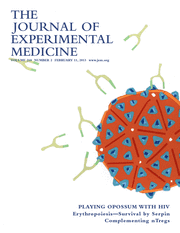
JOURNAL OF EXPERIMENTAL MEDICINE
metrics 2024
Elevating Experimental Medicine to New Heights
Introduction
JOURNAL OF EXPERIMENTAL MEDICINE, published by Rockefeller University Press, is a renowned peer-reviewed journal dedicated to advancing the field of experimental medicine since its inception in 1896. With an impressive impact factor and categorized in the Q1 quartile for Immunology, Immunology and Allergy, and Miscellaneous Medicine, this journal stands at the forefront of medical research and innovation. It provides a prestigious platform for scholars and practitioners to disseminate groundbreaking findings that drive the understanding of disease mechanisms and therapeutic strategies. While the journal is not open access, it maintains high visibility and engagement within the scientific community, fostering collaboration among researchers, professionals, and students alike. The journal's consistent ranking in the top percentiles of Scopus illustrates its significant impact and commitment to excellence in medical research.
Metrics 2024
 6.8412.6014.10490
Metrics History
Rank 2024
Scopus
IF (Web Of Science)
JCI (Web Of Science)
Quartile History
Similar Journals
PARASITE IMMUNOLOGY
Advancing the Frontiers of Host-Parasite Research.PARASITE IMMUNOLOGY, published by Wiley, is a leading journal in the field of immunology and parasitology, with an ISSN of 0141-9838 and E-ISSN of 1365-3024. Since its inception in 1979, it has played a pivotal role in advancing our understanding of host-parasite interactions, immunological responses to parasitic infections, and the mechanisms of immunological resistance. The journal is adeptly positioned within the academic community, currently holding a prestigious Q2 ranking in Parasitology and a Q3 ranking in Immunology for 2023, indicating its significant influence and relevance. Its comprehensive scope attracts a diverse readership, contributing to the discourse surrounding novel therapeutic approaches and emerging challenges in parasitic diseases. With a consistent convergence of research until 2024, PARASITE IMMUNOLOGY is an essential resource for researchers, professionals, and students seeking to deepen their knowledge and foster collaboration in these dynamic fields. Although it is not an open-access journal, the insights shared within its pages are invaluable for shaping future research trajectories.
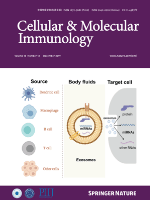
Cellular & Molecular Immunology
Unraveling the Mysteries of ImmunityCellular & Molecular Immunology is a prestigious peer-reviewed journal published by the CHIN SOCIETY IMMUNOLOGY. As a leading journal in the fields of immunology and infectious diseases, it proudly holds a Q1 designation across multiple categories, including Immunology, Allergy, and Medicine (Miscellaneous), reflecting its commitment to excellence and impactful research. With an ISSN of 1672-7681 and an E-ISSN of 2042-0226, the journal has been essential reading since its inception in 2004, continuously gathering insights from cutting-edge studies. It ranks impressively within Scopus, with positions in the 7th, 8th, and 9th percentile in relevant categories, establishing it as a cornerstone for researchers, clinicians, and students alike. The journal offers an extensive range of original research articles, reviews, and clinical studies, ensuring that readers stay at the forefront of immunological discovery. Whether you are interested in basic immunology, infectious diseases, or evolving therapies, Cellular & Molecular Immunology serves as an invaluable resource for advancing your knowledge and engagement in this dynamic field.
CELLULAR IMMUNOLOGY
Unveiling the Complexities of Immune ResponsesCELLULAR IMMUNOLOGY is a prestigious journal published by Academic Press Inc. Elsevier Science, dedicated to advancing the field of immunology. Established in 1970 and converging ongoing research up to 2024, this journal has carved out a significant niche within the academic community, boasting a notable Q2 ranking in the Immunology category and holding a respectable 67th percentile ranking within Scopus for its contributions to the disciplines of Immunology and Microbiology. The journal serves as a vital platform for disseminating high-quality research, reviews, and methodologies that elucidate the intricacies of cellular immune responses, thereby benefiting researchers, professionals, and students alike. Although it does not offer open access, the journal's impact is evidenced by its comprehensive coverage of pioneering studies and ongoing developments in the immunological sciences, positioning it as an essential resource for those seeking to deepen their understanding and engage with the latest findings in cellular immunology.
MOLECULAR IMMUNOLOGY
Decoding the Molecular Language of the Immune SystemMOLECULAR IMMUNOLOGY, published by Pergamon-Elsevier Science Ltd in the United Kingdom, is a highly regarded journal in the fields of Immunology and Molecular Biology. With a focus on advancing the understanding of the immune system at the molecular level, the journal has been a critical resource since its inception in 1975. The journal is currently listed in the second quartile (Q2) of its category as per the 2023 rankings, indicating its substantial impact in both Immunology and Molecular Biology research. Researchers and professionals benefit from the journal's rigorous peer-review process and its commitment to publishing high-quality original research, reviews, and methodological studies that explore the intricate dynamics of immune responses. Although it does not currently offer an open access option, MOLECULAR IMMUNOLOGY remains an essential platform for scholars, emphasizing the significance of molecular interactions within the immune system and their implications in health and disease.
IMMUNOLOGY AND CELL BIOLOGY
Cutting-edge Insights into Immune Responses and Cellular DynamicsIMUNOLOGY AND CELL BIOLOGY, published by Wiley, serves as a prominent platform for disseminating cutting-edge research in the fields of immunology and cell biology. With an ISSN of 0818-9641 and an E-ISSN of 1440-1711, this journal has established itself since its inception in 1987, demonstrating a commitment to advancing knowledge in its disciplines through high-quality articles. Renowned for its rigorous peer-review process, it holds a Q2 quartile ranking in both immunology and cell biology categories as of 2023, showing its competitive stature in these fields. IMUNOLOGY AND CELL BIOLOGY is indexed among the elite journals worldwide, with impressive Scopus rankings, including a rank of #75/233 in Immunology and Allergy. The journal’s comprehensive scope ensures that it caters to an audience of researchers, professionals, and students who are dedicated to exploring the intricate mechanisms of immune responses and cellular interactions. Although it does not operate under an open access model, its subscription-based content remains invaluable for those seeking to broaden their understanding of immunology and cell biology. By providing a forum for significant scientific dialogue, IMUNOLOGY AND CELL BIOLOGY continues to shape the future of research in these vital areas.
FASEB JOURNAL
Illuminating the Pathways of Health and DiseaseFASEB JOURNAL, published by Wiley, stands as a leading interdisciplinary platform in the realm of biological sciences, prominently featured in the United States. With an impressive 2023 impact factor placing it in the Q1 category across various fields including Biochemistry, Biotechnology, Genetics, Molecular Biology, and Medicine (miscellaneous), the journal is recognized for its substantial contribution to advancing knowledge and innovation. It serves as a vital resource for researchers, professionals, and students alike, providing high-quality, peer-reviewed articles that explore the molecular and cellular mechanisms underlying health and disease. The FASEB JOURNAL not only emphasizes accessible scientific communication but also fosters collaboration within these dynamic fields, making it an essential publication for anyone engaged in cutting-edge life sciences research. To explore more about the journal's offerings and access its vast repository of scholarly articles, visit their official page.

Immunological Medicine
Exploring the Frontiers of Immune HealthImmunological Medicine, published by Taylor & Francis Ltd, is an esteemed open-access journal that has made significant strides in the field of immunology since its establishment in 2018. With an E-ISSN of 2578-5826, the journal has quickly gained recognition for its contribution to advancing immunological research, evidenced by its impressive ranking in the Q2 quartile for both immunology and allergy. Positioned in the United Kingdom, it offers a platform for publishing high-quality original research, reviews, and case studies that delve into the complex interactions of the immune system and its implications for human health. The journal serves as a vital resource for researchers, professionals, and students engaged in the burgeoning fields of immunology, providing open access to a wide audience and fostering collaboration and innovation. With a current Scopus ranking of #81 out of 233 in Immunology and Allergy and #97 out of 236 in Immunology and Microbiology, the journal aims to enhance the visibility and impact of cutting-edge research by bridging the gap between academia and clinical practice.

TRENDS IN IMMUNOLOGY
Elevating Immunological Knowledge for Global ImpactTRENDS IN IMMUNOLOGY, published by CELL PRESS, stands as a premier source of insights and developments within the field of immunology. With an ISSN of 1471-4906 and E-ISSN of 1471-4981, this journal has established a strong reputation, evidenced by its prestigious status in Q1 quartiles for both Immunology and Allergy in 2023. It is ranked #13 out of 233 in the Scopus category of Medicine – Immunology and Allergy, and #16 out of 236 in Immunology and Microbiology, placing it within the top 94th and 93rd percentiles respectively. Since its inception in 1987, TRENDS IN IMMUNOLOGY has provided a critical platform for researchers, professionals, and students to access the latest advancements and integrative reviews in immunological research. The journal offers open access options, enhancing the accessibility of its high-impact content to a global audience. Researchers and practitioners rely on its pages not only for cutting-edge findings but also for comprehensive discussions that drive the future of immunology research.
JOURNAL OF IMMUNOTHERAPY
Uniting Knowledge and Innovation in ImmunotherapyJOURNAL OF IMMUNOTHERAPY, published by Lippincott Williams & Wilkins, is a premier journal dedicated to advancing the field of immunotherapy, a vital aspect of contemporary cancer research and treatment. With an ISSN of 1524-9557 and an E-ISSN of 1537-4513, this esteemed journal has been disseminating cutting-edge research since 1991 and continues to thrive with a convergence of knowledge leading into 2024. Recognized in the top Q2 quartile for fields such as Cancer Research, Immunology, and Allergy, as well as achieving a Q1 ranking in Pharmacology, the journal serves as a critical resource for researchers, clinicians, and students alike. Its robust impact is reflected in its competitive Scopus rankings across various categories, where it holds significant percentile standings. Highly regarded in the academic community for its rigor, the JOURNAL OF IMMUNOTHERAPY aims to provide a platform for innovative ideas, clinical findings, and experimental research that propels the science of immunotherapy forward. Although it does not offer open access, the journal ensures that its contents remain accessible and impactful for professionals in the field, fostering collaboration and knowledge exchange in an era where immunotherapy holds the promise for breakthroughs in patient care.
CLINICAL AND EXPERIMENTAL IMMUNOLOGY
Advancing the Frontiers of Immunological ResearchClinical and Experimental Immunology, published by Oxford University Press, is a premier journal that has been a cornerstone in the field of immunology since its inception in 1966. With an ISSN of 0009-9104 and an E-ISSN of 1365-2249, this journal holds a significant position in academic research, currently ranking in the Q2 category for both Immunology and Allergy (2023). Its impactful contributions are reflected in its Scopus rankings, where it stands at Rank #63 out of 233 in Immunology and Allergy, placing it in the 73rd percentile, and Rank #73 out of 236 in Immunology and Microbiology. Researchers, healthcare professionals, and students will find this journal an invaluable resource for cutting-edge studies, reviews, and clinical advancements in the ever-evolving domain of immunology. While the publication does not offer open-access options, it remains a pivotal platform for disseminating knowledge that impacts both clinical practice and experimental research.