
Journal of Road Safety-JRS
Scope & Guideline
Exploring the future of transportation safety.
Introduction
Aims and Scopes
- Road Safety Management and Systems Thinking:
The journal emphasizes the application of systems thinking to road safety management, exploring how various components interact within the road safety ecosystem. - Traffic Education and Behavioral Change:
Research on structured educational programs aimed at improving knowledge and commitment towards traffic rules, particularly among new drivers and vulnerable populations. - Technological Innovations in Road Safety:
Investigations into the role of technology, such as mobile applications and augmented reality, in enhancing road safety awareness and compliance. - Child Safety and Vulnerable Road Users:
A core focus on the safety of children and other vulnerable road users, including the effectiveness of child restraint systems and safety education. - Community Engagement and Social Factors:
Exploration of community engagement strategies and the impact of socioeconomic factors on traffic behaviors and road safety outcomes. - Data-Driven Insights and Policy Evaluation:
Analysis of traffic crash data, including methodologies for data collection and evaluation of road safety policies and interventions.
Trending and Emerging
- Safe System Approach:
A growing trend towards adopting the Safe System approach in road safety, emphasizing the need for a holistic view that considers human behavior, vehicle safety, and road infrastructure. - Impact of Digital Technologies:
Increasing focus on the effects of digital technologies, including mobile apps and social media, on driver behavior and public engagement with road safety initiatives. - Health and Socioeconomic Factors:
Emerging research on how health and socioeconomic factors influence road safety, particularly among vulnerable populations, underscores the importance of addressing these disparities. - Community and Stakeholder Engagement:
A trend towards involving communities and stakeholders in road safety initiatives, recognizing the role of social dynamics in fostering safer driving environments. - Data Analytics and Predictive Modelling:
The use of advanced data analytics and predictive modeling techniques to understand and prevent traffic incidents is becoming increasingly prominent, reflecting advancements in data science.
Declining or Waning
- Traditional Traffic Safety Measures:
There has been a noticeable decline in research focusing solely on traditional traffic safety measures without an integrated systems approach, suggesting a shift towards more holistic strategies. - Basic Driver Behavior Studies:
Studies examining basic driver behavior, without the context of broader social or technological factors, are becoming less common as the field moves towards more complex analyses. - Single-Factor Analysis of Traffic Crashes:
Research that focuses on single factors contributing to traffic crashes is waning, as contemporary studies favor multifactorial approaches that consider a variety of interacting elements. - Static Road Safety Interventions:
There is a diminishing emphasis on static interventions such as road signage or physical barriers without accompanying evaluations of their effectiveness or community engagement strategies.
Similar Journals
IATSS Research
Fostering collaboration for transformative safety solutions.IATSS Research, published by Elsevier Science Ltd, stands as a premier open-access journal at the intersection of engineering, safety research, urban studies, and transportation. Established in 2000, this esteemed journal caters to a diverse audience of researchers, industry professionals, and students eager to delve into innovative research that addresses pressing societal challenges. With an impressive impact factor and a consistent demonstration of high-quality scholarship, IATSS Research has achieved notable rankings within Scopus, including a top-tier position in Safety Research (Rank #13/109, 88th percentile) and Engineering (Rank #46/307, 85th percentile). The journal has evolved significantly since its inception, reflecting the dynamic nature of its converged fields from 2008 to 2024. By embracing open access, IATSS Research amplifies the reach of critical findings and fosters collaboration across disciplines, making it an invaluable resource for anyone invested in advancing knowledge and practices in modern engineering and urban safety.
SAE International Journal of Transportation Safety
Enhancing Safety Through Rigorous ResearchSAE International Journal of Transportation Safety is a premier publication dedicated to advancing the field of transportation safety through rigorous research and analysis. Published by SAE International, this journal serves as a crucial platform for researchers and professionals aiming to enhance safety practices across various domains, including human factors, mechanical engineering, and safety research. With an ISSN of 2327-5626 and E-ISSN 2327-5634, the journal emphasizes the importance of empirical studies and best practices that address contemporary challenges in transportation safety. Although it operates under traditional subscription models, the journal is esteemed for its selective peer review process, ensuring the highest quality of published work. Currently positioned in the Q3 quartile across multiple categories in 2023, the journal is ranked within the lower percentiles of its field, indicating opportunities for growth and increasing visibility. With an audience that includes academic researchers, policy makers, and students, the SAE International Journal of Transportation Safety plays an essential role in shaping the future of safe transportation practices globally.
Journal of the South African Institution of Civil Engineering
Transforming ideas into engineering excellence.Journal of the South African Institution of Civil Engineering (ISSN: 1021-2019) is a distinguished open-access publication dedicated to advancing the field of civil engineering in South Africa and beyond. Established by the South African Institution of Civil Engineering (SAICE) and South African Institute of Steel Construction (SAISI), it serves as a critical platform for sharing research, case studies, and industry developments. The journal has been openly accessible since 2015, ensuring broader dissemination of knowledge among researchers, professionals, and students alike. Although it currently holds a Q4 ranking in Civil and Structural Engineering and is positioned within the lower percentiles in Scopus rankings, its commitment to fostering growth in the engineering sector remains strong. Covering various topics from structural design to innovative construction methodologies, the journal invites contributions that push the boundaries of current practices and methodologies. This publication is essential for those invested in sustainable engineering solutions, aiming to collaborate and contribute towards the evolution of civil engineering standards in South Africa.

Baltic Journal of Road and Bridge Engineering
Elevating Standards in Road and Bridge Engineering ResearchThe Baltic Journal of Road and Bridge Engineering, published by RIGA TECHNICAL UNIV-RTU, serves as a pivotal platform for disseminating cutting-edge research in the fields of building and construction as well as civil and structural engineering. Established as an Open Access journal since 2006, it fosters global collaboration and accessibility to critical engineering knowledge, facilitating the exchange of innovative ideas among researchers, professionals, and students. With a commendable impact factor and recognition in Scopus rankings, where it stands in the third quartile for both relevant engineering categories, the journal underscores its significance in advancing the discipline. The journal aims to publish high-quality, peer-reviewed articles that address contemporary challenges in road and bridge engineering, making it an essential resource for anyone involved in infrastructure development and research. Located in Lithuania at 6B Kipsalas Street, RIGA LV-1658, this journal not only highlights the latest advancements but also seeks to inspire future innovations in engineering practices.
Therapeutic Advances in Drug Safety
Exploring New Horizons in Pharmacological SafetyTherapeutic Advances in Drug Safety is a prestigious open-access journal published by SAGE Publications Ltd that has made significant strides in the field of pharmacology since its inception in 2010. With an impressive impact factor that places it in the Q1 category for Pharmacology (medical), this journal ranks 61st out of 272 in Scopus, showcasing its global influence and commitment to advancing drug safety research. Based in the United Kingdom, it aims to bridge the critical gap between pharmacological innovation and clinical application, offering a platform for the dissemination of groundbreaking research, case studies, and expert reviews. Since adopting an Open Access model in 2019, the journal has significantly increased its reach, ensuring that vital findings in drug safety are accessible to researchers, healthcare professionals, and educators worldwide. As the field of drug safety continues to evolve, Therapeutic Advances in Drug Safety remains an essential resource for those dedicated to enhancing safe therapeutic practices and patient outcomes.
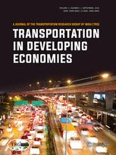
Transportation in Developing Economies
Catalyzing equitable mobility in the global south.Transportation in Developing Economies is a premier academic journal published by SPRINGER INT PUBL AG, specializing in the interdisciplinary study of transportation systems in developing nations. With an ISSN of 2199-9287 and an E-ISSN of 2199-9295, this journal provides an essential platform for researchers, policymakers, and practitioners to explore the unique challenges and innovations in transportation infrastructure, mobility, and planning within emerging economies. The journal aims to critically assess and promote sustainable transport solutions that cater to the socio-economic dynamics of these regions, making it an invaluable resource for those invested in equitable transportation development. With its open access philosophy, it ensures widespread dissemination of research findings, fostering collaboration and knowledge exchange among scholars and industry professionals alike. As the global focus on sustainable practices intensifies, Transportation in Developing Economies stands at the forefront of vital research, contributing to both academic discourse and pragmatic advancements in the field.
Traffic Injury Prevention
Empowering change through evidence-based strategies.Traffic Injury Prevention is a premier academic journal dedicated to disseminating critical research and innovative findings in the field of injury prevention, with a particular focus on traffic-related incidents. Published by Taylor & Francis Inc, this journal serves as a vital platform for communication among researchers, policymakers, and practitioners in public health, safety research, and environmental health. With an impressive impact factor and a robust ranking—earning a place in the Q2 quartile for Public Health, Environmental and Occupational Health, and Q1 for Safety Research—it reflects the journal's significant contributions to advancing knowledge and practice in reducing traffic injuries and fatalities. Since its inception in 2002, Traffic Injury Prevention has highlighted pivotal studies and interventions that inform best practices, encouraging a safer environment for all road users. The journal is essential reading for anyone involved in traffic safety, from researchers and public health officials to educators and students. As we look towards the future, contributions to this journal not only inform current practices but also shape ongoing research, policy, and education aimed at preventing traffic injuries worldwide.
TRANSPORTATION RESEARCH RECORD
Shaping Policy Through Cutting-Edge ResearchTRANSPORTATION RESEARCH RECORD is a premier journal published by SAGE PUBLICATIONS INC, focusing on the latest advancements and research in the fields of civil and structural engineering as well as mechanical engineering. Since its inception in 1974, this journal has become an essential platform for disseminating innovative methodologies, case studies, and comprehensive reviews that address critical issues in transportation systems and infrastructure. With a respectable Q2 ranking in both engineering categories as of 2023, it solidifies its position among reputable publications, catering to a diverse range of scholars, professionals, and students. The journal not only facilitates access to high-quality research but also plays a pivotal role in shaping policy and practice through its robust findings. For those invested in the engineering disciplines, particularly within the transportation domain, TRANSPORTATION RESEARCH RECORD is an invaluable resource, with a wide array of topics covered throughout converged years, from 1974 to 1990, and from 1993 to 2024, ensuring a comprehensive exploration of historical and contemporary challenges in transportation.
Lighting Research & Technology
Empowering Professionals with the Latest in Lighting AdvancesLighting Research & Technology is a pivotal journal in the domain of electrical and electronic engineering, published by the renowned SAGE Publications Ltd. Established in 1969, it has continuously served as a platform for innovative research and advancements in lighting technology, with a strong emphasis on enhancing the quality, sustainability, and efficiency of lighting systems. With an impressive impact factor placing it in the Q2 quartile of its category, this journal ranks #238 out of 797 in the Scopus database, reflecting its substantial influence and contribution to the field. The journal offers comprehensive insights into various aspects of lighting, including photometric techniques, illumination design, and the impact of lighting on health and well-being. Although not an open-access journal, it provides valuable subscription-based content that caters to researchers, professionals, and students dedicated to pushing the boundaries of lighting technology. By engaging with the articles published in Lighting Research & Technology, readers are afforded the opportunity to stay abreast of the latest developments and best practices in this vital area of study.
Romanian Journal of Transport Infrastructure
Advancing Transport Solutions for a Connected FutureWelcome to the Romanian Journal of Transport Infrastructure, a premier publication dedicated to advancing knowledge in the field of transport infrastructure engineering and management. Published by SCIENDO, this open access journal has been committed to sharing significant research and developments since 2012, ensuring that vital information is readily available to the global academic community. The journal's ISSN is 2286-2218, and it provides a platform for researchers, professionals, and students to collaborate and disseminate findings related to transport systems planning, design, construction, and maintenance. The Romanian Journal of Transport Infrastructure aims not only to contribute to scholarly literature but also to influence policy and practice related to transportation challenges. Our editorial team strives to maintain high standards of academic rigor and relevance, making this journal an essential resource for anyone involved in the transport infrastructure sector.