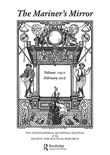
MARINERS MIRROR
Scope & Guideline
Exploring the Seas of Knowledge
Introduction
Aims and Scopes
- Maritime History:
The journal focuses extensively on the historical narratives associated with maritime activities, including naval battles, trade routes, and the evolution of naval technologies. - Cultural Studies:
It examines the cultural dimensions of the sea, exploring how maritime practices shape and are shaped by societal values, artistic expressions, and historical events. - Naval Operations and Strategies:
Research often delves into specific naval operations, strategies employed by various nations, and the implications of these actions on maritime history. - Shipbuilding and Technology:
The journal provides insights into ship design, construction methods, and technological advancements in naval engineering, highlighting their historical contexts. - Environmental and Economic Aspects:
There is a growing interest in the environmental impact of maritime activities and the economic significance of shipping and fishing industries throughout history. - Interdisciplinary Approaches:
The journal encourages interdisciplinary research that connects maritime history with areas such as economics, politics, and cultural studies.
Trending and Emerging
- Environmental Impact of Maritime Activities:
Recent publications increasingly address the environmental consequences of historical maritime activities, reflecting a growing concern for ecological issues and sustainability in maritime studies. - Transnational Maritime Networks:
There is a noticeable trend towards exploring transnational maritime connections, emphasizing the global nature of trade and cultural exchanges that transcend national boundaries. - Maritime Labor and Social History:
A rising focus on the lives and experiences of maritime workers, including sailors and shipbuilders, highlights the social history aspect of maritime studies, shedding light on labor rights and conditions. - Cultural Representations of the Sea:
Emerging themes include the analysis of how the sea is represented in literature, art, and popular culture, showcasing its significance in shaping national and cultural identities. - Technological Innovations in Shipping:
The journal has begun to increasingly explore the impact of technological advancements on maritime activities, including the evolution of ship design and navigation technologies.
Declining or Waning
- Piracy and Privateering:
Research on piracy and privateering, once a prominent topic, has seen a decline in recent issues, possibly due to a shift towards more comprehensive studies of maritime law and trade. - Traditional Navigation Methods:
There has been a noticeable decrease in papers focusing solely on traditional navigation techniques, as the journal increasingly emphasizes modern technological advancements and their historical implications. - Maritime Warfare Tactics:
Detailed analyses of specific naval battles and warfare tactics, while still relevant, have become less frequent, indicating a potential shift towards broader thematic studies rather than tactical specifics. - Historical Shipwreck Accounts:
Although shipwreck narratives have been a staple, there appears to be a waning interest in purely anecdotal accounts of shipwrecks, with more emphasis now placed on their archaeological and historical significance. - Regional Maritime Studies:
Research focusing on specific regional maritime histories has seen a decline, as the journal seems to be moving towards more global and comparative perspectives.
Similar Journals

International Journal of Maritime Engineering
Bridging Theory and Practice in Maritime EngineeringThe International Journal of Maritime Engineering (ISSN: 1479-8751, E-ISSN: 1740-0716), published by UNIV BUCKINGHAM PRESS in the United Kingdom, is a vital resource for the maritime engineering community, addressing pressing issues in both Environmental Engineering and Ocean Engineering. Established in 2006, this journal serves as a platform for disseminating innovative research, technological advancements, and practical solutions that enhance the sustainability and efficiency of maritime operations. With its current classification in the Q3 quartile for both fields in 2023, it offers valuable insights to researchers, professionals, and students who seek to bridge theoretical knowledge with industry applications. Though the journal does not operate under an open access model, it remains an essential reference for academic discourse and advancement in maritime studies through its rigorous peer-review process and high-level research outputs.
INTERNATIONAL JOURNAL OF NAUTICAL ARCHAEOLOGY
Charting New Territories in Nautical HistoryWelcome to the International Journal of Nautical Archaeology, a premier peer-reviewed publication dedicated to advancing the study of maritime history and underwater archaeology. Published by Taylor & Francis Ltd, this esteemed journal, indexed with an ISSN of 1057-2414 and an E-ISSN of 1095-9270, serves as a vital platform for researchers, professionals, and students alike. Celebrated for its rigorous scholarship, the journal ranks in the top quartile for both Archaeology and History in 2023, reflecting its influential role within the academic community. Covering a broad spectrum of topics from ancient shipwrecks to contemporary marine archaeology practices, the journal aims to foster interdisciplinary dialogues that enrich our understanding of humanity's maritime heritage. With a publication history dating back to 1972, it continues to thrive as a key resource in the field. Although currently not offering Open Access, the insights published in this journal are invaluable for those seeking to explore the intersections of archaeology and oceanography, making it a must-read for anyone engaged in or studying these dynamic disciplines.
Proceedings of the Institution of Mechanical Engineers Part M-Journal of Engineering for the Maritime Environment
Elevating Engineering Standards for the Maritime EnvironmentProceedings of the Institution of Mechanical Engineers Part M - Journal of Engineering for the Maritime Environment, published by SAGE Publications Ltd, is a leading scholarly journal that addresses critical advancements in the field of maritime engineering. With an ISSN of 1475-0902 and an E-ISSN of 2041-3084, this journal serves as an essential platform for researchers and practitioners alike, disseminating original research, reviews, and case studies relevant to mechanical and ocean engineering. Recognized for its rigorous peer-review process, it currently holds a commendable Q2 ranking in both Mechanical Engineering and Ocean Engineering. The journal's reputation is bolstered by its strategic emphasis on innovative practices and sustainability in maritime environments. By providing a valuable resource for interdisciplinary collaboration, the journal facilitates the intersection of technology and engineering solutions critical for the evolving challenges within the maritime sector. Researchers, professionals, and students alike will find this journal instrumental in keeping abreast of the latest developments, best practices, and future directions in maritime engineering.

IEEE ANNALS OF THE HISTORY OF COMPUTING
Unveiling the Legacy of Technology's EvolutionIEEE Annals of the History of Computing is a distinguished journal published by the IEEE Computer Society, dedicated to the exploration and documentation of the historical development of computing technologies and their profound impact on society and culture. With an ISSN of 1058-6180 and an E-ISSN of 1934-1547, this journal has been instrumental in providing critical insights into the evolution of computer science and the philosophical questions surrounding technology. While it operates under a non-open access model, its contributions are significant, as evidenced by its rankings in Scopus, where it holds the 93rd position in the Arts and Humanities category and 209th in Computer Science. Spanning from 1992 to 2024, it serves as a crucial platform for scholars and practitioners alike, facilitating a deeper understanding of the historical contexts that shape modern computational practices. With a current category quartile of Q4 in the miscellaneous field of Computer Science and Q3 in the History and Philosophy of Science, the journal continues to foster scholarly discourse, making it essential reading for anyone interested in the intersection of technology history and its philosophical implications.
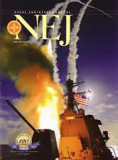
NAVAL ENGINEERS JOURNAL
Bridging theory and practice in naval architecture.NAVAL ENGINEERS JOURNAL, published by the American Society of Naval Engineers, serves as a pivotal platform for the dissemination of research and advancements in naval engineering. With a rich publication history dating back to 1889, this journal offers vital insights into the principles, practices, and technologies that shape the naval engineering discipline. While it does not operate under an open access model, NAVAL ENGINEERS JOURNAL remains an essential resource for researchers, professionals, and students, facilitating a deeper understanding of marine engineering challenges and innovations. It encompasses a range of topics including, but not limited to, ship design, propulsion systems, and naval architecture, making it a critical resource for practitioners and scholars committed to advancing maritime technologies. For those interested in the most recent studies and discussions in the field, this journal serves as an authoritative reference, fostering collaboration and knowledge sharing among the naval engineering community.

Scientific Journals of the Maritime University of Szczecin-Zeszyty Naukowe Akademii Morskiej w Szczecinie
Exploring the frontiers of nautical science and engineering.Scientific Journals of the Maritime University of Szczecin (Zeszyty Naukowe Akademii Morskiej w Szczecinie) is a premier academic journal published by the Maritime University of Szczecin, dedicated to advancing knowledge in the maritime sciences and related disciplines. With an ISSN of 1733-8670 and an E-ISSN of 2392-0378, the journal has been a vital resource for researchers, professionals, and students since its transition to Open Access in 2008, ensuring that valuable research is readily accessible to a global audience. The journal aims to disseminate high-quality original research, reviews, and case studies related to maritime engineering, marine technology, nautical science, and environmental studies, thereby fostering innovation and collaboration within the field. Situated in Szczecin, Poland, the journal plays a significant role in enhancing the maritime academic landscape and contributing to sustainable development within the maritime industry.

Archaeologia Maritima Mediterranea-An International Journal on Underwater Archaeology
Charting New Waters in Maritime ResearchArchaeologia Maritima Mediterranea is a prestigious international journal focused on the vital field of underwater archaeology, published by FABRIZIO SERRA EDITORE. With an ISSN of 1724-6091 and E-ISSN 1825-3881, this journal has been a cornerstone for scholars and enthusiasts alike in the study of maritime cultures, shipwrecks, and submerged sites around the Mediterranean region since its inception. Operating from its base in Pisa, Italy, the journal has a commendable academic presence, reflected in its recent Scopus rankings which place it in the lower quartiles in both Arts and Humanities, and Social Sciences subcategories within archaeology. Despite its current Q4 categorization, it serves as an important platform for emerging research and advancements in the field, aiming to foster collaboration and knowledge exchange amongst researchers, practitioners, and students. While the journal is accessible through traditional subscription models, the lack of open access emphasizes the publisher's commitment to maintaining high academic standards. The collection of issues from 2011 to 2023 showcases a rich tapestry of research that contributes significantly to our understanding of underwater cultural heritage.
TEXTILE HISTORY
Charting the Course of Textile InnovationTEXTILE HISTORY is a distinguished journal focusing on the rich tapestry of textile development across various historical contexts, published by Routledge Journals, Taylor & Francis Ltd. With origins dating back to 1968, this journal serves as a crucial platform for scholarly discourse in the fields of history, industrial and manufacturing engineering, and business management. It holds impressive rankings, including Q2 in History and ranks within the top 20% in Arts and Humanities, reflecting its significant contribution to understanding the socio-economic and cultural implications of textiles. Additionally, it operates under a traditional access model, ensuring that quality research is preserved within a structured environment. The journal is an invaluable resource for researchers, professionals, and students alike, aiming to advance knowledge and inspire future studies in textile history. Situated in the United Kingdom, the editorial team is committed to fostering a vibrant academic community that engages with the dynamic intersections of textiles, industry, and cultural heritage.
TransNav-International Journal on Marine Navigation and Safety of Sea Transportation
Enhancing Navigation for Safer Seas.TransNav - International Journal on Marine Navigation and Safety of Sea Transportation is a leading scholarly publication that addresses the critical themes of marine navigation and maritime safety. Published by Gdynia Maritime University in Poland, this open-access journal has been a vital resource since its inception in 2007, fostering a global dialogue among researchers, maritime professionals, and students. With an impressive trajectory of convergence from 2019 to 2024, TransNav is recognized for its impact in the realm of Ocean Engineering, Oceanography, and Transportation, holding a notable Q3 ranking in Ocean Engineering and Q4 rankings in both Oceanography and Transportation for 2023. The journal serves as an essential platform for disseminating research findings and advancements that enhance safety protocols and navigation strategies in sea transportation, thus contributing to the sustainability and efficiency of maritime operations worldwide. Researchers can access its wealth of information through various academic databases, ensuring that your work remains on the cutting edge of this vital field.

NAVAL RESEARCH LOGISTICS
Navigating the Future of Maritime LogisticsNAVAL RESEARCH LOGISTICS is a prestigious scholarly journal, published by WILEY, that serves as a vital platform for researchers and professionals in the fields of management science, operations research, ocean engineering, mathematics, and modeling and simulation. With an impressive impact factor and recognized as a Q1 journal in its respective categories, it reflects the highest standards of quality and rigor in research dissemination. Covering discussions from its inception in 1973 to the present, NAVAL RESEARCH LOGISTICS addresses key issues and innovations in logistics and operational challenges, particularly within the naval context, thus making significant contributions to policy and strategic decision-making. The journal is not currently available as an open-access publication, yet it provides rich insights essential for academics, industry experts, and students keen on advancing their knowledge in logistics and operations related to maritime applications. With a commitment to bridging theory and practice, this journal is an indispensable resource for anyone connected to the maritime logistics field.