
Scientific Journals of the Maritime University of Szczecin-Zeszyty Naukowe Akademii Morskiej w Szczecinie
Scope & Guideline
Navigating the depths of maritime research and innovation.
Introduction
Aims and Scopes
- Sustainable Maritime Practices:
Research focusing on sustainable development criteria in maritime operations, including emissions reduction and eco-friendly technologies. - Transport and Logistics Innovations:
Exploration of advancements in urban transport logistics, including the application of AI and autonomous vehicles to improve efficiency and sustainability. - Maritime Safety and Risk Management:
Studies aimed at enhancing safety protocols in maritime transportation, addressing risks associated with navigation and cargo handling. - Quality Management in Maritime Industries:
Investigation into quality improvement processes in maritime and logistics sectors, emphasizing the importance of effective management systems. - Environmental Impact Assessments:
Research dedicated to assessing the environmental effects of maritime activities and urban transport, aiming to promote sustainable practices. - Technological Advancements in Maritime Engineering:
Focus on innovations in maritime engineering, including the use of computational fluid dynamics and new materials in vessel design and construction.
Trending and Emerging
- Artificial Intelligence and Machine Learning Applications:
There is a rising trend in the application of AI and machine learning techniques in maritime logistics and education, indicating the industry's move towards data-driven decision-making. - Sustainable Development and Green Technologies:
A significant increase in research addressing sustainable development practices and green technologies in maritime operations, highlighting the industry's commitment to environmental stewardship. - Autonomous Maritime Systems:
Emerging themes surrounding the use of autonomous vehicles and systems in maritime transport are gaining momentum, reflecting advancements in technology and the need for innovative solutions. - Urban Mobility and Smart Logistics:
Research on urban mobility solutions and smart logistics is trending, particularly in the context of integrating maritime transport with broader urban transportation systems. - Impact of Global Events on Maritime Operations:
Studies examining the effects of global events, such as the COVID-19 pandemic, on maritime transport and logistics operations are increasingly relevant, showcasing the industry's adaptability.
Declining or Waning
- Traditional Maritime Operations:
Research related to conventional maritime operations without a focus on sustainability or technological advancements appears to be less prevalent, indicating a shift towards more innovative and eco-friendly practices. - Basic Statistical Analyses in Shipping:
There is a diminishing emphasis on basic statistical analyses related to shipping operations, as more complex and interdisciplinary approaches gain traction in the research community. - Historical Studies of Maritime Practices:
Research focusing solely on historical perspectives of maritime practices is declining, with a growing preference for studies that integrate historical context with current technological and environmental challenges. - Localized Environmental Studies:
While environmental impact studies remain crucial, there is a waning interest in localized studies that do not connect to broader sustainability frameworks or global maritime challenges.
Similar Journals
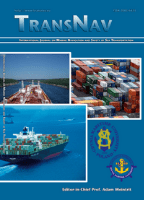
TransNav-International Journal on Marine Navigation and Safety of Sea Transportation
Navigating the Future of Marine Safety.TransNav - International Journal on Marine Navigation and Safety of Sea Transportation is a leading scholarly publication that addresses the critical themes of marine navigation and maritime safety. Published by Gdynia Maritime University in Poland, this open-access journal has been a vital resource since its inception in 2007, fostering a global dialogue among researchers, maritime professionals, and students. With an impressive trajectory of convergence from 2019 to 2024, TransNav is recognized for its impact in the realm of Ocean Engineering, Oceanography, and Transportation, holding a notable Q3 ranking in Ocean Engineering and Q4 rankings in both Oceanography and Transportation for 2023. The journal serves as an essential platform for disseminating research findings and advancements that enhance safety protocols and navigation strategies in sea transportation, thus contributing to the sustainability and efficiency of maritime operations worldwide. Researchers can access its wealth of information through various academic databases, ensuring that your work remains on the cutting edge of this vital field.

Journal of Eta Maritime Science
Fostering collaboration in the maritime research community.Welcome to the Journal of Eta Maritime Science, an esteemed publication dedicated to advancing the field of maritime science and engineering. Published by GALENOS PUBL HOUSE in Turkey, this Open Access journal has been facilitating scholarly communication since 2013, ensuring that groundbreaking research is accessible to experts and enthusiasts alike. With its E-ISSN 2148-9386, the journal covers a broad spectrum of topics within maritime engineering and related disciplines. Currently positioned in the Q3 category of Engineering (miscellaneous) according to the 2023 rankings, the journal ranks #142 out of 204 in its field and is recognized within the 30th percentile on Scopus, showcasing its growing influence. Researchers, professionals, and students looking to contribute to and engage with cutting-edge maritime science will find a vibrant community and a platform for their work in this journal.

Archaeologia Maritima Mediterranea-An International Journal on Underwater Archaeology
Advancing Knowledge in Underwater ArchaeologyArchaeologia Maritima Mediterranea is a prestigious international journal focused on the vital field of underwater archaeology, published by FABRIZIO SERRA EDITORE. With an ISSN of 1724-6091 and E-ISSN 1825-3881, this journal has been a cornerstone for scholars and enthusiasts alike in the study of maritime cultures, shipwrecks, and submerged sites around the Mediterranean region since its inception. Operating from its base in Pisa, Italy, the journal has a commendable academic presence, reflected in its recent Scopus rankings which place it in the lower quartiles in both Arts and Humanities, and Social Sciences subcategories within archaeology. Despite its current Q4 categorization, it serves as an important platform for emerging research and advancements in the field, aiming to foster collaboration and knowledge exchange amongst researchers, practitioners, and students. While the journal is accessible through traditional subscription models, the lack of open access emphasizes the publisher's commitment to maintaining high academic standards. The collection of issues from 2011 to 2023 showcases a rich tapestry of research that contributes significantly to our understanding of underwater cultural heritage.
MARINERS MIRROR
Discovering the Legacy of the SeaThe Mariners Mirror, published by Routledge Journals, Taylor & Francis Ltd, is an esteemed journal dedicated to exploring the rich intersections of maritime history and oceanographic research. Since its inception in 1911, this periodical has become a vital resource for scholars and professionals alike, offering a platform for high-quality peer-reviewed articles that delve into the historical significance of maritime activities, navigation, and the evolving relationship between humans and the sea. With an ISSN of 0025-3359 and an E-ISSN of 2049-680X, the journal operates under a rigorous academic framework, contributing to its current rankings in Scopus, particularly its Q3 position in History and Q4 in Oceanography as of 2023. Although it does not offer open access, it remains influential in both disciplines, fostering a deeper understanding of our maritime heritage and the environmental challenges faced by our oceans. The Mariners Mirror is essential for researchers, professionals, and students who seek to engage with the historical narratives that shape our contemporary maritime world.
Nase More
Navigating New Frontiers in Environmental ResearchNase More is a prominent open-access journal dedicated to the fields of Ocean Engineering, Process Chemistry and Technology, Water Science and Technology, and Transportation. Published by the University of Dubrovnik, this journal has been disseminating valuable research since its inception in 1994, with a commitment to providing unrestricted access to scholarly work since 2003. The journal boasts a diverse range of submissions that contribute to the advancement of knowledge and innovation within its scope, making it an essential resource for researchers, professionals, and students alike. With a current impact factor reflected in its Category Quartiles as Q4 in Ocean Engineering, Q3 in Process Chemistry and Technology, and Q4 in related fields, Nase More is positioned to meet the evolving needs of its readership. Located in the picturesque city of Dubrovnik, Croatia, this journal not only serves as a platform for rigorous academic inquiry but also fosters collaboration and dialogue among experts in environmental science and engineering disciplines.

Pomorstvo-Scientific Journal of Maritime Research
Bridging Disciplines for a Sustainable Maritime FuturePomorstvo-Scientific Journal of Maritime Research, published by the University of Rijeka's Faculty of Maritime Studies, serves as a vital platform in the fields of maritime studies and related disciplines. With an Open Access policy established since 2006, this journal fosters the dissemination of peer-reviewed research covering a diverse range of topics within Engineering, Geography, Ocean Engineering, and Social Sciences, making it an essential resource for researchers, professionals, and students alike. As of 2023, it holds a commendable profile with Q3 rankings in multiple categories, including Engineering and Geography, highlighting its ongoing commitment to quality scholarship. Accessible from Croatia, and included in Scopus with significant rankings, the journal aims to promote innovative and practical maritime research, contributing significantly to the advancement of knowledge and policy within the maritime community.

International Journal of Maritime Engineering
Charting New Waters in Environmental and Ocean EngineeringThe International Journal of Maritime Engineering (ISSN: 1479-8751, E-ISSN: 1740-0716), published by UNIV BUCKINGHAM PRESS in the United Kingdom, is a vital resource for the maritime engineering community, addressing pressing issues in both Environmental Engineering and Ocean Engineering. Established in 2006, this journal serves as a platform for disseminating innovative research, technological advancements, and practical solutions that enhance the sustainability and efficiency of maritime operations. With its current classification in the Q3 quartile for both fields in 2023, it offers valuable insights to researchers, professionals, and students who seek to bridge theoretical knowledge with industry applications. Though the journal does not operate under an open access model, it remains an essential reference for academic discourse and advancement in maritime studies through its rigorous peer-review process and high-level research outputs.
International Journal of Maritime History
Sailing Through Time: Maritime History ExploredThe International Journal of Maritime History is a distinguished academic publication dedicated to the exploration of maritime history, providing a platform for innovative research and scholarship in the field. Published by SAGE Publications Ltd, this journal aims to enhance our understanding of maritime activities and their impact on global historical narratives. With an ISSN of 0843-8714 and E-ISSN 2052-7756, the journal has established itself as a vital resource for historians, social scientists, and transportation scholars alike. Notably, it has achieved a respectable Q2 ranking in History and a Q4 ranking in Transportation, alongside being placed in the 57th percentile for History and 4th percentile for Transportation according to Scopus rankings. The journal spans converged years from 2001 to 2002 and 2011 to 2024, encouraging scholarly discourse on the intricate relationships between maritime practices, cultural exchange, and global developments. Accessibility options may vary, and contributors are invited to engage with historians and researchers in advancing maritime discourse. Commencing your journey into the depths of maritime studies begins here.

Asia-Pacific Journal of Ocean Law and Policy
Navigating the Future of Maritime GovernanceAsia-Pacific Journal of Ocean Law and Policy is an essential publication in the realm of maritime law and policy, dedicated to fostering a deeper understanding of legal issues pertaining to ocean governance in the Asia-Pacific region. Published by BRILL, a reputable publisher known for its scholarly contributions, this journal serves as a vital platform for researchers, professionals, and students engaged in the interdisciplinary fields of law, environmental science, and international relations. With its unique focus on current challenges and developments in ocean policy, it aims to bridge knowledge gaps and promote informed discourse among stakeholders. Although the journal operates on a subscription basis, it is committed to disseminating high-quality research that addresses pressing maritime issues, thus influencing policy-making and legal frameworks in this crucial area. As the Asia-Pacific region continues to play a pivotal role in global marine affairs, the Asia-Pacific Journal of Ocean Law and Policy stands out as a critical resource for those looking to navigate the complex interplay of law and oceanic policy.
Maritime Policy & Management
Innovating Solutions for Global Maritime ChallengesMaritime Policy & Management, published by Routledge Journals, Taylor & Francis Ltd, is a premier international journal that explores the complex and multifaceted aspects of maritime affairs. Since its inception in 1976, this journal has established itself as an essential resource for researchers, practitioners, and policymakers in the fields of Geography, Planning and Development, Management, Monitoring, Policy and Law, and Ocean Engineering. With an impressive impact factor evidenced by its placement in the Q1 category for multiple disciplines and high rankings in Scopus, this journal continues to contribute significantly to the academic and professional discourse surrounding maritime issues. Although it is not an open-access journal, it provides a wealth of rigorous peer-reviewed research that enhances understanding and informs best practices in the maritime sector. Positioned at the forefront of maritime studies, Maritime Policy & Management remains a vital publication for those aiming to advance knowledge and policy in this critical area of global development.