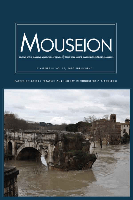
Mouseion-Journal of the Classical Association of Canada
Scope & Guideline
Advancing scholarship in Classics and Archaeology.
Introduction
Aims and Scopes
- Classical Literature and Poetics:
The journal publishes works that analyze classical texts, including poetry, drama, and prose, exploring their literary qualities, rhetorical strategies, and cultural significance. - Cultural and Historical Studies:
It examines the social, political, and economic contexts of the ancient Mediterranean, providing insights into how historical events shaped cultural narratives and practices. - Archaeology and Material Culture:
The journal features research on archaeological findings and material culture from ancient civilizations, contributing to our understanding of daily life, rituals, and artistic expression. - Interdisciplinary Approaches:
Encouraging interdisciplinary dialogue, the journal integrates perspectives from history, literature, archaeology, and cultural studies to enrich classical scholarship. - Contemporary Relevance of Classics:
It explores the relevance of classical studies in contemporary society, engaging with themes such as identity, memory, and the reception of classical texts in modern contexts.
Trending and Emerging
- Postcolonial Perspectives:
The journal has seen an increase in studies that apply postcolonial theories to classical texts and contexts, examining how ancient narratives can inform discussions on colonialism and identity. - Gender Studies and Diversity:
Emerging themes surrounding gender diversity in the ancient world are gaining traction, highlighting the need for inclusive scholarship that addresses the complexities of identity in classical studies. - Environmental and Economic Studies:
There is a growing focus on environmental and economic aspects of ancient societies, exploring how these factors influenced cultural practices and historical developments. - Digital Humanities:
The integration of digital tools and methodologies in classical studies is on the rise, representing a trend towards innovative approaches that enhance research accessibility and engagement. - Contemporary Relevance of Classical Themes:
Recent works increasingly draw connections between ancient themes and contemporary issues, reflecting a desire to explore how classical studies can inform modern debates on politics, ethics, and cultural identity.
Declining or Waning
- Traditional Historical Narratives:
There seems to be a decline in publications focused solely on traditional historical narratives, particularly those that do not engage with contemporary theoretical frameworks or interdisciplinary approaches. - Narrowly Defined Archaeological Reports:
Specific archaeological reports that lack broader contextual analysis are becoming less common, as there is a growing preference for studies that connect archaeological findings to larger cultural or historical themes. - Focus on Classical Reception:
While classical reception studies were previously a significant focus, recent issues indicate a waning interest in this area, possibly in favor of more direct analyses of classical texts and contexts.
Similar Journals
MNEMOSYNE
Illuminating the past through rigorous research.MNEMOSYNE is a prestigious academic journal published by BRILL, specializing in the fields of Archeology, Classics, History, Linguistics and Language, and Literature and Literary Theory. With a remarkable history dating back to its inception in 1948, this journal continues to be a crucial resource for scholars and researchers, spanning its publication years that extend to 2024. The journal boasts high rankings in multiple categories according to Scopus, including Q1 status in Classics and History, reflecting its impact and relevance in the academic community. Although it is not an Open Access journal, its selection of peer-reviewed articles ensures rigorous scholarship that contributes to ongoing discussions and discoveries in the humanities. By providing a platform for innovative research and critical discourse, MNEMOSYNE plays an integral role in advancing the understanding of cultural and historical contexts, making it an essential read for both seasoned academics and emerging scholars alike.

RAMUS-CRITICAL STUDIES IN GREEK AND ROMAN LITERATURE
Illuminating Classical Texts for Modern MindsRAMUS: Critical Studies in Greek and Roman Literature, published by Cambridge University Press, stands as a premier journal dedicated to the exploration and analysis of classical literary texts. Established in 2002, this journal has garnered recognition in its field, achieving a Q1 category ranking in both Classics and Literature and Literary Theory for 2023, which reflects its commitment to scholarly excellence. With an impressive Scopus ranking, where it places in the 76th percentile for Literature and Literary Theory and the 70th percentile for Classics, RAMUS is a critical resource for researchers, professionals, and students engaged in the study of ancient texts and their lasting impact on contemporary literature. Although currently not an open-access journal, it offers a wealth of peer-reviewed articles, reviews, and critical essays that enrich understanding and foster discussions in the realms of Greek and Roman literary traditions. This journal not only serves as an academic platform but also contributes to the ongoing dialogue on the relevance of classical literature in today's cultural and literary discourse.
Cambridge Classical Journal
Fostering Dialogue Across the Classical SpectrumThe Cambridge Classical Journal, published by Cambridge University Press, is a prestigious academic journal that has been a cornerstone of classical scholarship since its inception in 1884. With a focus on advancing knowledge in the fields of Classics, Linguistics, and Literature and Literary Theory, the journal operates with an annual publication cycle, showcasing cutting-edge research that contributes significantly to these disciplines. With a commendable impact factor and ranking in the top quartile (Q1) for Classics and Q2 for Literature and Literary Theory as of 2023, it remains an essential resource for scholars, students, and professionals alike. The journal's commitment to excellence is evident in its rigorous peer-review process and its role in fostering scholarly dialogue on classical texts and their linguistic and cultural implications. While the Cambridge Classical Journal is not an open-access publication, it is invaluable for anyone seeking to deepen their understanding of the classical world and its enduring influence on contemporary thought.
Trends in Classics
Fostering critical dialogue in the field of Classics.Trends in Classics is a distinguished academic journal published by WALTER DE GRUYTER GMBH, dedicated to advancing the field of Classics through critical scholarship and innovative research. With an ISSN of 1866-7473 and an E-ISSN of 1866-7481, this journal offers a platform for scholars from around the globe to share insights on classical literature, history, and archaeology. Indexed in Scopus and awarded a respectable Q4 classification in Classics, it ranks 48th out of 170 in the Arts and Humanities category, placing it in the top 72nd percentile—an indicator of its growing influence and contribution to the field. Operating from Germany, specifically from Genthin Strasse 13, D-10785 Berlin, the journal spans converged years from 2009 to 2024, fostering ongoing dialogues and developments within classical studies. Although it does not currently offer open access, its commitment to scholarly excellence makes it a vital resource for researchers, professionals, and students alike, who seek to deepen their understanding of ancient cultures and their lasting impacts on contemporary society.
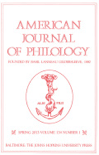
AMERICAN JOURNAL OF PHILOLOGY
Exploring the Depths of Classics and CultureThe American Journal of Philology is a premier scholarly publication dedicated to the field of classics, literature, cultural studies, and linguistics. Published by Johns Hopkins University Press, this esteemed journal boasts an impressive reputation, reflected in its high impact factor and robust rankings—achieving a prestigious Q1 classification in Classics and Literary Theory, while securing a Q2 in Cultural Studies and Linguistics for 2023. The journal provides a rigorous platform for original research, critical essays, and innovative inquiries, contributing significantly to contemporary discourse in the humanities. Its comprehensive scope encompasses interdisciplinary studies, making it a vital resource for researchers, professionals, and students alike. Although it does not operate under an open-access model, the journal ensures that its content remains accessible to a wide audience through institutional subscriptions. With a publication history dating from 1972 to the present, the American Journal of Philology continues to be pivotal in fostering academic excellence and enriching the understanding of philological studies.

Bulletin of the American Society of Overseas Research
Connecting disciplines to illuminate the tapestry of human history.Bulletin of the American Society of Overseas Research, published by the University of Chicago Press, serves as a premier platform for scholarly discourse in the fields of archaeology, cultural studies, and history. With its ISSN 2769-3600 and E-ISSN 2769-3589, this journal has swiftly established itself as a key resource for researchers, professionals, and students alike, demonstrating exceptional impact as evidenced by its Q1 rankings in multiple relevant categories for 2023. Notably, it holds the 93rd percentile rank in Arts and Humanities (History) and the 84th percentile in Social Sciences (Cultural Studies), evidencing its respected standing within the academic community. The journal's commitment to advancing knowledge and fostering interdisciplinary dialogue is complemented by its accessible publication from 2022 to 2024, making it an essential read for those engaged in the exploration of global cultural histories and archaeological research.
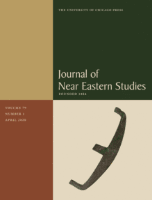
JOURNAL OF NEAR EASTERN STUDIES
Illuminating the Depths of Near Eastern History and LanguageJournal of Near Eastern Studies (ISSN: 0022-2968; E-ISSN: 1545-6978), published by University of Chicago Press, stands as a cornerstone of academic discourse in the fields of Archaeology, Cultural Studies, and Linguistics and Language. With a prestigious track record that has evolved since its inception and spanning converged publication years from 1968 to 2024, this journal holds an impressive Q1 ranking in Cultural Studies and Linguistics and Language, and a solid Q2 ranking in Archaeology and Arts and Humanities as of 2023. Despite not offering open access, it is widely regarded for its rigorous peer-reviewed articles that contribute significantly to the understanding of Near Eastern history, culture, and languages. The journal's sustained recognition in Scopus rankings, including a notable 30th rank out of 173 in Arts and Humanities, ensures it remains an essential resource for researchers, academics, and students dedicated to exploring the rich tapestry of the Near East. With its base in Chicago, USA, the Journal of Near Eastern Studies continues to foster interdisciplinary collaboration and scholarly excellence.
PHOENIX-THE JOURNAL OF THE CLASSICAL ASSOCIATION OF CANADA
Connecting Scholars Through the AgesPHOENIX - THE JOURNAL OF THE CLASSICAL ASSOCIATION OF CANADA is a distinguished academic journal published by the Classical Association of Canada, dedicated to advancing the study of classical antiquity and its enduring influence on contemporary society. With an ISSN of 0031-8299 and an E-ISSN of 1929-4883, PHOENIX serves as a pivotal platform for researchers, educators, and students in the field of classics. Although without open access provisions, the journal is noted for its rigorous peer-review process, ensuring the publication of high-quality scholarship that meets the academic community's standards. With its back issues archived since 2002, the journal is supported by a strong reputation, evidenced by its Scopus ranking in the 80th percentile in the Arts and Humanities - Classics category. Based in Toronto, Ontario, it continues to foster scholarly dialogue and exploration of themes ranging from ancient texts to contemporary interpretations of classical traditions. By prioritizing diverse contributions that enhance our understanding of classical studies, PHOENIX remains a vital resource for anyone engaged in the rich and varied exploration of the ancient world.
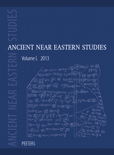
Ancient Near Eastern Studies
Charting New Territories in Ancient Near Eastern ResearchAncient Near Eastern Studies, published by PEETERS in Belgium, is a distinguished journal dedicated to the exploration and scholarship of the rich cultural and historical tapestry of the ancient Near East. With a focus on interdisciplinary research, this journal invites contributions across various fields including Archeology, History, Classics, Literature and Literary Theory, and Visual Arts and Performing Arts. As evidenced by its robust performance in the 2023 category quartiles, ranking Q1 in Classics and Q2 in History, this journal is recognized for its academic rigor and relevance, making it an integral platform for researchers, professionals, and students alike. Although currently not open access, it provides indispensable insights into research trends and theoretical frameworks that advance our understanding of ancient civilizations. With its ISSN 1378-4641 and E-ISSN 1783-1326, Ancient Near Eastern Studies continues to foster scholarly communication and engagement in this vital area of human history.

OLBA
Advancing Knowledge in the Field of ArchaeologyOLBA is a distinguished journal in the field of archaeology, published by Mersin University Publications Research Center Cilician Archaeology in Turkey. With an ISSN of 1301-7667, this academic journal has been a platform for scholarly discourse from 2009 to 2014 and again from 2016 to 2019, with a recent volume published in 2022. Although it is currently categorized in the fourth quartile (Q4) for both Arts and Humanities and Social Sciences within archaeology, OLBA continues to contribute significantly to the global archaeology community. It serves as an essential resource for researchers, professionals, and students interested in the diverse aspects of archaeological studies and cultural heritage. Despite not being an open-access journal, OLBA strives to disseminate knowledge effectively, aiding in the exploration of ancient civilizations and the rich tapestry of human history. Its Scopus rankings, placing it in the bottom percentiles, demonstrate the ongoing need for the community to support and engage with the journal to enhance its visibility and impact in the archaeological domain.