Museum Worlds
Scope & Guideline
Advancing knowledge in museology and conservation.
Introduction
Aims and Scopes
- Interdisciplinary Research:
The journal encourages contributions from various fields including anthropology, art history, cultural studies, and sociology, reflecting the multifaceted nature of museum studies. - Decolonization and Inclusivity:
A core focus on decolonizing museum practices and promoting inclusivity within exhibitions and collections, addressing historical injustices and representation of marginalized communities. - Community Engagement:
Research that emphasizes the role of museums in community engagement, participatory practices, and cultural democracy, highlighting how museums can serve as spaces for dialogue and social change. - Cultural Heritage and Identity:
Exploration of the relationship between museums, cultural heritage, and identity, focusing on how museums can preserve and represent diverse cultural narratives. - Impact of Technology:
Investigating the integration of digital technologies in museum practices, including how they enhance visitor experiences and facilitate new forms of engagement with collections.
Trending and Emerging
- Climate Change and Environmental Responsibility:
An increasing number of papers are addressing the role of museums in discussing and mitigating climate change, showcasing how institutions can contribute to environmental awareness and action. - Decolonial and Indigenous Perspectives:
There is a significant trend toward incorporating decolonial perspectives and Indigenous voices in museum practices, emphasizing the need for museums to address historical wrongs and support cultural revitalization. - Participatory and Community-Centric Approaches:
Emerging themes focus on participatory practices where museums engage directly with communities, fostering collaborative projects that prioritize local narratives and experiences. - Digital Transformation and Innovation:
The integration of digital technologies in museums is becoming a prominent theme, with research exploring how these tools can enhance accessibility, engagement, and the overall visitor experience. - Interdisciplinary Collaboration:
A growing trend towards interdisciplinary collaboration is evident, as museums increasingly partner with various sectors, including education, health, and social services, to create holistic cultural experiences.
Declining or Waning
- Traditional Museology:
There seems to be a waning interest in conventional museological approaches, with fewer papers focusing solely on traditional exhibition practices without considering contemporary issues like decolonization and community involvement. - Historical Artifacts without Contextual Analysis:
Papers that solely discuss historical artifacts without connecting them to current social, political, or ethical issues are becoming less frequent, indicating a shift towards more contextually rich analyses. - Exclusivity in Curatorial Practices:
Themes that promote exclusivity or elitism in curatorial practices are declining, as there is a growing push towards democratization and inclusivity in museum spaces. - Focus on Western-centric Narratives:
There is a noticeable decrease in publications that center on Western-centric museum narratives, reflecting a broader shift towards global perspectives and the inclusion of diverse voices.
Similar Journals

Culture et Musees
Illuminating the Dynamics of Cultural InstitutionsCulture et Musées is a prominent journal published by ACTES SUD, dedicated to exploring the multifaceted domains of conservation, cultural studies, museology, and the visual and performing arts. With the ISSN 1766-2923 and E-ISSN 2111-4528, this scholarly platform serves as an essential resource for researchers, professionals, and students interested in the dynamic interplay between cultural heritage and contemporary practices. Although the journal does not offer Open Access, it maintains a notable presence in academic circles, evidenced by its rankings in Scopus. In 2023, it ranked in the fourth quartile across various categories, including Conservation and Cultural Studies, reflecting its commitment to enhancing discourse in these fields. By publishing rigorous research, theoretical contributions, and case studies, Culture et Musées aims to bridge academic insights with practical applications, fostering a deeper understanding of cultural institutions and their societal roles. Located in France, this journal is positioned to influence a global audience while enriching local scholarship.
Journal of Museum Education
Empowering educators and museum professionals to inspire and engage.Journal of Museum Education, published by Routledge Journals, Taylor & Francis Ltd, serves as a vital platform for the exchange of ideas and research in the fields of education and museology. With an ISSN of 1059-8650 and E-ISSN 2051-6169, this journal not only holds a prestigious Q2 ranking in Education and a Q1 ranking in Museology for 2023, but it also enriches the academic landscape by positioning itself among the top ten percent in the museology category. Spanning a converged publishing period from 2014 to 2024, the journal aims to foster interdisciplinary dialogue among museum professionals, educators, and researchers by addressing critical issues in museum-based learning and engagement. Although it operates under a subscription model, its compelling scope and focus on innovative educational practices make it an indispensable resource for those committed to enhancing museum education. By contributing to the Journal of Museum Education, authors engage with an audience dedicated to advancing scholarship and practice in this essential area of the arts and humanities.

ZEITSCHRIFT FUR ETHNOLOGIE - Journal of Social and Cultural Anthropology
Navigating the Intersections of Society and CultureZEITSCHRIFT FUR ETHNOLOGIE - Journal of Social and Cultural Anthropology, published by DIETRICH REIMER VERLAG, serves as a vital platform for the dissemination of high-quality research in the fields of social and cultural anthropology. Established with a commitment to advancing scholarly dialogue, this journal captures the dynamic interplay of cultural practices and social structures across diverse contexts. With an ISSN of 0044-2666, it gained significant traction among researchers, ranking in Q3 for Cultural Studies and Q4 for miscellaneous Social Sciences in 2023. Its Scopus ranking reflects its growing impact, particularly within the 68th percentile of Cultural Studies. Although the journal does not offer open access, it remains a crucial resource for academia, fostering critical insights and innovative analyses essential for students, professionals, and scholars alike. With a publication history highlighted by a convergence of issues from 1981 and various intervals, the journal is poised to shape debates in anthropological research both locally within Germany and globally.

Quiroga-Revista de Patrimonio Iberoamericano
Advancing Knowledge in Cultural Preservation and Artistic ExpressionQuiroga-Revista de Patrimonio Iberoamericano, published by UNIV GRANADA, is a distinguished open-access journal dedicated to the fields of conservation, museology, and the visual and performing arts. Since its inception in 2012, the journal has provided a platform for scholars and practitioners to disseminate innovative research and critical discussions pertinent to Ibero-American heritage. With a growing impact, evidenced by its category quartiles ranking—Q3 in Conservation and Q2 in both Museology and Visual Arts and Performing Arts—as well as its Scopus rankings, Quiroga serves as an essential resource for researchers, professionals, and students who engage with the complexities of cultural preservation and artistic expression. The journal’s commitment to open access ensures the widespread availability of knowledge, fostering academic dialogue and collaboration within the global community. For inquiries, the journal can be reached at their offices located in Granada, Spain.

Revista Eletronica Ventilando Acervos
Fostering Dialogue on Cultural HeritageRevista Eletronica Ventilando Acervos, with ISSN 2318-6062, is a pioneering academic journal published by the esteemed MUSEU VICTOR MEIRELLES-IBRAM, dedicated to the exploration and dissemination of research in the field of archival studies, museum studies, and heritage conservation. As an open-access journal, it provides unrestricted access to a wealth of scholarly articles, promoting the sharing of knowledge and innovative practices among researchers, professionals, and students alike. Situated in Florianópolis, Brazil, the journal not only showcases local research but also contributes to global discourse on cultural heritage and information management. With a vision to foster collaboration and dialogue within the academic community, Revista Eletronica Ventilando Acervos plays a pivotal role in enriching our understanding of archival science and its impact on society, making it an invaluable resource for anyone engaged in this dynamic field.
Journal of the Institute of Conservation
Advancing Conservation Knowledge for a Sustainable FutureJournal of the Institute of Conservation is a leading academic journal dedicated to advancing the field of conservation, published by Routledge Journals, Taylor & Francis Ltd. With an impressive Q1 ranking in Conservation and a Scopus rank of #21 out of 103 in the Arts and Humanities category, this journal plays a pivotal role in disseminating high-quality research that shapes conservation practices and policies. Spanning the years from 2009 to 2024, it serves as a vital platform for scholars and practitioners alike, offering innovative perspectives on materials science, museology, and media technology. Accessible solely through institutional subscriptions, the journal invites contributions that engage with contemporary issues in conservation, ensuring that all articles foster interdisciplinary dialogue and enhance professional standards within the field. The Journal of the Institute of Conservation is thus essential for those committed to preserving our cultural and natural heritage.

Cuadernos de Antropologia
Championing Diverse Perspectives in AnthropologyCuadernos de Antropología is a premier academic journal published by the University of Costa Rica, Faculty of Social Sciences, that has been contributing to the field of anthropology since 1983. With its commitment to Open Access, this journal ensures that research findings are readily available to a global audience, fostering collaboration and knowledge dissemination across various regions and disciplines. Although specific metrics like H-index or Scopus Rankings are not provided, the journal's long-standing history and accessibility underscore its importance in promoting anthropological research in Latin America and beyond. Covering a broad spectrum of topics within anthropology, Cuadernos de Antropología welcomes submissions from researchers, professionals, and students, aiming to enrich the academic landscape with diverse perspectives and innovative insights. Located in the heart of Costa Rica, the journal serves as a vital platform for advancing the understanding of cultural, social, and historical contexts that shape human behavior.
Journal of the History of Collections
Exploring the rich tapestry of collection histories.Journal of the History of Collections, published by Oxford University Press, serves as a vital resource for scholars and practitioners in the fields of conservation, museology, and visual arts. Established in 1989, this esteemed journal explores the intricate narratives of collections, addressing the historical, cultural, and social dynamics that influence collecting practices across various mediums. With an evolving publication span through 1994 and resuming in 1996 to the present day, the journal maintains a strong academic reputation, demonstrated by its impressive rankings in Scopus—placing it in the top quartiles for both Museology and Visual Arts and Performing Arts. Researchers and students will find engaging articles that not only contribute to academic discourse but also reflect on the conservation challenges faced by collections today. While currently not available as open access, the journal’s rigorous peer-review process ensures that only the highest quality research is published, making it an essential addition to any library dedicated to the arts and humanities.
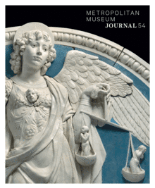
METROPOLITAN MUSEUM JOURNAL
Cultivating Knowledge for Art Preservation ExpertsMETROPOLITAN MUSEUM JOURNAL, published by the University of Chicago Press, serves as a vital platform for researchers, professionals, and students in the fields of Conservation and Museology. With an ISSN of 0077-8958 and an E-ISSN of 2169-3072, this journal emphasizes the importance of scholarly discourse on art preservation and museum practices. Although it currently holds a Q4 ranking in both Conservation and Museology according to the 2023 category quartiles, the journal continues to contribute to advancements and discussions within these vital fields. Located in Belgium, the journal's mission is to illuminate best practices, innovative techniques, and significant case studies that inform the future of museum work. As an indispensable resource for those dedicated to the arts and humanities, METROPOLITAN MUSEUM JOURNAL fosters a community for exchanging ideas and insights, crucial for the ongoing development and understanding of museum methodologies.
Museum Management and Curatorship
Pioneering Research in Museum DynamicsMuseum Management and Curatorship is a leading academic journal dedicated to the exploration and advancement of museum practices, curatorial studies, and heritage management. Published by Routledge Journals, Taylor & Francis Ltd, this journal serves a diverse audience comprised of researchers, professionals, and students interested in the critical analysis of museum management strategies and the evolving role of curators in contemporary society. With its Q2 rankings in both Business and International Management and Tourism, Leisure and Hospitality Management, along with a prestigious Q1 classification in Visual Arts and Performing Arts, the journal underscores its importance in interdisciplinary research and showcases innovative practices within the sector. While operating under a subscription access model, it is committed to disseminating impactful findings and fostering a deeper understanding of museum dynamics from 1990 to the present, making it an essential resource in the field.