
Natural Language Semantics
metrics 2024
Innovating Understanding in Language and Philosophy
Introduction
Natural Language Semantics, published by Springer, is a premier journal that has established itself as an essential platform in the fields of linguistics and philosophy. Since its inception in 1992, the journal has dedicated itself to advancing the understanding of natural language meaning through rigorous research and innovative methodologies. With its impressive Q1 ranking in both Linguistics and Language and Philosophy as of 2023, and a notable Scopus ranking in the 85th percentile within the Arts and Humanities, this journal is at the forefront of scholarly discourse. Authors and researchers contribute high-impact, peer-reviewed articles that explore topics ranging from semantics, pragmatics, to the intersections of philosophy of language. Though not an open-access publication, it provides maximum accessibility through various distribution channels, ensuring widespread dissemination of knowledge. Researchers, professionals, and students will find Natural Language Semantics a critical resource that not only informs but also inspires future inquiry in the analysis of meaning.
Metrics 2024
 0.810.901.1053
Metrics History
Rank 2024
Scopus
IF (Web Of Science)
JCI (Web Of Science)
Quartile History
Similar Journals

Snippets
Unveiling insights that enrich scholarly pursuits.Snippets is an esteemed academic journal published by LED EDIZIONI UNIV, known for its commitment to advancing knowledge across various disciplines. The journal, which carries the ISSN 1590-1807, serves as a crucial platform for researchers, professionals, and students in the fields of humanities, social sciences, and applied sciences. With an increasing emphasis on open-access content, Snippets offers a wealth of information and insights aimed at fostering academic dialogue and innovation. Although specific metrics like impact factor and H-index are yet to be established, the journal is dedicated to providing high-quality research outputs that contribute to the enrichment of scholarly pursuits. Based in Milan, Italy, Snippets welcomes contributions from a diverse range of perspectives, thus enhancing interdisciplinary collaboration and promoting a deeper understanding of contemporary issues.
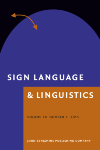
Sign Language & Linguistics
Advancing the Understanding of Sign Languages and LinguisticsSign Language & Linguistics is an esteemed academic journal published by John Benjamins Publishing Co, dedicated to advancing the field of sign language studies and linguistics. With an ISSN of 1387-9316 and an E-ISSN of 1569-996X, this journal has earned a prominent place in the linguistic community, achieving a Q1 ranking in both the Linguistics and Language category, and standing out within the Scopus rankings, placing in the 77th percentile among the Arts and Humanities and 75th percentile in the Social Sciences categories. Sign Language & Linguistics spans over two decades of research, offering comprehensive insights and analyses from 1998 to 2024, promoting high-quality scholarly communication. Aimed at researchers, professionals, and students alike, this journal is essential for those exploring the intersection of sign languages, linguistics, and cultural studies, facilitating progressive discourse and fostering an understanding of this vital mode of human communication.

Russian Journal of Linguistics
Advancing the Frontiers of Linguistic ResearchWelcome to the Russian Journal of Linguistics, a prestigious journal published by Peoples Friendship University of Russia that has made significant strides in the realm of linguistic studies since its inception. With an Open Access policy established in 2019, this journal provides unparalleled opportunities for researchers, professionals, and students to share and disseminate groundbreaking linguistic research. The journal is currently ranked in the Q1 category for Linguistics and Language and boasts impressive Scopus rankings, placing 129th out of 1088 in the Arts and Humanities, and 148th out of 1167 in the Social Sciences. Focusing on a diverse range of linguistics topics, the journal aims to facilitate cross-disciplinary dialogue and foster advancements in the study of language. Located in Moscow, Russia, it champions the vibrant linguistic community by consistently publishing high-quality research that contributes to the global understanding of language dynamics. We invite you to explore the wealth of knowledge and insight the Russian Journal of Linguistics has to offer.
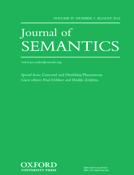
Journal of Semantics
Exploring the Depths of Meaning and Language.Journal of Semantics, published by Oxford University Press, is a prestigious academic journal that stands at the forefront of the fields of Artificial Intelligence, Linguistics, and Arts and Humanities. With an impressive Impact Factor and ranking among the Q1 quartiles in its respective categories as of 2023, this journal caters to researchers and practitioners committed to exploring the intricate relationships between meaning, language, and computational models. The journal is indexed within the Scopus database and ranks highly, indicating its significant contribution to academic discourse. With a timeline spanning decades from 1982 to 2024, the Journal of Semantics aims to publish high-quality, innovative research articles that stimulate rigorous debate within the semantic community. Although it does not currently offer Open Access options, the journal's physical and digital presence ensures it reaches a wide readership.
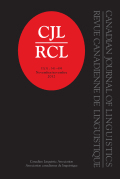
CANADIAN JOURNAL OF LINGUISTICS-REVUE CANADIENNE DE LINGUISTIQUE
Advancing linguistic frontiers with every issue.The Canadian Journal of Linguistics - Revue canadienne de linguistique is a prestigious peer-reviewed publication dedicated to advancing the field of linguistics. Published by Cambridge University Press, this journal has firmly established itself as a vital resource for researchers, professionals, and students alike, offering insights into a diverse range of linguistic studies and theories. With an impressive impact factor reflecting its academic rigor, the journal is ranked Q2 in the categorization of linguistics and language as of 2023, and holds commendable positions in both Scopus ranks for Arts and Humanities as well as Social Sciences. The journal's converged years span from 1996 to 2024, showcasing a rich history of contributions to the discipline. Although it currently does not offer open access, it remains highly influential. Located in Canada, the journal plays a crucial role in fostering scholarly communication within the linguistic community, making it an essential outlet for disseminating groundbreaking research and engaging discussions.
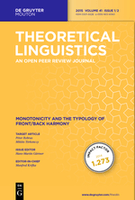
THEORETICAL LINGUISTICS
Illuminating the Path of Linguistic ResearchTHEORETICAL LINGUISTICS, published by Walter de Gruyter GmbH, is a prominent journal dedicated to exploring the intricate dimensions of linguistics, positioning itself as an essential resource for scholars and practitioners in the field. Established in 1974, this Germany-based journal has undergone significant evolution, contributing to the theoretical and empirical understanding of language with a focus on diverse linguistic phenomena. As evidenced by its Q2 ranking in the Linguistics and Language category for 2023, THEORETICAL LINGUISTICS engages with innovative theoretical discussions and methodologies, making it a vital platform for researchers navigating the complexities of language structure and usage. Though not an open-access journal, it ensures accessibility through robust distribution networks, fostering collaboration and knowledge-sharing within the academic community. With a consistent output from 1990 to 2024, this journal stands at the intersection of linguistics and language studies, appealing to a wide audience of researchers, professionals, and students alike.

Vestnik Sankt-Peterburgskogo Universiteta-Yazyk i Literatura
Exploring the Depths of Language and LiteratureVestnik Sankt-Peterburgskogo Universiteta-Yazyk i Literatura, published by ST PETERSBURG UNIV PRESS, stands as a pivotal academic journal in the fields of linguistics and literature, reflecting a profound commitment to the exploration of language and literary theory. With an ISSN of 2541-9358, this journal has steadily built its reputation since its inception in 2017, achieving impressive rankings in Scopus that place it within the top tiers of its categories—Q2 in Linguistics and Language and Q1 in Literature and Literary Theory as of 2023. The journal serves as an essential platform for researchers, professionals, and students who are keen to delve into the complex interactions between language and literature. Although currently not offering Open Access, its contributions are invaluable to advancing scholarly dialogue and fostering understanding within these vibrant fields. With a converged publication timeline extending through 2024, Vestnik Sankt-Peterburgskogo Universiteta-Yazyk i Literatura exemplifies the ongoing commitment to high-quality research and critical thought, making it an indispensable resource for those dedicated to the study of language and its literary manifestations.

Glossa-A Journal of General Linguistics
Unlocking the Secrets of Language and TheoryGlossa: A Journal of General Linguistics, published by the Open Library of Humanities, stands as a leading voice in the realm of linguistic research since its inception in 2016. With its Q1 category ranking in Linguistics and Language and impressive Scopus ranks encompassing the top 83rd and 81st percentiles in its respective fields, Glossa fosters a vibrant academic community committed to the rigorous exploration of language and linguistic theory. Operating under an open access model, the journal not only enhances the visibility of groundbreaking research but also ensures that valuable insights are accessible to a global audience. The journal's commitment to interdisciplinary dialogue makes it an indispensable resource for scholars, professionals, and students eager to engage with contemporary developments in linguistics. As it converges into 2024, Glossa continues to champion innovative scholarship and critical discourse that challenges conventional boundaries within the field.
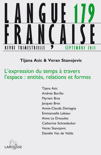
LANGUE FRANCAISE
Illuminating the Pathways of French Linguistic ThoughtLANGUE FRANCAISE, published by LAROUSSE, stands as a premier journal in the realm of linguistics and language studies, boasting an impressive Q1 quartile rating in the 2023 Linguistics and Language category. With its international reputation anchored in France, this journal presents critical research and discussions that advance our understanding of the French language, its structures, usage, and evolution. Although not an open-access publication, LANGUE FRANCAISE is indexed with an ISSN of 0023-8368 and an E-ISSN of 1957-7982, reflecting its scholarly credibility and impact, including Scopus rankings that place it competitively in the fields of arts and humanities as well as social sciences. This journal serves as an essential resource for researchers, practitioners, and students aiming to deepen their knowledge and engage in scholarly debates that shape contemporary linguistic thought. The journal's commitment to high-quality research continues to foster an enriching academic environment and contribute to the dynamic discourse surrounding language and linguistics.

LINGUISTIQUE
Cultivating Insights in the World of LanguageLINGUISTIQUE, an esteemed journal published by PRESSES UNIV FRANCE, serves as a vital platform for scholarly discourse in the fields of linguistics and language studies. With its ISSN 0075-966X and E-ISSN 2101-0234, this French journal has been a significant contributor to the understanding of linguistic phenomena since its inception in 2004, and it continues its journey through to 2024. Although currently categorized in the Q4 quartile for both Arts and Humanities (miscellaneous) and Linguistics and Language, its commitment to publishing quality research encourages a diverse range of articles, reviews, and innovative studies. Positioned in the 32nd and 29th percentiles for its respective fields according to Scopus rankings, LINGUISTIQUE is dedicated to advancing knowledge and stimulating engagement among researchers, professionals, and students alike. While it does not offer open access, the journal remains an essential resource for those who seek to deepen their understanding of linguistic principles in a global context, facilitating a richer discourse that connects theory with practice.