
Proceedings of the National Academy of Sciences of Belarus-Agrarian Series
Scope & Guideline
Empowering collaboration in the realm of agrarian sciences.
Introduction
Aims and Scopes
- Sustainable Agricultural Practices:
Research on techniques and methodologies aimed at enhancing sustainability in agricultural systems, including organic farming, agroecology, and precision agriculture. - Genetic and Biotechnological Research:
Exploration of genetic diversity and biotechnological innovations in crops and livestock, including genetic mapping, molecular markers, and improvements in breeding techniques. - Food Quality and Safety:
Studies focused on the nutritional quality, safety, and processing of food products, including the impact of various agricultural practices on food attributes. - Environmental Impact and Resource Management:
Investigations into the environmental effects of agricultural practices, soil management, and water resource optimization in farming. - Technological Innovations in Agriculture:
Development and application of new technologies, such as remote sensing, automation, and biotechnological tools, to enhance agricultural efficiency and productivity. - Economic and Policy Analysis in Agriculture:
Assessment of agricultural policies, market trends, and economic factors influencing the agrarian sector, particularly in Belarus and the surrounding regions.
Trending and Emerging
- Precision Agriculture and Technology Integration:
A growing number of studies are focusing on the integration of technology in agriculture, such as remote sensing, drones, and automated systems for monitoring and managing crops effectively. - Climate Change Adaptation Strategies:
Research addressing the impacts of climate change on agriculture is increasingly prominent, with studies exploring adaptive practices and resilient crop varieties. - Health and Nutritional Aspects of Food Products:
There is an emerging focus on the health benefits and nutritional quality of food products, including the effects of agricultural practices on food composition. - Sustainable Land Use and Resource Management:
Articles related to sustainable land use practices and the management of natural resources are on the rise, emphasizing the importance of ecological balance in agricultural systems. - Digitalization in Agriculture:
Research on the digital transformation of the agricultural sector, including data analytics, digital platforms for market access, and smart farming solutions, is increasingly being featured.
Declining or Waning
- Traditional Crop Breeding Techniques:
There has been a noticeable decrease in research focused solely on conventional breeding methods, as the field shifts towards genetic and biotechnological innovations. - Pesticide Application and Management:
Research on traditional pesticide application methods is declining, likely due to increasing interest in sustainable practices and integrated pest management strategies. - Basic Agricultural Economics:
The focus on foundational agricultural economics seems to be waning, with more emphasis placed on innovative economic models and digital transformations in agriculture. - Classic Soil Fertility Studies:
There is a reduced emphasis on traditional soil fertility studies, as newer methodologies and technologies are being favored for soil management research. - General Livestock Management Practices:
Research on generic livestock management practices is becoming less frequent, as the journal increasingly highlights genetic and health-related studies in livestock.
Similar Journals

International Journal of Agriculture and Natural Resources
Empowering Sustainable Agriculture Through Open AccessInternational Journal of Agriculture and Natural Resources is a premier academic journal published by the Pontificia Universidad Católica de Chile, Facultad de Agronomía e Ingeniería Forestal. With an ISSN of 2452-5731 and an e-ISSN of the same, this journal operates as an Open Access publication, allowing for the widespread dissemination of research findings pertinent to the fields of agriculture and natural resources. As of 2023, it holds a commendable Q2 ranking in Agricultural and Biological Sciences, indicating its significant contribution to the field. The journal's objective is to provide a platform for innovative research and in-depth analyses on emerging trends and challenges within agriculture, promoting sustainability and ecological balance. Covering a broad spectrum of topics, it aims to foster dialogue among researchers, professionals, and students, ultimately enhancing knowledge and fostering collaboration. With a current Scopus rank of #93 out of 221 in the general agricultural and biological sciences category, it occupies a vital role in advancing research and practices in agriculture and related disciplines.
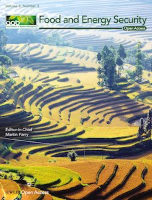
Food and Energy Security
Innovating the Future of Food Systems and Renewable EnergyFood and Energy Security, an esteemed journal published by WILEY, is dedicated to advancing the fields of food science, agriculture, and renewable energy. Since its inception in 2012, this open-access journal has provided a platform for groundbreaking research and innovative practices that address global challenges related to food production and energy sustainability. With an impressive impact factor reflected in its Q1 quartile rankings across notable categories such as Agronomy and Crop Science and Food Science, this journal is instrumental for researchers and practitioners alike who are focused on enhancing food security and promoting sustainable energy solutions. The journal's scope encompasses multidisciplinary approaches and encourages submissions that explore the intersection of food systems and energy dynamics, ensuring relevance in the evolving landscape of environmental science and policy. By offering open access to its publications, Food and Energy Security commits to making vital research accessible, fostering informed dialogue and collaboration among scholars, policymakers, and the agrifood industry worldwide.

AGROCIENCIA
Empowering research that cultivates environmental solutions.AGROCIENCIA, published by COLEGIO POSTGRADUADOS, is a key journal in the fields of agronomy, animal science, and environmental science in Mexico. With an ISSN of 1405-3195 and an E-ISSN of 2521-9766, this journal has been a crucial platform for disseminating research findings since its inception in 2000. Operating from Montecillo, Estado Mexico, it provides an outlet for scholars and practitioners to share innovations and insights that directly impact agricultural practices and environmental sustainability. Despite its current categorization in the Q4 quartile across multiple disciplines, AGROCIENCIA strives to elevate the quality and reach of research, fostering a collaborative approach to tackle pressing issues within the agricultural sciences. Access options are primarily through institutional subscriptions, allowing for a diverse audience of researchers, professionals, and students to engage with the latest studies aimed at advancing knowledge in the agricultural sector. As the journal converges towards its 2024 milestone, it remains dedicated to enhancing scientific inquiry and promoting effective solutions within its discipline.
Agritech
Shaping Sustainable Practices for a Greener TomorrowAgritech is a prominent open-access journal dedicated to advancing the field of agricultural technology. Published by UNIV GADJAH MADA, FAC AGRICULTURAL TECHNOLOGY, this esteemed journal disseminates innovative research and cutting-edge practices that contribute significantly to sustainable agriculture, precision farming, and environmental stewardship. Launched in 1999, Agritech has established itself as a vital resource for researchers, professionals, and students alike, providing a platform for the exchange of ideas and findings that shape the future of agricultural technology. By embracing an open-access model, the journal ensures that high-quality research is accessible to a global audience, promoting collaboration and knowledge sharing in the agricultural community. With an ISSN of 0216-0455 and an E-ISSN of 2527-3825, Agritech remains committed to enriching agricultural practices and policies through rigorous scientific inquiry and innovation.
Poljoprivreda
Cultivating innovation in crop science and agronomy.Poljoprivreda is a distinguished open-access journal dedicated to the field of agronomy and crop science, published by the FAC Agriculture Osijek in Croatia. Since its inception in 2000, the journal has been committed to disseminating high-quality research that informs both academic and practical advancements in agriculture. With an ISSN of 1330-7142 and an E-ISSN of 1848-8080, Poljoprivreda provides a vital platform for researchers, professionals, and students to engage with the latest findings and methodologies in agronomy, contributing significantly to the enhancement of agricultural practices in Croatia and beyond. Although currently ranked in the 22nd percentile within its category according to Scopus, the journal aspires to elevate its standing by welcoming innovative research that addresses contemporary challenges within the agricultural sciences. By fostering open access since 2000, Poljoprivreda ensures that its scholarly content is freely available, promoting wider dissemination and collaborative opportunities among researchers globally.

Agricultural Economics-Zemedelska Ekonomika
Bridging theory and practice in agricultural economics.Agricultural Economics-Zemedelska Ekonomika is a prominent open-access journal published by the Czech Academy of Agricultural Sciences, dedicated to advancing the field of agricultural economics and related disciplines. Since its inception in 2007, this journal has provided a vital platform for researchers, professionals, and students to disseminate and engage with cutting-edge insights and empirical studies that contribute to the understanding of agricultural practices, economic theories, and policy analysis. With an impressive impact factor reflected in its 2023 quartile rankings of Q2 in both Agricultural and Biological Sciences and Economics, Econometrics and Finance, the journal ranks highly among its peers, specifically occupying the 46th position out of 288 in General Economics and 40th among 193 in Agricultural Sciences, highlighting its broad relevance and respected status. The journal's open access model ensures that research is widely disseminated and easily accessible, fostering an inclusive academic environment that encourages collaboration and knowledge sharing. With a commitment to publishing quality research until at least 2024, Agricultural Economics-Zemedelska Ekonomika remains a crucial resource for those dedicated to improving agricultural productivity and sustainability through economic insight.

JOURNAL OF AGRICULTURAL AND RESOURCE ECONOMICS
Cultivating insights that shape the future of agriculture.Journal of Agricultural and Resource Economics is a pivotal platform in the realm of agricultural and resource economics, published by the Western Agricultural Economics Association. Since its inception, the journal has embraced an Open Access model, fostering widespread dissemination of research findings to benefit both scholars and practitioners in the field. The journal operates within an impressive global ranking framework, resting in Q2 across several pertinent categories including Agronomy and Crop Science, Animal Science and Zoology, and Economics and Econometrics. With its ISSN 1068-5502 and E-ISSN 2327-8285, it has garnered attention for its rigorous academic standards and impactful contributions to the discourse on resource management and agricultural practices. Researchers, professionals, and students alike will find the journal's ongoing commitment to advancing knowledge invaluable, with publications that span from 1996 to 2024 capturing evolving trends and insights in the sector.

Scientific Papers-Series Management Economic Engineering in Agriculture and Rural Development
Elevating Agricultural Practices with Cutting-edge ResearchScientific Papers-Series Management Economic Engineering in Agriculture and Rural Development is a premier open access journal dedicated to advancing the field of agricultural and rural development management. Published by the University of Agronomic Sciences and Veterinary Medicine Bucharest, this journal has been a valuable resource for researchers, practitioners, and students since its inception in 2009. With a focus on the integration of economic engineering principles into agricultural practices, the journal aims to provide innovative solutions and insights that address contemporary challenges in rural development. While the journal's H-index and specific Scopus rankings are not listed, its open access format ensures that cutting-edge research is readily available to a global audience, facilitating engagement and collaboration across disciplines. Located in the heart of Romania, the journal serves as a critical platform for disseminating impactful research and fostering dialogue in the ever-evolving landscape of agriculture and rural development.
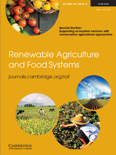
RENEWABLE AGRICULTURE AND FOOD SYSTEMS
Exploring the nexus of agriculture, sustainability, and innovation.RENEWABLE AGRICULTURE AND FOOD SYSTEMS, published by Cambridge University Press, is a leading open-access journal dedicated to the advancement of sustainability in agricultural practices and food systems. With an ISSN of 1742-1705 and an E-ISSN of 1742-1713, this journal spans the interdisciplinary fields of agronomy and food science, achieving a commendable Q2 ranking in both categories for 2023. As it continues to converge through the years from 2004 to 2024, the journal offers a platform for researchers, professionals, and students to disseminate transformative research that addresses the challenges of food security, resource management, and environmental impact. The journal’s significant impact is underscored by its Scopus rankings, situating it in the 77th percentile among agronomy and crop science publications, and the 67th percentile in food science. Since becoming fully open access in 2023, RENEWABLE AGRICULTURE AND FOOD SYSTEMS promotes wider accessibility to vital research findings, fostering collaboration and innovation in the pursuit of sustainable agricultural practices and food systems worldwide.
Journal of Integrative Agriculture
Championing Integrative Strategies for Ecological ProgressJournal of Integrative Agriculture, published by Elsevier Science Ltd, stands as a leading platform for innovative research at the intersection of agricultural sciences. With a significant focus on integrative approaches, this journal has established itself within the academic community, reflecting its excellence through impressive Impact Factor rankings and a consistent Q1 category status in multiple fields, including Agronomy, Animal Science, and Ecology. The journal spans a wide range of topics, making it a critical resource for exploring advancements in Biochemistry, Food Science, and Plant Science. With its diverse Scopus rankings—from Rank #3 in Food Animals to Rank #14 in Animal Science—it serves as a vital repository for cutting-edge research that influences both scientific inquiry and practical applications in the agricultural domain. Operating from China and accessible through open access options, the Journal of Integrative Agriculture aims to foster collaborative research and knowledge exchange among scientists, professionals, and students worldwide, supporting the growth and sustainability of agricultural practices.