
Qualitative Report
Scope & Guideline
Advancing Knowledge through Rich Qualitative Narratives
Introduction
Aims and Scopes
- Diverse Qualitative Methodologies:
The journal publishes research utilizing various qualitative methodologies, including phenomenology, autoethnography, grounded theory, and narrative inquiry, showcasing the versatility of qualitative approaches. - Focus on Human Experience:
A central aim is to explore and document human experiences, perceptions, and meanings across different contexts, enabling rich, in-depth understandings of complex social phenomena. - Application in Educational Contexts:
Many articles focus on qualitative research in educational settings, addressing topics such as teacher experiences, student engagement, and curriculum development, contributing to the field of educational research. - Social Justice and Activism:
The journal emphasizes research that highlights social justice issues, advocating for marginalized voices and exploring the intersections of identity, culture, and power dynamics. - Reflexivity and Researcher Positionality:
A strong focus on reflexivity in qualitative research is evident, encouraging researchers to critically examine their roles, biases, and influences on the research process. - Interdisciplinary Perspectives:
The Qualitative Report promotes interdisciplinary research, inviting contributions from various fields such as sociology, psychology, education, health, and cultural studies, fostering a broader understanding of qualitative inquiry.
Trending and Emerging
- Engagement with Technology:
There is a growing trend towards exploring the implications of technology in qualitative research, including the use of digital tools for data collection and analysis, reflecting the increasing digitization of research environments. - Intersectionality and Identity Studies:
Research focusing on intersectionality and the complexities of identity continues to gain traction, reflecting a broader interest in how various social categories intersect to shape individual experiences. - Community-Based Participatory Research:
There is an emerging emphasis on community-based participatory research approaches, highlighting collaborative methods that empower participants and prioritize community voices in the research process. - Mental Health and Wellbeing:
An increasing number of studies are addressing mental health and wellbeing, particularly in the context of the COVID-19 pandemic, showcasing the relevance of qualitative inquiry in understanding emotional and psychological experiences. - Visual and Arts-Based Methodologies:
Innovative methodologies, including visual and arts-based approaches, are becoming more prominent, allowing researchers to capture and convey complex phenomena through creative expression. - Reflexivity and Ethical Considerations:
Heightened attention to reflexivity and ethical considerations in qualitative research is evident, as scholars emphasize the importance of ethical engagement with participants and the implications of researcher identity.
Declining or Waning
- Traditional Quantitative Comparisons:
There has been a noticeable decrease in studies that strictly compare qualitative findings with quantitative data, suggesting a shift towards valuing qualitative insights on their own terms rather than in contrast to quantitative metrics. - Focus on Basic Qualitative Descriptions:
Research that primarily offers basic qualitative descriptions without deeper analytical frameworks or theoretical contributions seems to be declining, as the journal increasingly favors studies that provide robust analytical depth. - Centralized Research Designs:
There are fewer articles employing rigid or centralized research designs, with a trend towards more flexible, adaptive methodologies that reflect the complexities of real-world research settings. - Methodological Rigor in Traditional Formats:
The emphasis on methodological rigor in traditional formats, such as strict adherence to established qualitative protocols, appears to be less prevalent as researchers explore innovative and emergent methodologies. - Narrowly Focused Case Studies:
The journal has shifted away from narrowly focused case studies that lack broader implications, favoring research that connects local findings to larger theoretical or practical frameworks.
Similar Journals
International Journal of Qualitative Studies in Education
Exploring the Depths of Educational Inquiry.Welcome to the International Journal of Qualitative Studies in Education, a prestigious publication in the field of education, managed by Routledge Journals, Taylor & Francis Ltd. With a strong emphasis on qualitative methodologies, this journal serves as a critical platform for researchers, educators, and practitioners, providing insightful analyses and innovative approaches to educational inquiry since its inception in 1988. Recognized within the Q2 category in Education as of 2023, it holds an impressive Scopus rank of 570 out of 1543, reflecting its significant impact and relevance in social sciences and education research. Although it does not offer open access, the journal's rich content contributes to the advancement of qualitative research, encouraging discourse that shapes contemporary educational practices. With a commitment to rigorous scholarly standards, the International Journal of Qualitative Studies in Education aims to stimulate critical dialogue and foster community among researchers, professionals, and students seeking to deepen their understanding of qualitative research and its applications in the rapidly evolving educational landscape.

Educational Studies-AESA
Empowering academics to understand and influence educational change.Educational Studies-AESA, published by Routledge Journals, Taylor & Francis Ltd, is a prestigious peer-reviewed journal that serves as a vital platform for sharing cutting-edge research in the fields of education, sociology, and political science. With an ISSN of 0013-1946 and an E-ISSN of 1532-6993, this journal holds a commendable status, reflected in its strong rankings: it is positioned in the Q2 category in both Education and Sociology/Political Science, emphasizing its significant impact in these disciplines. Moreover, with Scopus rankings that place it in the 62nd and 48th percentiles within its categories, Educational Studies-AESA is recognized for its contributions to scholarly discourse and is an essential resource for researchers, professionals, and students alike seeking to deepen their understanding of educational dynamics and their societal implications. While this journal is not currently open access, it remains a vital scholarly source, enriching the academic community from its base in the United Kingdom, addressing vital educational issues from 2018 to 2024 and beyond.
QUALITATIVE HEALTH RESEARCH
Exploring the Depths of Health ExperiencesQUALITATIVE HEALTH RESEARCH is a pivotal journal published by SAGE Publications Inc, specializing in the dynamic field of qualitative research within public health and health services. With an ISSN of 1049-7323 and an E-ISSN of 1552-7557, this esteemed publication has secured a prominent position in academic discourse, as evidenced by its Q1 ranking in the 2023 category of Public Health, Environmental and Occupational Health and a Scopus rank of #100 out of 665, placing it in the 85th percentile. Since its inception in 1991, the journal has fostered innovative methodologies and diverse perspectives, making it an essential resource for researchers, professionals, and students dedicated to understanding the complexity of health experiences and outcomes. Although it does not feature open access, QUALITATIVE HEALTH RESEARCH remains committed to advancing knowledge and scholarly dialogue, ensuring that significant contributions in qualitative methodologies are readily available to a global academic audience.
Qualitative Research in Psychology
Innovating the dialogue in qualitative psychological research.Qualitative Research in Psychology is a premier journal dedicated to advancing the field of qualitative research within psychology. Published by Routledge Journals, Taylor & Francis Ltd, this influential journal has established itself as a pivotal resource since its inception in 2004 and is set to continue its impactful journey through 2024. With an impressive Q1 ranking in the miscellaneous psychology category, it ranks #6 out of 216 in general psychology according to Scopus, placing it within the top 3% of its field. The journal's commitment to promoting qualitative methodologies makes it an essential platform for researchers, professionals, and students aiming to explore the complexities of human behavior and mental processes. Though it currently does not offer open access options, the journal provides critical insights and rigorous scholarly discussions that enrich the academic community's understanding of qualitative approaches. As a vital contributor to the psychological sciences, Qualitative Research in Psychology encourages interdisciplinary dialogue, ensuring that diverse voices and perspectives are included in the ongoing research discourse.
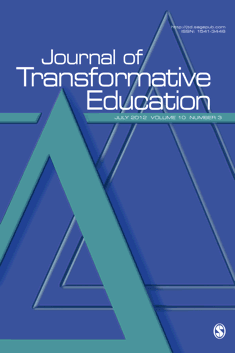
Journal of Transformative Education
Elevating Educational Discourse for Meaningful ChangeJournal of Transformative Education, published by SAGE PUBLICATIONS INC, stands as a pivotal resource within the field of education, dedicated to fostering innovation and positive change in educational practices. Established in 2003 and continuing through to 2024, this journal boasts an impressive range of contributions that are crucial for academics, policymakers, and practitioners focusing on transformative learning processes. With a current classification in the Q3 quartile for education in 2023 and a respectable Scopus ranking of 730 out of 1543, this journal provides a platform for high-quality research and discourse. Although it is not an open-access journal, its findings are invaluable for those seeking to enhance educational methodologies and learner engagement. The Journal of Transformative Education is a must-read for anyone interested in the evolving landscape of educational theory and practice, as it continuously aims to inspire and guide transformative educational initiatives.
Qualitative Social Work
Elevating Social Work Standards with Rigorous ResearchQualitative Social Work is a leading journal dedicated to advancing the field of social work through qualitative research. Published by SAGE PUBLICATIONS INC in the United States, this journal serves as a key platform for scholars and practitioners aimed at exploring the complexities of social work practice and its profound impact on individuals and communities. With an ISSN of 1473-3250 and E-ISSN 1741-3117, the journal has established a notable presence, currently ranking in the Q2 category in Health (social science) and Q1 in Social Sciences (miscellaneous) in its 2023 evaluations. The journal spans the period from 2002 to 2024, emphasizing its ongoing commitment to disseminating cutting-edge research. Although it is not an Open Access journal, its significant Scopus Ranks—ranking #100/604 in Social Sciences (miscellaneous) and #120/371 in Health (social science)—highlight the rigorous standards and relevance of its published work. Researchers, professionals, and students can benefit from the detailed insights and innovative methodologies featured within its pages, solidifying Qualitative Social Work as an essential resource for those passionate about enhancing social work practices through qualitative investigation.
International Journal of Qualitative Studies on Health and Well-Being
Transforming healthcare understanding with qualitative research.International Journal of Qualitative Studies on Health and Well-Being is a premier academic platform, published by Taylor & Francis Ltd, that has been dedicated to advancing the field of health and well-being through qualitative research since its inception in 2006. With an Open Access model, the journal ensures that vital research findings are accessible to a global audience, fostering greater collaboration and innovation among scholars, practitioners, and students alike. Recognized for its robust impact within the academic community, it boasts a commendable Q1 classification in Fundamentals and Skills and ranked #3 in Nursing related to this category, demonstrating its commitment to publishing high-quality and impactful research. Additionally, the journal holds strong positions in areas such as Gerontology and Health Policy, making it a critical resource for those studying the multifaceted aspects of health. With a focus on ethical considerations and legal aspects of healthcare, it invites submissions that can contribute to the ongoing dialogue surrounding health policies and practices. Situated in Oxon, England, the journal's multidisciplinary approach is essential for guiding research that will influence future practices in the healthcare sector.

Departures in Critical Qualitative Research
Advancing Critical Perspectives in Communication and LinguisticsDepartures in Critical Qualitative Research, published by University of California Press, is an influential journal dedicated to advancing knowledge within the realms of Communication and Linguistics and Language. With its commitment to exploring the complexities and nuances of qualitative research, this journal has quickly established itself as a vital resource for scholars and professionals alike. Although it currently resides in the fourth quartile in Communication and the third quartile in Linguistics, its notable Scopus rankings, including a 64th percentile in Language and Linguistics, highlight its growing significance in the academic discourse. Covering a converged period from 2019 until 2024, the journal seeks to foster innovative and critical perspectives on qualitative methodologies, offering invaluable insights that address contemporary social issues. Access to its content is available to a wide audience, contributing to the journal's reputation as a beacon for those engaged in critical qualitative research.
Qualitative Research in Education
Shaping educational discourse through qualitative exploration.Qualitative Research in Education is an influential open-access journal published by HIPATIA PRESS, based in Barcelona, Spain. With an ISSN of 2014-6418, this journal has been dedicated to advancing the field of qualitative methodologies within the realms of education, developmental psychology, and the arts and humanities since its inception in 2012. Highlighted by a commendable Q2 ranking in both Arts and Humanities and Education, as well as a Q3 position in Developmental and Educational Psychology as of 2023, it offers critical insights and innovative research that resonate with educators, researchers, and policymakers. The journal is indexed in prominent databases and boasts a solid reputation, ranking in the 79th percentile for Arts and Humanities and 70th percentile for Education in Scopus, affirming its contribution to scholarly discourse. As it converges towards the years 2018 to 2024, Qualitative Research in Education remains a vital resource for those seeking to enhance their understanding of qualitative approaches in educational settings.
Qualitative Sociology
Navigating the Complexities of Society with Qualitative DepthQualitative Sociology, published by SPRINGER, is a leading journal in the fields of sociology and political science, holding a prestigious Q1 ranking in the 2023 category quartiles. With an ISSN of 0162-0436 and an E-ISSN of 1573-7837, this journal has been a vital resource for qualitative research since its inception in 1978. It serves as a platform for critical scholarship, illuminating diverse sociological perspectives and methodologies, and is vital for those engaged in qualitative inquiry. While it does not offer open access, Qualitative Sociology remains influential with its rigorous peer-review process and substantial impact factor. Its prominence is reflected in its Scopus ranking at #331 out of 1466 in Social Sciences, placing it within the top 77th percentile. Researchers, professionals, and students alike will find this journal an indispensable tool for advancing their understanding of societal dynamics and advancing qualitative methodologies.