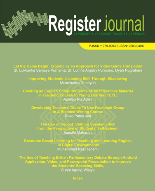
REGISTER Journal
Scope & Guideline
Navigating the intersections of culture, thought, and academia.
Introduction
Aims and Scopes
- Language Acquisition and Development:
The journal explores various aspects of language acquisition, including vocabulary development, pragmatic skills, and the impact of technology on learning outcomes. - Cultural and Sociolinguistic Studies:
It investigates the interplay between language and culture, examining how sociopolitical contexts, identity, and gender influence language use and education. - Educational Technology Integration:
The journal addresses the integration of technology in language education, focusing on tools and strategies that enhance learning experiences and outcomes. - Teacher Education and Professional Development:
It highlights the challenges and strategies of language teachers, promoting discussions on effective teaching practices and professional growth. - Critical Discourse Analysis:
REGISTER emphasizes critical perspectives on language use in various contexts, including media, politics, and education, to uncover underlying ideologies and power dynamics.
Trending and Emerging
- Digital Learning and Technology:
There is a growing emphasis on the role of digital tools and platforms, such as WhatsApp and ChatGPT, in facilitating language learning, particularly in the context of distance education. - Translanguaging and Multilingualism:
Research on translanguaging practices and multilingual education has gained traction, highlighting how learners utilize multiple languages in their learning processes. - Intercultural Competence and Awareness:
The focus on intercultural communicative competence is rising, reflecting the need for language learners to navigate diverse cultural contexts effectively. - Socio-Pragmatic Analysis:
Emerging studies are increasingly analyzing socio-pragmatic aspects of language use, particularly in understanding politeness strategies and gender differences in communication. - Challenges in Language Teaching During Crises:
The impact of crises, such as the COVID-19 pandemic, on language teaching and learning has become a prominent theme, showcasing adaptive strategies and resilience among educators and learners.
Declining or Waning
- Traditional Teaching Methods:
There appears to be a waning focus on conventional language teaching methods, as evidenced by a shift towards more innovative practices and technology integration. - Language Policy and Planning:
Research directly addressing language policy issues has decreased, suggesting a move towards more localized studies of language use and teaching rather than overarching policy discussions. - Static Language Assessment Techniques:
The journal has seen fewer studies centered on traditional assessment techniques, likely as researchers explore more dynamic and formative assessment methods.
Similar Journals
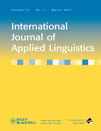
International Journal of Applied Linguistics
Bridging Gaps Between Linguistic Theory and Real-World ApplicationsInternational Journal of Applied Linguistics, published by WILEY, is a premier platform for cutting-edge research in the field of applied linguistics. With a notable Impact Factor and ranked in the top Q1 quartile of linguistics and language, this journal serves as an essential resource for scholars, practitioners, and students. The journal’s wide-ranging scope includes various subfields such as language acquisition, language education, sociolinguistics, and discourse analysis, fostering multidisciplinary approaches to language studies. It has achieved a significant Scopus Rank, placing it in the 90th percentile for both Arts and Humanities as well as Social Sciences categories, reflecting its high visibility and influence in the academic community. The International Journal of Applied Linguistics is committed to advancing the understanding of language use in real-world contexts through rigorously peer-reviewed articles that contribute to both theory and practical applications. While it is not an open-access journal, it remains a highly respected publication for researchers looking to disseminate and acquire knowledge in applied linguistics.

Cuadernos de Filologia Italiana
Exploring the Depths of Italian Language and CultureCuadernos de Filologia Italiana is a distinguished academic journal dedicated to the study of Italian philology, published by UNIV COMPLUTENSE MADRID, SERVICIO PUBLICACIONES. Since its inception in 1994, it has embraced an Open Access model, allowing for unrestricted access to critical research and scholarship within the field. By facilitating a dynamic platform for the dissemination of high-quality research, this journal plays a vital role in advancing knowledge on Italian language, literature, and culture. With a commitment to fostering scholarly dialogue and innovation, Cuadernos de Filologia Italiana is an essential resource for researchers, professionals, and students seeking to deepen their understanding of Italian studies in an increasingly globalized academic landscape. The journal is based in Madrid, Spain, and continues to contribute significantly to the field through its rigorous peer-reviewed articles.

Journal of Technology and Chinese Language Teaching
Fostering Collaborative Advances in Language EducationJournal of Technology and Chinese Language Teaching, published by JOURNAL TECHNOLOGY & CHINESE LANGUAGE TEACHING, serves as an influential platform for scholars and practitioners in the intersecting fields of technology, language education, and linguistic research. With an ISSN of 1949-260X, this journal strives to disseminate cutting-edge research and innovative practices aimed at enhancing the teaching and learning of Chinese language through technological advancements. Operated from the United States, it currently occupies valuable quartiles within its categories, showcasing its significance—ranking Q4 in Computer Science Applications, Q3 in Education, and Q2 in Linguistics and Language. As it spans from 2019 to 2024, the journal provides a rich repository for international contributions, fostering a collaborative environment for educators, researchers, and students alike. With both Scopus and HIndex metrics reflecting a solid reputation, the Journal of Technology and Chinese Language Teaching is pivotal for those keen on pushing the boundaries of language instruction in the digital age.

Porta Linguarum
Bridging linguistics and education for a brighter tomorrow.Porta Linguarum, published by UNIV GRANADA in Spain, is a pioneering journal dedicated to the fields of linguistics and language studies, with a dual focus on the educational implications and applications within these disciplines. Launched in 2008 and continuing its impactful contributions into 2024, the journal is recognized for its rigorous peer-reviewed articles that address contemporary language issues, pedagogical approaches, and linguistic research, evidenced by its notable rankings in the 2023 Scopus metrics. Porta Linguarum holds a distinguished Q1 classification in Linguistics and Language, alongside a respectable Q3 placement in Education, marking it as a valuable resource for academics and practitioners alike. With an impressive ranking of 231 out of 1088 in the Arts and Humanities category and a strong 78th percentile ranking for Language and Linguistics, this journal facilitates the exchange of innovative ideas and promotes scholarly discourse. Although currently not adopting an open access model, it remains an essential platform for advancing knowledge in linguistics and education.

TESOL Journal
Advancing the Art of Language EducationTESOL Journal, published by Wiley, is a premier academic journal dedicated to advancing the field of Teaching English to Speakers of Other Languages (TESOL). With an esteemed reputation reflected in its high impact factor and its Q1 ranking in both Education and Linguistics and Language categories for 2023, this journal serves as a critical resource for researchers, educators, and policy-makers. It covers a wide spectrum of topics related to language acquisition, pedagogical innovations, and educational strategies in TESOL, contributing significantly to the discourse around multilingualism and effective teaching practices. The journal is notable not only for its rigorous peer-review process but also for its commitment to disseminating high-quality research that informs and inspires practice in diverse educational settings. Interested readers can access articles through traditional subscription methods, ensuring that groundbreaking research is available to a broad audience. With converged years spanning from 2010 to 2024, TESOL Journal continues to evolve, making it a vital publication for anyone interested in the complexities of language education.

GIST-Education and Learning Research Journal
Inspiring Change through Evidence-Based Learning StrategiesGIST-Education and Learning Research Journal, published by INST UNIV COLOMBO AMERICANA-UNICA, stands as a prominent vessel for the dissemination of scholarly research in the field of education and learning. Since its inception in 2007, this open access journal has championed the free exchange of knowledge, allowing researchers, educators, and students from around the globe to contribute to and benefit from the latest findings and practices in educational theory and methodology. With its commitment to enhancing educational practices and influencing policy through rigorous research, GIST-Education and Learning Research Journal invites submissions that explore innovative teaching strategies, learning technologies, educational psychology, and related fields. Its accessibility and dedication to quality research make it an invaluable resource for anyone invested in the improvement of educational outcomes.

Turkish Journal of Education
Advancing Education Research for a Brighter TomorrowTurkish Journal of Education, published by MEHMET TEKEREK, is a prominent Open Access journal dedicated to advancing the field of education research since its establishment in 2012. With an ISSN of 2147-2858, this journal exemplifies a commitment to disseminating high-quality research that addresses contemporary issues and innovative practices in education. It serves as a vital resource for researchers, educators, and policymakers interested in the educational landscape of Turkey and beyond. The journal promotes accessibility to knowledge by offering free access to its articles, fostering a collaborative and inclusive academic environment. By engaging with a diverse range of topics, from pedagogical theories to educational technology, the Turkish Journal of Education strives to contribute significantly to the field and stimulate scholarly debate among its readers.

Language Learning in Higher Education
Cultivating excellence in language acquisition methodologies.Language Learning in Higher Education is a prominent academic journal published by DE GRUYTER MOUTON, dedicated to exploring the intricate dynamics of language acquisition and pedagogical practices within the higher education context. With a robust ISSN: 2191-611X and E-ISSN: 2191-6128, this journal provides a platform for innovative research that addresses contemporary challenges and methodologies in language education. The journal enjoys a favorable reputation in the academic community, as evidenced by its ranks in the Scopus database, where it holds a position in the 67th percentile for Language and Linguistics and is classified in the Q3 and Q2 quartiles across relevant education and linguistics categories. Since its convergence in 2017, Language Learning in Higher Education aims to enrich scholarly discourse by publishing high-quality articles that foster insights into effective language learning strategies, thus serving as an essential resource for researchers, educators, and students committed to enhancing language education. The journal's editorial team is devoted to advancing the field through rigorous peer-review processes and welcomes contributions that push the boundaries of language learning research.

Taiwan Journal of TESOL
Enhancing Pedagogy for Tomorrow's Global CommunicatorsTaiwan Journal of TESOL, published by CRANE PUBL CO, serves as a vital platform for research in the fields of Education and Linguistics. Established to advance the field of Teaching English to Speakers of Other Languages, this journal provides a diverse range of scholarly articles aimed at enhancing pedagogical practices, understanding language acquisition, and facilitating cross-cultural communication. With a convergence of research years from 2017 to 2024, it proudly holds its position within the quartile rankings of Q4 in Education and Q2 in Linguistics and Language. The journal’s Scopus ranks notably place it in the 61st percentile for Language and Linguistics among Arts and Humanities, making it a respected resource for both seasoned scholars and emerging researchers. While it currently does not offer open access, the journal remains committed to making its contributions available to the academic community. The ISSN numbers are 1814-9448 and 2076-7617 for print and electronic formats, respectively, ensuring accessibility to a global audience. As a leading publication within its domain, the Taiwan Journal of TESOL invites submission of innovative research that shapes the future of language education.
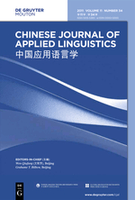
Chinese Journal of Applied Linguistics
Unveiling the practical applications of linguistic theory.The Chinese Journal of Applied Linguistics, published by the esteemed FOREIGN LANGUAGE TEACHING & RESEARCH PRESS, serves as a premier platform for scholars and practitioners in the field of linguistics, specifically focusing on the application of linguistic research in real-world contexts. With an ISSN of 2192-9505 and an E-ISSN of 2192-9513, this journal is distinguished by its position in the Q1 category for Linguistics and Language as of 2023, underscoring its influence and prestige within the academic community. Notably, it ranks 248th out of 1,088 in the Arts and Humanities field and 292nd out of 1,167 in Social Sciences, reflecting a strong percentile rank of 77th and 74th respectively. This journal aims to contribute to the advancement of applied linguistics through innovative research articles, comprehensive reviews, and critical discussions on contemporary issues in language learning and teaching, thereby attracting a diverse readership of researchers, educators, and students who are keen on exploring new linguistic paradigms. With its scope spanning from 2017 to 2024, the Chinese Journal of Applied Linguistics is committed to disseminating cutting-edge insights and fostering dialogues that propel the discipline forward, making it an essential resource for anyone engaged in the study of language and its applications.