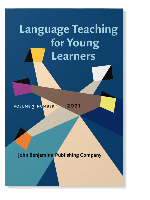
Language Teaching for Young Learners
Scope & Guideline
Advancing research to nurture language skills in children.
Introduction
Aims and Scopes
- Innovative Language Teaching Practices:
The journal consistently publishes research on innovative teaching methodologies, including task-based language teaching, project-based learning, and the integration of technology in language learning. - Intercultural Competence and Multilingualism:
A core focus is on developing intercultural competence among young learners, often through plurilingual approaches and the incorporation of diverse cultural perspectives in the curriculum. - Parental and Community Involvement:
Research often highlights the role of parents and the community in supporting language learning, emphasizing collaborative approaches between educators and families. - Motivation and Engagement Strategies:
The journal addresses strategies to enhance motivation and engagement in language learning, exploring factors that influence children's attitudes toward language acquisition. - Literacy Development in Early Language Learning:
There is a significant emphasis on literacy skills development, particularly in the context of early foreign language education, analyzing how young learners acquire reading and writing skills. - Ethical Considerations in Language Education Research:
The journal also explores the ethical implications of conducting research with child participants, promoting child-centred practices in language education research.
Trending and Emerging
- Digital and Remote Learning Technologies:
The integration of digital tools and online platforms in language education is increasingly emphasized, especially in light of recent global shifts toward remote learning, showcasing innovative practices for engaging young learners. - Focus on Social and Emotional Learning (SEL):
There is a growing trend toward incorporating social and emotional learning within language education, addressing how emotional factors influence language acquisition and learner engagement. - Research on Language Learner Agency:
Emerging research emphasizes the importance of learner agency, exploring how young learners can take ownership of their language learning processes, fostering independence and self-directed learning. - Culturally Responsive Teaching:
The journal is increasingly focusing on culturally responsive teaching practices that recognize and respect students' diverse backgrounds, promoting inclusivity in language education. - Interdisciplinary Approaches to Language Learning:
Recent publications highlight the benefits of interdisciplinary approaches, integrating language learning with subjects like science, arts, and social studies to create holistic educational experiences for young learners.
Declining or Waning
- Traditional Language Teaching Methods:
There has been a noticeable decrease in research centered on traditional, teacher-centered language teaching methods, as the field increasingly embraces more interactive and student-centered approaches. - Focus on Specific Language Skills in Isolation:
Research concentrating solely on discrete language skills, such as grammar or vocabulary in isolation, is less frequently published, indicating a shift toward integrated language skill development. - Exclusively English-Focused Research:
While English language teaching remains a primary focus, there appears to be reduced attention on English as a sole language of instruction, with growing interest in multilingual and plurilingual approaches. - Standardized Assessment Approaches:
The journal has seen a decline in studies advocating for standardized assessment methods, moving towards more formative and dynamic assessment practices that cater to young learners' diverse needs.
Similar Journals

Language Learning in Higher Education
Pioneering insights into contemporary language education challenges.Language Learning in Higher Education is a prominent academic journal published by DE GRUYTER MOUTON, dedicated to exploring the intricate dynamics of language acquisition and pedagogical practices within the higher education context. With a robust ISSN: 2191-611X and E-ISSN: 2191-6128, this journal provides a platform for innovative research that addresses contemporary challenges and methodologies in language education. The journal enjoys a favorable reputation in the academic community, as evidenced by its ranks in the Scopus database, where it holds a position in the 67th percentile for Language and Linguistics and is classified in the Q3 and Q2 quartiles across relevant education and linguistics categories. Since its convergence in 2017, Language Learning in Higher Education aims to enrich scholarly discourse by publishing high-quality articles that foster insights into effective language learning strategies, thus serving as an essential resource for researchers, educators, and students committed to enhancing language education. The journal's editorial team is devoted to advancing the field through rigorous peer-review processes and welcomes contributions that push the boundaries of language learning research.

LFE-Revista de Lenguas para Fines Especificos
Pioneering Research for Professional CommunicationLFE-Revista de Lenguas para Fines Especificos is a distinguished academic journal focused on the field of applied linguistics and language education, published by UNIV LAS PALMAS GRAN CANARIA, SERV PUBL & DIF CIENT PARQUE CIENT. Established in 1993, this Open Access journal promotes the dissemination of research on specific purposes in language studies, making it an invaluable resource for researchers, educators, and students alike. Based in Spain, it serves an international audience interested in the intersection of language acquisition, pedagogy, and professional communication. Despite its recent entry into Scopus with competitive rankings in Social Sciences, particularly in Linguistics and Language and Education, the journal aims to continually enhance its impact by inviting innovative contributions that explore contemporary challenges and methodologies in language teaching and learning. Researchers are encouraged to tap into this growing repository of knowledge, which is easily accessible to foster collaborative and interdisciplinary dialogues within the field.

Journal of Research in Applied Linguistics
Unlocking Insights in Language Acquisition and PedagogyJournal of Research in Applied Linguistics is an esteemed academic journal published by Shahid Chamran University Ahvaz, Iran, focusing on the dynamic field of linguistics and language studies. With an ISSN of 2345-3303 and an E-ISSN of 2588-3887, the journal has established itself as a valuable resource for researchers and professionals aiming to explore diverse issues related to applied linguistics, including language acquisition, pedagogy, and sociolinguistic interactions. As part of a robust academic community since its inception in 2017, it is recognized with a Q2 quartile ranking in the world of linguistics and achieved impressive Scopus ranks reflective of its growing impact, particularly within the arts and humanities. The journal embraces an open access policy, enhancing its reach and availability to a broad audience. Researchers, educators, and students alike will find in the Journal of Research in Applied Linguistics a critical platform for dialogue, innovation, and contribution to the evolving landscape of language research.
AILA Review
Championing quality research in linguistics and applied studies.AILA Review, published by John Benjamins Publishing Co, stands as a pivotal resource within the field of linguistics and language studies. With an ISSN of 1461-0213 and an E-ISSN of 1570-5595, this journal is dedicated to fostering innovative research and scholarship that advances the understanding of language in its diverse forms and applications. Spanning significant years from 2003 to 2016 and 2018 to 2024, AILA Review has established itself with a commendable reputation, reflected by its Q2 ranking in Linguistics and Language and notable Scopus rankings, positioning it in the 73rd percentile among Arts and Humanities. As an essential forum for researchers, professionals, and students alike, the journal invites high-quality contributions that engage with theoretical and practical aspects of language acquisition, multilingualism, and applied linguistics, enhancing discourse in these vital areas of study. Although not an open-access journal, its commitment to quality ensures that publications are widely recognized and cited, fostering impactful scholarly exchanges.
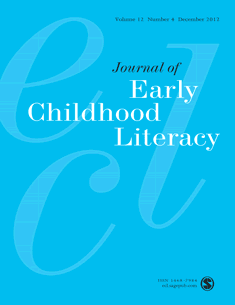
Journal of Early Childhood Literacy
Connecting Research and Practice in Early LiteracyJournal of Early Childhood Literacy, published by SAGE PUBLICATIONS LTD, is a leading international journal dedicated to the exploration and dissemination of research in the field of early childhood literacy. With a robust impact factor and a distinguished ranking in the Q1 category of Education, this journal is at the forefront of publishing innovative studies and theoretical frameworks that shape literacy practices and policies for young learners. Operating from its base in the United Kingdom, it serves as a crucial platform for researchers, educators, and practitioners alike, providing insights into literacy development, pedagogical strategies, and the socio-cultural contexts affecting literacy acquisition. Researchers can access a wealth of articles that reflect the journal’s commitment to advancing knowledge and understanding in early childhood literacy, making it an essential resource for anyone dedicated to fostering literacy in the formative years. The journal has consistently maintained a strong reputation, ranking in the top 82nd percentile among its peers in Social Sciences - Education according to Scopus metrics. Engage with the vibrant discourse and contribute to the evolving landscape of early literacy by exploring the latest findings published in the Journal of Early Childhood Literacy.
ITL-International Journal of Applied Linguistics
Advancing knowledge in applied linguistics and education.ITL-International Journal of Applied Linguistics, published by JOHN BENJAMINS PUBLISHING CO in Belgium, stands as a leading journal in the field of applied linguistics and education, recognized for its rigorous scholarship and impactful contributions. With an impressive ranking of Q1 in both the Education and Linguistics and Language categories, ITL holds its place among the top journals globally, featuring in the Scopus rankings with a notable 91st percentile in both Arts and Humanities as well as Social Sciences. The journal aims to disseminate innovative research exploring the intersection of linguistics, language acquisition, and pedagogical practices, fostering a rich academic dialogue among researchers, educators, and practitioners. Though not currently an open access journal, ITL remains accessible to a broad readership, with an emphasis on high-quality, peer-reviewed articles that inform and inspire advancements in applied linguistics. The journal's commitment to academic excellence and relevance makes it an essential resource for those seeking to understand and contribute to the dynamic landscape of language studies.
RELC Journal
Innovating Language Education Through Rigorous ResearchRELC Journal, published by SAGE Publications Ltd, stands as a leading platform in the fields of Education and Linguistics, boasting an impressive Q1 ranking in both categories according to the latest metrics. Established in 1970 and continuing its commitment to academic excellence through 2024, the journal features rigorous peer-reviewed research that explores the intersections of language, culture, and pedagogy. With a notable Scopus ranking that places it in the 98th percentile for both Language and Linguistics (Rank #16/1088) and Education (Rank #91/1543), the RELC Journal is essential for scholars, educators, and practitioners seeking to contribute to and stay abreast of cutting-edge developments in their respective fields. Although currently not open access, the journal remains accessible to a diverse audience and invites contributions that challenge conventional perspectives and inspire innovative practices in language education.

Argentinian Journal of Applied Linguistics
Exploring the intersections of language, culture, and education.The Argentinian Journal of Applied Linguistics is a prominent publication dedicated to advancing the field of linguistics with a particular focus on practical applications within various contexts. Published by the Federación Argentina de Asociaciones Profesionales de Profesores de Inglés (FAAP), this journal serves as a vital platform for researchers, educators, and linguistics professionals interested in the nuances of language teaching, acquisition, and sociolinguistics. With an ISSN of 2314-3576, the journal showcases original research and reviews that push the boundaries of current knowledge and practice in applied linguistics. Despite being in its early stages, the journal aims to build a strong academic presence by fostering collaboration among scholars and practitioners, thereby contributing to the enhancement of language education in Argentina and beyond. The importance of this journal lies not only in its commitment to accessibility and knowledge dissemination but also in its role as a bridge between linguistic theory and practical application, ultimately benefiting educators and learners alike.

Journal of Teaching English for Specific and Academic Purposes
Transforming Academic Language Education.Journal of Teaching English for Specific and Academic Purposes, published by UNIV NIS, FAC SCI MATH, is a pivotal platform for researchers, educators, and practitioners in the field of language education, particularly focusing on specialized and academic English instruction. With an ISSN of 2334-9182 and an E-ISSN of 2334-9212, this journal serves as a conduit for innovative research and pedagogical advancements from 2019 to 2024, contributing significantly to the understanding of language teaching methodologies. As a recognized entity in the Q3 category of Education as per 2023 evaluations, it ranks #1071 in Scopus’s social sciences education realm, indicating its growing influence and relevance. Although it operates without open access, the journal aims to provide a comprehensive exploration of effective teaching strategies and academic practices, crucial for both current scholars and institutions. The journal welcomes diverse contributions that shed light on the evolving landscape of English language teaching, making it an essential resource for those striving to enhance their knowledge and practice in this important area.
Language Teaching Research
Advancing the frontiers of language education.Language Teaching Research, published by SAGE Publications Ltd, serves as a pivotal platform for scholars and practitioners in the domains of education and linguistics. Since its inception in 1997, this prestigious journal has maintained its status within the Q1 category for both Education and Linguistics, symbolizing its significant impact and commitment to excellence in research. With impressive Scopus rankings placing it among the top percentile in its fields, Language Teaching Research provides a comprehensive array of articles, studies, and reviews dedicated to advancing the theory and practice of language education. Although currently not an Open Access journal, it remains essential reading for those engaged in the evolving challenges and methodologies surrounding language teaching and learning. The journal aims to foster insightful discussions and disseminate innovative research findings, making it a crucial resource for educators, researchers, and students keen on enhancing language acquisition and pedagogical strategies.