Revista Ibero-Americana de Ciencia da Informacao
Scope & Guideline
Connecting Ideas, Bridging Borders in Information Science
Introduction
Aims and Scopes
- Information Access and Literacy:
The journal emphasizes studies that explore how individuals access and utilize information, particularly in the context of libraries and educational institutions. It often discusses methodologies for promoting information literacy and the role of librarians as educators. - Digital Transformation and Technology:
With the rise of digital technologies, the journal frequently publishes articles on the integration of emerging technologies such as artificial intelligence, blockchain, and digital curation in information science, highlighting their implications for libraries and information services. - Cultural Heritage and Memory:
The journal addresses the preservation and management of cultural heritage, focusing on the role of archives and libraries in maintaining institutional memory and supporting cultural narratives. - Social Inclusion and Community Engagement:
There is a consistent focus on the role of libraries in promoting social inclusion, especially through community-based programs that enhance access to information for marginalized groups. - Policy and Ethics in Information Science:
The journal also explores the ethical dimensions and policy implications of information science, including issues related to privacy, information security, and the impact of misinformation.
Trending and Emerging
- Impact of the COVID-19 Pandemic:
Recent publications have increasingly focused on the effects of the COVID-19 pandemic on information access and library services, exploring how institutions adapted to the crisis and the implications for future practices. - Emphasis on Digital Equity and Accessibility:
There is a growing trend towards discussing issues of digital equity, particularly how libraries can serve diverse populations, including individuals with disabilities and those from underserved communities. - Interdisciplinary Approaches to Information Science:
Emerging themes reflect a trend towards interdisciplinary research, integrating perspectives from social sciences, education, and technology to address complex information challenges. - Use of Altmetrics and Research Visibility:
The journal has seen an increase in articles discussing altmetrics and their role in enhancing the visibility of research outputs, indicating a shift towards new metrics for evaluating scholarly impact. - Sociotechnical Perspectives on Information Systems:
Recent publications are increasingly adopting sociotechnical frameworks to analyze information systems, highlighting the interplay between technology, society, and information practices.
Declining or Waning
- Traditional Bibliographic Control:
There has been a noticeable decrease in publications focusing on traditional bibliographic control methods, as the field shifts towards more dynamic and technology-driven approaches to information management. - Print-Based Information Services:
As digital media continues to dominate, discussions surrounding print-based services and their relevance in modern libraries are becoming less frequent, indicating a waning interest in this area. - Historical Studies of Library Science:
While historical perspectives remain important, there has been a decline in the number of studies centered on the historical development of library science as the journal focuses more on contemporary issues and future trends.
Similar Journals

Ibersid-Revista de Sistemas de Informacion y Documentacion
Shaping the Future of Information Systems ResearchIbersid-Revista de Sistemas de Informacion y Documentacion is an esteemed academic journal published by IBERSID NETWORK, focusing on pivotal themes in the fields of communication, computer networks, information systems, and library and information sciences. With an ISSN of 1888-0967 and an E-ISSN of 2174-081X, this Spanish journal has been a significant contributor to scholarly discourse since its inception in 2012. Recognized in the 2023 category quartiles, it holds a Q3 ranking in communication and library and information sciences, while ranking Q4 in computer networks and communications as well as information systems, reflecting its unique intersectionality within these domains. Despite its emerging status, evidenced by its Scopus ranks demonstrating a mixed percentile across various categories, the journal is committed to advancing knowledge and fostering innovative research. Researchers, professionals, and students are encouraged to contribute to this open-access platform, further enhancing the impact and reach of vital information and documentation systems.

African Journal of Library Archives and Information Science
Navigating the Future of Library Science in Africa.The African Journal of Library Archives and Information Science (ISSN: 0795-4778; E-ISSN: 0795-4778) is a pivotal publication in the field of Library and Information Sciences, published by ARCHLIB & INFORMATION SERVICES LTD in Nigeria. With a focus on the diverse and evolving challenges faced by libraries and information professionals in the African context, this journal serves as a platform for scholarly communication, fostering innovation and collaboration among researchers, practitioners, and academics. The journal has a notable impact factor, reflected in its Q3 ranking within the category for 2023, and is indexed in Scopus, holding a percentile rank of 22nd in its field, further validating its relevance and scholarly contribution. Running since 2008 with continual publications through to 2024, the journal aims to advance knowledge, share best practices, and highlight emerging trends in librarianship and information science across Africa and beyond. By offering open access options, it ensures wide dissemination of knowledge, making it an essential resource for those dedicated to enhancing information services and archives.
PORTAL-LIBRARIES AND THE ACADEMY
Elevating Academic Discourse in Library and Information SciencePORTAL: Libraries and the Academy is an esteemed academic journal published by Johns Hopkins University Press, focusing on the intersection of library and information science, academic practice, and scholarly communication. With an ISSN of 1531-2542 and an E-ISSN of 1530-7131, this journal offers rigorous peer-reviewed research essential for librarians, researchers, and information professionals committed to enhancing academic libraries and fostering innovative practices in higher education. It holds a strong position in its field, ranking in the 61st percentile within Social Sciences and Library and Information Sciences, and categorized as Q2 in both Development and Library and Information Sciences for 2023. Though the journal is not Open Access, its content is invaluable for anyone interested in staying abreast of the latest trends and challenges in library services and academic environments. Since its inception in 2001, PORTAL has continuously contributed to the discourse on the evolving role of libraries in academia, making it a critical resource for those striving to bridge the gap between information access and higher education pedagogy.
ZEITSCHRIFT FUR BIBLIOTHEKSWESEN UND BIBLIOGRAPHIE
Shaping the Future of Library Sciences through Scholarly InsightZEITSCHRIFT FUR BIBLIOTHEKSWESEN UND BIBLIOGRAPHIE is a distinguished academic journal dedicated to the fields of library science and bibliography, published by Vittorio Klostermann GmbH in Germany. With a historical foundation dating back to 1969 and a focus on contemporary research and practices in library and information sciences, this journal serves as a vital resource for scholars, practitioners, and students alike. Although it currently operates under a traditional subscription model, it remains an important platform for the dissemination of scholarly work, boasting insights into critical developments within the field. The journal's Scopus rank places it in the challenging Q4 category, reflecting its commitment to advancing knowledge in a competitive landscape. Published regularly, the journal invites contributions that discuss theoretical innovations, practical approaches, and empirical research, fostering collaboration and knowledge exchange among professionals in library management, information retrieval, and archival studies. By continuing to explore relevant topics, ZEITSCHRIFT FUR BIBLIOTHEKSWESEN UND BIBLIOGRAPHIE remains pivotal in shaping the future discourse in library and information sciences.
Bibliothek Forschung und Praxis
Fostering Collaboration in Information ResearchBibliothek Forschung und Praxis is a distinguished journal in the field of library and information science, published by WALTER DE GRUYTER GMBH. With its ISSN 0341-4183 and E-ISSN 1865-7648, this journal provides a vital platform for researchers, professionals, and students to explore the latest developments, innovative practices, and theoretical advancements in library research. Situated in the academic hub of Berlin, Germany, the journal encourages submissions that address a wide array of topics pertinent to libraries, archives, and information services, aiming to foster dialogue and collaboration within the global academic community. Although it currently does not offer Open Access options, the journal ensures rigorous peer-review processes uphold the integrity and scholarly quality of published works. With a commitment to enhancing the field of library science, Bibliothek Forschung und Praxis plays a crucial role in shaping best practices and promoting deeper understanding among scholars and practitioners alike.

Turkish Librarianship
Connecting Scholars and Practitioners GloballyTurkish Librarianship is a distinguished open-access journal published by the Turkish Librarians Association, dedicated to the scholarly examination of library and information science. Since its inception in 1987, the journal has played a vital role in promoting research, innovative practices, and knowledge sharing within the field. By providing a platform for academics, practitioners, and students, Turkish Librarianship facilitates discussions that intersect with current trends and challenges in librarianship both locally and globally. The journal draws attention to various aspects of information management, preservation practices, digital libraries, and the evolving role of librarians in a rapidly changing landscape. With an ISSN of 1300-0039 and an E-ISSN of 2147-9682, the journal aims to enrich the academic discourse and serve as a pivotal resource for those engaged in library sciences, ensuring accessibility through its open-access model. This commitment to free dissemination of knowledge not only enhances the journal’s visibility but also underscores its significance in fostering collaborative research and development in the area.
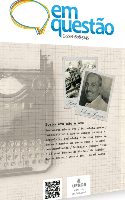
Em Questao
Exploring Innovative Trends in Library and Communication StudiesEm Questao is an esteemed open-access journal dedicated to the fields of library science and communication studies, published by the Universidade Federal do Rio Grande do Sul, specifically through its esteemed Faculdade de Biblioteconomia e Comunicação. Since its inception in 2003, this journal has provided a platform for researchers, professionals, and students to disseminate influential scholarly work that fosters dialogue and innovation within these critical academic domains. Em Questao strives to enhance the visibility of emerging trends and methodologies in library science and communication, making it an indispensable resource for those looking to navigate the complexities of information dissemination in today's digital landscape. With a commitment to open access, it ensures that knowledge is readily available to a global audience, contributing to the advancement of these vital fields. Researchers interested in exploring insightful analyses and fostering collaborative research will find Em Questao a valuable addition to their academic resources.
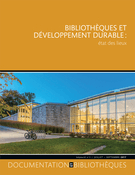
Documentation et Bibliotheques
Empowering researchers with cutting-edge resources.Documentation et Bibliothèques is a pivotal academic journal published by the Association pour l'Avancement des Sciences et Techniques de la Documentation, based in Montreal, Canada. Focusing on the fields of library science and documentation, this journal serves as a crucial platform for disseminating research and practical insights that drive innovation in information management and library services. Although it does not follow an open access model, it boasts a dedicated readership among researchers, professionals, and students who seek high-quality content in the realm of information science. With its commitment to advancing theoretical and empirical studies, Documentation et Bibliothèques remains an essential resource for navigating the evolving landscape of documentation and library services. For those interested in exploring how strategic documentation practices can enhance knowledge dissemination, this journal provides a wealth of valuable resources and scholarly articles.

Perspectivas em Ciencia da Informacao
Navigating emerging trends in communication and museology.Perspectivas em Ciencia da Informacao is a premier academic journal published by Universidade Federal de Minas Gerais, specifically from the Escola de Biblioteconomia. Since its inception in 2006, this Open Access journal has become a vibrant platform for disseminating research in the fields of Library and Information Sciences, Information Systems, Communication, and Museology. With a reputation bolstered by its classification in multiple quartiles—ranging from Q2 to Q4 in 2023—this journal stands out in the Brazilian academic landscape, providing valuable insights and supporting knowledge development for researchers, professionals, and students alike. Its impact is further underscored by its inclusion in Scopus, where it ranks within the lower percentiles of its categories, highlighting its potential for growth and increasing relevance in the scholarly community. The journal aims to explore emerging trends and significant issues in information science, facilitating an essential dialogue among scholars and practitioners to propel the field forward.
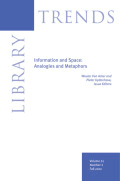
LIBRARY TRENDS
Empowering Researchers with Cutting-Edge InsightsLIBRARY TRENDS is a leading academic journal published by Johns Hopkins University Press, dedicated to the field of Library and Information Sciences. With an established history spanning from 1980 to 2023, this peer-reviewed journal provides a platform for insightful research, innovative practices, and critical analysis addressing contemporary issues in library science. While it holds a respectable Q3 quartile ranking within its category, it ranks #145 out of 280 in Scopus, indicating its significance in the academic community. With an impact factor that reflects the growing importance of the field, LIBRARY TRENDS invites contributions that encompass a wide range of topics, including digital libraries, information technology, and user studies. Although it is not an open-access journal, the content it provides is invaluable for researchers, professionals, and students seeking to enhance their understanding and improve their practices in the rapidly evolving landscape of library and information science. Discover more by exploring the latest issues and join the vibrant discourse shaping our information ecosystems.