
World Mycotoxin Journal
metrics 2024
Pioneering insights into mycotoxins for public health and safety.
Introduction
The World Mycotoxin Journal, published by Wageningen Academic Publishers, stands at the forefront of research in the field of mycotoxins, drawing particular attention to their implications in food science, public health, and environmental safety. With an ISSN of 1875-0710 and an E-ISSN of 1875-0796, this journal has continuously contributed to advancing knowledge since its inception and will remain a vital source of information through 2024. Ranked in Q2 within Food Science and achieving notable positions in Public Health and Toxicology, it offers an impactful forum for scholars and professionals worldwide. The journal’s Scopus rankings reflect its importance, with Public Health receiving a 68th percentile ranking, further underscoring the relevance of mycotoxin research in mitigating health risks. Researchers and students alike will benefit from its rigorous peer-reviewed articles, providing access to cutting-edge studies and overviews that address the complexities of mycotoxins and their far-reaching effects.
Metrics 2024
 0.391.702.3047
Metrics History
Rank 2024
Scopus
IF (Web Of Science)
JCI (Web Of Science)
Quartile History
Similar Journals
JOURNAL OF FOOD COMPOSITION AND ANALYSIS
Elevating Standards in Food Science ResearchJOURNAL OF FOOD COMPOSITION AND ANALYSIS, published by Academic Press Inc. Elsevier Science, is a leading peer-reviewed journal in the field of Food Science, recognized for its substantial impact on advancing research and knowledge within the discipline. With a commendable Q1 quartile ranking in the 2023 category of Food Science and a Scopus rank of 86/389, this journal holds a prestigious position, emphasizing its significance in crop and food quality research. The journal's scope encompasses a wide range of studies related to food composition, nutrition, and analytical methodologies, aiming to foster innovation and knowledge dissemination in food science. Although it operates under a subscription model, it remains an essential resource for researchers, professionals, and students seeking credible and cutting-edge findings. Established in 1987, the JOURNAL OF FOOD COMPOSITION AND ANALYSIS continues to be at the forefront of food science, contributing to the understanding of food quality and nutrition standards globally.
Pesticide Biochemistry and Physiology
Bridging agricultural practices with cutting-edge biochemistry insights.Pesticide Biochemistry and Physiology, published by Academic Press Inc Elsevier Science, is a prominent peer-reviewed journal dedicated to advancing knowledge in the fields of agronomy, crop science, and the toxicological effects of pesticides. With an established history since 1971, this journal aims to provide a platform for researchers and professionals to share groundbreaking studies that bridge the gap between agricultural practices and environmental health. Holding a remarkable Q1 ranking in both Agronomy and Crop Science as well as Health, Toxicology, and Mutagenesis, it reflects the journal's commitment to high-quality research. The journal is essential reading for anyone involved in the sustainability of agricultural ecosystems, offering insights into the biochemical interactions of pesticides and their physiological impacts on various crops and non-target organisms. As the global demand for sustainable agricultural practices escalates, Pesticide Biochemistry and Physiology remains at the forefront, promoting innovative research to ensure both food security and environmental safety. Converged through an extensive range of studies, this journal is a valuable resource for researchers, professionals, and students aiming to make significant contributions to the evolving landscape of pesticide biochemistry.
JOURNAL OF ANALYTICAL CHEMISTRY
Unveiling Breakthroughs in Instrumentation and ApplicationsJOURNAL OF ANALYTICAL CHEMISTRY, published by PLEIADES PUBLISHING INC, stands as a pivotal resource in the field of analytical chemistry, offering an innovative platform for researchers, professionals, and students to advance their knowledge and contribute to the discourse within the discipline. With an ISSN of 1061-9348 and an E-ISSN of 1608-3199, this journal features a focused exploration of analytical methodologies, instrumentation developments, and applications across various domains, contributing to practical and theoretical advancements in the field. Currently ranked in the Q3 category in Analytical Chemistry with a Scopus rank of #111 out of 156, it provides critical insights and innovation strategies for professionals aiming to enhance their analytical capabilities. Access to the journal is through standard subscription models, and it covers an extensive range of topics pertinent to the discipline from 1996 to 2024. Engage with the JOURNAL OF ANALYTICAL CHEMISTRY to be part of a vibrant research community dedicated to push the boundaries of analytical practices.
BULLETIN OF ENVIRONMENTAL CONTAMINATION AND TOXICOLOGY
Illuminating the path to safer, cleaner environments.BULLETIN OF ENVIRONMENTAL CONTAMINATION AND TOXICOLOGY, published by SPRINGER, is a pivotal journal in the fields of Environmental Science, Toxicology, and Public Health. With a strong history of dissemination since its inception in 1966, the journal predominantly focuses on the latest advances in understanding environmental contaminants and their toxicological effects on health and ecosystems. It currently holds a respectable Q2 ranking across multiple categories including Health, Toxicology and Mutagenesis, Medicine (miscellaneous), and Pollution, as per the 2023 metrics. While the journal is not Open Access, it provides an invaluable platform for researchers, professionals, and students seeking to contribute to and stay informed on critical issues regarding environmental hazards and their implications. With an engaged community of scholars and practitioners, this journal continues to be an essential resource for addressing the pressing challenges of environmental contamination and its health impacts, guiding future research and policy decisions.
FOOD AND CHEMICAL TOXICOLOGY
Leading the way in food and chemical safety research.FOOD AND CHEMICAL TOXICOLOGY, published by Pergamon-Elsevier Science Ltd, is a prestigious journal with a significant impact in the fields of food science, medicine, and toxicology, reflecting its Q1 and Q2 quartile rankings in various categories as of 2023. Established in 1982, this journal continues to serve as an essential platform for disseminating high-quality research focused on the toxicological assessment of foods and chemicals, aiming to advance knowledge that affects public health and safety. With a pivotal role in integrating diverse disciplines, including pharmacology and agricultural sciences, the journal ranks impressively within the top percentiles—specifically 95th in Toxicology and 92nd in Food Science on the Scopus metrics. Though it operates on a traditional subscription model, the journal is committed to providing valuable insights and findings to researchers, professionals, and students across the globe, making it a vital resource in the ongoing discourse around food safety and environmental health. Its comprehensive scope underscores its importance in shaping evidence-based policies and practices.
Journal of Food Measurement and Characterization
Pioneering Research in Food Quality and SafetyJournal of Food Measurement and Characterization, published by SPRINGER, is a pivotal resource for researchers and professionals in the fields of Chemical Engineering, Food Science, and Industrial and Manufacturing Engineering. With an ISSN of 2193-4126 and an E-ISSN of 2193-4134, this esteemed journal has carved its niche since its inception in 2012, continuing to contribute valuable insights until 2024. Ranking in the Q2 category across multiple disciplines, including Safety, Risk, Reliability, and Quality, it reflects a strong commitment to advancing knowledge and innovation within these critical areas. Although it operates under a subscription model, the journal provides an array of access options for institutions and researchers keen to explore novel methodologies and analyses in food measurement and characterization. The journal’s rigorous peer-review process ensures the dissemination of high-quality research, making it an essential platform for advancing the science of food and related industries.
Current Opinion in Food Science
Transforming Food Science Through Critical DialogueCurrent Opinion in Food Science is a premier peer-reviewed journal published by ELSEVIER SCI LTD that focuses on the latest advancements and research in the domain of food science and technology. With its ISSN 2214-7993 and E-ISSN 2214-8000, this journal serves as a critical platform for researchers and professionals to share insights and opinions on emerging trends, innovations, and challenges faced in food science. The journal enjoys an impressive impact factor and ranks in the first quartile (Q1) in both Applied Microbiology and Biotechnology and Food Science, symbolizing its influence and reputation in the field. It is strategically located in the Netherlands and conducts its academic dialogue with a broad scope that includes essential topics in food safety, nutrition, and sustainable practices. Operating from 2015 to 2024, the journal has established itself as a critical resource for the global academic community, boasting excellent Scopus rankings—#9 out of 389 in Food Science and #6 out of 127 in Applied Microbiology and Biotechnology—indicating its high relevance and impact. Readers can look forward to insightful articles and comprehensive reviews that bridge the gap between fundamental research and practical application in the ever-evolving food science landscape.
Bulletin of University of Agricultural Sciences and Veterinary Medicine Cluj-Napoca-Food Science and Technology
Exploring Innovations in Food Safety and QualityBulletin of University of Agricultural Sciences and Veterinary Medicine Cluj-Napoca - Food Science and Technology is a prominent peer-reviewed journal dedicated to advancing the field of food science and technology. Published by the University of Agricultural Sciences and Veterinary Medicine Cluj-Napoca, this open-access journal has been serving the academic community since 2013, promoting the dissemination of high-quality research that addresses pressing issues in food safety, quality, and innovation. With its ISSN 2344-2344 and E-ISSN 2344-5300, the journal aims to bridge the gap between academia and industry by providing a platform for scholars and practitioners to share their findings, insights, and methodologies. Situated in the heart of Romania, the journal reflects the country's rich agricultural heritage and its commitment to enhancing global food systems. By maintaining a rigorous editorial standard, the Bulletin ensures that it remains a vital resource for researchers, industry professionals, and students who are keen to explore the latest developments in food science.
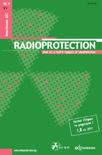
RADIOPROTECTION
Advancing safety in the realm of radiation.RADIOPROTECTION, published by EDP SCIENCES S A, stands as a pivotal journal in the multidisciplinary fields of Nuclear Energy, Public Health, and Environmental Safety. With an ISSN of 0033-8451 and an E-ISSN of 1769-700X, this journal delves into the crucial aspects of radiation protection and its interactions with health and environment, providing a platform for researchers and professionals to disseminate their findings and insights. Despite being classified in the Q4 quartile for Health, Toxicology and Mutagenesis in 2023, its Q3 status in prestigious categories such as Nuclear Energy and Engineering, and Public Health, underscores its relevance in contemporary academic discourse. The journal continues to expand its cachet with converged years of publication from 1977 to 1981 and 1988 to 2024, ensuring a rich history of scholarly contributions. Access options for interested readers include traditional subscriptions, allowing for comprehensive engagement with a broad range of topics surrounding safety, sustainability, and risk management. Whether you are a researcher, professional, or student, RADIOPROTECTION serves as an essential resource for expanding understanding and fostering innovation within its field.
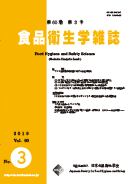
Food Hygiene and Safety Science
Exploring the Intersection of Food and HealthFood Hygiene and Safety Science is a pivotal academic journal published in Japan by the esteemed FOOD HYGIENE & SAFETY. With its ISSN 0015-6426, this journal operates within the broad domains of food science, public health, and medicine, strategically addressing the critical issues surrounding food hygiene and safety. With a notable history spanning from 1960 to 2024, it has become an essential resource in these fields, currently holding a Q3 category ranking in Food Science as well as in Medicine (Miscellaneous) and Public Health, Environmental and Occupational Health, according to the 2023 evaluations. Although access options may vary, the journal is committed to disseminating vital research findings to enhance food safety practices on a global scale. With its focus on advancing knowledge and sharing innovative practices, Food Hygiene and Safety Science serves as a vital platform for researchers, professionals, and students dedicated to improving food safety standards and public health outcomes.