
Frontiers in Sustainable Food Systems
metrics 2024
Advancing sustainable practices for a resilient future.
Introduction
Frontiers in Sustainable Food Systems, published by FRONTIERS MEDIA SA, stands at the forefront of interdisciplinary research in sustainable food practices, agriculture, and global ecological impacts. This open-access journal, launched in 2018, aims to disseminate innovative findings that reshape our understanding of food systems' sustainability and resilience. With a significant impact factor and ranking in the top quartile across various categories such as Agronomy and Crop Science, Ecology, and Food Science, it is positioned as a leading platform for scholars and practitioners alike. The journal’s commitment to addressing the pressing challenges of food security and environmental sustainability ensures its relevance in today’s rapidly evolving landscape. It is a vital resource for researchers, professionals, and students dedicated to advancing sustainable practices in food systems globally.
Metrics 2024
 -3.704.60-
Metrics History
Rank 2024
IF (Web Of Science)
JCI (Web Of Science)
Quartile History
Similar Journals
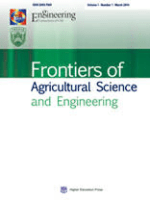
Frontiers of Agricultural Science and Engineering
Unlocking biotechnological breakthroughs for global challenges.Frontiers of Agricultural Science and Engineering, published by HIGHER EDUCATION PRESS, is a distinguished open-access journal established in 2014, dedicated to advancing research across the fields of agricultural and biological sciences, biotechnology, and veterinary studies. With an impressive Q1 ranking in both Agricultural and Biological Sciences and Veterinary categories for 2023, this journal positions itself prominently within the academic landscape, reflecting the importance and quality of the research it disseminates. The journal serves as a vital platform for researchers, professionals, and students worldwide, featuring a broad array of studies that enhance our understanding of agricultural technologies, biotechnological innovations, and veterinary sciences. With a focus on rigor and accessibility, Frontiers of Agricultural Science and Engineering promotes the global exchange of knowledge, encouraging the collaboration that is essential for tackling contemporary challenges in these critical fields. Available online with a comprehensive range of article options, it continues to contribute to the scientific community's advancements in agricultural and biological disciplines.
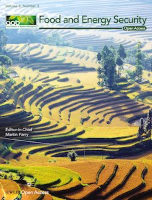
Food and Energy Security
Connecting Ideas to Foster Food and Energy SustainabilityFood and Energy Security, an esteemed journal published by WILEY, is dedicated to advancing the fields of food science, agriculture, and renewable energy. Since its inception in 2012, this open-access journal has provided a platform for groundbreaking research and innovative practices that address global challenges related to food production and energy sustainability. With an impressive impact factor reflected in its Q1 quartile rankings across notable categories such as Agronomy and Crop Science and Food Science, this journal is instrumental for researchers and practitioners alike who are focused on enhancing food security and promoting sustainable energy solutions. The journal's scope encompasses multidisciplinary approaches and encourages submissions that explore the intersection of food systems and energy dynamics, ensuring relevance in the evolving landscape of environmental science and policy. By offering open access to its publications, Food and Energy Security commits to making vital research accessible, fostering informed dialogue and collaboration among scholars, policymakers, and the agrifood industry worldwide.
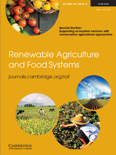
RENEWABLE AGRICULTURE AND FOOD SYSTEMS
Transforming food systems for a sustainable future.RENEWABLE AGRICULTURE AND FOOD SYSTEMS, published by Cambridge University Press, is a leading open-access journal dedicated to the advancement of sustainability in agricultural practices and food systems. With an ISSN of 1742-1705 and an E-ISSN of 1742-1713, this journal spans the interdisciplinary fields of agronomy and food science, achieving a commendable Q2 ranking in both categories for 2023. As it continues to converge through the years from 2004 to 2024, the journal offers a platform for researchers, professionals, and students to disseminate transformative research that addresses the challenges of food security, resource management, and environmental impact. The journal’s significant impact is underscored by its Scopus rankings, situating it in the 77th percentile among agronomy and crop science publications, and the 67th percentile in food science. Since becoming fully open access in 2023, RENEWABLE AGRICULTURE AND FOOD SYSTEMS promotes wider accessibility to vital research findings, fostering collaboration and innovation in the pursuit of sustainable agricultural practices and food systems worldwide.

Journal of Agriculture and Environment for International Development
Elevating Research for a Sustainable FutureJournal of Agriculture and Environment for International Development, published by AGENZIA ITALIANA COOPERAZIONE SVILUPPO-ITALIAN DEV COOP AGENCY, is a vital platform advancing research at the intersection of agricultural practices, environmental sustainability, and international development. Since its inception, this Open Access journal has aimed to disseminate knowledge and innovative strategies that address global challenges in the agri-environment sector. With ISSN 2240-2802, this esteemed publication is situated in Italy and has maintained an unwavering commitment to accessibility since 2011, encouraging widespread engagement amongst researchers and practitioners. Although currently ranked in the Q4 quartile across various categories including Agricultural and Biological Sciences and Environmental Science, the journal is dedicated to covering crucial topics that contribute to sustainable development, thus serving as an invaluable resource for scholars and policymakers alike. The convergence years from 2016 to 2024 reflect the journal's adaptive approach to evolving global trends, ensuring its relevance in a rapidly changing academic landscape.

Revista Investigaciones Altoandinas-Journal of High Andean Research
Connecting researchers to the pulse of the high Andes.Revista Investigaciones Altoandinas-Journal of High Andean Research is a premier open access journal that has been dedicated to advancing the knowledge of high Andean ecosystems and communities since its inception in 2013. Published by UNIV NACL ALTIPLANO and accessible globally, this journal serves as a significant platform for disseminating research findings related to the social, environmental, and economic dynamics of the Andean region. With its ISSN of 2306-8582 and E-ISSN of 2313-2957, the journal aims to foster interdisciplinary dialogue among researchers, professionals, and students committed to studying this unique geographical area. Although specific metrics such as HIndex and Scopus rankings are currently unavailable, the journal's commitment to rigorous peer review ensures the publication of high-quality research. By bridging theoretical insights with practical applications, Revista Investigaciones Altoandinas plays a crucial role in enriching perspectives on the challenges and opportunities faced by the Andean community.
Agroecology and Sustainable Food Systems
Pioneering the future of food through ecological principles.Agroecology and Sustainable Food Systems, published by Taylor & Francis Inc, is a premier academic journal dedicated to advancing the science of agroecology and its applications in sustainable food systems. With an impact factor that reflects its significant influence in the field, this journal serves as a vital resource for researchers, industry professionals, and students engaged in sustainability, agriculture, and environmental studies. As of 2023, it proudly holds a Q1 ranking in Agronomy and Crop Science, as well as Q2 rankings in Development and Renewable Energy, Sustainability, and the Environment categories. Covering a broad spectrum of topics, it not only shares peer-reviewed research but also encourages discourse on innovative practices and policies that enhance food security and ecological balance. Available for access through various options including Open Access, the journal's commitment to knowledge dissemination is further underscored by its substantial rankings on Scopus, with notable percentiles across multiple disciplines. By focusing on agroecological principles and their socio-economic implications, Agroecology and Sustainable Food Systems is essential for those looking to stimulate meaningful change in agricultural practices and sustainability initiatives worldwide.

AIMS Agriculture and Food
Exploring the nexus of food science and agricultural research.AIMS Agriculture and Food is a leading open access journal published by the American Institute of Mathematical Sciences (AIMS), focused on the critical intersections of agricultural and food sciences. Since its inception in 2016, this journal has provided a vital platform for disseminating innovative research and advancements in the fields of agricultural and biological sciences and food science. With impressive Scopus rankings, including a Q2 categorization in 2023 for both Agricultural and Biological Sciences (miscellaneous) and Food Science, AIMS Agriculture and Food is recognized for its significant contributions to the academic community. The journal aims to foster interdisciplinary dialogue by welcoming submissions that tackle contemporary challenges, promote sustainable practices, and enhance food security. Researchers, professionals, and students will find this journal an invaluable resource, offering open access to high-quality, peer-reviewed articles that are essential for informed decision-making in agriculture and food industries.
Current Opinion in Environmental Sustainability
Exploring Innovative Pathways to a Sustainable FutureCurrent Opinion in Environmental Sustainability, published by Elsevier Science Ltd, is a leading academic journal that specializes in exploring innovative strategies and emerging trends in environmental sustainability. With an impressive impact factor that reflects its esteemed position within the field, this journal is classified as Q1 in both the Environmental Science and Social Sciences categories for 2023, indicating its high-quality and influential contributions. The journal has been at the forefront of sustainability discussions since its inception in 2009 and continues to provide a platform for multidisciplinary research and critical analysis. As a key resource for researchers, professionals, and students alike, Current Opinion in Environmental Sustainability ensures open access to valuable insights while fostering collaboration and knowledge sharing across various domains. This journal not only serves to inform and inspire but also aims to address the pressing challenges of sustainability in our evolving world, making it an essential read for anyone engaged in environmental studies.
CAHIERS AGRICULTURES
Elevating agricultural science for global impact.CAHIERS AGRICULTURES is a distinguished open-access journal published by EDP Sciences S A, focusing on the vital fields of Agronomy and Crop Science, Animal Science and Zoology, as well as Management, Monitoring, Policy, and Law. With an ISSN of 1166-7699 and an E-ISSN of 1777-5949, this journal has notably maintained a strong presence in the academic landscape since its establishment, covering a wide range of topics pertinent to agricultural sciences. Based in France, CAHIERS AGRICULTURES fosters collaboration and knowledge sharing among researchers and practitioners through its open-access model, which has been in effect since 2014. The journal is recognized for its rigorous peer-review process, reflected in its competitive Scopus rankings, which place it in the Q2 quartile for both Agronomy and Crop Science, and Animal Science and Zoology. Researchers and scholars are encouraged to contribute cutting-edge findings that may influence agricultural practices and policy development. With a vision to advance sustainable agricultural practices, CAHIERS AGRICULTURES stands as a critical resource for advancing scientific knowledge and informing stakeholders in the agricultural sector.
Agricultural and Food Economics
Empowering scholars with cutting-edge findings in food economics.Agricultural and Food Economics is a leading journal published by SPRINGERNATURE, dedicated to the advancement of research in the interconnected fields of agriculture, food systems, and economic analysis. Established in 2013 and operating under an Open Access model, this journal serves as a vital platform for scholars and practitioners to disseminate innovative findings and insights that influence policy and practice. With a notable impact reflected in its 2023 quartile rankings—Q1 in Agricultural and Biological Sciences (miscellaneous), Q2 in Economics and Econometrics, and Q1 in Food Science—this journal is recognized for its rigorous scholarly output. It ranks among the top resources in its domain, with Scopus ranks placing it in the 88th percentile for Agricultural and Biological Sciences and the 79th percentile for Economics. The journal covers a broad spectrum of topics, including sustainable agricultural practices, the dynamics of food markets, and the economic implications of food policies. Researchers, professionals, and students alike will find valuable insights and comprehensive analyses that contribute to the ever-evolving discourse on food and agriculture.