
Malaysian Journal of Library & Information Science
Scope & Guideline
Championing Research and Practices in Library Science
Introduction
Aims and Scopes
- Library Services and User Engagement:
The journal emphasizes research on improving library services and enhancing user engagement through various strategies, including information literacy programs and community outreach initiatives. - Information Technology and Innovation:
A core focus of the journal is exploring the impact of technology on libraries and information services, including the implementation of digital tools, data analytics, and innovative service delivery models. - Research Collaboration and Partnerships:
The journal highlights the role of academic librarians as research partners, emphasizing qualitative studies that explore collaboration between librarians and researchers to enhance academic output. - Community Needs and Inclusivity:
Research addressing the information needs of diverse and vulnerable communities is a significant aim, focusing on how libraries can better serve populations such as those with disabilities. - Data Governance and Management:
The journal also covers topics related to research data governance, stewardship practices, and the management of institutional repositories, reflecting the growing importance of data in academic research.
Trending and Emerging
- Social Media and Community Engagement:
Research exploring the role of social media in fostering community engagement and information sharing is on the rise, highlighting the importance of digital platforms in modern library services. - Machine Learning and Predictive Analytics:
The application of machine learning techniques in library settings, such as predictive modeling of social capital among library workers, is emerging as a significant theme, indicating a trend towards data-driven decision-making. - Open Science and Data Sharing:
There is a growing interest in Open Science practices, especially regarding the governance of research data and the implementation of open data portals, reflecting a shift towards transparency and accessibility in research. - Health Information Seeking Behavior:
Studies focusing on health information-seeking behavior have gained traction, particularly in the context of public health crises like the COVID-19 pandemic, emphasizing the role of libraries in supporting health literacy. - Qualitative Research Methodologies:
An increase in qualitative research approaches, particularly studies examining the experiences and perspectives of diverse user groups, is evident, showcasing a commitment to understanding complex social dynamics in information use.
Declining or Waning
- Traditional Library Models:
There appears to be a waning interest in traditional library models and services, as evidenced by a shift towards studies focusing on digital transformation and new service paradigms. - Print Media and Physical Collections:
Research focused on print media and the management of physical collections is becoming less frequent, likely due to the increasing digitization of resources and the rise of digital libraries. - Simple Bibliometric Analyses:
While bibliometric studies remain relevant, there is a noticeable decline in simplistic bibliometric analyses without deeper insights or implications, as the field moves towards more complex and nuanced evaluations. - Basic Information Literacy Programs:
There has been a decrease in studies solely addressing basic information literacy programs, suggesting a move towards more integrated approaches that consider broader educational contexts and outcomes. - Conventional Research Metrics:
The focus on conventional research metrics and traditional evaluation methods is diminishing, as the academic community increasingly recognizes the limitations of such metrics in capturing the impact of research.
Similar Journals

Investigacion Bibliotecologica
Connecting Scholars and Ideas in Library ScienceInvestigacion Bibliotecologica, published by the National Autonomous University of Mexico, stands as a vital resource in the field of library and information sciences. With a legacy of open access publishing since 1986, this journal endeavors to disseminate high-quality research which aims to advance knowledge and practices within the library and information sector. With an ISSN of 0187-358X and E-ISSN 2448-8321, it has secured its position in the competitive landscape of scholarly communication, earning a commendable Q3 ranking in its category as of 2023. The journal's influence is reflected in its Scopus ranking within the library and information sciences field, where it ranks #151 among 280 journals. Located in Mexico City, it provides scholars, professionals, and students with open access to its content, facilitating knowledge sharing and academic collaboration. As it continues its publication journey from 2008 to 2024, Investigacion Bibliotecologica remains an essential platform for innovative inquiries, practical insights, and the latest developments in library science.
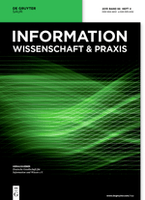
INFORMATION-WISSENSCHAFT UND PRAXIS
Cultivating Knowledge at the Intersection of Theory and Application.INFORMATION-WISSENSCHAFT UND PRAXIS is a prominent academic journal dedicated to advancing the fields of Information Systems and Library and Information Sciences. Published by Walter de Gruyter GmbH in Germany, this journal serves as a crucial platform for researchers, professionals, and students to publish and access cutting-edge findings and discussions from the intersection of information science and practical applications. With an ISSN of 1434-4653 and E-ISSN of 1619-4292, it has maintained a steady course since its inception in 1997 and will continue to thrive through 2024. While currently categorized in the Q4 quartile of pertinent fields, it provides value by soliciting diverse perspectives and innovative research, albeit ranking within the lower percentiles in prominent databases such as Scopus. The journal's commitment to fostering discourse in the critical issues of information management and its impact on society is essential in this rapidly evolving digital era. Though not an open-access journal, the insights gleaned from its pages are vital for those invested in the future of information science. For interested contributors and readers, INFORMATION-WISSENSCHAFT UND PRAXIS stands as a beacon for ongoing research and practical enlightenment in its domain.
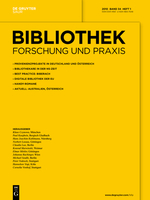
Bibliothek Forschung und Praxis
Shaping the Future of Library PracticesBibliothek Forschung und Praxis is a distinguished journal in the field of library and information science, published by WALTER DE GRUYTER GMBH. With its ISSN 0341-4183 and E-ISSN 1865-7648, this journal provides a vital platform for researchers, professionals, and students to explore the latest developments, innovative practices, and theoretical advancements in library research. Situated in the academic hub of Berlin, Germany, the journal encourages submissions that address a wide array of topics pertinent to libraries, archives, and information services, aiming to foster dialogue and collaboration within the global academic community. Although it currently does not offer Open Access options, the journal ensures rigorous peer-review processes uphold the integrity and scholarly quality of published works. With a commitment to enhancing the field of library science, Bibliothek Forschung und Praxis plays a crucial role in shaping best practices and promoting deeper understanding among scholars and practitioners alike.

Biblios-Revista de Bibliotecologia y Ciencias de la Informacion
Navigating Contemporary Challenges in Bibliographic StudiesBiblios-Revista de Bibliotecologia y Ciencias de la Informacion, published by the University of Pittsburgh's Library System, stands as a pivotal contributor to the field of Library and Information Sciences. Holding an ISSN of 1562-4730, this peer-reviewed journal has been offering Open Access content since 2011, reinforcing its commitment to the democratization of knowledge. Despite its current classification in the Q4 quartile with a Scopus rank of 257 out of 280 in its category, the journal plays a crucial role in disseminating research that explores contemporary challenges and innovations within the library science landscape. It is particularly relevant for researchers, practitioners, and students invested in the future of information management and bibliographic studies. With coverage from 2014 to 2024, Biblios provides a platform for scholars to engage with critical discourse, share findings, and enhance the global library and information community.

Qualitative & Quantitative Methods in Libraries
Exploring Innovative Insights in Library MethodologiesQualitative & Quantitative Methods in Libraries is an essential journal in the field of library and information science, published by the esteemed International Society for Art, Science and Technology (ISAST). With its ISSN 2241-1925, the journal focuses on the application of both qualitative and quantitative research methodologies in the realm of library studies, offering insights that are crucial for advancing practices and policies within the sector. Although it currently does not offer open access, its rigorously peer-reviewed articles ensure high-quality contributions that cater to researchers, practitioners, and students alike. This journal is committed to fostering innovative research that bridges theory with practice, making it a vital resource for anyone looking to enhance their understanding and application of research methods in library science. With its base in Athina, Greece, it serves as an international platform for scholarly exchange, contributing to the global discourse in the field.
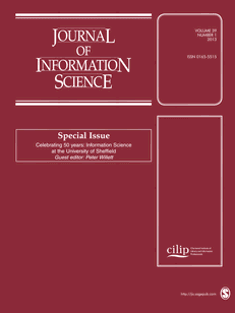
JOURNAL OF INFORMATION SCIENCE
Pioneering research in Library and Information Sciences since 1979.JOURNAL OF INFORMATION SCIENCE (ISSN: 0165-5515; E-ISSN: 1741-6485), published by SAGE PUBLICATIONS LTD, stands as a leading academic journal in the realms of Information Systems and Library and Information Sciences. Established in 1979 and continuing through 2024, this journal has become a cornerstone for researchers, professionals, and students seeking to enhance their understanding of the rapidly evolving landscape of information management. With a commendable Q1 ranking in Library and Information Sciences and a Q2 ranking in Information Systems as of 2023, it demonstrates significant influence, evidenced by its 89th percentile ranking in Scopus for Social Sciences. Although it currently does not offer open access, the journal is committed to delivering high-quality, peer-reviewed research that addresses both theoretical and practical challenges in the field. Researchers and practitioners alike will find invaluable insights that bolster their work and contribute to the broader academic dialogue surrounding information science.

Bibliotecas-Anales de Investigacion
Navigating the Evolving Landscape of LibrariesBibliotecas-Anales de Investigacion is a prominent scholarly journal dedicated to the field of Library and Information Sciences, published by BIBLIOTECA NACL CUBA JOSE MARTI, with its esteemed presence based in Havana, Cuba. This journal (ISSN: 0006-176X, E-ISSN: 1683-8947) plays a crucial role in disseminating research and insights relevant to the evolving landscape of library operations, information management, and user services. Acknowledged for its rigorous peer-review process, it is indexed in Scopus, currently classified in the 2023 Q4 quartile, ranking 199 out of 280 in its category, marking a significant contribution to the academic community despite its modest percentile of 29th. The journal welcomes original research articles, case studies, and reviews that explore contemporary issues and developments in library science, creating an inclusive platform for both seasoned scholars and emerging voices. Interested readers can anticipate a robust exploration of topics from information retrieval to digital libraries, aligning with the journal's objective to enhance knowledge and practice within the library and information sector. As the journal converges its themes from 2019 to 2024, it remains a vital resource for researchers, professionals, and students aiming to stay informed on the latest trends and innovations in the field.

Publications is a leading international journal published by MDPI, based in Switzerland, that has been at the forefront of scholarly communication since its inception in 2013. As an Open Access journal, it aims to disseminate high-quality research across multiple disciplines, notably in Business and International Management, Communication, Computer Science Applications, Library and Information Sciences, and Media Technology. Its impressive standing is reflected in its 2023 Scopus ranks, with top quartile positions across various fields, including a Q1 ranking in Library and Information Sciences and Media Technology. With a commitment to promoting innovation and collaboration, Publications serves as an essential platform for researchers, professionals, and students alike, allowing them to engage with the latest findings and discourse. The journal's strategic focus on accessibility ensures that knowledge is available to a global audience, fostering an environment conducive to academic and practical advancements. The E-ISSN 2304-6775 identifies its distinct digital presence, making it an invaluable resource for anyone passionate about cutting-edge research.
Library Management
Unlocking Knowledge for the Evolving Library LandscapeLibrary Management, published by Emerald Group Publishing Ltd, is an esteemed academic journal dedicated to the field of Library and Information Sciences. Since its inception in 1979, the journal has continued to be a vital resource for researchers, scholars, and practitioners interested in the evolving practices of library management, information organization, and the role of libraries in the digital age. With an impressive Q1 ranking in the Library and Information Sciences category and a strong performance in Scopus metrics (ranked #85 out of 280), Library Management offers innovative insights and evidence-based research that aim to enhance library services and management practices globally. As an essential contributor to the academic and professional landscape, the journal's objectives include promoting scholarly discourse, fostering best practices, and providing a platform for cutting-edge research that addresses current challenges and opportunities in library management. Researchers and professionals in the field can access a wealth of knowledge without open access barriers, ensuring that the latest findings are available to those dedicated to advancing the discipline.

Annals of Library and Information Studies
Advancing Knowledge in Library and Information SciencesAnnals of Library and Information Studies is a prominent open-access journal, published by NATL INST SCIENCE COMMUNICATION-NISCAIR in India, dedicated to advancing research in the fields of library science and information studies. With an ISSN of 0972-5423 and an E-ISSN of 0975-2404, this journal ensures broad accessibility, having embraced open access since 2009, facilitating the dissemination of knowledge to a diverse global audience. The journal features a comprehensive range of scholarly articles that explore innovative practices, emerging technologies, and significant trends influencing library and information science, which are crucial for professionals, researchers, and students alike. Additionally, it holds a respectable ranking in Scopus, positioned at the 54th percentile in Library and Information Sciences and 22nd percentile in Computer Science Applications, underscoring its relevance and impact within these disciplines. The Converged Years of 2011 to 2024 illustrate a commitment to publishing contemporary research. As the realm of information continues to evolve rapidly, the Annals of Library and Information Studies serves as an essential platform for fostering dialogue and knowledge exchange, solidifying its role as a vital resource for the academic community.