
Sophia-Coleccion de Filosofia de la Educacion
Scope & Guideline
Cultivating Ideas at the Intersection of Philosophy and Education
Introduction
Aims and Scopes
- Philosophical Foundations of Education:
The journal emphasizes the exploration of philosophical ideas and theories that form the basis of educational practices, encouraging critical examination of pedagogical methods through philosophical inquiry. - Interdisciplinary Approaches:
It promotes interdisciplinary research that integrates philosophy with other fields such as psychology, sociology, and technology, fostering a comprehensive understanding of educational phenomena. - Ethics and Education:
A significant focus is placed on the ethical dimensions of education, examining how values, norms, and philosophical ethics shape educational practices and the formation of educators. - Cultural Contexts in Education:
The journal highlights the role of culture in education, investigating how cultural philosophies influence pedagogical approaches and the development of socio-emotional skills. - Critical Thinking and Pedagogy:
There is a strong emphasis on developing critical thinking skills within educational contexts, promoting practices that encourage learners to engage with philosophical concepts and challenges.
Trending and Emerging
- Postdigital Pedagogy:
There is an increasing focus on postdigital pedagogy, which reflects the integration of technology in education and the implications of digital culture on learning and teaching practices. - Emotional and Socio-Emotional Learning:
Emerging themes around the role of emotions in education and the development of socio-emotional skills are gaining prominence, highlighting the importance of emotional intelligence in educational settings. - Critical Pedagogies and Cultural Psychology:
A trend towards critical pedagogies informed by cultural psychology suggests a growing interest in how cultural contexts shape learning and teaching, promoting inclusivity and diversity in educational practices. - Ethics in Technology and AI:
The implications of ethics in the context of technology and artificial intelligence are increasingly explored, reflecting contemporary concerns about the ethical dimensions of education in a technology-driven society. - Interdisciplinary Dialogues:
There is a burgeoning interest in interdisciplinary dialogues that connect philosophy with fields such as cognitive science, sociology, and technology, indicating a trend towards holistic educational frameworks.
Declining or Waning
- Traditional Philosophical Theories:
There has been a noticeable decline in papers focusing solely on traditional philosophical theories without contemporary application, as the journal shifts towards more applied and interdisciplinary approaches. - Static Pedagogical Models:
Research centered around static or rigid pedagogical models is becoming less frequent, with a growing preference for dynamic, context-sensitive approaches that account for the complexities of modern education. - Historical Philosophical Contexts:
Papers solely focusing on historical philosophical contexts without linking them to current educational practices or challenges are less prevalent, indicating a shift towards more relevant applications of philosophy in education.
Similar Journals

JOURNAL OF DHARMA
Bridging Minds: Where Philosophy Meets SpiritualityWelcome to the JOURNAL OF DHARMA, a distinguished publication in the realms of Philosophy and Religious Studies, published by Dharmaram College, India. This journal has carved out a niche in academic scholarship, achieving notable rankings in Scopus—#374 in Religious Studies and #511 in Philosophy—demonstrating its relevance and contribution to the respective fields. With its scope encompassing a diverse range of topics from philosophical inquiry to religious discourse, the journal reflects a commitment to promoting critical dialogue and interdisciplinary research. Although it operates without an open-access model, the JOURNAL OF DHARMA invites contributions from researchers, professionals, and students keen on exploring the intricacies of human thought and spiritual practices. As it continues to evolve, the journal remains a key resource for those seeking to deepen their understanding of philosophical and religious inquiries from 2002 to 2024.
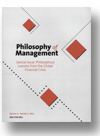
Philosophy of Management
Challenging Conventional Wisdom in Business ManagementPhilosophy of Management, published by Springer International Publishing AG, is an esteemed academic journal dedicated to advancing the discussion and exploration of philosophical perspectives in management practices and theories. Established in Switzerland, this journal has become a pivotal forum for scholars, practitioners, and students alike who are interested in the intersection of business practices and philosophical thought. With a comprehensive focus across multiple disciplines, including Business and International Management, History and Philosophy of Science, and Organizational Behavior, the journal enjoys a competitive reputation, evidenced by its quartile rankings in categories such as Q1 and Q2 for 2023. The journal encompasses years of valuable contributions from 2003 to 2024, aiming to stimulate critical thinking and foster innovative ideas within the field. Researchers seeking to publish their work in a prestigious outlet with an engaged readership will find the Philosophy of Management to be an essential platform, affirming its importance in the wider academic community.

INQUIRY-AN INTERDISCIPLINARY JOURNAL OF PHILOSOPHY
Fostering Critical Thought at the Intersection of DisciplinesINQUIRY - AN INTERDISCIPLINARY JOURNAL OF PHILOSOPHY, published by Routledge Journals, Taylor & Francis Ltd, stands as a pivotal platform for the exploration of philosophical discourse, particularly at the intersection of philosophy and health policy. With its ISSN 0020-174X and E-ISSN 1502-3923, this journal has been committed to open access since 2014, thereby fostering an inclusive environment for both dissemination and engagement in critical philosophical inquiry. Spanning its rich history from 1958 to 2024, INQUIRY is consistently recognized for its significant contributions, boasting a 2023 ranking of Q1 in Philosophy and Q2 in Health Policy, indicative of its scholarly impact and prestige. Currently, it ranks #69/806 in Arts and Humanities for Philosophy and #170/310 in Medicine for Health Policy, solidifying its role as a vital resource for researchers, professionals, and students committed to advancing knowledge across disciplines. The journal's address in Milton Park, Abingdon, UK, further embeds it within a robust academic community that champions interdisciplinary collaboration and innovation.

Convivium
Exploring Innovative Ideas in PhilosophyConvivium is a distinguished open-access journal published by the Universitat de Barcelona, Facultat Filologia, specializing in the field of philosophy. Since its inception, the journal has committed to fostering scholarly dialogue by providing a platform for innovative and critical research. Operating under an open-access model since 2007, Convivium ensures that its articles, which span a range of contemporary philosophical topics, are freely accessible to a global audience, thereby promoting the dissemination of knowledge. Despite facing challenges indicated by its current Scopus rank in the 2nd percentile of the Arts and Humanities, and its Q3 quartile in 2023, Convivium continues to thrive as an important resource for researchers, professionals, and students engaged in philosophical inquiry. With published volumes converging from 2009 to 2014, 2017 to 2018, and 2021 to 2023, the journal is poised to contribute significantly to the ongoing discussions and developments in philosophy.

Haser-Revista Internacional de Filosofia Aplicada
Exploring the Intersection of Philosophy and PracticeHaser-Revista Internacional de Filosofia Aplicada is a distinguished academic journal published by UNIV SEVILLA, EDITORIAL, based in Spain. With an ISSN of 2172-055X and an E-ISSN of 2386-4761, this journal specializes in the field of applied philosophy, a vital intersection of theoretical frameworks and practical implementation that addresses contemporary issues. Since its inception in 2019, Haser has aimed at fostering interdisciplinary dialogue and advancing scholarship within philosophical disciplines. Although currently categorized in the Q4 quartile in Philosophy and positioned at rank #401 out of 806 in Scopus, its contributions are increasingly recognized, appealing to researchers, professionals, and students seeking to explore philosophical applications in the modern context. The journal maintains a commitment to open access to enhance visibility and dissemination of research. The editorial office is located at SECRETARIADO PUBLICACIONES, C/ PORVENIR, NO 27, SEVILLE 41013, SPAIN. Join an engaging academic community dedicated to enriching philosophy's relevance in societal discourse through meaningful contributions.
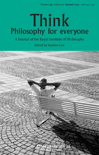
Think-Philosophy for Everyone
Inviting Diverse Voices to the Philosophical TableThink-Philosophy for Everyone, published by Cambridge University Press, is a dynamic platform that encourages interdisciplinary dialogue in the realm of philosophy, catering to both seasoned scholars and enthusiastic students alike. With an ISSN of 1477-1756 and an E-ISSN of 1755-1196, this journal encompasses a broad scope from 2019 to 2024, promoting accessible and innovative discussions on philosophical themes relevant to contemporary society. Positioned in the 38th percentile among its peers in the Arts and Humanities category, it ranks #496 out of 806 in Scopus, highlighting its significance within the academic community. Although currently not an Open Access journal, it remains a valuable resource for various academic inquiries. By fostering critical thinking and diverse perspectives, Think-Philosophy for Everyone stands as an essential contribution to the field, inviting researchers and practitioners to explore, challenge, and expand their philosophical horizons.

Paideusis-The Journal of the Canadian Philosophy of Education Society
Cultivating Ideas for Tomorrow's EducatorsPaideusis - The Journal of the Canadian Philosophy of Education Society serves as a vital platform for scholarly discussion and inquiry within the field of philosophy of education. Published by the Canadian Philosophy of Education Society (CPES) and embracing an Open Access model since 1987, this journal fosters an inclusive environment for researchers, educators, and students seeking to engage with contemporary educational theories and practices. With an emphasis on philosophical reflection and critical analysis, Paideusis invites contributions that challenge and extend our understanding of educational paradigms, making it a crucial resource for those committed to advancing discourse in education. The journal not only aims to promote intellectual engagement but also to cultivate a community where new ideas can flourish, ultimately shaping the future of educational thought and practice.
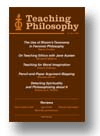
Teaching Philosophy
Cultivating Insightful Dialogues on Educational PhilosophyTeaching Philosophy is a renowned academic journal dedicated to the in-depth exploration and critical examination of philosophical dimensions in education. Published by the Philosophy Documentation Center, the journal has been a cornerstone in the field since its inception in 1977, providing a rich resource for educators, researchers, and students interested in the philosophical underpinnings of teaching and learning. With an ISSN of 0145-5788 and an E-ISSN of 2153-6619, it serves as a vital platform for disseminating research that bridges the gap between philosophy and educational practice. Although currently not an open-access journal, Teaching Philosophy maintains a significant impact within its field, reflected by its impressive quartile rankings—Q4 in Education and Q2 in Philosophy, as well as its Scopus rankings that position it within the top half percentile of both the Philosophy and Education categories. The journal aims to foster scholarly dialogue on diverse philosophical topics in pedagogy, ensuring that insights from philosophy continue to inform and enhance educational practices. Whether one is a seasoned philosopher or a budding educator, Teaching Philosophy presents an invaluable avenue for enriching understanding and engagement in the discipline.

Topicos-Revista de Filosofia
Connecting Minds Through Open Access Philosophical ScholarshipTopicos-Revista de Filosofia, published by UNIV PANAMERICANA, DEPT FILOSOFIA, stands as a significant academic platform within the field of philosophy, actively contributing to scholarly discourse since 2006 through its open access model. With an ISSN of 0188-6649 and an E-ISSN of 2007-8498, this journal is dedicated to fostering critical thought and philosophical inquiry in both regional and global contexts. Operating out of Mexico City, it provides a vital avenue for researchers, professionals, and students to engage with contemporary philosophical issues, reflected in its ranking of Q3 in the 2023 category for Philosophy and its position within the 33rd percentile among over 800 peer journals in the field according to Scopus. Topicos not only prioritizes accessibility to philosophical scholarship but also aims to propel academic discussions and elevate the standards of philosophical research. With coverage extending from 2013 to 2024, it invites contributions that bridge diverse philosophical traditions and innovative thought pathways, reinforcing its role as an influential resource for the philosophical community.

REVUE PHILOSOPHIQUE DE LA FRANCE ET DE L ETRANGER
Engaging Minds with Timeless Philosophical QuestionsREVUE PHILOSOPHIQUE DE LA FRANCE ET DE L'ETRANGER is a distinguished academic journal published by PRESSES UNIV FRANCE, focusing primarily on the field of philosophy. Established in 1949 and continuing its legacy into 2023, this journal serves as a vital platform for scholarly dialogue and exploration of philosophical ideas that transcend national boundaries. While it currently holds a Q4 ranking in the philosophy category according to the latest Scopus assessments, its contributions remain significant in fostering a comprehensive understanding of various philosophical discourses. Based in France, at 6 AVENUE REILLE, 75685 PARIS CEDEX 14, this journal provides an essential resource for researchers, professionals, and students alike, despite not being an open-access publication. Each issue encourages a deeper engagement with contemporary philosophical thought while contributing to the academic community's ongoing discussions on fundamental philosophical questions.