
Journal of Teaching English for Specific and Academic Purposes
Scope & Guideline
Enhancing Strategies for Effective English Instruction.
Introduction
Aims and Scopes
- Teaching Methodologies:
Explores innovative and effective teaching methodologies tailored for English for Specific Purposes (ESP) and English for Academic Purposes (EAP), including task-based learning, blended learning, and digital tools. - Curriculum Development:
Focuses on the design and implementation of curricula that meet the specific language needs of students in various fields such as business, medicine, law, and engineering. - Assessment and Evaluation:
Analyzes assessment strategies and tools for measuring language proficiency and academic skills in ESP and EAP contexts, ensuring alignment with professional standards. - Interdisciplinary Approaches:
Investigates the integration of language teaching with subject-specific content, fostering collaboration between language instructors and discipline experts. - Technological Integration:
Examines the role of technology in enhancing language learning, including the use of online platforms, mobile-assisted language learning, and digital feedback mechanisms. - Cultural Competence:
Addresses the importance of cultural awareness and communication strategies in teaching English, particularly in diverse and multicultural settings.
Trending and Emerging
- Mobile-Assisted Language Learning (MALL):
Recent studies highlight the impact of mobile technology on language acquisition, emphasizing its role in developing speaking skills and enhancing learner engagement. - Artificial Intelligence in Language Teaching:
The exploration of AI tools like ChatGPT in English Language Teaching (ELT) showcases the journal's responsiveness to technological advancements and their implications for pedagogy. - Metacognition in Language Learning:
There is a growing focus on metacognitive strategies and their influence on vocabulary development and language proficiency, indicating a shift towards learner-centered approaches. - Work-Integrated Learning:
Emerging themes around embedding work-integrated learning in language curricula reflect the increasing importance of employability skills in language education. - Feedback Mechanisms:
Research on the impact of feedback on communication willingness emphasizes the necessity of effective feedback strategies in fostering language development. - Interdisciplinary Collaboration:
The journal is increasingly focusing on the collaboration between language educators and professionals from various disciplines to create relevant and effective learning experiences.
Declining or Waning
- Traditional Grammar Instruction:
There is a noticeable decrease in articles focused solely on traditional grammar instruction, as the emphasis shifts towards communicative competence and practical language use. - General English Language Instruction:
The journal's focus has shifted away from general English language instruction topics, favoring more specialized discussions related to ESP and EAP. - Static Learning Materials:
There is a declining interest in static or traditional learning materials, with a growing preference for dynamic, interactive, and contextually relevant resources. - Non-Technology-Based Approaches:
As technology becomes increasingly integrated into language education, discussions around non-technology-based teaching methods are becoming less prevalent. - Overly Theoretical Frameworks:
The journal has moved away from overly theoretical discussions that lack practical application, favoring empirical studies and actionable insights for educators.
Similar Journals
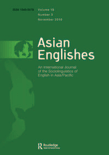
Asian Englishes
Advancing Understanding of Linguistic Diversity Across AsiaAsian Englishes, published by Routledge Journals, Taylor & Francis Ltd, is a leading journal in the field of linguistics and language studies, showcasing diverse English varieties across Asia and their socio-cultural contexts. With an impressive impact factor, it ranks in the Q1 category for both Linguistics and Language disciplines, reflecting its exceptional contribution to the academic community. The journal serves as a vital platform for researchers, professionals, and students who seek to explore the complexities and evolving nature of English usage in Asian settings, providing insightful analyses and fostering scholarly discourse since its inception in 1998. Although not an open-access journal, Asian Englishes is highly regarded in prominent databases such as Scopus, where it ranks in the 90th percentile across multiple categories. The journal's commitment to advancing knowledge in language variation and change remains central to its objectives, making it an essential resource for those dedicated to understanding the dynamics of English in Asian contexts.
International Journal of English Studies
Unveiling the Rich Tapestry of English CultureInternational Journal of English Studies, published by UNIV MURCIA, is a leading open-access journal dedicated to the multifaceted exploration of English studies, encompassing literature, linguistics, cultural studies, and education. With its ISSN 1578-7044 and E-ISSN 1989-6131, this journal has been a vital platform for scholarly communication since 2001, fostering innovative research and dialogues in the field. Hailing from Spain, it enjoys a noteworthy reputation, as evidenced by its impressive rankings in various categories: Q2 in Cultural Studies, Q4 in Education, Q2 in Linguistics and Language, and Q1 in Literature and Literary Theory, as of 2023. Its impactful presence is reflected in the Scopus Rankings, positioning it within the top tiers of its categories, including a rank of #51 out of 1106 in Literature and Literary Theory and a 95th percentile ranking overall. The journal is committed to enhancing academic discourse by publishing high-quality research articles, reviews, and critical essays that together contribute significantly to the fields of English studies. As it converges from 2013 to 2024, the International Journal of English Studies invites researchers, professionals, and students alike to delve into its rich repository of knowledge.

Taiwan Journal of TESOL
Exploring the Intersection of Language and CultureTaiwan Journal of TESOL, published by CRANE PUBL CO, serves as a vital platform for research in the fields of Education and Linguistics. Established to advance the field of Teaching English to Speakers of Other Languages, this journal provides a diverse range of scholarly articles aimed at enhancing pedagogical practices, understanding language acquisition, and facilitating cross-cultural communication. With a convergence of research years from 2017 to 2024, it proudly holds its position within the quartile rankings of Q4 in Education and Q2 in Linguistics and Language. The journal’s Scopus ranks notably place it in the 61st percentile for Language and Linguistics among Arts and Humanities, making it a respected resource for both seasoned scholars and emerging researchers. While it currently does not offer open access, the journal remains committed to making its contributions available to the academic community. The ISSN numbers are 1814-9448 and 2076-7617 for print and electronic formats, respectively, ensuring accessibility to a global audience. As a leading publication within its domain, the Taiwan Journal of TESOL invites submission of innovative research that shapes the future of language education.

TESOL Journal
Fostering Dialogue in Language Acquisition and PedagogyTESOL Journal, published by Wiley, is a premier academic journal dedicated to advancing the field of Teaching English to Speakers of Other Languages (TESOL). With an esteemed reputation reflected in its high impact factor and its Q1 ranking in both Education and Linguistics and Language categories for 2023, this journal serves as a critical resource for researchers, educators, and policy-makers. It covers a wide spectrum of topics related to language acquisition, pedagogical innovations, and educational strategies in TESOL, contributing significantly to the discourse around multilingualism and effective teaching practices. The journal is notable not only for its rigorous peer-review process but also for its commitment to disseminating high-quality research that informs and inspires practice in diverse educational settings. Interested readers can access articles through traditional subscription methods, ensuring that groundbreaking research is available to a broad audience. With converged years spanning from 2010 to 2024, TESOL Journal continues to evolve, making it a vital publication for anyone interested in the complexities of language education.

COLLEGE ENGLISH
Connecting Educators and Researchers for Impactful LearningCOLLEGE ENGLISH, ISSN 0010-0994, is a premier academic journal published by the NATIONAL COUNCIL OF TEACHERS OF ENGLISH that serves as a pivotal platform for the advancement of research and scholarly discussion in the fields of education and linguistics. With a strong focus on the intersection of language and teaching, this journal has established its reputation with notable Scopus rankings, achieving a Q2 category in Education and a Q1 category in Linguistics and Language as of 2023. The journal’s commitment to high-quality research is further evidenced by its placement in the top 20th percentile for Arts and Humanities—Language and Linguistics. By providing a rigorous forum for educators, researchers, and students alike, COLLEGE ENGLISH fosters an environment conducive to innovative ideas and interdisciplinary dialogue, promoting deeper understanding and effective teaching practices. Although it does not provide Open Access options, the journal continues to be an essential resource for those aiming to enhance their academic pursuits in the evolving landscape of language education.

Porta Linguarum
Elevating the discourse on contemporary language challenges.Porta Linguarum, published by UNIV GRANADA in Spain, is a pioneering journal dedicated to the fields of linguistics and language studies, with a dual focus on the educational implications and applications within these disciplines. Launched in 2008 and continuing its impactful contributions into 2024, the journal is recognized for its rigorous peer-reviewed articles that address contemporary language issues, pedagogical approaches, and linguistic research, evidenced by its notable rankings in the 2023 Scopus metrics. Porta Linguarum holds a distinguished Q1 classification in Linguistics and Language, alongside a respectable Q3 placement in Education, marking it as a valuable resource for academics and practitioners alike. With an impressive ranking of 231 out of 1088 in the Arts and Humanities category and a strong 78th percentile ranking for Language and Linguistics, this journal facilitates the exchange of innovative ideas and promotes scholarly discourse. Although currently not adopting an open access model, it remains an essential platform for advancing knowledge in linguistics and education.
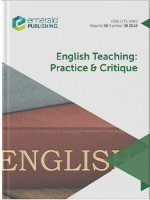
English Teaching-Practice and Critique
Navigating the Landscape of English Teaching with Critical PerspectivesEnglish Teaching-Practice and Critique is an esteemed journal published by Emerald Group Publishing Ltd, focusing on the interdisciplinary fields of Education and Linguistics. With a commitment to advancing knowledge and practice in English language teaching, the journal offers a platform for innovative research, critical reflections, and practical insights that are vital for educators, researchers, and students alike. The journal has established itself in the academic community, achieving a Q3 ranking in Education and a prestigious Q1 ranking in Linguistics and Language as of 2023, highlighting its impact and relevance. Although not an open-access journal, its curated content remains accessible to a global audience, facilitating meaningful discourse and development in English language education. The journal spans articles from 2008 to 2014 and 2016 to 2024, making it a valuable resource for ongoing scholarly dialogue and pedagogical advancement. It is particularly recognized within Scopus rankings, standing at the 76th percentile in Arts and Humanities as well as the 74th percentile in Social Sciences, underscoring its significance and standing in these domains.

TESL Canada Journal
Fostering Excellence in Language Education ResearchTESL Canada Journal, published by TESL Canada, serves as a vital resource for researchers, educators, and practitioners in the field of English as a Second Language (ESL) and applied linguistics. With its commitment to advancing scholarship and best practices in language education, this esteemed journal fosters a platform for the dissemination of high-quality research and innovative pedagogical approaches. Although it operates without open access, its comprehensive articles and reviews offer valuable insights into current trends and challenges faced by ESL educators across Canada and internationally. The journal is dedicated to promoting a deeper understanding of language acquisition processes and instructional methodologies, contributing significantly to the professional development of its readership. Located in Burnaby, Canada, the journal aims to bridge the gap between theory and practice, making it an indispensable source for educators and researchers looking to enhance their expertise in ESL education.

English Studies at NBU
Exploring the forefront of linguistics and literature.English Studies at NBU is a distinguished open-access journal published by New Bulgarian University, Sofia, focusing on the dynamic and evolving field of English studies. With an ISSN of 2367-5705 and an E-ISSN of 2367-8704, this journal serves as a vital platform for scholars, researchers, and students to disseminate innovative research and critical analyses related to linguistics, literature, cultural studies, and pedagogy. Since its inception in 2015, the journal has championed the principle of open access, ensuring that its content is freely available to the global academic community. By fostering interdisciplinary dialogue and highlighting contemporary debates within English studies, English Studies at NBU plays a crucial role in advancing knowledge and promoting scholarly collaboration, making it an essential resource for anyone engaged in the field.

GIST-Education and Learning Research Journal
Exploring New Frontiers in Educational PracticesGIST-Education and Learning Research Journal, published by INST UNIV COLOMBO AMERICANA-UNICA, stands as a prominent vessel for the dissemination of scholarly research in the field of education and learning. Since its inception in 2007, this open access journal has championed the free exchange of knowledge, allowing researchers, educators, and students from around the globe to contribute to and benefit from the latest findings and practices in educational theory and methodology. With its commitment to enhancing educational practices and influencing policy through rigorous research, GIST-Education and Learning Research Journal invites submissions that explore innovative teaching strategies, learning technologies, educational psychology, and related fields. Its accessibility and dedication to quality research make it an invaluable resource for anyone invested in the improvement of educational outcomes.