
Applied Theatre Research
Scope & Guideline
Illuminating the Role of Theatre in Society
Introduction
Aims and Scopes
- Educational Theatre Practices:
The journal consistently publishes research on educational theatre, exploring its methodologies, impacts, and core issues, particularly in diverse cultural contexts. - Applied Theatre as a Social Tool:
There is a strong emphasis on how applied theatre can serve as a tool for social change, addressing issues such as mental health, community wellness, and cultural expression. - Cultural Contexts and Global Perspectives:
The journal includes studies that examine theatre practices across different cultural contexts, showcasing the global nature of applied theatre and examining how local traditions influence educational approaches. - Interdisciplinary Approaches:
Research often intersects with fields such as psychology, education, and social work, demonstrating the multifaceted applications of theatre in addressing complex social issues. - Youth Engagement and Development:
A significant focus is placed on youth and their participation in theatre, exploring how drama can influence their development, well-being, and social engagement.
Trending and Emerging
- Digital and Online Theatre Practices:
There is an increasing focus on the use of digital platforms for theatre, especially in the context of the COVID-19 pandemic, highlighting how technology can enhance accessibility and engagement. - Mental Health and Well-Being:
Recent studies emphasize the role of theatre in addressing mental health challenges, particularly among youth, showcasing how drama can serve as a therapeutic tool. - Community and Social Justice Initiatives:
A notable trend is the exploration of theatre as a vehicle for social justice, with research focusing on community-based performances that address issues of inequality and promote dialogue. - Interdisciplinary Collaborations:
Emerging themes include collaborative projects that integrate applied theatre with other disciplines, such as healthcare and education, reflecting the journal's commitment to interdisciplinary research. - Youth-Led Initiatives:
There is a growing emphasis on youth-led theatre projects, exploring how young people's voices can shape narratives and influence community change through performance.
Declining or Waning
- Traditional Theatre Forms:
There appears to be a waning focus on traditional forms of theatre, as the journal increasingly emphasizes contemporary practices and innovative methodologies that engage modern audiences. - Purely Theoretical Discussions:
Research that is primarily theoretical without practical applications seems to be less prevalent, indicating a shift towards more empirical studies that demonstrate real-world applications of theatre. - Single-Cultural Focus Studies:
There is a decline in studies that focus exclusively on single cultural contexts, suggesting a growing trend towards comparative studies and an interest in cross-cultural practices. - Performance Arts without Social Context:
The journal has moved away from studies that do not explicitly connect performance arts to broader social issues, indicating a preference for research that highlights the societal relevance of applied theatre.
Similar Journals
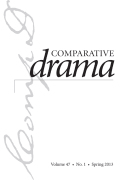
COMPARATIVE DRAMA
Unveiling the Global Tapestry of Dramatic ExpressionCOMPARATIVE DRAMA is an esteemed journal published by Western Michigan University that examines a broad spectrum of drama across cultures and time periods. With an ISSN of 0010-4078 and an E-ISSN of 1936-1637, this journal serves as a critical platform for researchers, educators, and students in the fields of literature and literary theory. Although classified in the Q3 quartile for 2023, its commitment to scholarly rigor and innovative discourse on comparative drama ensures its relevance in the academic community, garnering attention from a global audience. The journal is particularly valued for its interdisciplinary approach, making it a vital resource for those interested in exploring the interplay between dramatic texts and their cultural, historical, and social contexts. With a strong foundational focus that spans from 2002 to 2024, COMPARATIVE DRAMA continues to engage with contemporary issues surrounding theatrical practice and performance studies, paving the way for new interpretations and scholarly conversations.
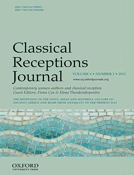
Classical Receptions Journal
Connecting Ancient Voices to Modern NarrativesClassical Receptions Journal, published by Oxford University Press, is a leading scholarly periodical that engages with the intersection of classical studies and contemporary culture. With its ISSN 1759-5134 and E-ISSN 1759-5142, the journal has established itself as a notable platform for innovative research that examines how classical texts, themes, and ideas continue to resonate in modern contexts. With a scope that includes the realms of Arts and Humanities, Classics, and Cultural Studies, this journal is ranked in the Q2 category for Classics and Q3 for both Arts and Humanities and Cultural Studies, demonstrating its significant impact in the field. Researchers and students will find a wealth of peer-reviewed articles that not only explore historical reception but also inspire new conversations and methodologies. The journal's commitment to publishing quality scholarship makes it an essential resource for anyone interested in the ongoing relevance of classical antiquity in today’s world, from its home base in the United Kingdom at Great Clarendon St, Oxford.
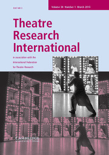
THEATRE RESEARCH INTERNATIONAL
Advancing Scholarly Discourse in the World of TheatreTHEATRE RESEARCH INTERNATIONAL, published by Cambridge University Press, stands as a vital academic journal dedicated to the dynamic and multifaceted field of theatre studies. With its ISSN 0307-8833 and E-ISSN 1474-0672, this journal has been a cornerstone of scholarly discourse since its inception in 1970, continuing to provide valuable insights through 2024. Ranked in the Q2 quartile for both Literature and Literary Theory and Visual Arts and Performing Arts, it boasts impressive performance metrics reflected in its Scopus rankings at the 72nd and 62nd percentiles, respectively. The journal aims to illuminate the interplay between theatre and its cultural, social, and historical contexts, fostering a platform for both established and emerging voices in the field. While the journal is not Open Access, it ensures rigorous peer-reviewed content that engages researchers, professionals, and students alike, making it indispensable for anyone seeking to broaden their understanding and contribute to theatre research.
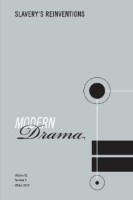
MODERN DRAMA
Advancing Scholarship in the Dramatic ArtsMODERN DRAMA is a premier academic journal published by University of Toronto Press Inc, specializing in the field of literature and literary theory, with a particular focus on the dramatic arts. Established to foster scholarly dialogue, this journal offers a platform for innovative research and critical perspectives on modern theatrical practices and their cultural contexts. With an esteemed Q1 ranking in the category of Literature and Literary Theory for 2023, it places high importance on scholarly rigour and relevance, ensuring that its contributions resonate within the academic community. Though it operates under a traditional subscription model, MODERN DRAMA remains vital for researchers, professionals, and students dedicated to exploring the complexities of contemporary drama. With coverage ranging from 2002 to 2024, it continues to push the boundaries of literary discourse, making it an essential resource for anyone engaged in the dynamic field of drama studies.
THEATRE SURVEY
Unveiling the Dynamics of Theatrical StudiesTHEATRE SURVEY, an esteemed journal published by Cambridge University Press, serves as a vital platform for innovative research in the realms of visual arts and performing arts. With an ISSN of 0040-5574 and an E-ISSN of 1475-4533, this journal has established itself as a prominent source for critical discourse and analysis since its inception in 1960. Currently categorized in the Q3 quartile for Visual Arts and Performing Arts, it ranks #239 out of 667 in Scopus, highlighting its relevance and impact in the field, positioned in the 64th percentile. Although it does not offer open access, the journal's rigorous peer-review process ensures the dissemination of high-quality scholarship crucial for researchers, professionals, and students alike. Based in Cambridge, England, THEATRE SURVEY aims to enrich the academic landscape with its comprehensive coverage of theatrical studies, theory, and practice, fostering a deeper understanding of the dynamic interplay between performance and society.
CONTEMPORARY THEATRE REVIEW
Bridging Theory and Practice in Modern TheatreCONTEMPORARY THEATRE REVIEW is a leading journal published by Taylor & Francis Ltd, focusing on the dynamic intersections of theatre, performance studies, and contemporary visual arts. With a Q2 ranking in both Visual Arts and Performing Arts, this journal has established itself as a significant platform for scholarly discourse and critical analysis since its inception in 1992, particularly from 1994 through 2024. Researchers, practitioners, and students engaging with the evolving landscape of theatre will find this journal an essential resource for innovative research, reviews, and theoretical papers. The journal invites contributions that explore diverse themes in contemporary performance, ensuring it remains at the forefront of the academic and professional dialogue within the performing arts community.

REVUE D HISTOIRE DU THEATRE
Illuminating the Evolution of Theatrical ArtsREVUE D HISTOIRE DU THEATRE is a distinguished academic journal published by the Société d'Histoire du Théâtre in France, focusing on the rich historical tapestry of theater studies. Since its inception, the journal has dedicated itself to the exploration and appreciation of theatrical art, its evolution, and its socio-cultural implications, particularly within the realms of Literature and Literary Theory and Visual Arts and Performing Arts. With a consistent publication history starting from 1999, the journal is indexed in Scopus, currently positioned in Q4 quartiles, providing researchers, professionals, and students a platform for both innovative scholarship and critical analysis. While it does not offer Open Access options, REVUE D HISTOIRE DU THEATRE remains an invaluable resource for those seeking in-depth knowledge and scholarly discourse in the history of theater.
THEATRE HISTORY STUDIES
Connecting Past and Present through Performance ResearchTHEATRE HISTORY STUDIES, published by University of Alabama Press, serves as an essential platform for scholarly discourse and research in the fields of Cultural Studies and Visual Arts and Performing Arts. With an ISSN of 0733-2033, this journal offers critical insights into the evolution of theatre and performance, positioning itself as a valuable resource for researchers and practitioners alike. Despite its niche focus, it holds a commendable ranking in Scopus, reflecting its cultural significance and academic rigor—ranked #356 out of 667 in Visual Arts and Performing Arts and #911 out of 1304 in Cultural Studies. The journal has published continuously from 2002 to 2012, and again in 2014 to 2019, as well as from 2021 to 2023, consistently fostering a rich dialogue around artistic practices and historical contexts. Although not open access, its articles are pivotal for advancing knowledge and inspiring new perspectives in the interplay of theatre, culture, and society. For those dedicated to understanding the intricate tapestry of performance studies, THEATRE HISTORY STUDIES is a must-read.
ASIAN THEATRE JOURNAL
Transforming Perspectives on Asian Theatrical ArtsASIAN THEATRE JOURNAL, published by University of Hawaii Press, is a distinguished scholarly journal dedicated to the exploration of theatrical arts in Asia. With its ISSN 0742-5457 and E-ISSN 1527-2109, the journal serves as a crucial platform for researchers, practitioners, and students interested in the dynamic intersections of culture, performance, and social commentary within Asian theatre traditions. As of 2023, it proudly holds a Q2 ranking in the fields of Visual Arts and Performing Arts, highlighting its significance and influence in shaping academic discourse. The journal is indexed in Scopus, ranking at #257 out of 667 in the Arts and Humanities category, placing it in the 61st percentile. Despite not being open access, ASIAN THEATRE JOURNAL remains committed to fostering a deeper understanding of Asian theatrical practices and their global implications. With a convergence of years from 2002 to 2024, it promises to be an invaluable resource for those seeking to delve into the richness of Asian performance traditions.

Jeu-Revue de Theatre
Celebrating Innovation in Theatrical ScholarshipJeu-Revue de Theatre is a distinguished journal dedicated to the exploration and analysis of theatrical arts, published by CAHIERS THEATRE JEU INC. With a rich history reflected in its ISSN 0382-0335 and E-ISSN 1923-2578, this journal serves as a vital platform for scholars, practitioners, and students interested in the multifaceted dimensions of theatre. Based in Montreal, Canada, the journal aims to foster a deeper understanding of theatre through scholarly articles, performance reviews, and critical essays, making it essential reading for those engaged in the performing arts. While the journal does not currently offer open access options, its comprehensive discussions and research contribute significantly to the field, encouraging a vibrant dialogue among artists and academics alike. With a commitment to promoting innovative scholarship, Jeu-Revue de Theatre stands as an invaluable resource in the dramatic arts landscape.