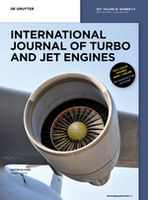
INTERNATIONAL JOURNAL OF TURBO & JET-ENGINES
Scope & Guideline
Driving Research in High-Performance Engine Systems
Introduction
Aims and Scopes
- Turbo Machinery Design and Optimization:
Research in this area encompasses the design and optimization of various components of turbo engines, including compressors, turbines, and combustion chambers, utilizing both experimental and computational methods. - Combustion and Emissions Control:
This scope focuses on the study of combustion processes in gas turbines and jet engines, emphasizing techniques for emission reduction and efficiency improvement through advanced combustion modeling and innovative fuel injection strategies. - Thermal and Aerodynamic Performance Analysis:
Investigations in this area involve the thermal management and aerodynamic efficiency of turbo engines, including heat transfer analysis, flow characteristics, and performance predictions under various operating conditions. - Control Systems and Diagnostics:
Research related to control strategies, health monitoring, and predictive maintenance of turbo engines, employing advanced algorithms and machine learning techniques to enhance reliability and performance. - Novel Materials and Manufacturing Techniques:
This includes studies on the application of advanced materials in turbo engine components and innovative manufacturing processes that improve performance and durability.
Trending and Emerging
- Machine Learning and Artificial Intelligence Applications:
There is a growing trend in employing machine learning and AI techniques for predictive maintenance, performance optimization, and fault detection in turbo engines, showcasing the industry's shift towards data-driven methodologies. - Hybrid and Alternative Propulsion Systems:
Research on hybrid propulsion systems, including the integration of electric and traditional engines, is gaining momentum as the industry explores sustainable alternatives to conventional jet propulsion. - Advanced Combustion Techniques:
Emerging studies focus on innovative combustion technologies, such as plasma-assisted combustion and alternative fuels, which aim to enhance efficiency and reduce emissions in turbo engines. - Enhanced Cooling Techniques:
There is an increasing emphasis on advanced cooling strategies for turbine blades and combustion chambers, utilizing novel materials and designs to improve thermal performance and engine longevity. - Multi-Disciplinary Approaches to Engine Design:
An emerging trend is the integration of multi-disciplinary research approaches, combining aerodynamics, thermodynamics, materials science, and control systems to create more efficient and reliable turbo engines.
Declining or Waning
- Traditional Mechanical Design Approaches:
Research focused solely on classical mechanical design methods without integrating modern computational techniques appears to be declining as the field shifts towards more complex modeling and simulation approaches. - Basic Thermal Analysis without Advanced Techniques:
Studies that employ only basic thermal analysis methods without incorporating advanced computational fluid dynamics (CFD) or finite element analysis (FEA) are becoming less common, as there is a greater emphasis on detailed and sophisticated analysis. - Simplistic Fuel Efficiency Studies:
Research that does not delve into the complexities of fuel efficiency, such as advanced combustion strategies or alternative fuels, is experiencing a downturn as the industry moves towards more sustainable and efficient technologies.
Similar Journals

Transactions of the Korean Society of Mechanical Engineers A
Connecting Researchers to Shape the Future of Mechanical Engineering.Transactions of the Korean Society of Mechanical Engineers A is a leading academic journal dedicated to the field of mechanical engineering, published by the Korean Society of Mechanical Engineers. With an ISSN of 1226-4873 and an E-ISSN of 2288-5226, this journal serves as a vital platform for disseminating innovative research and advancements in mechanical engineering. Situated in South Korea, the journal aims to foster knowledge exchange among researchers and professionals by publishing high-quality, peer-reviewed articles that cover a broad range of topics, including but not limited to manufacturing processes, thermodynamics, and materials science. Although it currently holds a Q4 ranking in the Mechanical Engineering category and is positioned in the 12th percentile of Scopus rankings, the journal is dedicated to expanding its impact and visibility in the global academic community. As it converges from 2007 to 2024, Transactions of the Korean Society of Mechanical Engineers A represents an essential resource for those seeking to advance their understanding and research within this dynamic discipline.
JOURNAL OF ENGINEERING FOR GAS TURBINES AND POWER-TRANSACTIONS OF THE ASME
Driving Excellence in Mechanical Engineering ResearchJournal of Engineering for Gas Turbines and Power - Transactions of the ASME, published by the esteemed American Society of Mechanical Engineers (ASME), is a leading interdisciplinary journal dedicated to advancing the fields of energy engineering, aerospace, nuclear energy, and mechanical engineering. With an impressive history dating back to 1960 and continuing its contributions through 2024, this journal boasts a Q2 ranking in multiple engineering categories, reflecting its strong impact on both academia and industry. Although not an open-access journal, it provides invaluable insights and research findings that cater to the needs of professionals, researchers, and students alike. The journal's ISSN is 0742-4795 with an E-ISSN of 1528-8919, ensuring widespread visibility in the global academic community. Indexed in Scopus, it ranks notably within its fields—21st in Nuclear Energy and Engineering and 51st in Aerospace Engineering—underscoring its relevance and contribution to critical technological advancements. Researchers in this domain will find the journal a vital resource for innovative studies, practical applications, and the latest developments related to gas turbines and power generation.
JOURNAL OF ELECTRONIC PACKAGING
Transforming Ideas into Cutting-edge Packaging SolutionsJOURNAL OF ELECTRONIC PACKAGING, published by the esteemed American Society of Mechanical Engineers (ASME), is a pivotal platform for research in the fields of Computer Science Applications, Electrical and Electronic Engineering, and Materials Science, particularly focusing on electronic packaging technologies. With an ISSN of 1043-7398 and an E-ISSN of 1528-9044, this journal has consistently showcased groundbreaking studies since its inception in 1989, projected to continue until 2025. Recognized within the Q2 quartile rankings across multiple categories in the 2023 Scopus rankings, it maintains a strong presence in the academic community with notable rankings in various engineering and materials science domains. This journal serves as a critical resource for researchers, professionals, and students who seek to advance their understanding and application of innovative electronic packaging solutions. Though it does not offer open access, it encompasses a robust array of high-quality articles that foster knowledge advancement and interdisciplinary collaboration in a rapidly evolving technological landscape, ultimately contributing to the growth and sophistication of the electronic packaging field.

Journal of the Korean Society for Aeronautical and Space Sciences
Advancing Global Collaboration in AeronauticsThe Journal of the Korean Society for Aeronautical and Space Sciences is a dedicated platform for the dissemination of cutting-edge research in the fields of aerospace engineering and space sciences. Published by the esteemed Korean Society for Aeronautical & Space Sciences, this journal aims to bring together innovative findings and technological advancements from around the globe, thereby contributing to the ongoing development of the aerospace sector. Operating from South Korea, the journal holds an ISSN of 1225-1348 and an E-ISSN of 2287-6871, catering to both print and digital scholarly communication. Although categorized in Q4 within the Aerospace Engineering segment and ranked 139 out of 153 on Scopus, the journal plays a crucial role in fostering research collaboration and knowledge exchange among professionals, researchers, and students alike. With converged years from 2019 to 2024, it continuously seeks to enhance its contributions to the academic community through rigorous peer review and publication of original research. Given the evolution of aerospace technologies, this journal is vital for anyone involved in aeronautical research, ensuring that their work reaches the right audience.
JOURNAL OF PROPULSION AND POWER
Fueling Progress in Aerospace EngineeringJOURNAL OF PROPULSION AND POWER, published by the American Institute of Aeronautics and Astronautics, is a premier peer-reviewed journal dedicated to the advancement of knowledge in the fields of aerospace engineering, mechanical engineering, and fuel technology. With an impressive impact factor and ranked in the Q1 and Q2 categories for various relevant fields, the journal serves as a vital resource for researchers, professionals, and students alike who are looking to stay abreast of the latest innovations and breakthroughs in propulsion systems and power generation methodologies. Established in 1985, the journal covers a wide range of topics, ensuring a comprehensive understanding of propulsion technologies from atmospheric to space applications. Its robust Scopus rankings highlight its significance in the academic community, establishing it as a leading forum for sharing pivotal research findings and fostering collaborative dialogues that drive the aerospace industry forward. Located in Reston, Virginia, the journal does not currently offer open access options, yet it remains accessible to a vast audience via academic institutions and libraries. As we move further into the 21st century, the JOURNAL OF PROPULSION AND POWER continues to be an indispensable tool for the exploration and evolution of propulsion and power systems.
COMBUSTION SCIENCE AND TECHNOLOGY
Advancing Energy Technologies through Rigorous ResearchCOMBUSTION SCIENCE AND TECHNOLOGY, published by Taylor & Francis Inc, is a pivotal journal in the fields of Chemical Engineering and Chemistry, with a robust history spanning from 1969 to 2024. With an established impact factor and a strong reputation reflected in its Q2 ranking in both Chemical Engineering and Chemistry, this journal serves as an essential resource for researchers and professionals dedicated to the intricacies of combustion processes and energy technologies. The journal also holds commendable rankings in Energy Engineering, Fuel Technology, and Physics and Astronomy, showcasing its interdisciplinary relevance. While currently not an open-access publication, it offers a wealth of knowledge through its meticulously peer-reviewed articles, which are crucial for advancing understanding and innovation in combustion science. With a commitment to promoting rigorous research and fostering scholarly communication, COMBUSTION SCIENCE AND TECHNOLOGY is indispensable for anyone seeking cutting-edge insights into combustion phenomena and their applications in various engineering fields.

JOURNAL OF SOUND AND VIBRATION
Advancing knowledge in sound and vibration.The JOURNAL OF SOUND AND VIBRATION, published by Academic Press Ltd - Elsevier Science Ltd, stands as a pivotal platform in the fields of Acoustics and Ultrasonics, Mechanical Engineering, and Mechanics of Materials. Since its inception in 1964, the journal has served as a beacon for researchers and practitioners looking to share and advance their knowledge on sound and vibration phenomena. With an impressive Q1 ranking in multiple categories and a Scopus ranking placing it in the top 10% of significant journals in related fields, it offers a high-impact venue for disseminating innovative research. The journal's well-rounded scope intersects fundamental and applied science, ensuring it remains relevant to a diverse audience, including students and professionals aiming to deepen their understanding of dynamic mechanical systems. Although primarily subscription-based, the journal's commitment to academic excellence makes it a valuable resource for all involved in the study and application of sound and vibration research, contributing significantly to advancements across engineering and physics disciplines.
AIAA JOURNAL
Navigating the Future of Flight with Premier Research InsightsAIAA JOURNAL, published by the American Institute of Aeronautics and Astronautics, stands as a premier peer-reviewed platform for cutting-edge research in the field of aerospace engineering. With an esteemed Q1 classification in the Aerospace Engineering category and a notable rank within the top 20% of its field according to Scopus, this journal has become an essential resource for researchers, professionals, and students alike. Spanning over six decades of impactful scholarship from 1963 to 2024, the AIAA JOURNAL contributes significantly to the advancement of aerospace technologies and methodologies. While it does not offer open access, its rigorous editorial standards and impactful articles ensure that it remains a vital source for those seeking to stay at the forefront of aerospace innovation. Explore the rich tradition of excellence and stay informed on the latest discoveries that shape the world of flight and space exploration.

Aerospace
Unlocking the Future of Aerodynamics and PropulsionAerospace is a premier open-access journal published by MDPI, established in 2014 and dedicated to the dynamic field of aerospace engineering. With an impressive Q2 ranking in the 2023 category of Aerospace Engineering, this journal is a vital resource for researchers, professionals, and students interested in advancements and innovations in aerodynamics, avionics, propulsion, and more. Operating from Switzerland, Aerospace provides a platform for the dissemination of high-quality research articles and reviews, contributing to the ongoing dialogue in the aerospace community. This journal not only enhances visibility through its open access model but also ensures that critical knowledge is freely available, fostering collaborative efforts and inspiring the next generation of aerospace engineers. With a Scopus ranking of #60 out of 153 in the Aerospace Engineering category, it plays a significant role in shaping the future of aviation and space exploration.
Journal of Machinery Manufacture and Reliability
Championing open access for groundbreaking manufacturing research.The Journal of Machinery Manufacture and Reliability, published by PLEIADES PUBLISHING INC, serves as a pivotal platform for advancing knowledge in the fields of Industrial and Manufacturing Engineering, Mechanical Engineering, and Safety, Risk, Reliability, and Quality. Having adopted an Open Access model since 2015, this journal facilitates global dissemination of research findings and innovations, ensuring that critical developments in machinery manufacture resonate across the academic and professional spectrum. With its ISSN 1052-6188 and E-ISSN 1934-9394, it has established itself within established quartiles, notably Q3 in key engineering categories according to the 2023 metrics. Its Scopus rankings underscore its emerging impact, though it remains an area for growth, making it an excellent venue for early-career researchers aiming to contribute to a growing body of literature. The journal's commitment to high-quality, accessible research positions it as a must-read for academics and practitioners alike, fostering innovation and collaboration in the machinery manufacturing sector.