
Culture & History Digital Journal
Scope & Guideline
Innovating the Study of Culture and History for a Global Audience.
Introduction
Aims and Scopes
- Interdisciplinary Approaches to Historical Analysis:
The journal emphasizes the integration of various disciplines such as anthropology, history, cultural studies, and visual studies to provide a comprehensive understanding of historical phenomena. - Focus on Colonial and Post-Colonial Studies:
A significant portion of the research addresses the impacts of colonialism and the complexities of post-colonial identities, particularly in relation to the Iberian Atlantic and other regions. - Exploration of Gender and Cultural Identity:
The journal frequently examines themes of gender, race, and identity within historical contexts, reflecting on how these elements shape societal structures and cultural narratives. - Visual Culture and Representation:
A unique contribution of the journal is its attention to visual culture, exploring how images and representations influence historical understanding and cultural memory. - Economic and Political Histories:
The journal includes research on economic systems, trade, and political strategies, particularly in relation to the Iberian empires and their global interactions.
Trending and Emerging
- Decolonial Approaches to History:
A growing trend is the application of decolonial frameworks in historical research, emphasizing the need to challenge traditional narratives and acknowledge the voices and experiences of marginalized groups. - Transnational and Global Histories:
There is an increasing focus on transnational studies that explore the interconnectedness of different regions, particularly in relation to the Iberian Atlantic and its global impact. - Visual Anthropology and Historical Memory:
The intersection of visual culture and historical memory is becoming a key theme, with researchers critically analyzing how images shape collective memories and cultural identities. - Gender Studies in Historical Contexts:
Recent publications show a significant increase in research addressing gender and sexuality within historical frameworks, highlighting their importance in understanding power dynamics and cultural narratives. - Environmental Histories and Human Impact:
Emerging interest in environmental histories reflects a growing awareness of the interplay between human actions and environmental change, particularly in historical contexts.
Declining or Waning
- Traditional Historical Narratives:
There appears to be a waning interest in conventional historical narratives that do not incorporate interdisciplinary methods or critical perspectives, reflecting a move towards more nuanced and complex analyses. - Eurocentric Perspectives:
Research that solely emphasizes Eurocentric views without acknowledging global interconnectedness is becoming less prominent, as scholars increasingly recognize the need for inclusive historical interpretations. - Static Cultural Representations:
Themes centered solely on static representations of culture, without engagement with dynamic cultural processes or interactions, are seeing reduced attention in favor of more fluid and contextual analyses.
Similar Journals
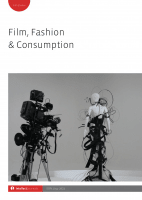
Film Fashion & Consumption
Exploring the Nexus of Visual Culture and Consumer BehaviorFilm Fashion & Consumption is an innovative academic journal published by INTELLECT LTD, focusing on the interdisciplinary exploration of the intertwined domains of film, fashion, and cultural consumption. Established in 2019, this journal has rapidly become a significant platform for scholars, practitioners, and students alike, contributing to critical discussions on how visual culture shapes consumer behaviors and social narratives. With an impact factor reflecting a growing influence in the fields of Communication, Cultural Studies, History, and Visual Arts, it holds respectable positions in its respective quartiles as of 2023. Although it is not an open-access journal, it provides essential insights and research articles that inform and challenge prevailing notions around media and style. The journal's Scopus rankings highlight its relevance, particularly within the realms of Visual Arts and Cultural Studies, making it a valuable resource for anyone engaged in the analysis of contemporary visual trends.
Visual Anthropology
Illuminating Cultural Practices with Visual AnthropologyVisual Anthropology is a distinguished journal published by Routledge Journals, Taylor & Francis Ltd in the United Kingdom. With an ISSN of 0894-9468 and E-ISSN 1545-5920, this journal focuses on the intersection of visual media and anthropological research, exploring the ways in which visual representations influence cultural practices and perceptions. Since its inception in 1987, Visual Anthropology has contributed significantly to the fields of Anthropology and Cultural Studies, earning a Q2 rank in both categories as of 2023. With a solid impact factor and strategic indexing, the journal maintains a vital place for scholars seeking to understand the visual dimensions of human behavior and societal structures. Although it operates under a traditional subscription model, its rigorous peer-review process ensures the dissemination of high-quality research. The journal invites researchers, professionals, and students alike to engage with cutting-edge studies that bridge visual culture and anthropological inquiry.
JOURNAL OF AMERICAN CULTURE
Charting the Landscape of American Cultural DiscourseJOURNAL OF AMERICAN CULTURE is a distinguished academic journal published by Wiley, focusing on the rich tapestry of American culture through various lenses including history, literature, visual arts, and cultural studies. Established in 1996 and continuing its scholarly contributions through 2024, the journal serves as a vital platform for researchers, professionals, and students to disseminate their work and engage with critical discussions surrounding American cultural narratives. With an impressive impact reflected in its 2023 quartile rankings — Q2 in Literature and Literary Theory and Q3 in Cultural Studies, History, and Visual Arts and Performing Arts — the journal enhances scholarly dialogue across diverse disciplines. Although it does not offer Open Access options, its rigorous peer-review process ensures high-quality research dissemination. It is a go-to resource for those aiming to explore the evolving dynamics of American culture within a global context.

Anclajes
Fostering Innovative Research in Linguistics and LiteratureAnclajes is a prominent academic journal dedicated to the fields of Cultural Studies, Linguistics, and Literature, published by the UNIV NACIONAL LA PAMPA, FAC CIENCIAS HUMANAS. With both print (ISSN 0329-3807) and electronic (E-ISSN 1851-4669) formats, the journal has embraced an Open Access model since 2010, greatly enhancing its accessibility and reach to a global audience. Based in Argentina, Anclajes provides a platform for innovative research and critical discourse, contributing significantly to the understanding of cultural phenomena and literary theories. In recent years, the journal has established itself with a Scopus rank placing it in the top 30% of Literature and Literary Theory and the top 57% of Cultural Studies, as indicated by its quartile rankings for 2023. With issues converging from 2012 to 2024, Anclajes continues to foster scholarly communication and serves as an essential resource for researchers, students, and professionals seeking to explore the dynamism of human culture and expression.
Middle East Journal of Culture and Communication
Connecting Cultures through Scholarly InquiryMiddle East Journal of Culture and Communication is a vital scholarly platform published by BRILL, dedicated to fostering an understanding of cultural dynamics and communication pathways within the Middle East. Established in 2008, this journal delivers a rich array of interdisciplinary research spanning the fields of Arts and Humanities, Communication, Cultural Studies, Political Science, and Sociology. With an impact factor reflective of its commitment to high-quality scholarship, it currently ranks in various quartiles, including Q3 in Arts and Humanities (miscellaneous) and Q4 in Communication and Political Science, demonstrating its importance in the academic discourse surrounding these disciplines. The journal's open access policy ensures that critical insights and analyses are widely disseminated, catering to a global audience of researchers, professionals, and students alike. The Middle East Journal of Culture and Communication stands as an essential resource for those seeking to explore the intricate tapestry of cultural interactions in the region through rigorous academic inquiry.
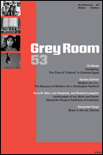
Grey Room
Innovating Conversations in Architecture and the ArtsGrey Room is a distinguished peer-reviewed academic journal published by MIT Press, focusing on interdisciplinary discussions at the intersection of architecture, communication, sociology, political science, and the visual and performing arts. Established in 2002, the journal has carved out a critical space for exploring the links between built environments and cultural narratives, engaging a diverse readership of researchers, professionals, and students. With an impact factor reflecting its contribution to these fields, it is recognized for fostering innovative dialogue and scholarship. Although it operates without an open access model, Grey Room continues to thrive in the academic community, particularly as it moves towards converged years spanning from 2002 to 2024. The journal's categorization into various quartiles highlights its relevance and ongoing commitment to contemporary issues. Readers can expect thought-provoking articles that challenge conventional boundaries of practice and scholarship, making Grey Room an essential resource for those interested in the dynamic interplay of architecture and culture.

Antiteses
Navigating the Complexities of Thought and SocietyAntiteses is a distinguished academic journal published by UNIV ESTADUAL LONDRINA, serving as an indispensable platform for scholarly discourse in the humanities and social sciences. With an ISSN of 1984-3356 and an E-ISSN matching the same number, this peer-reviewed journal has embraced the Open Access model since 2008, ensuring that cutting-edge research is readily available to researchers, professionals, and students globally, thereby fostering an inclusive academic community. Antiteses aims to explore critical discourses across various domains, encouraging innovative thoughts and discussions that challenge conventional paradigms. Located in Londrina, Paraná, Brazil, the journal maintains its commitment to high academic standards, although specific metrics such as H-Index or impact factor remain to be established. Its open-access nature aligns with contemporary trends towards equitable access to knowledge, making it a vital resource for those invested in the evolution of academic thought.
Images
Exploring the Intersections of Visual Culture and SocietyImages, published by BRILL, serves as a significant academic platform within the realms of Cultural Studies, History, Religious Studies, and the Visual Arts and Performing Arts. With its ISSN 1871-7993 and E-ISSN 1871-8000, this journal is committed to providing a scholarly forum that engages with the complexities of visual representations and their impact on cultural narratives. Though it currently holds a Q4 category ranking across various fields, indicating room for growth, its presence in Scopus rankings showcases its contribution to the arts and humanities, positioning it as a unique voice in interdisciplinary discourse. The journal aims to publish innovative research that fosters dialogue among scholars, practitioners, and students interested in the intersections of visual culture and societal dynamics. Despite its non-open access status, Images remains a vital resource for those seeking to understand the intricate fabric of cultural expressions from historical and contemporary perspectives, offering insights that resonate across academic and artistic landscapes.

Imafronte-Revista de Historia del Arte
Exploring the Depths of Artistic HeritageImafronte-Revista de Historia del Arte is a premier scholarly journal published by the University of Murcia, dedicated to advancing the field of art history. With an ISSN of 0213-392X and an E-ISSN of 1989-4562, this open-access journal has been serving the academic community since 1985, ensuring that research is widely available and accessible. Nestled in the heart of Spain at the Campus de Espinardo in Murcia, Imafronte invites contributions that span a myriad of topics within art history, providing a rich platform for critical analysis and interdisciplinary dialogue. Its commitment to fostering scholarly communication and innovation makes it an essential resource for researchers, professionals, and students alike, eager to explore the nuances of artistic heritage and contemporary discourse in the arts.

South African Journal of Art History
Connecting Local Insights to Global Art ConversationsSouth African Journal of Art History is a premier academic publication dedicated to the exploration and critical analysis of art history within the South African context. Published by the Art Historical Work Group South Africa (AHWG), this journal serves as a vital platform for researchers, professionals, and students alike to disseminate innovative research and engage with diverse perspectives on visual culture. With an ISSN of 0258-3542, the journal aims to elevate the study of art history, contributing significantly to the scholarly community's understanding of both local and international art narratives. Although currently not an open access journal, it is committed to high academic standards and in-depth scholarship, ensuring that each article published meets rigorous criteria. As South Africa continues to position itself at the forefront of global art discourse, the South African Journal of Art History stands out as a critical resource for anyone interested in the intersections of art, culture, and history within this dynamic region.