
French Screen Studies
Scope & Guideline
Unveiling the Artistry of French Film and Media
Introduction
Aims and Scopes
- Interrogation of Gender and Sexuality in Film:
The journal frequently examines how gender and sexuality are represented in French cinema, particularly through the lens of feminist and queer theories, highlighting the significance of these themes in contemporary narratives. - Cultural and National Identity:
Many articles focus on the construction and representation of national and cultural identities in French cinema, exploring how films reflect societal values, historical contexts, and the complexities of globalization. - Historical Contextualization:
The journal places a strong emphasis on the historical evolution of French cinema, analyzing the impact of specific historical events and movements on cinematic expression and genre development. - Transnational and Global Perspectives:
There is a consistent focus on transnational cinema, examining how French films engage with global narratives, aesthetics, and audiences, thus positioning French cinema within a broader international context. - Innovative Methodologies:
The journal employs a range of methodologies, including textual analysis, audience studies, and interdisciplinary approaches that incorporate insights from cultural studies, gender studies, and film theory.
Trending and Emerging
- Intersectionality in Representation:
There is a growing trend towards analyzing intersectional identities within French cinema, particularly regarding race, gender, and sexuality, which reflects broader societal conversations about inclusivity and representation. - Streaming Culture and New Media:
The impact of streaming platforms on French cinema and television is increasingly explored, focusing on how these platforms reshape narratives, audience engagement, and the distribution of French content. - Documentary and Autobiographical Narratives:
Emerging themes include the exploration of autobiographical documentary filmmaking, particularly in relation to personal and collective histories, reflecting a trend towards more intimate and subjective storytelling. - Globalization and Transnational Narratives:
The journal is increasingly focusing on how globalization affects French cinema, particularly through the lens of cultural exchange and the representation of diasporic experiences in film. - New Perspectives on Feminism and Queer Cinema:
Recent works delve deeper into complex feminist narratives and queer cinema, examining how contemporary filmmakers are reinterpreting traditional tropes and challenging gender norms.
Declining or Waning
- Traditional Film Criticism:
There appears to be a waning focus on conventional film criticism and reviews, with fewer articles dedicated to straightforward critiques of individual films, as the journal shifts towards more theoretical and thematic explorations. - Classic French Cinema:
The exploration of classic French cinema, while still present, seems to be decreasing in favor of contemporary analysis, suggesting a pivot towards discussing current trends and recent cinematic works. - Focus on Star Studies:
The previous popularity of star studies, particularly concerning historical figures in French cinema, has diminished, indicating a shift away from biographical approaches to more thematic and genre-based inquiries. - Formalism in Film Studies:
There has been a noticeable decline in formalist approaches that concentrate solely on cinematic techniques or aesthetics, moving instead towards socio-political and cultural analyses.
Similar Journals

SIGHT AND SOUND
Illuminating Film's Impact on SocietySIGHT AND SOUND is a prestigious journal published by the British Film Institute, dedicated to the exploration of cinema and its cultural significance. With an ISSN of 0037-4806 and an E-ISSN matching the same, this journal has been a critical platform for film studies since its inception, contributing valuable insights to the realms of visual arts and performing arts. Despite its discontinuation in the Scopus database post-2021, SIGHT AND SOUND commands respect within its field, currently holding a Q3 rank among Visual Arts and Performing Arts journals. Operating from 21 Stephen Street, London W1P 1PL, England, it serves as a vital resource for researchers, professionals, and students looking to deepen their understanding of film theory, critique, and history. While access to its articles is not open, the journal continues to influence the discourse in film studies, making it a significant asset in academic and professional circles.

Fotocinema-Revista Cientifica de Cine y Fotografia
Fostering Innovative Discourse in Visual MediaFotocinema-Revista Cientifica de Cine y Fotografia is a leading open-access journal published by FOTOCINEMA since 2014, dedicated to the academic exploration of cinema and photography. Based in Spain, this journal serves as a vital platform for researchers, professionals, and students, fostering innovative discourse in the fields of Visual Arts, Performing Arts, and History. With an impressive Q2 rank in both History and Visual Arts, as well as a Q4 rank in Communication in 2023, Fotocinema reflects a commitment to high-quality scholarship, backed by Scopus rankings that highlight its growing influence within the academic community. By offering open access to its content, the journal ensures that significant research is available to a broader audience, encouraging collaboration and knowledge sharing across disciplines. As it continues its converged publication run from 2019 to 2024, Fotocinema stands at the forefront of cinematic and photographic studies, providing an essential resource for those dedicated to understanding the intricate relationships between visual media and society.
NINETEENTH-CENTURY FRENCH STUDIES
Connecting Scholars Through French Literary DiscourseNINETEENTH-CENTURY FRENCH STUDIES, published by University of Nebraska Press, is a premier academic journal dedicated to the exploration and analysis of French literature and culture from the 19th century. Established as a vital resource for scholars in the field, this journal is recognized for its contribution to literary studies, holding a commendable Q2 rating in the 2023 category of Literature and Literary Theory, reflecting its academic rigor and relevance. With an ISSN of 0146-7891, it offers a platform for innovative research and scholarly discourse, delving into critical topics that shape our understanding of the era. Although it does not currently operate as an open-access journal, its impactful research is instrumental in guiding literary analysis within the arts and humanities. As it continues its publication journey, converging from 2001 to 2024, NINETEENTH-CENTURY FRENCH STUDIES remains essential for researchers, professionals, and students aiming to gain deeper insights into the complexities of 19th-century French literature.

NEUE RUNDSCHAU
Charting New Territories in Literary TheoryNEUE RUNDSCHAU is a prominent journal published by S Fischer Verlag GmbH, specializing in the fields of literature and literary theory, as well as visual arts and performing arts. With its roots tracing back to its inception in 1969, this journal has evolved significantly, providing a platform for critical discourse and innovative scholarship in the arts and humanities. Although it experienced coverage changes, the journal remains a vital resource for researchers and academics, contributing to the rich dialogue surrounding cultural studies and artistic expression. Furthermore, while it is not available through open access, NEUE RUNDSCHAU offers essential insights into contemporary literary trends and artistic movements, ensuring its relevance and importance within the academic sphere. With Scopus rankings including a position in the 16th percentile for literature and literary theory, and a 10th percentile placement in cultural studies, the journal embodies a commitment to quality scholarly contributions, making it an invaluable asset for students, professionals, and researchers alike.
Film International
Illuminating the Art and Impact of Film.Film International is a prominent journal dedicated to the exploration of film and its cultural, social, and artistic significance. Published by INTELLECT LTD, this journal serves as a platform for interdisciplinary studies in the field of film criticism, theory, and scholarship, contributing valuable insights from both established and emerging researchers. With an ISSN of 1651-6826 and an E-ISSN of 2040-3801, the journal is an essential resource for those engaged in the realms of communication, cultural studies, and visual arts, though it is currently classified in the lower quartiles of these fields (Q4). Noteworthy for its critical perspectives and diverse content, Film International enhances the dialogue surrounding cinematic practices and their impact on society. Researchers, professionals, and students can explore its rich assemblage of articles and reviews that reflect the evolving landscape of film studies, making it a significant addition to the academic community focused on the art of film.
JCMS-Journal of Cinema and Media Studies
Advancing Scholarly Dialogue in Media StudiesJCMS-Journal of Cinema and Media Studies, published by University of Texas Press, stands as a vital platform for scholars and practitioners in the realms of cinema, media, and visual arts. With an ISSN of 2578-4900 and an E-ISSN of 2578-4919, the journal has been a part of the academic landscape since its inception in 2018 and will continue to contribute valuable research until 2024. Notably ranked in the top tiers of Scopus, securing Q1 status in Visual Arts and Performing Arts and Q3 in Communication, JCMS features articles that critically engage with both traditional and contemporary issues in media studies. Located in the United States, the journal is committed to providing open access to a wide array of interdisciplinary research, fostering dialogue among researchers, students, and media professionals. By serving as a nexus for innovative scholarship and creative discourse, JCMS enriches our understanding of cinematic and media practices and their impact on society today.

Film History
Exploring the intricate tapestry of film and history.Film History, published by Indiana University Press, is a premier academic journal that delves into the evolving landscape of cinema, illuminating the intricate interplay between historical narratives and film culture. With ISSN 0892-2160, and E-ISSN 1553-3905, this journal has established itself as a crucial resource for researchers, professionals, and students in the fields of history and visual arts. Recognized in the Q2 category for both History and Visual Arts and Performing Arts as of 2023, it boasts impressive Scopus rankings, securing #152 out of 667 in Visual Arts and Performing Arts, and #524 out of 1760 in History, placing it in the top 30th percentile. Although it does not currently offer open access options, the journal provides a wealth of scholarly articles that critically engage with film as a historical text, fostering a deeper understanding of its role in shaping societal narratives. Since its inception in 1987, Film History has been at the forefront of academic discourse, making it an invaluable resource for those seeking to explore the rich tapestry of cinematic history.
Adaptation-The Journal of Literature on Screen Studies
Unveiling the Dynamics of Literature on Screen.Adaptation: The Journal of Literature on Screen Studies, published by Oxford University Press, stands at the forefront of interdisciplinary scholarship, blending the realms of literature, visual arts, and performing arts. This esteemed journal addresses the evolving relationship between literature and its adaptation into various screen formats, providing a vital platform for researchers, professionals, and students interested in the adaptation process across different media. With a commendable 2023 impact factor reflected by its recognition in the Q1 quartile categories for Literature and Literary Theory as well as Visual Arts and Performing Arts, it ranks in the top tiers of its field, showcasing its influence and reach. The journal is dedicated to exploring theoretical and practical approaches to adaptation, ensuring that voices from diverse perspectives are heard. Although it operates under traditional access models, the insights offered in its publications are invaluable for those looking to deepen their understanding of how literature translates into screen narratives. With coverage spanning from 2010 to 2024, Adaptation continues to be a pivotal reference point for innovative scholarship and critical discourse.

Frantsuzskii Ezhegodnik-Annuaire d Etudes Francaises
Illuminating French Heritage Through Scholarly ExcellenceFrantsuzskii Ezhegodnik-Annuaire d Etudes Francaises is a distinguished journal dedicated to the study of French culture, literature, and history. Published by the Russian Academy of Sciences, Institute of World History, this journal serves as a critical platform for scholars and researchers in the field of French studies, promoting interdisciplinary dialogue and insightful analysis. Although it currently does not offer Open Access options, it upholds a commitment to rigorous peer review and scholarly excellence. With an ISSN of 0235-4349, the journal aims to foster a deeper understanding of French heritage and its global impacts, making it an invaluable resource for professionals and students alike. The editorial team is dedicated to curating a collection of innovative research that reflects contemporary debates and challenges within the field, establishing the journal as an essential reference point for anyone engaged in French studies.
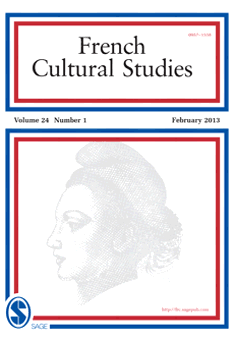
French Cultural Studies
Exploring the Depths of French Culture and SocietyFrench Cultural Studies, published by SAGE Publications Inc, is a leading journal in the domains of Cultural Studies and History. With its ISSN 0957-1558 and E-ISSN 1740-2352, this esteemed journal has made significant contributions to the understanding of French culture, literature, and society since its inception in 1990. Notably ranked in the Q2 category for Cultural Studies and Q1 category for History in 2023, it stands out with impressive Scopus rankings, placing 447th in History and 482nd in Cultural Studies. The journal aims to facilitate a nuanced discourse around French cultural phenomena, offering researchers, professionals, and students a platform for high-quality scholarly work. Although it does not operate under an Open Access model, its rigorous peer-review process ensures the publication of impactful articles that advance academic inquiry and foster collaborative dialogue in the field. Adhering to the mission of promoting interdisciplinary research, French Cultural Studies is a vital resource for anyone interested in exploring the complexities of French cultural identity and its global implications.